Like life, audiophilia often takes unexpected turns. A while back, I happily put my turntable and records on ice, for much of the 1990s and the first part of the current century. Yet lately I find myself further down the phonography rabbit hole than I have been in decades.
Although I've long worked with grooved media in my analog-to-digital–transfer business, whenever I listened for pleasure I turned to CDs, digital files, and—when it got good enough—streaming.
I worked first-hand with digital audio as its capabilities evolved from "better than 10 years ago" (mid-'90s) to very high fidelity (today), and I'm satisfied that it has gotten to where, when it's done right, it's extremely close to output = input (ie, totally transparent).
Meanwhile, I continue to call vinyl a "black box." What goes into the electromechanical system that cuts a lacquer never sounds like what comes out the end of the mechanical-electrical system that is a cartridge. That doesn't mean the black box ruins the sound, but it's always altered from the source in very audible ways. It is not, in the literal sense, "high-fidelity."
During those decades that digital sound was steadily improving, vinyl nearly disappeared as a consumer medium. But then, phoenix-like, it came back to surpass CDs as the preeminent physical format in today's streaming-dominated world. Apparently those 12" bits of plastic remain compelling, and the ritual of playing records appeals too broadly, to allow vinyl to die. It helps that the modern luxury-pricing model allows or even mandates more attention and quality control at mastering and manufacturing facilities than was typically the case when records were the mainstream format. It's enough to keep the world's pressing plants humming along at full capacity and the vinyl niche profitable for record companies and retailers (footnote 1).
In fact, there are new record presses being made, new vinyl compounds being developed, and phono-tech keeps moving forward. I don't believe I took a nostalgic step backward with my renewed interest in vinyl. Rather, modern phonography offers an alternative path to music enjoyment, which can peacefully coexist with the best digital playback systems.
My Technics past
The first "real" turntable I owned was a Technics SL-D2 (circa 1980), which still spins records for the friend I gave it to. In the early 2000s, I became vinyl-curious—a little, not a lot, and mainly to digitize the small number of my records that hadn't made it to CD so that I could load them in my iPod. I bought a lightly used European belt-drive turntable, the maker of which I won't reveal. I found its performance—including the British cartridge that came mounted—unimpressive. I found it noisy, its motor sluggish, with bothersome wow and flutter. That experience reinforced my decision to abandon vinyl records. Then a few years later, I got an A/D transfer gig involving digitizing more than 100 LPs and a few wide-groove 78s and lacquers. The job was big enough that I needed to get an "adult" turntable. I sold that Euro belt-drive disappointment and bought a Technics SL-1200MKV from KAB Electro Acoustics in Plainfield, New Jersey. It was hot-rodded with Kevin Barrett's (that's KAB himself) best mods: 78rpm speed, tonearm rewiring, and fluid damping of the tonearm (which really helps keep the needle in groove during the Nantucket sleighride that is a warped shellac 78). Just like my A/D transfers from tape, I set up my vinyl rig to get as much good sound as possible in the analog domain so that I didn't have to rely on balky digital tools to fix a FUBAR transfer. I was knee-deep in record-playing again, like it or not. Like it, I did! I started playing records for pleasure again and needle-dropping the good ones to CDs (later to HD digital files to be stored in my NAS music-server library). When Barrett told me about a well-used Technics SL-1200MK2 he got in trade and planned to refurbish, I asked him to get it running like new, swap in his external power supply, rewire the tonearm, and install the fluid damping system. I had my second SL-1200.
I bought a series of ever-better cartridges and figured out what sounded best with which records. Then about 10 years ago, I started buying new records and writing music reviews (the side benefit of which is receiving a steady stream of new records at my door). During Peak COVID, I found a great deal on a sweet-looking Technics SL-1200MK7 Golden Anniversary Edition (black plinth, gold tonearm and accents, and an option to set the strobe light to old-school red instead of modern SL-1200 blue). Although my listening world was still more digital than vinyl, I enjoyed playing records from time to time, and I noted how much better the average modern cutting and pressing is than all too many albums I spent hard-earned dollars on in the 1980s.
Finally, proving that I had descended into the Vinyl Rabbit Tunnels, I reviewed the superb, affordable Technics SL-50C record player for Stereophile.
 Which brings us to the present
Duly impressed with Technics's latest entry-level 'table, I asked to review the SL-1200GME/SL-1210GME, described by the company as its last and best top-line G-series SL-1200. The G series debuted with Technics's return to the turntable market in 2016 after an absence of a few years.
Why end the G line? Reports say there's a part, process, or material that is no longer available (footnote 2), so Technics decided to send the G's out with a bang.
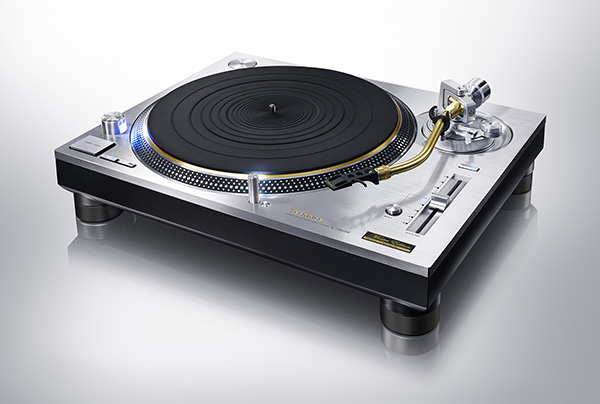
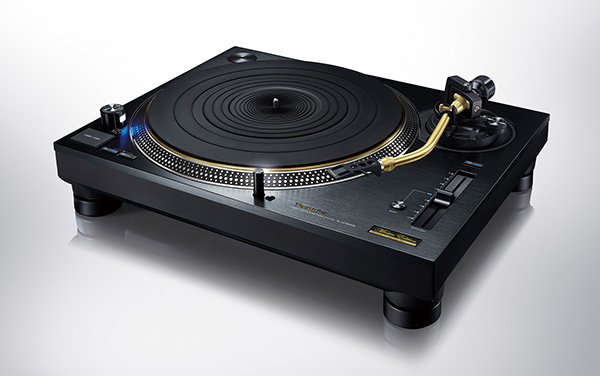
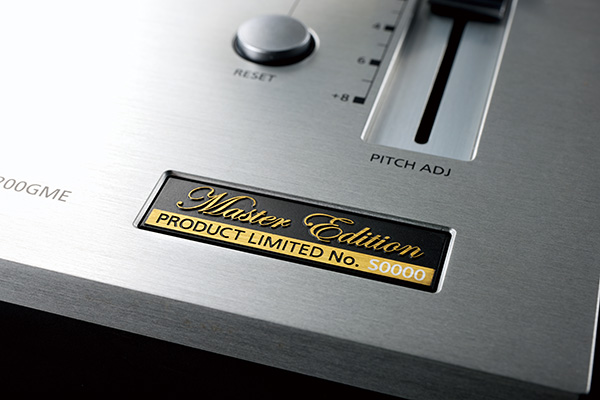
The SL-1200GME (silver, top photo) and SL-1210GME (black, above) are the most advanced, most tricked-out, most expensive SL-1200s ever. Only 1200 SL-1200GMEs will be made; Technics will make 1210 SL-1210GMEs. Each one will be individually numbered. (The SL-1200/1210G is already out of production.) If that sentence piqued your interest, get shopping soon, before they're all gone—assuming they aren't already.
As soon as I took hold of the hefty platter, I knew this was a different level of SL-1200—a fact corroborated by the heft of the whole 'table. Everything about the GME looks and feels heavy-duty and precise. It's a SL-1200, but better.
All the tech
Although they look very similar, there are many differences between the SL-1200GME/SL-1210GME and my previous-era SL-1200s and its linemates from the present day, the SL-1200GR2 and SL-1200MK7. It's more similar to the discontinued SL-1200/SL-1210G, but it's different from that, too. The main areas of uniqueness: The SL-1200GME/SL-1210GME has the same twin-rotor coreless DC motor as the SL-1200/1210G, but in place of a circa-2016 high-precision vector-control motor control system, it uses Technics's newest delta-sigma pulse-wave modulation digital drive system operating at 20kHz, which the company said contributes to "reducing audible noise and further suppressing micro-vibrations." The delta-sigma drive circuit used on the SL-1200GR2 and SL-1300G operates at 2kHz.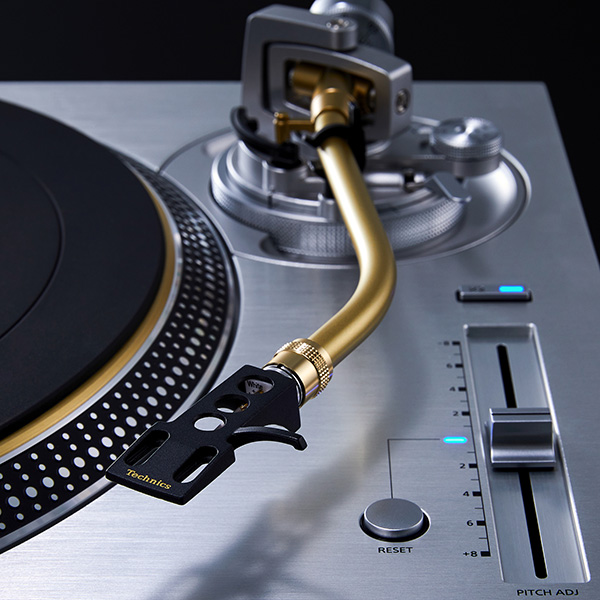 Only the SL-1200GME/SL-1210GME and the SL-1200/SL-1210G—plus Technics's top-line SL-1000R—have the company's cold-drawn magnesium tonearm (above), which is hand-assembled and balanced in Japan. And only the GME turntables have the gold-colored version of the tonearm. Compared to the aluminum tonearms used on other Technics turntables, magnesium is said to offer better resonance damping and—in combination with precision hand-tuned gimbal bearings—more-precise tracking.
The 1200GME/SL-1210GME and G have four-layered bodies: 10mm thick brushed aluminum top plate, die-cast aluminum structural frame, "bulk moulding compound" (BMC) high-density base, and heavy-duty rubber bottom skin. The turntables below it in the line have two-layer bodies made of aluminum and BMC. The GME turntables weigh almost 40lb, while the SL-1200MK7 weighs just over 21lb.
The G-series turntables—including the GMEs—and the SL-1000R feature a three-layer platter: brass, aluminum, and rubber. The others are two-layer (aluminum and rubber). The SL-1200GME/SL-1210GME and SL-1300G platters weigh about 7.3lb compared to about 5lb for the SL-1200GR2 and 4lb for the SL-1200MK7 platters.
The SL-1200GME/SL-1210GME have feet similar to those on the SL-1000R, made of zinc-alloy housing with silicone-based "Alpha-GEL" inside to reduce vibration transmission. The SL-1200GME/SL-1210G feet are zinc-alloy housing with silicone rubber. The SL-1200MK7 feet are made of resin and rubber with isolation springs inside.
The point of all this technology and specialized manufacturing is to make a turntable that precisely tracks records and is nearly impervious to vibrations around it and under it.
The design proved itself valid and effective in my system playing my records.
Only the SL-1200GME/SL-1210GME and the SL-1200/SL-1210G—plus Technics's top-line SL-1000R—have the company's cold-drawn magnesium tonearm (above), which is hand-assembled and balanced in Japan. And only the GME turntables have the gold-colored version of the tonearm. Compared to the aluminum tonearms used on other Technics turntables, magnesium is said to offer better resonance damping and—in combination with precision hand-tuned gimbal bearings—more-precise tracking.
The 1200GME/SL-1210GME and G have four-layered bodies: 10mm thick brushed aluminum top plate, die-cast aluminum structural frame, "bulk moulding compound" (BMC) high-density base, and heavy-duty rubber bottom skin. The turntables below it in the line have two-layer bodies made of aluminum and BMC. The GME turntables weigh almost 40lb, while the SL-1200MK7 weighs just over 21lb.
The G-series turntables—including the GMEs—and the SL-1000R feature a three-layer platter: brass, aluminum, and rubber. The others are two-layer (aluminum and rubber). The SL-1200GME/SL-1210GME and SL-1300G platters weigh about 7.3lb compared to about 5lb for the SL-1200GR2 and 4lb for the SL-1200MK7 platters.
The SL-1200GME/SL-1210GME have feet similar to those on the SL-1000R, made of zinc-alloy housing with silicone-based "Alpha-GEL" inside to reduce vibration transmission. The SL-1200GME/SL-1210G feet are zinc-alloy housing with silicone rubber. The SL-1200MK7 feet are made of resin and rubber with isolation springs inside.
The point of all this technology and specialized manufacturing is to make a turntable that precisely tracks records and is nearly impervious to vibrations around it and under it.
The design proved itself valid and effective in my system playing my records.
 Setting the stage
The handsome SL-1210GME arrived double-boxed and packed in the company's new all-cardboard system, part of Panasonic's effort to reduce its environmental footprint. It was securely but logically packed. Aside from being heavier, the SL-1200GME/SL-1210GME is boxed like other Technics turntables, with the dust cover, platter mat, platter, and turntable body in separate parts of the packaging, isolated and protected from each other. Technics includes a printed supplement to the user manual showing a method using the box and a sheet of packing cardboard to support the turntable leaning on its front panel while the power cord, RCA signal cable, and grounding wire are connected to a terminal block located underneath the turntable body. Why place the essential connections there? I'm sure there's a good reason, but it's user-hostile, especially if you want to experiment with signal cables. My SL-1200MK7 has the connections on the lower rear panel. The old SL-1200s had the cables attached, coming out the rear. The KAB tonearm rewire includes a very convenient RCA terminal block mounted on the back panel. There must be a good reason for it, but the under-body location on the GME is an odd design choice.
Cabling secure, I carefully placed the platter on the spindle, attached it with three included Phillips (footnote 3) screws, and placed the heavy rubber mat on top of the brass platter.
Some people swap non-Technics mats onto Technics platters, but I don't recommend it. The system is designed for the weight and thickness of the company's own mat. My colleague Michael Trei, the Spin Doctor, advises against using record weights with Technics platter mats, and I agree. KAB makes a useful and Technics-compatible spindle clamp (footnote 4).
In the accessories box is a deluxe Technics headshell with gold-plated wire terminals and a smart-looking gold insignia on top. The standard plastic Technics alignment gauge (optimized for a Stevenson-like alignment, experts tell me) is included. The tonearm is the same configuration as every SL-1200 since the MK2 and is SME-compatible, so any headshell (or all-in-one "pickup head") that fits an SME tonearm with detachable headshells will also fit this one. My Hana SL MK II cartridge was already installed in the same kind of Technics headshell, so I secured it in the arm, installed the counterweight, balanced it to track at the recommended 2gm, set the antiskate knob to half that value (footnote 5)—and there it was, time to connect to the system and spin.
The SL-1210GME took the place of my early-2000s SL-1200MKV on top of my Butcher Block Acoustics equipment rack. It fit right in with my black-faced Benchmark LA-4 preamplifier and dCS Bartók APEX streaming DAC. My Pro-Ject Phono Box RS2 and Benchmark AHB2 power amplifier are silver faced, so there was still some ... let's call it visual variety in the system. In the bright daylight of the living room, it was easy to see that the GME's fit and finish were more refined than any prior 1200 'table I've known. That heavy, brushed-aluminum top and the gold tonearm look sharp! Everything about it felt another degree of precise and solid compared to the older SL-1200, and many degrees above the somewhat flimsy-feeling (but solid-performing) SL-1200MK7. This was most noticeable in the cueing lever, damped cue lifter, and the precision movement of the counterweight. I knew as I set it up that the gimbal bearing system was hand-tuned in Japan, so there may have been some confirmation bias, but that tonearm felt like it was floating on air when I moved it on and off my records.
Finally, let's spin!
I expected the pile of records I brought into the living room to sound good. Still, the SL-1210GME impressed and sometimes amazed me. Right away, I noticed that the combination of the GME and the Hana cartridge was copacetic and minimized background noise. Records with quiet surfaces had almost silent backgrounds at my listening seat. This was new: music from a vinyl record emerging from silence as is usual with digital media. With all the audible whoosh and rumble gone, the music danced out of the speakers and lived in the room. Some highlights: Roy Haynes: Out of the Afternoon (Impulse! A-23, Verve/Analogue Productions). This must have been cut from one of the Impulse! master tapes that survived the Universal vault fire. It's dynamic and lively, and it demonstrates the best of Rudy Van Gelder's studio and engineering. Ryan Smith's remastering, at Sterling Sound in Nashville, is ideal, and Quality Record Pressing pressed it on-center on near-silent vinyl. Pairing Haynes, Mr. Snap-Crackle, with the wild yet always musical Roland Kirk (playing multiple reed instruments, often at the same time) was a genius move by producer Bob Theile. Tommy Flanagan on piano and Henry Grimes on bass hold it all together and take a number of tasty solos. The CD-rez version streaming on Qobuz didn't sound as peppy, relaxed, or dynamic. What a great way to start my time with the top-line SL-1200.
 Al Cohn and Zoot Sims: You 'n' Me (Mercury SR 60606, original pressing). Recorded (and likely mastered) in 1960 by George Piros at Fine Recording (footnote 6), this album is a showcase of extroverted, swinging jazz made at a time when the music was turning inward and serious. There's even a track where bassist Major Holley channels Slam Stewart in the tradition of scat-singing/bass-bowing fun. (Holley did a few of these things over the years, notably on Clark Terry albums.) The vinyl wasn't as quiet as on a well-executed luxury-priced modern record, but that didn't interfere with my enjoyment. The sound was typical of good early-stereo records: a bit nasal, and instruments hard-panned to left (Sims and Mose Allison, playing some respectable jazz piano) and right (Cohn, Holley, and Osie Johnson on drums). Again, the CD-resolution Qobuz version didn't sound as good.
 Tony Rice (Rounder CR01032, Craft Recordings AAA reissue). There's legitimate criticism of where Rice ended up: a technically astounding player of "New-Grass" NPR concert hall sorta-jazz. The good news is, he didn't start out that way. His debut album was a foot-stompin' bluegrass virtuoso romp. The excitement and joy bottled up in the 1977 master tape translated to vinyl superbly in Kevin Gray's capable hands. The spirited hoe-down came to life in front of me, with Rice's Martin guitar in the center, David Gristman's mandolin on the left and J.D. Crowe's banjo on the right. Pass the Mason jar!
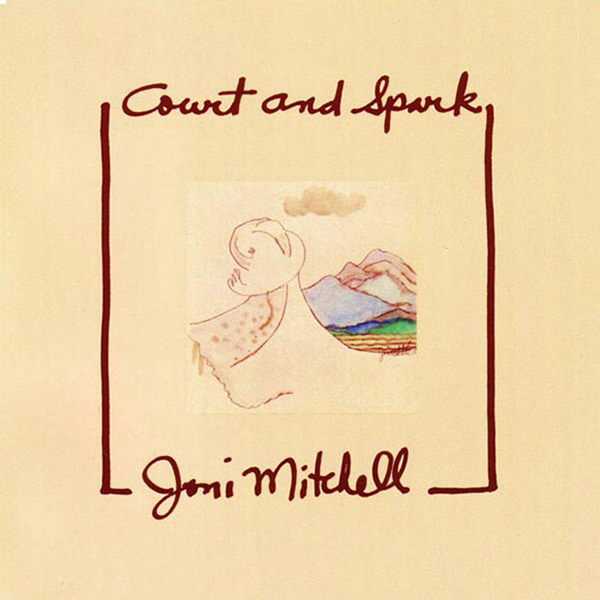
Joni Mitchell, Court and Spark (Asylum/Rhino High Fidelity RHF1 1001). I'm not that into the Laurel Canyon thing, but up to now I haven't given this album its due. The interview with Mitchell in the four-page 12×12 insert convinced me because she set its context so well, and it let me in on production details that unfolded before my ears. Gray did a nice job on this remaster. The streaming version also sounds good. "Help Me" was the hit; "Raised on Robbery" should have been.
Tony Rice (Rounder CR01032, Craft Recordings AAA reissue). There's legitimate criticism of where Rice ended up: a technically astounding player of "New-Grass" NPR concert hall sorta-jazz. The good news is, he didn't start out that way. His debut album was a foot-stompin' bluegrass virtuoso romp. The excitement and joy bottled up in the 1977 master tape translated to vinyl superbly in Kevin Gray's capable hands. The spirited hoe-down came to life in front of me, with Rice's Martin guitar in the center, David Gristman's mandolin on the left and J.D. Crowe's banjo on the right. Pass the Mason jar!
Joni Mitchell, Court and Spark (Asylum/Rhino High Fidelity RHF1 1001). I'm not that into the Laurel Canyon thing, but up to now I haven't given this album its due. The interview with Mitchell in the four-page 12×12 insert convinced me because she set its context so well, and it let me in on production details that unfolded before my ears. Gray did a nice job on this remaster. The streaming version also sounds good. "Help Me" was the hit; "Raised on Robbery" should have been.
 I also thoroughly enjoyed spinning the new Rhino High Fidelity reissue of Workingman's Dead by the Grateful Dead, Universal VinylPhyle's two-LP (mono and stereo versions), Pet Sounds by the Beach Boys, and my Bob Ludwig original cuts of David Bowie's Let's Dance and the Rolling Stones' Tattoo You.
Every record I played on the SL-1210GME sounded great, with reduced surface noise, rock-solid pitch, and intense dynamics.
With other cartridges
I also thoroughly enjoyed spinning the new Rhino High Fidelity reissue of Workingman's Dead by the Grateful Dead, Universal VinylPhyle's two-LP (mono and stereo versions), Pet Sounds by the Beach Boys, and my Bob Ludwig original cuts of David Bowie's Let's Dance and the Rolling Stones' Tattoo You.
Every record I played on the SL-1210GME sounded great, with reduced surface noise, rock-solid pitch, and intense dynamics.
With other cartridges
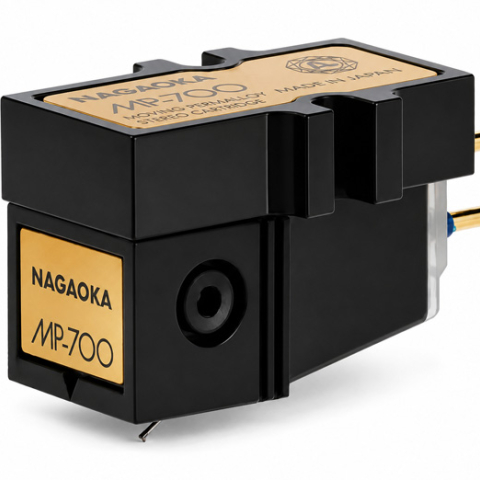
I spent an afternoon playing a handful of familiar tracks with a variety of cartridges, including the relatively new Nagaoka MP-700 (review coming soon). As is the case with my other Technics turntables, swapping cartridges is easy: Just set the antiskate to 0, adjust the counterweight to 0 (meaning the cartridge is floating with the tonearm parallel to the platter), then dial in the recommended tracking weight and set the antiskate accordingly (footnote 7). (The tonearm height may need to be adjusted so that the arm is parallel to the record surface while playing a disc; this process is clearly explained in the user manual.) I confirmed the accuracy of the Technics counterweight dial with my digital scale.
The cartridges I know well (Ortofon 2M Blue and 2M Bronze, Shure V15 Type III, and Audio-Technica AT-VM95) sounded exactly as expected and behaved like they do on my other Technics turntables—though with quieter backgrounds, even more rock-solid pitch, and enhanced dynamics. The Nagaoka was new and unique—my first spins with a variable-reluctance ("Moving Permalloy," Nagaoka calls it) cartridge (footnote 8). It sounded different from the Hana and the 2M Bronze—the other cartridges I used that have fine-profile styluses. I will detail my impressions of the Nagaoka in the full review.
The key takeaway: Whatever cartridge works well in other Technics tonearms will likely work well in the top-line magnesium tonearm. As with other SL-1200 turntables, the GME is widely compatible, and its rock-steady speed and nonfidgety gimbal bearing system allow many if not most cartridges to sound their best.
The verdict
I bought the SL-1210GME I reviewed. That's the strongest endorsement I can give. Was it worth thousands of extra dollars compared to the G, GR2, SL-1300, and so on? I concluded yes, for the following reasons: It has every bit of Technics's latest turntable technology in one package; its design and aesthetics are pinnacle for long-time SL-1200 fans like me; it's a limited edition, so its value isn't likely to drop over time; it's going to be my lifetime turntable.
I could spend thousands and thousands more dollars to maybe eke out another degree or two of record-playing refinement, but I'm not going to. As soon as I heard that near-silent background with trademark Technics rock-steady speed/pitch and blazing fast dynamics, I decided this turntable is the right price-performance point to squeeze every bit of music out of my hundreds of records, and I'm going to enjoy hearing all of them fresh with the SL-1210GME.
And now, friends, I am at the bottom of the vinyl rabbit hole!
Footnote 1: As detailed in May's Industry Update, the Recording Industry Association of America reported that 2025 vinyl revenues surpassed $1 billion for the first time since 1983. Footnote 2: Technics would not identify the part in question. According to some online sleuthing and digging through Technics's press materials, the main features unique to the SL-1200G and SL-1200GME/SL-1210GME are the magnesium tonearm, twin-rotor coreless direct-drive motor, and three-layer factory-balanced platter. Also the fact that both are partially made and "finished" in Japan whereas the rest of the current Technics turntable range is made in Malaysia. Further digging indicates that the magnesium tonearm is made by Technics's parent Panasonic, in Japan.
Footnote 3: There are also three Belleville springs and three washers that must be installed in a specific sequence as described in the owner's manual to properly seat and secure the platter.
Footnote 4: See kabusa.com/RC1200.htm.
Footnote 5: Many tonearm manufacturers recommend setting the antiskate knob (when it exists) to a value equal to the VTF setting, yet the actual force applied is typically less, perhaps half the value indicated. I asked Bill Voss what the Technics standard is. He credited the reply to "our CTO"; Voss didn't name him, but it's probably the legendary Tetsuya Itani. The reply: "In our case, it is designed so that the set value corresponds accurately to the actual force." Technics manuals (including the manual for the SL-1200GME) recommend setting antiskate to the same value as the VTF, which will result in a value that, according to most experts, is much too high. The classic reference (Kogen, 1967) recommends around a quarter. J.R. Boisclair of WallyTools says the correct value is more like a tenth.—Jim Austin
Footnote 6: Fine Recording was my father's recording studio. Here's a history: tinyurl.com/k8sd88bf.
Footnote 7: Most tonearm manufacturers say you should set the antiskate knob to the same number as the tracking force—but the actual antiskating force applied will be much smaller.
Footnote 8: All these names have issues, although "moving permalloy" is better than most. In an email discussion about cartridge terminology, a group of us decided that the most appropriate description for this whole genre of cartridges is "flux-steering." It's unlikely to catch on, but I hope it will.—Jim Austin
The first "real" turntable I owned was a Technics SL-D2 (circa 1980), which still spins records for the friend I gave it to. In the early 2000s, I became vinyl-curious—a little, not a lot, and mainly to digitize the small number of my records that hadn't made it to CD so that I could load them in my iPod. I bought a lightly used European belt-drive turntable, the maker of which I won't reveal. I found its performance—including the British cartridge that came mounted—unimpressive. I found it noisy, its motor sluggish, with bothersome wow and flutter. That experience reinforced my decision to abandon vinyl records. Then a few years later, I got an A/D transfer gig involving digitizing more than 100 LPs and a few wide-groove 78s and lacquers. The job was big enough that I needed to get an "adult" turntable. I sold that Euro belt-drive disappointment and bought a Technics SL-1200MKV from KAB Electro Acoustics in Plainfield, New Jersey. It was hot-rodded with Kevin Barrett's (that's KAB himself) best mods: 78rpm speed, tonearm rewiring, and fluid damping of the tonearm (which really helps keep the needle in groove during the Nantucket sleighride that is a warped shellac 78). Just like my A/D transfers from tape, I set up my vinyl rig to get as much good sound as possible in the analog domain so that I didn't have to rely on balky digital tools to fix a FUBAR transfer. I was knee-deep in record-playing again, like it or not. Like it, I did! I started playing records for pleasure again and needle-dropping the good ones to CDs (later to HD digital files to be stored in my NAS music-server library). When Barrett told me about a well-used Technics SL-1200MK2 he got in trade and planned to refurbish, I asked him to get it running like new, swap in his external power supply, rewire the tonearm, and install the fluid damping system. I had my second SL-1200.
Which brings us to the presentDuly impressed with Technics's latest entry-level 'table, I asked to review the SL-1200GME/SL-1210GME, described by the company as its last and best top-line G-series SL-1200. The G series debuted with Technics's return to the turntable market in 2016 after an absence of a few years.
Although they look very similar, there are many differences between the SL-1200GME/SL-1210GME and my previous-era SL-1200s and its linemates from the present day, the SL-1200GR2 and SL-1200MK7. It's more similar to the discontinued SL-1200/SL-1210G, but it's different from that, too. The main areas of uniqueness: The SL-1200GME/SL-1210GME has the same twin-rotor coreless DC motor as the SL-1200/1210G, but in place of a circa-2016 high-precision vector-control motor control system, it uses Technics's newest delta-sigma pulse-wave modulation digital drive system operating at 20kHz, which the company said contributes to "reducing audible noise and further suppressing micro-vibrations." The delta-sigma drive circuit used on the SL-1200GR2 and SL-1300G operates at 2kHz.
Only the SL-1200GME/SL-1210GME and the SL-1200/SL-1210G—plus Technics's top-line SL-1000R—have the company's cold-drawn magnesium tonearm (above), which is hand-assembled and balanced in Japan. And only the GME turntables have the gold-colored version of the tonearm. Compared to the aluminum tonearms used on other Technics turntables, magnesium is said to offer better resonance damping and—in combination with precision hand-tuned gimbal bearings—more-precise tracking.
Setting the stageThe handsome SL-1210GME arrived double-boxed and packed in the company's new all-cardboard system, part of Panasonic's effort to reduce its environmental footprint. It was securely but logically packed. Aside from being heavier, the SL-1200GME/SL-1210GME is boxed like other Technics turntables, with the dust cover, platter mat, platter, and turntable body in separate parts of the packaging, isolated and protected from each other. Technics includes a printed supplement to the user manual showing a method using the box and a sheet of packing cardboard to support the turntable leaning on its front panel while the power cord, RCA signal cable, and grounding wire are connected to a terminal block located underneath the turntable body. Why place the essential connections there? I'm sure there's a good reason, but it's user-hostile, especially if you want to experiment with signal cables. My SL-1200MK7 has the connections on the lower rear panel. The old SL-1200s had the cables attached, coming out the rear. The KAB tonearm rewire includes a very convenient RCA terminal block mounted on the back panel. There must be a good reason for it, but the under-body location on the GME is an odd design choice.
I expected the pile of records I brought into the living room to sound good. Still, the SL-1210GME impressed and sometimes amazed me. Right away, I noticed that the combination of the GME and the Hana cartridge was copacetic and minimized background noise. Records with quiet surfaces had almost silent backgrounds at my listening seat. This was new: music from a vinyl record emerging from silence as is usual with digital media. With all the audible whoosh and rumble gone, the music danced out of the speakers and lived in the room. Some highlights:
Roy Haynes: Out of the Afternoon (Impulse! A-23, Verve/Analogue Productions). This must have been cut from one of the Impulse! master tapes that survived the Universal vault fire. It's dynamic and lively, and it demonstrates the best of Rudy Van Gelder's studio and engineering. Ryan Smith's remastering, at Sterling Sound in Nashville, is ideal, and Quality Record Pressing pressed it on-center on near-silent vinyl. Pairing Haynes, Mr. Snap-Crackle, with the wild yet always musical Roland Kirk (playing multiple reed instruments, often at the same time) was a genius move by producer Bob Theile. Tommy Flanagan on piano and Henry Grimes on bass hold it all together and take a number of tasty solos. The CD-rez version streaming on Qobuz didn't sound as peppy, relaxed, or dynamic. What a great way to start my time with the top-line SL-1200.
Al Cohn and Zoot Sims: You 'n' Me (Mercury SR 60606, original pressing). Recorded (and likely mastered) in 1960 by George Piros at Fine Recording (footnote 6), this album is a showcase of extroverted, swinging jazz made at a time when the music was turning inward and serious. There's even a track where bassist Major Holley channels Slam Stewart in the tradition of scat-singing/bass-bowing fun. (Holley did a few of these things over the years, notably on Clark Terry albums.) The vinyl wasn't as quiet as on a well-executed luxury-priced modern record, but that didn't interfere with my enjoyment. The sound was typical of good early-stereo records: a bit nasal, and instruments hard-panned to left (Sims and Mose Allison, playing some respectable jazz piano) and right (Cohn, Holley, and Osie Johnson on drums). Again, the CD-resolution Qobuz version didn't sound as good.
Tony Rice (Rounder CR01032, Craft Recordings AAA reissue). There's legitimate criticism of where Rice ended up: a technically astounding player of "New-Grass" NPR concert hall sorta-jazz. The good news is, he didn't start out that way. His debut album was a foot-stompin' bluegrass virtuoso romp. The excitement and joy bottled up in the 1977 master tape translated to vinyl superbly in Kevin Gray's capable hands. The spirited hoe-down came to life in front of me, with Rice's Martin guitar in the center, David Gristman's mandolin on the left and J.D. Crowe's banjo on the right. Pass the Mason jar!
Joni Mitchell, Court and Spark (Asylum/Rhino High Fidelity RHF1 1001). I'm not that into the Laurel Canyon thing, but up to now I haven't given this album its due. The interview with Mitchell in the four-page 12×12 insert convinced me because she set its context so well, and it let me in on production details that unfolded before my ears. Gray did a nice job on this remaster. The streaming version also sounds good. "Help Me" was the hit; "Raised on Robbery" should have been.
I also thoroughly enjoyed spinning the new Rhino High Fidelity reissue of Workingman's Dead by the Grateful Dead, Universal VinylPhyle's two-LP (mono and stereo versions), Pet Sounds by the Beach Boys, and my Bob Ludwig original cuts of David Bowie's Let's Dance and the Rolling Stones' Tattoo You.
Every record I played on the SL-1210GME sounded great, with reduced surface noise, rock-solid pitch, and intense dynamics.
With other cartridgesI spent an afternoon playing a handful of familiar tracks with a variety of cartridges, including the relatively new Nagaoka MP-700 (review coming soon). As is the case with my other Technics turntables, swapping cartridges is easy: Just set the antiskate to 0, adjust the counterweight to 0 (meaning the cartridge is floating with the tonearm parallel to the platter), then dial in the recommended tracking weight and set the antiskate accordingly (footnote 7). (The tonearm height may need to be adjusted so that the arm is parallel to the record surface while playing a disc; this process is clearly explained in the user manual.) I confirmed the accuracy of the Technics counterweight dial with my digital scale.
The verdictI bought the SL-1210GME I reviewed. That's the strongest endorsement I can give. Was it worth thousands of extra dollars compared to the G, GR2, SL-1300, and so on? I concluded yes, for the following reasons: It has every bit of Technics's latest turntable technology in one package; its design and aesthetics are pinnacle for long-time SL-1200 fans like me; it's a limited edition, so its value isn't likely to drop over time; it's going to be my lifetime turntable.
Footnote 1: As detailed in May's Industry Update, the Recording Industry Association of America reported that 2025 vinyl revenues surpassed $1 billion for the first time since 1983. Footnote 2: Technics would not identify the part in question. According to some online sleuthing and digging through Technics's press materials, the main features unique to the SL-1200G and SL-1200GME/SL-1210GME are the magnesium tonearm, twin-rotor coreless direct-drive motor, and three-layer factory-balanced platter. Also the fact that both are partially made and "finished" in Japan whereas the rest of the current Technics turntable range is made in Malaysia. Further digging indicates that the magnesium tonearm is made by Technics's parent Panasonic, in Japan.