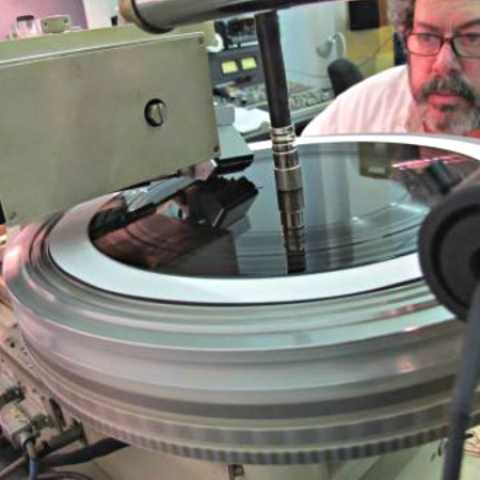

A phono cartridge is a mechanical-electrical thing with a single job: tracking a squiggly spiral groove as accurately as possible and converting that mechanical tracking into an electrical signal. (Okay, maybe that's two jobs.) Put your ear near a playing record and you can hear the groove reproduced mechanically. The groove is—forgive the pun—an analog of the electrical signal, etched into the lacquer by the cutting stylus. For most music, the electrical signal is itself an analog of humans with instruments gathered in front of microphones.
The process can seem miraculous. A person or instrument produces sound waves, which propagate through the air. A microphone converts those sound waves into an electrical signal, and the sound stays electrical until a mastering engineer's cutting lathe converts it to a mechanical etching. That etching is cloned many times into vinyl records, whose grooves shape an electrical signal that is amplified and processed until loudspeakers or headphones turn it back into sound waves.
The mechanical parts of that process have been in place since 1877. The electrical parts were developed at Bell Labs in the early 1920s and commercialized around 1925 (footnote 1). From then on, the process evolved and improved on the same basic principles.
Nagaoka has had a place in that evolution since the early 1950s, when it began manufacturing sapphire and diamond record styli. The company was founded earlier, in 1940, as a supplier of watch jewels—another field that involves precisely cutting and shaping tiny diamonds, rubies, and sapphires. Nowadays, the company, which is based in Higashine, Japan (footnote 2), specializes in phono cartridges, diamond styli, and analog accessories like record-cleaning brushes and inner sleeves.
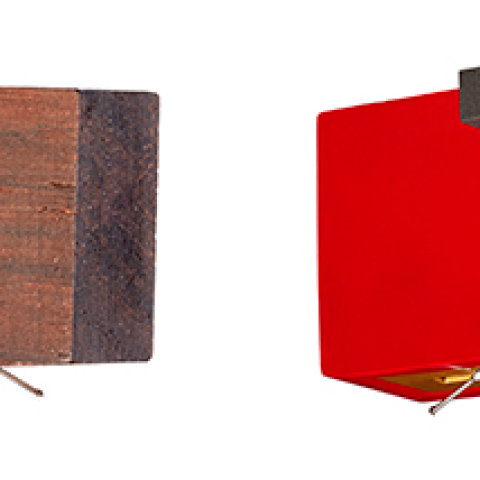
As a way of translating mechanical motion to electrical energy, variable reluctance predates even moving magnet, which evolved from it. In variable-reluctance cartridges, fixed coils sit in the field of a fixed permanent magnet. A small bit of light, semipermanent magnetic material attached to the cantilever moves within the magnet's field, in sync with the stylus as it traces the groove. The moving material alters the flux through the coils, causing current toflow.
Variable reluctance has gone by many names through the years: moving iron, induced magnet, moving armature, fixed coil, moving flux ... Some of those names are proprietary, including General Electric's preferred Variable Reluctance, Ortofon's Variable Magnetic Shunt, B&O's Moving Micro Cross, Grado's Flux-Bridger (though Grado eventually embraced Moving Iron), and Tannoy's Variluctance.
In the 1970s, Nagaoka introduced a new twist on variable reluctance, which they called Moving Permalloy (MP). Nagaoka's innovation was a tiny sleeve of permalloy, a substance that's lighter and more magnetic than iron. The result is a cartridge that can behave in some ways like a moving coil (low-mass stylus-cantilever assembly, which is theoretically superior for accurate groove-tracing) and in others like a moving magnet (higher output, which needs less preamplification and is less susceptible to induced noise and hum; user-replaceable stylus assemblies). In principle, a Nagaoka MP can offer the fine detail of an MC with the easy setup, user-swappable styli, and durability of a moving magnet (footnote 3). What's not to like?
 The most deluxe MP
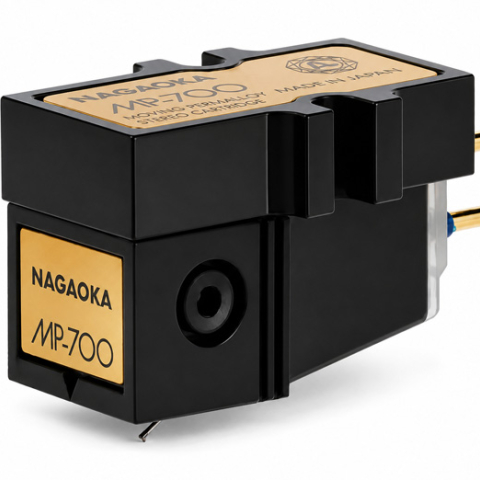
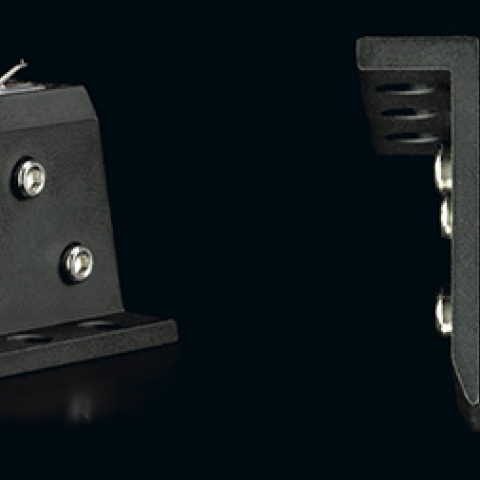
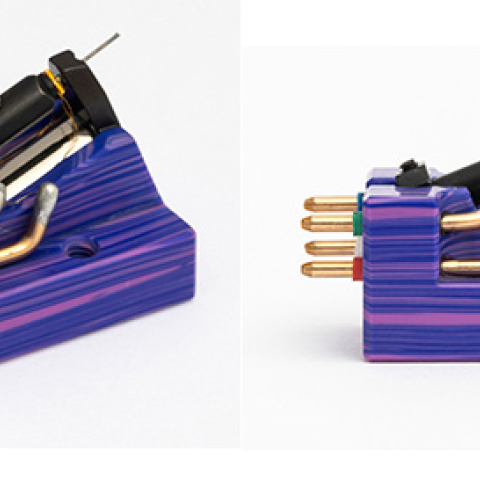
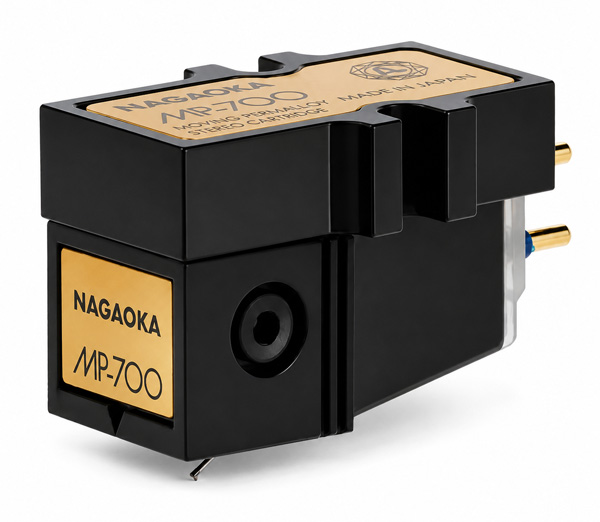
Last year, Nagaoka marked its 85th anniversary by rolling out the MP-700, its most sophisticated cartridge yet. At $1699, it is also Nagaoka's most expensive cartridge. With a nude MicroLine diamond mounted on a boron cantilever, a suspension system tuned for exactly 1.4gm of tracking force, a body of ultraduralumin (a high-tensile-strength alloy of zinc, magnesium, copper, and about 89% aluminum), and "three layers of surface treatment (nickel plating, black tin plating, and insulating coating)," it's positioned as a top-tier high-output cartridge.
With the MP-700, Nagaoka also added a "flux plate" under the hood. On its website, the company explains: "By adding a magnetic flux induction plate, the flow of magnetic flux in the magnetic circuit is improved. The amount of magnetic flux around the permalloy at the rear end of the cantilever has been increased, and the sensitivity to weak vibrations has been improved. This makes it possible to capture a wide range of minute sounds that support spatial expression, and the sound image and localization become clearer."
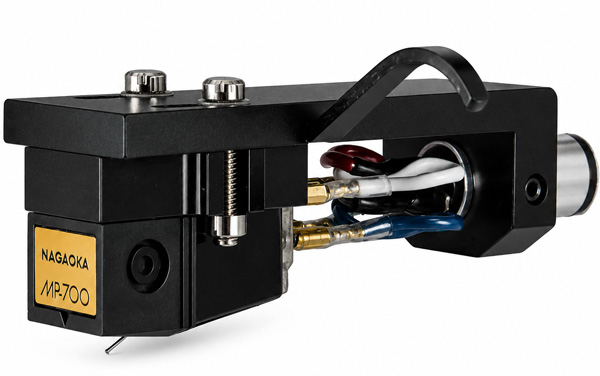
I auditioned the H version of the MP-700—that is, the MP-700H—in which the MP-700 is factory-mounted in an SME/Technics-style headshell; it retails for an extra $100. The excellent headshell allows for azimuth adjustment via a locking Allen screw. It arrived misaligned, the stylus tip not quite the right distance from the pivot. I loosened the mounting screws, moved the stylus, and retightened them. I then mounted the headshell in my Technics SL-1200GME and used the Fozgometer V2 to adjust the azimuth. (A slight counterclockwise pivot was required, after which the L–R and R–L crosstalk were almost exactly the same, as were the output levels of the 1kHz signals on the Analogue Productions test record.)
Following the advice of Nagaoka engineers, I let the cartridge loosen up over about 50 hours of listening. I heard its sound relax a bit, with the richness of the midrange and the depth of the bass increasing. The top end was never strident; it always seemed "polite," in the best way.
 Listening
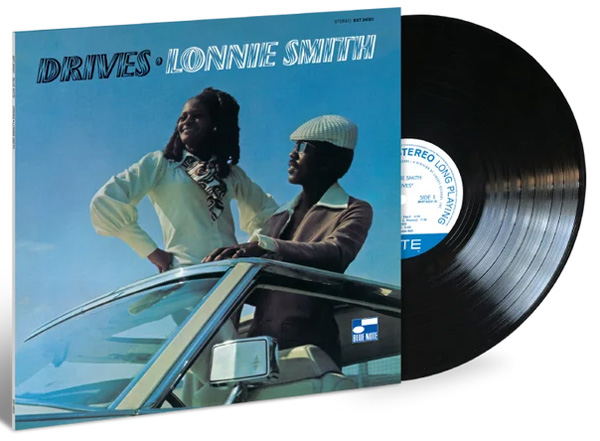
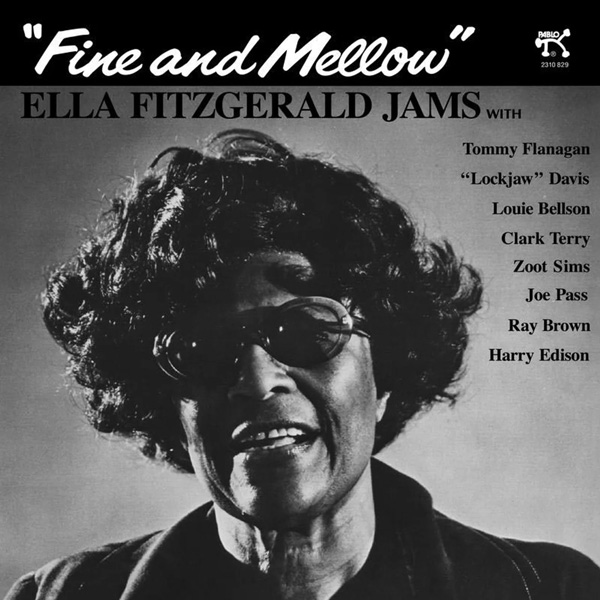
After that break-in period, the first record I spun was Lonnie Smith's Drives (LP, Blue Note Classic Vinyl BST-84351). Joe Dukes's drums sounded great! And Smith's settings on his Hammond organ—percussive attack on the top keyboards' notes, crisp and undistorted bass pedal tones—came through clearly into my living room. On Intervention Records' superb 45rpm all-analog reissue of Johnny Cash with His Hot and Blue Guitar! (LP, Sun 1220), the Man in Black's voice sounded a bit more sibilant and "toothy" than I was accustomed to, but there was still plenty of chest and body to it. The MP-700 transmitted his life force out of the grooves and through my speakers, presenting a monophonic holograph. Ella Fitzgerald's rendering of Billie Holiday's classic "Fine and Mellow," the title cut of a Pablo–Analogue Productions disc (LP, 2310 829), is more jazz-polished and less pain-wracked than the original but stands up as a fine and daring cover. As reproduced by the Nagaoka MP-700, the middle of Ms. Fitzgerald's voice stood out, and Joe Pass's guitar sounded full-toned and warm. Harry "Sweets" Edison's muted trumpet was somewhat subdued compared to other cartridges, but Eddie "Lockjaw" Davis's tenor sax sounded especially lifelike.
 I started thinking: There's a Nagaoka sound, and it's a bit different from the sound of my usual cartridge choices. It's focused less on percussive dynamics and more on a realistic, complete rendering of the middle frequencies, where a lot of musical information lives. The MP-700's top end continued to be pleasantly "polite" (not dull, but not sparkling, never hissy-pissy). The bottom and beat weren't as punchy as some cartridges, but they were in scale with the midrange.
The sound presentation made sense. It was very "analog," without falling into stereotypes of sluggishness and larded harmonic distortions. It reminded me of some great-sounding, fun systems I heard in my younger years, pre-CD and later, when digital recording was a new outlier. Those systems activated my interest in full-sized high-fidelity sound. What they lacked in sonic precision and image depth, they made up for in excitement and ballsy humanism.
As I was working on this review, the September issue of Stereophile hit the newsstands. In his Gramophone Dreams column—centered on the Audio Note IO II cartridge—Herb Reichert found a good way to classify the Nagaoka sound: "If you are a card-carrying Dynavector, Lyra, or Ortofon fan," the Audio Note MC cartridge likely won't match your preferred sound. But "if you're a Grado, Goldring, or Nagaoka ... fan," he opined, it will be a good fit.
That reminded me of the Grado Blue I had in college. It had that same rich, realistic midrange as the MP-700, but ultimately it didn't do everything else well enough for me to keep it long-term.
Back then, and ever since, I have preferred the kind of sound Ortofon does well: punchy and beat-centric with a finely detailed top end, though sometimes with less humanity in the room. I tend to prefer the dynamics and top-end details, but time spent with the Nagaoka is expanding my worldview. I can envision a place for both kinds of sound in my vinyl universe, and Nagaoka's cartridges are as no-fuss and stylus-swappable as Ortofon's MM line—a big plus.
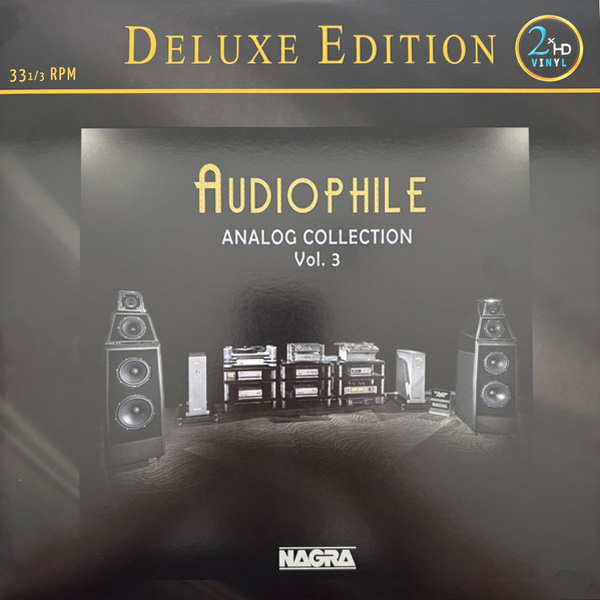 I've already expanded my cartridge palette once, taking a big step into the fussy world of low-output MCs with the superb Hana SL MK II, which has a nude Shibata stylus on an aluminum cantilever. One track that illustrates the difference between its sound and that of the Nagaoka MP-700 (which costs nearly twice as much) is "Traversia" by Maria Saintonge, from Nagra and 2XHD's Audiophile Analog Collection Vol.3. With the Hana cartridge, the accordion, stand-up bass, and acoustic guitar were separate and well-sorted. The flute sounded just the right distance from the microphone, its tone fully developed. With the Nagaoka, the bass plucking wasn't as clearly enunciated, but its tone was warmer and fuller. The flute was less breathy, which suited my tastes. The handclaps near the end sounded realistic.
Conclusions
The Nagaoka MP-700 is one of the most expensive non-MC cartridges I'm aware of, costing more, even, than Ortofon's top-line MM, the 2M Black LVB (nude Shibata stylus on a boron cantilever). Consequently, the bar is high. If you favor a more traditional high-fidelity vinyl sound, it may be right in your sweet spot. If you want super-sharp, focused sound with oodles of top-end detail and the fastest dynamics (all of which some of the best vintage and modern vinyl records can provide), it might not be for you—or it might provide a pleasant contrast and make some records sound better. I recommend using the Nagaoka MP cartridges with peppy turntables like Technics.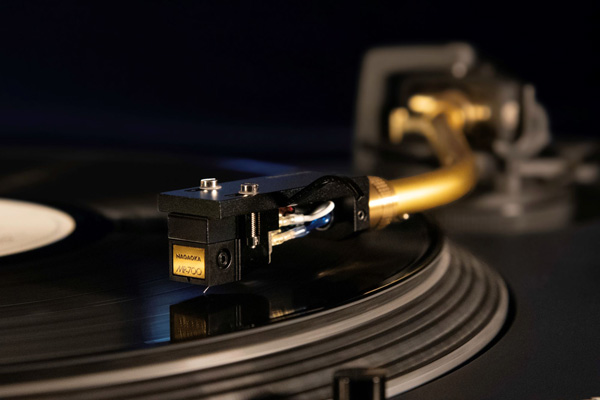 The headshell included with the MP-700H was impressive. The azimuth adjustment proved useful, even necessary, in my Technics tonearm.
The Nagaoka sound fascinates me. I will likely explore it further via one of the lower-priced MP cartridges. I'd like to know whether it survives the trip to the lunchpail world of nude elliptical styli on aluminum cantilevers. The MP-150, with a nude elliptical stylus on a "tapered" aluminum cantilever, retails for about $370; if it retains the MP-700's main qualities, it would be a bargain indeed. Meanwhile, the MP-700 is worth checking out if you're in the market for a fine-profile stylus on a stiff and quick boron cantilever. You'll hear the fullest expression of the Nagaoka sound. It may be just the thing to make your records sound their best.
Footnote 1: Worth celebrating: We are now a century into electrical recording, and the earliest commercial electrical recordings are entering the public domain. The recordings of the pre-electrical era are already there. Footnote 2: See en.wikipedia.org/wiki/Higashine. The city is known for fruit production, especially cherries, and its mascot is a pear with cherry earrings and a staff with an apple on top. Footnote 3: Nagaoka also manufactures moving magnet cartridges, its "Jeweltone" line. The company recently signed on with MoFi Distribution in North America. In recent years, it has paired with Technics at some high-profile audio shows.
The most deluxe MPLast year, Nagaoka marked its 85th anniversary by rolling out the MP-700, its most sophisticated cartridge yet. At $1699, it is also Nagaoka's most expensive cartridge. With a nude MicroLine diamond mounted on a boron cantilever, a suspension system tuned for exactly 1.4gm of tracking force, a body of ultraduralumin (a high-tensile-strength alloy of zinc, magnesium, copper, and about 89% aluminum), and "three layers of surface treatment (nickel plating, black tin plating, and insulating coating)," it's positioned as a top-tier high-output cartridge.
ListeningAfter that break-in period, the first record I spun was Lonnie Smith's Drives (LP, Blue Note Classic Vinyl BST-84351). Joe Dukes's drums sounded great! And Smith's settings on his Hammond organ—percussive attack on the top keyboards' notes, crisp and undistorted bass pedal tones—came through clearly into my living room. On Intervention Records' superb 45rpm all-analog reissue of Johnny Cash with His Hot and Blue Guitar! (LP, Sun 1220), the Man in Black's voice sounded a bit more sibilant and "toothy" than I was accustomed to, but there was still plenty of chest and body to it. The MP-700 transmitted his life force out of the grooves and through my speakers, presenting a monophonic holograph. Ella Fitzgerald's rendering of Billie Holiday's classic "Fine and Mellow," the title cut of a Pablo–Analogue Productions disc (LP, 2310 829), is more jazz-polished and less pain-wracked than the original but stands up as a fine and daring cover. As reproduced by the Nagaoka MP-700, the middle of Ms. Fitzgerald's voice stood out, and Joe Pass's guitar sounded full-toned and warm. Harry "Sweets" Edison's muted trumpet was somewhat subdued compared to other cartridges, but Eddie "Lockjaw" Davis's tenor sax sounded especially lifelike.
I started thinking: There's a Nagaoka sound, and it's a bit different from the sound of my usual cartridge choices. It's focused less on percussive dynamics and more on a realistic, complete rendering of the middle frequencies, where a lot of musical information lives. The MP-700's top end continued to be pleasantly "polite" (not dull, but not sparkling, never hissy-pissy). The bottom and beat weren't as punchy as some cartridges, but they were in scale with the midrange.
The sound presentation made sense. It was very "analog," without falling into stereotypes of sluggishness and larded harmonic distortions. It reminded me of some great-sounding, fun systems I heard in my younger years, pre-CD and later, when digital recording was a new outlier. Those systems activated my interest in full-sized high-fidelity sound. What they lacked in sonic precision and image depth, they made up for in excitement and ballsy humanism.
As I was working on this review, the September issue of Stereophile hit the newsstands. In his Gramophone Dreams column—centered on the Audio Note IO II cartridge—Herb Reichert found a good way to classify the Nagaoka sound: "If you are a card-carrying Dynavector, Lyra, or Ortofon fan," the Audio Note MC cartridge likely won't match your preferred sound. But "if you're a Grado, Goldring, or Nagaoka ... fan," he opined, it will be a good fit.
I've already expanded my cartridge palette once, taking a big step into the fussy world of low-output MCs with the superb Hana SL MK II, which has a nude Shibata stylus on an aluminum cantilever. One track that illustrates the difference between its sound and that of the Nagaoka MP-700 (which costs nearly twice as much) is "Traversia" by Maria Saintonge, from Nagra and 2XHD's Audiophile Analog Collection Vol.3. With the Hana cartridge, the accordion, stand-up bass, and acoustic guitar were separate and well-sorted. The flute sounded just the right distance from the microphone, its tone fully developed. With the Nagaoka, the bass plucking wasn't as clearly enunciated, but its tone was warmer and fuller. The flute was less breathy, which suited my tastes. The handclaps near the end sounded realistic.
The Nagaoka MP-700 is one of the most expensive non-MC cartridges I'm aware of, costing more, even, than Ortofon's top-line MM, the 2M Black LVB (nude Shibata stylus on a boron cantilever). Consequently, the bar is high. If you favor a more traditional high-fidelity vinyl sound, it may be right in your sweet spot. If you want super-sharp, focused sound with oodles of top-end detail and the fastest dynamics (all of which some of the best vintage and modern vinyl records can provide), it might not be for you—or it might provide a pleasant contrast and make some records sound better. I recommend using the Nagaoka MP cartridges with peppy turntables like Technics.
The headshell included with the MP-700H was impressive. The azimuth adjustment proved useful, even necessary, in my Technics tonearm.
The Nagaoka sound fascinates me. I will likely explore it further via one of the lower-priced MP cartridges. I'd like to know whether it survives the trip to the lunchpail world of nude elliptical styli on aluminum cantilevers. The MP-150, with a nude elliptical stylus on a "tapered" aluminum cantilever, retails for about $370; if it retains the MP-700's main qualities, it would be a bargain indeed. Meanwhile, the MP-700 is worth checking out if you're in the market for a fine-profile stylus on a stiff and quick boron cantilever. You'll hear the fullest expression of the Nagaoka sound. It may be just the thing to make your records sound their best.
Footnote 1: Worth celebrating: We are now a century into electrical recording, and the earliest commercial electrical recordings are entering the public domain. The recordings of the pre-electrical era are already there. Footnote 2: See en.wikipedia.org/wiki/Higashine. The city is known for fruit production, especially cherries, and its mascot is a pear with cherry earrings and a staff with an apple on top. Footnote 3: Nagaoka also manufactures moving magnet cartridges, its "Jeweltone" line. The company recently signed on with MoFi Distribution in North America. In recent years, it has paired with Technics at some high-profile audio shows.