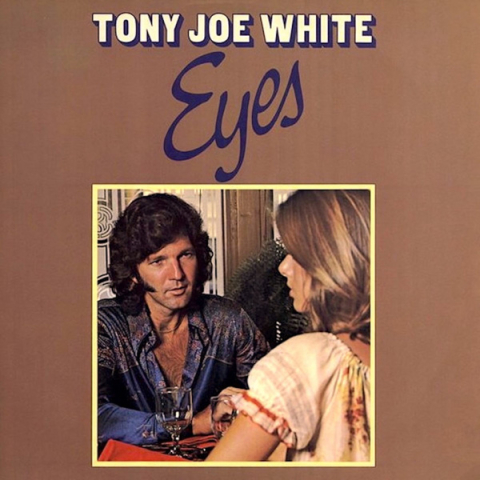

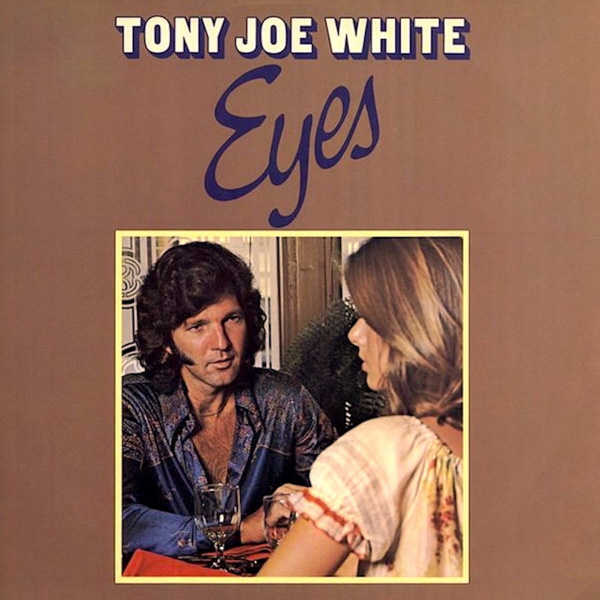
Tony Joe White: Eyes
Swamp Records SWMP25001 (LP). 2025. White, prod.; Ron Capone, Ryan McFadden, engs.
Performance ****
Sonics **** At the end of the 1970s, Tony Joe White, who'd seen others chart with his songs—"Rainy Night in Georgia," which Brook Benton took to number four on the pop charts in 1970, and "Polk Salad Annie" thanks to the famous live recording by Elvis Presley—had been dropped by Monument Records and Warner Brothers Records. Seeking a fresh start, White decided, like many in those strange days of punk and disco, to court the dance crowd with Eyes. Reviled at the time by White loyalists, his so-called disco album is now being listened to and reevaluated. Like a lot of albums from that era, Eyes has more than a few charms in retrospect. Never previously reissued in the US, Eyes and its follow-up, The Real Thang, have been reissued on colored 180gm vinyl by White's son Jody, on Tony Joe's still-extant Swamp Records. Pressed at United Record Pressing in Nashville, which has a mixed record on quality, my copies were relatively quiet and lay flat. Eyes has been resequenced from the original release, and 11 demos of the album's songs have been added. Originally produced by White and engineered by former Stax engineer Ron Capone, the album's three strongest tracks—"Soulful Eyes," "Hold on to Your Hiney," and "You Taught Me How to Love"—now open the album. All were a left turn stylistically for White and have a smooth and, in retrospect, appealing vibe. A trio of female backing singers add emphasis to "Making Love Is Good for You"; White's mellow voice suits that album's late-night love vibe.
White's usual funky, swampy country soul style creeps back in to power the upbeat workouts "Swamp Boogie" and "Texas Woman." While Eyes was not a hit, it may have convinced one of the premier disco labels, Neil Bogart's Casablanca, to put out his next album, The Real Thang, which isn't disco.—Robert Baird
 Goose: Big Modern!
No Coincidence Records NOCO42LP (LP). 2026. D. James Goodwin, prod.; Gillian Pelkonen, eng.
Performance ****
Sonics ***** For much of its career, Goose has occupied a space between indie folk and modern jam rock. Studio recordings have typically balanced layered vocal harmonies, acoustic textures, and extended instrumental passages without straying too far from their familiar, cohesive sound. Big Modern! is a noticeable departure from that approach.
The album examines how technology shapes relationships and identity. Rather than settling into a single sonic identity, the record moves between polished indie rock, synth-driven pop, dance grooves, and expansive improvisational passages. The shifts feel intentional, but it makes Big Modern! a less cohesive listening experience than the band's previous studio efforts.
The album's centerpiece is "SALT," a longtime live favorite that translates well to the studio. A wide, layered chorus gives way to a patient instrumental build, allowing the band to develop ideas gradually instead of rushing toward a climax. It captures the balance between composition and improvisation that has become Goose's greatest strength.
Elsewhere, the influence of early-'80s New Wave is unmistakable. The title track recalls the rhythmic precision and keyboard work of Talking Heads, while songs such as "Savenger" and "Good2B" lean on analog synthesizers, electric piano, and textured guitar effects. "Good Times // End Times" is perhaps the album's strongest pop statement, combining an accessible melody with an extended instrumental ride out that should translate well in concert.
Throughout the record, guitarist Rick Mitarotonda provides the musical through line. His clean, articulate tone anchors even the album's busiest arrangements, giving the music continuity as it moves between styles. Big Modern! doesn't always succeed as a complete album, but it documents a band deliberately trying to expand its territory.—Ray Chelstowski
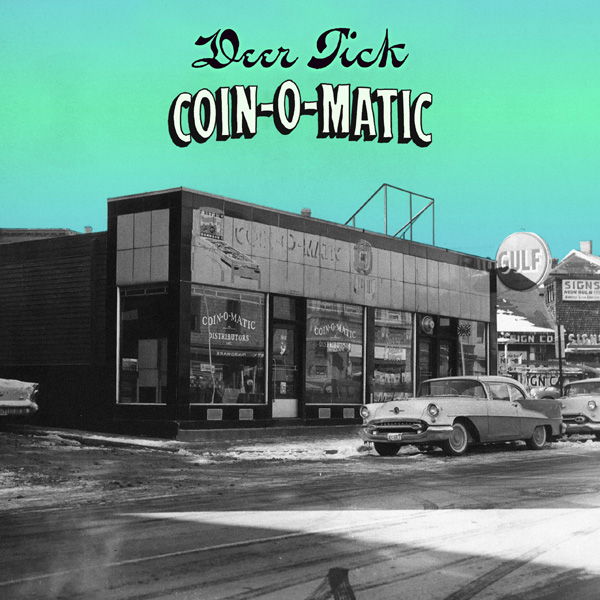 Deer Tick: Coin-O-Matic
ATCO Records ATO0706LP (LP). 2026. Deer Tick, prod.; Dennis Ryan, eng.
Performance *****
Sonics ***** Coin-O-Matic is a rock record. Recorded at the band's Providence studio and produced for the first time entirely by Deer Tick itself, it prioritizes performance over studio polish. Guitars sit at the center of nearly every arrangement: John McCauley and Ian O'Neil's wiry rhythm parts, overdriven leads, and tightly woven harmonies give the record weight. The mix leaves space for bass and drums to breathe while maintaining the energy of a live band.
Lyrically, the songs draw on family, friendships, and the people who populate Providence. McCauley writes with an eye for observation, recalling the character-driven storytelling of Bruce Springsteen's Nebraska, while the music leans toward the direct, guitar-forward approach of early Tom Petty. "Everything Born" captures that balance well, pairing jagged guitar riffs with one of the album's strongest hooks.
Album opener "Dog Years" begins with acoustic guitar and McCauley's weathered vocal then gradually adds drums, electric guitars, and horns. The arrangement's patient development sets the tone for the whole record.
Not every experiment succeeds. "Eyelid" has drive, but its restrained vocal never quite matches the urgency of the band. Elsewhere, the sequencing benefits from contrast. "Endless Loop" eases back with clean guitars and an understated rhythm section, while "507 Smith" pairs fuzzy electric guitars with a loose, late-night groove.
Closing track "Candy Cigarettes" brings the album's strengths into focus. Beginning as a reflective ballad then expanding into a layered guitar workout, it demonstrates Deer Tick's ability to balance melody, dynamics, and raw rock energy. It is one of the band's most confident studio recordings and a reminder that their songwriting continues to mature without losing its edge.—Ray Chelstowski
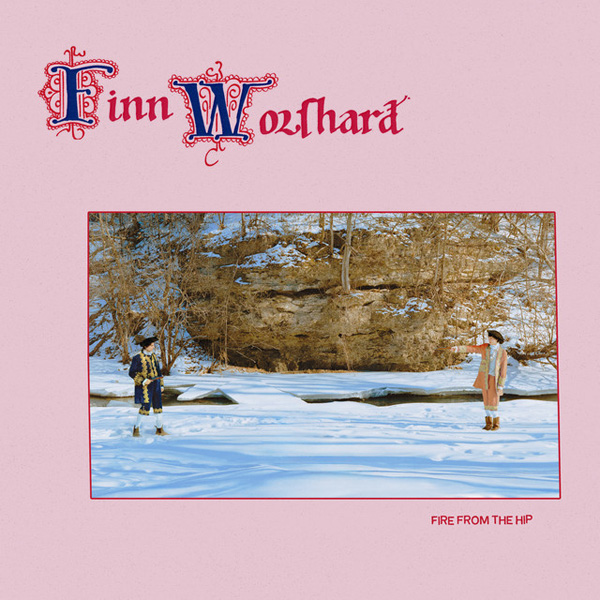 Finn Wolfhard: Fire from the Hip
AWAL Records FW002CD (CD). 2026. Finn Wolfhard, prod.; Andrew Humphrey, eng.
Performance *****
Sonics ***** Finn Wolfhard's acting career introduced him to a wide audience, but Fire from the Hip makes a convincing case that his music is more than a side project. His songwriting has grown noticeably since his debut; so has his confidence as an arranger. Rather than relying on confessional lyrics, he lets the band do much of the storytelling.
Fire from the Hip builds on the lo-fi aesthetic of his first release but is much broader in scope. Garage-rock edges remain, now joined by the loose, melodic guitar interplay of '90s indie rock. Much of the album recalls the understated approach of Pavement, while the opening track, "I'll Let You Finish," leans toward the tight, riff-based guitar work of The Strokes. Guitars are recorded with enough grit to preserve texture without obscuring detail; the resulting immediacy suits the material.
Straight-ahead rock songs are balanced by slower, restrained acoustic moments.
"Tunnels" is the album's strongest track. It opens with a warm, mid-tempo guitar that immediately establishes the song's relaxed pace. Layered electric guitars gradually fill the stereo space, while bass and drums remain understated, leaving room for Wolfhard's vocal to sit naturally in the mix. His delivery has become more measured and conversational, abandoning the urgency of his earlier recordings in favor of phrasing that better serves the songs. The production follows the same approach, resisting unnecessary embellishment and allowing the interaction between the instruments to carry much of the momentum.
Throughout Fire from the Hip, Wolfhard demonstrates confidence in his arrangements. The record doesn't try to reinvent indie rock, but it "gets" the strengths of the form: well-played guitars, economical production, and songs that trust melody over studio effects. Those qualities make this his strongest musical statement to date.—Ray Chelstowski
 Mamas Gun: Dig!
Blue Elan BER 1581 (LP). 2026. Mamas Gun, prod.; Neil Innes, Pierre Duplan, engs.
Performance ****
Sonics ***½ Making a successful new soul-music recording like Dig!, by UK soul band Mamas Gun, means walking an ever-thinning line between "authenticity" (like all the other neo-soul practitioners out there) and resisting the urge to add too much digital gloss. For Mamas Gun, there's an added danger: becoming too smooth and cloying and veering off into unlistenable cheesiness. Since their 2009 debut, Routes to Riches, this sextet (which takes its name from Erykah Badu's 2000 album of the same title and more than a little inspiration from the Average White Band) has grown adept at generating genuine grooves. The work of chief songwriter/lead singer/producer Andy Platts veers between harmless/flavorless 1980s-styled pop soul and the few standout, legit soul numbers that enhance every album. While this is clearly a constructed studio album rather than live takes, Platts's strong falsetto, which is front and center in the mix of every tune, moves in an easy, pleasing way through the swaying, bittersweet rhythms of "First Time (In a Long Time)," a tune Marvin Gaye could've nailed. In the love song "Wings," Platts lays down another convincing vocal performance, funkily asserting in the chorus, "I could get into heaven on the wings of her faith."
This album's standout is "Hardest Yards," where Platts struts his knowledge of the elan of Motown's Holland-Dozier-Holland and the snap of Memphis soul in the album's most convincing original. Exploring both the sad and the exhilarating sides of love, "Hardest Yards" admits and implores, "Each step is like a thousand miles/I stumble and I curse the ground/And I only wanna turn around/Come running right on back to you, babe." The album closes with the uplifting "Joy," where handclaps and wordless backing vocals owe an obvious though not slavish debt to the 1970s work of Stevie Wonder.—Robert Baird
 Charbel Haber: May a soft sun bless your sky while you wait for the inevitable
Ruptured/Tunefork RPTDO 75 (LP). 2026. Charbel Haber, prod.; Haber, Fadi Tabbal, engs.
Performance ***½
Sonics **** Charbel Haber, an edgy avant guitarist from Beirut who is currently based in Paris, has built a varied musical career, having played in the post-punk band Scrambled Eggs (which jump-started Beirut's experimental scene), founded free-improvisational collectives, and composed soundtracks for film and video projects. He is also a visual artist.
On this album he uses an electric guitar run through pedals and a small modular setup for processing the sound. He also uses a bow and an EBow (electronic bow) on the guitar, in addition to what he calls "metal objects." Despite the shifting clouds of sound, no synths were used. It's all guitar based.
Atmosphere more than music is what Haber aims for, and he succeeds. Recorded in Paris in early 2025, the sound is enveloping yet clear. Hovering in an ambient space, large tones move in and out, over and under each other in overlapping rhythms and a language of expression that is unique and previously unheard.
Opening with "This show starts in the future," the moods shift and blend, some more joyous, others darker, verging on menace. Pieces with sentence-long titles—"An infinity of pixelated seas under an infinity of pixelated suns"—have a peaceful quality as they move slowly, echoing and resonant. Tempos are measured and unfolding, changing slightly in "I stutter when I speak of love and death," in which the signal from the guitar sputters and quavers, giving the track an otherworldly quality that matches its title.
Not overly grandiose in its production or ambition, these tracks, none of which are so overlong that they belabor their feel, have a stillness that binds them together. While it's true that a certain sameness eventually sets in, the cumulative emotions are real, if also mysterious.—Robert Baird
Swamp Records SWMP25001 (LP). 2025. White, prod.; Ron Capone, Ryan McFadden, engs.
Performance ****
Sonics **** At the end of the 1970s, Tony Joe White, who'd seen others chart with his songs—"Rainy Night in Georgia," which Brook Benton took to number four on the pop charts in 1970, and "Polk Salad Annie" thanks to the famous live recording by Elvis Presley—had been dropped by Monument Records and Warner Brothers Records. Seeking a fresh start, White decided, like many in those strange days of punk and disco, to court the dance crowd with Eyes. Reviled at the time by White loyalists, his so-called disco album is now being listened to and reevaluated. Like a lot of albums from that era, Eyes has more than a few charms in retrospect. Never previously reissued in the US, Eyes and its follow-up, The Real Thang, have been reissued on colored 180gm vinyl by White's son Jody, on Tony Joe's still-extant Swamp Records. Pressed at United Record Pressing in Nashville, which has a mixed record on quality, my copies were relatively quiet and lay flat. Eyes has been resequenced from the original release, and 11 demos of the album's songs have been added. Originally produced by White and engineered by former Stax engineer Ron Capone, the album's three strongest tracks—"Soulful Eyes," "Hold on to Your Hiney," and "You Taught Me How to Love"—now open the album. All were a left turn stylistically for White and have a smooth and, in retrospect, appealing vibe. A trio of female backing singers add emphasis to "Making Love Is Good for You"; White's mellow voice suits that album's late-night love vibe.
Goose: Big Modern!No Coincidence Records NOCO42LP (LP). 2026. D. James Goodwin, prod.; Gillian Pelkonen, eng.
Performance ****
Sonics ***** For much of its career, Goose has occupied a space between indie folk and modern jam rock. Studio recordings have typically balanced layered vocal harmonies, acoustic textures, and extended instrumental passages without straying too far from their familiar, cohesive sound. Big Modern! is a noticeable departure from that approach.
Deer Tick: Coin-O-MaticATCO Records ATO0706LP (LP). 2026. Deer Tick, prod.; Dennis Ryan, eng.
Performance *****
Sonics ***** Coin-O-Matic is a rock record. Recorded at the band's Providence studio and produced for the first time entirely by Deer Tick itself, it prioritizes performance over studio polish. Guitars sit at the center of nearly every arrangement: John McCauley and Ian O'Neil's wiry rhythm parts, overdriven leads, and tightly woven harmonies give the record weight. The mix leaves space for bass and drums to breathe while maintaining the energy of a live band.
Finn Wolfhard: Fire from the HipAWAL Records FW002CD (CD). 2026. Finn Wolfhard, prod.; Andrew Humphrey, eng.
Performance *****
Sonics ***** Finn Wolfhard's acting career introduced him to a wide audience, but Fire from the Hip makes a convincing case that his music is more than a side project. His songwriting has grown noticeably since his debut; so has his confidence as an arranger. Rather than relying on confessional lyrics, he lets the band do much of the storytelling.
Mamas Gun: Dig!Blue Elan BER 1581 (LP). 2026. Mamas Gun, prod.; Neil Innes, Pierre Duplan, engs.
Performance ****
Sonics ***½ Making a successful new soul-music recording like Dig!, by UK soul band Mamas Gun, means walking an ever-thinning line between "authenticity" (like all the other neo-soul practitioners out there) and resisting the urge to add too much digital gloss. For Mamas Gun, there's an added danger: becoming too smooth and cloying and veering off into unlistenable cheesiness. Since their 2009 debut, Routes to Riches, this sextet (which takes its name from Erykah Badu's 2000 album of the same title and more than a little inspiration from the Average White Band) has grown adept at generating genuine grooves. The work of chief songwriter/lead singer/producer Andy Platts veers between harmless/flavorless 1980s-styled pop soul and the few standout, legit soul numbers that enhance every album. While this is clearly a constructed studio album rather than live takes, Platts's strong falsetto, which is front and center in the mix of every tune, moves in an easy, pleasing way through the swaying, bittersweet rhythms of "First Time (In a Long Time)," a tune Marvin Gaye could've nailed. In the love song "Wings," Platts lays down another convincing vocal performance, funkily asserting in the chorus, "I could get into heaven on the wings of her faith."
Charbel Haber: May a soft sun bless your sky while you wait for the inevitableRuptured/Tunefork RPTDO 75 (LP). 2026. Charbel Haber, prod.; Haber, Fadi Tabbal, engs.
Performance ***½
Sonics **** Charbel Haber, an edgy avant guitarist from Beirut who is currently based in Paris, has built a varied musical career, having played in the post-punk band Scrambled Eggs (which jump-started Beirut's experimental scene), founded free-improvisational collectives, and composed soundtracks for film and video projects. He is also a visual artist.