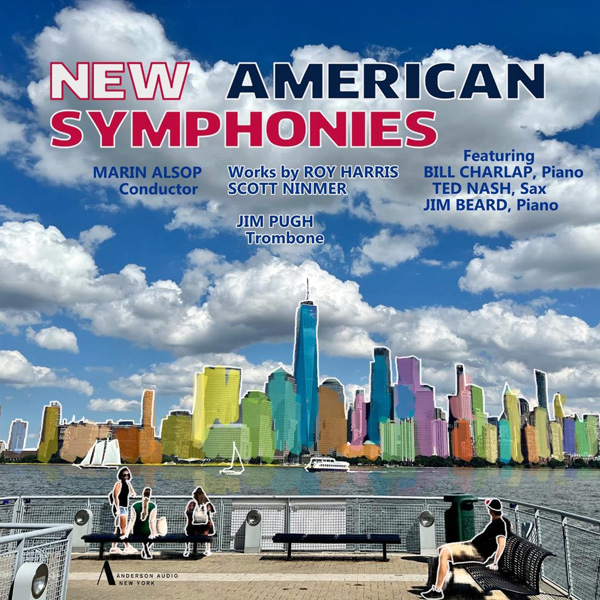
Jim Pugh, Trombone: New American Symphonies
Works by Roy Harris, Scott Ninmer
Anderson Audio A-512 (DXD). 2026. Jim Anderson, Jim Pugh, Ulrike Schwarz, prods.; Jim Anderson, eng.
Performance ****
Sonics ***** In 1938, American composer Roy Harris wrote a composition he called American Symphony, for trombonist Tommy Dorsey and his band. Jim Pugh, also a trombonist, made it his business to locate the work. He found it, or part of it, at the Library of Congress, and recorded two movements at a 1995 session engineered by longtime friend Jim Anderson. An all-star group of New York jazz cats, including pianist Bill Charlap and sax man Ted Nash, was conducted by Marin Alsop. I was provided a copy of the original, handwritten score, orchestrated for a 16-piece band; the first-trombone stave is labeled "Tommy." The first movement, marked "Vigorously," roars along from start to finish, with a gnarly piano part, nailed by Charlap. There's swing to it but also a feeling of up-tempo Baroque. A slow movement follows, with some pretty writing for Dorsey, played beautifully by Pugh. It feels like a third movement is missing. Wikipedia calls the work "unfinished or fragmentary."
Composer Scott Ninmer, also a trombonist, was a student of Pugh. He composed Night Suite for his former mentor. The 18-piece ensemble was wonderfully captured in 2023 by the same Jim Anderson at New York's Power Station Studio C. Night Suite's shifting moods and tempi and musical colors and tones remind me of some of Pat Metheny's work. Pugh is the soloist in this three-movement work, playing with a rich, burnished tone.
The technical excellence of this recording bears underlining. Anderson is joined in studio by Ulrike Schwarz, who has led a distinguished recording career, first in Europe and now in the US. She is responsible for mastering this recording in ultra-fi DXD. The sound is detailed and impactful, never harsh or over the top. A fine and interesting release.—Sasha Matson
 Vivaldi: Concerti per fagotto VI
Sergio Azzolini, baroque bassoon; L'Onda Armonica
Naïve OP 7956 (auditioned as 24/96 download). 2026. Fabio Framba, prod., eng.
Performance *****
Sonics ****½
For more than 25 years, Naïve's fancifully illustrated Vivaldi Edition has been issuing recordings of all the approximately 450 autograph manuscripts by Vivaldi (1678–1741) preserved in the Italian National Library in Turin. The series' 76th recording, Concerti per fagotto VI, contains seven of the 39 concertos for bassoon that Vivaldi penned during his lifetime; 37 survive complete. All are performed on period instruments, mainly copies of instruments played during Vivaldi's lifetime.
One of this recording's main draws is the colorful sound of virtuoso bassoonist Sergio Azzolini's copy, by Peter de Koningh, of an instrument that dates from 1710. Its sound is lighter than its modern counterpart, with more seductive color and bloom higher in the range. To me, its sonic appeal is akin to being offered part of a pack of delicious-tasting chewing gum: Once I sink my teeth into the first piece, I want more and more of its flavor.
One of the recording's true gems is the five-movement Concerto RV 501 in B-flat Major, La Notte, which alternates between dark and gloom, strange visions, and glorious light. It may not be as painterly or evocative as The Four Seasons—few compositions are—but its transitions from explosive excitement, complete with copious dazzling virtuosic passagework, to tenderness and mystery will hold you in their spell. Unusual rhythms and fascinating interplays between bassoon and orchestra distinguish the opening of Concerto RV 478 in C, while the opening notes of Concerto RV 487 bring one of Bach's Brandenburg Concerti to mind. Don't miss its last movement's captivating solo cadenza. All thumbs up to the wonderful Concerto RV 466 in C's wild virtuosic opening, lovely middle movement largo, and constantly changing final movement tempi. Some real gems here.—Jason Victor Serinus
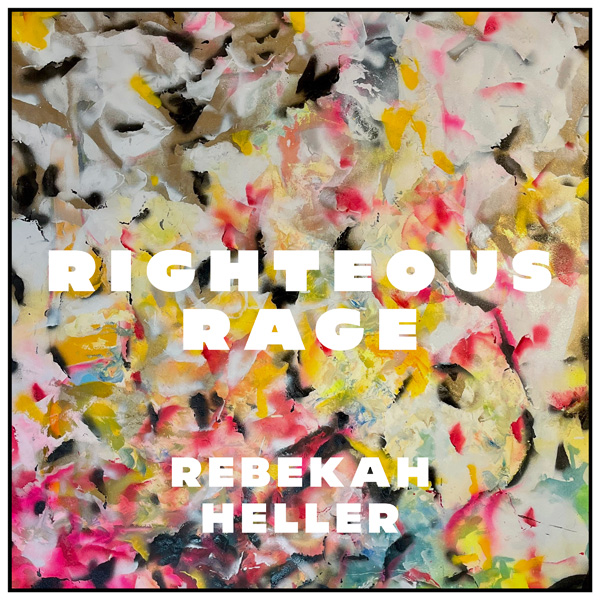 Rebekah Heller, Bassoon: Righteous Rage
Works by Eastman, Reich, Cox, Victor, and Green
Cantaloupe CA21222 (auditioned as 24/96). 2026. Rebekah Heller, prod.; Ryan Streber, Matthew Thiem, engs.
Performance *****
Sonics ****½ Smitten by the timbre of baroque bassoon, I set off to explore the farthest reaches of its bolder descendant, the modern bassoon. What better avenue than Righteous Rage, Rebekah Heller's triumphant one-person multitracked "love letter" of five compositions commissioned or arranged for a choir of bassoons. The opening work, Julius Eastman's The Holy Presence of Joan d'Arc (1981/2024), was intended for 10 cellos. Never notated, the quasi-minimalist work was painstakingly transcribed by Clarice Jensen from a recording of Eastman's live 1981 performance. Nine years later, the composer died impoverished and homeless.
The profound sorrow and isolation in the middle of Eastman's pulsating 18-minute work finds its perfect counterpart in Grand Street Counterpoint, Heller's composer-sanctioned arrangement of Cello Counterpoint by her friend and neighbor, the great Steve Reich.
Heller commissioned the album's other three works from composer friends who responded to her question, "What might a bassoon ensemble sound like?" The title work, by Brittany J. Green, began as a cello sketch "in conversation with and inspired by Eastman's The Holy Presence of Joan d'Arc." Although Green describes it as a response to her fear that her grandchildren "won't know the smell of fresh pine in the fall or the feeling of salty ocean waves crashing at your ankles," its surprisingly mild beginning grows relentless and alarming without fully embracing rage. Jessie Cox's Sonic Cartographies, by contrast, is a gorgeous microtonal and multiphonic texture-rich forest that takes maximum advantage of stereo counterpoint, and Fay Victor's intriguing Nurture (for Ingram) supplies welcome humor. Attention space explorers: Don't miss this!—Jason Victor Serinus
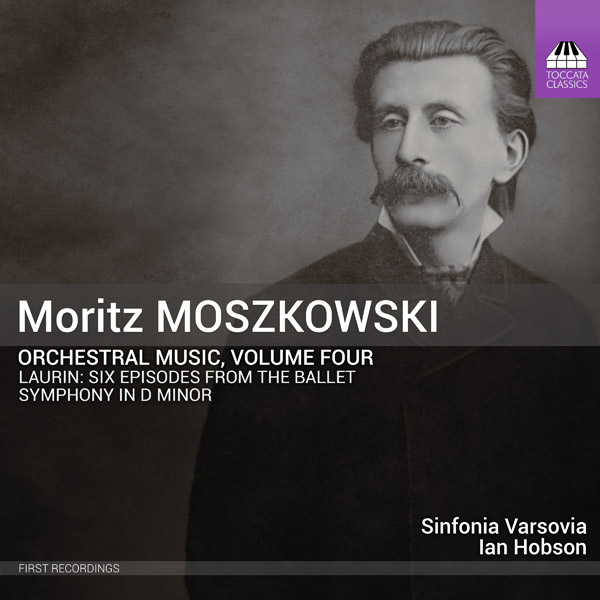 Moszkowski: Orchestral Music, Volume 4
Symphony in D Minor; Six Episodes from Laurin
Sinfonia Varsovia/Ian Hobson
Toccata Classics TOCC0615 (WAV download). 2026. Ian Hobson, prod.; Gabriela Blicharz, Lech Dudzik, Beata Jankowska-Burzyńska, Joanna Popowicz, engs.
Performance ***½
Sonics ***
Piano students may know German composer Moritz Moszkowski from his Spanish Dances or, further along, his Virtuosic Êtudes; other listeners may not know him at all. This is Volume Four of Toccata Classics' survey of his substantial corpus of orchestral music.
The symphony's first movement, with an anxious, agitated main theme and a more affirmative second, recalls Schumann, especially in the darting interplay among choirs.
I hear the scampering Vivo as a scherzo with two Trios, though the program note disagrees; a waltz introduced by horn chords is an imaginative touch. The Larghetto unfolds broadly, though as it expands, ensemble becomes imprecise; the oboe's cheery staccato theme brings a nice contrast. More wind staccatos, ominous rather than perky, introduce the finale; as they continue, a brass chorale enters beneath them, imparting a Russian flavor. The finish is convincing, though the players come unstuck in the home stretch.
The Laurin excerpts are melodic and infectious, and their lighter scoring draws a correspondingly lighter touch from Hobson, though his sectional ritards are often clumsy. The Introduction is charming, save when the basses rumble; we get two waltzes, one fervent, the other light and graceful; and a broad Nachtstück that suggests Tchaikovsky without a tune. It's considerably better than the wallpaper Gebrauchsmusik of such as Minkus, Drigo, et al.
A long resonance produces an inflated, steroidal effect in the symphony. The opening chords sound like gunshots; tuttis are opaque, though not unpleasant. Unfortunately, changes of ambience expose a few splices that a drier acoustic would have better concealed.—Stephen Francis Vasta
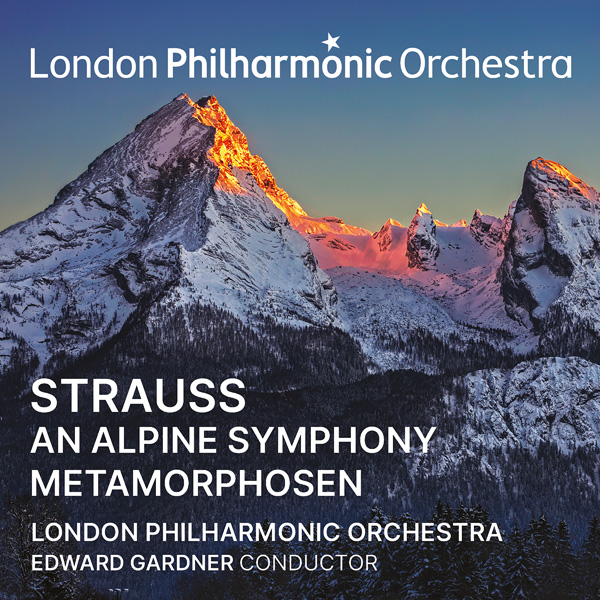 R. Strauss: An Alpine Symphony; Metamorphosen
London Philharmonic Orchestra/Edward Gardner
London Philharmonic Orchestra LPO-0140 (24/96 download). 2026. Nick Parker, prod.; Mike Hatch, eng.
Performance ***½
Sonics ****½
The miking is unusually close. The opening, normally an indistinct nether rumbling, is in distinctly audible layers. (Is all this low stuff this clear in the concert hall?) As the performance proceeds, woodwind detail—not only soli but daubs of twinkling, impressionistic staccatos—sounds very clear and upfront within the texture.
Gardner does a fine job shaping the score's first half, the "climb." The first tutti, while resplendent, doesn't stop the action, moving into an incisive fugal passage and then an unstable, undulating one. Episodes both calm and turbulent are dynamically shaped, even if we seem to hear Don Quixote's sheep in the mountain pasture. Gardner sets up the arrival of the (literal) peak nicely, almost eliding into it, satisfyingly.
On the trip back down the mountain, Gardner is less sure, though the subtle echoes of Der Rosenkavalier and Ein Heldenleben register well. A couple of turbulent episodes, arising seemingly out of nowhere, are disproportionate to the rest: Isn't the descent supposed to be the easier part? In the broad closing section, the tactfully registered organ is exceptionally consoling, but the ensemble textures are less airy than needed.
The LPO's playing is first-rate and generally well balanced, though the buoyant pizzicato accompaniments in the flowery meadows disappear in the general welter of sound. Conversely, the solo oboe is searching, the clarinet's legato is velvety, and the trumpet's soft high C is poised.
Gardner's introduction to the Metamorphosen is flowing and vibrant but not atmospheric. The purposeful main Allegro pushes forward incrementally, progressing well but missing space and gravitas. The final return of the slow material turns aimless. Emphatically directional sonics are a tremendous asset, clarifying the interplay between parts.—Stephen Francis Vasta
Works by Roy Harris, Scott Ninmer
Anderson Audio A-512 (DXD). 2026. Jim Anderson, Jim Pugh, Ulrike Schwarz, prods.; Jim Anderson, eng.
Performance ****
Sonics ***** In 1938, American composer Roy Harris wrote a composition he called American Symphony, for trombonist Tommy Dorsey and his band. Jim Pugh, also a trombonist, made it his business to locate the work. He found it, or part of it, at the Library of Congress, and recorded two movements at a 1995 session engineered by longtime friend Jim Anderson. An all-star group of New York jazz cats, including pianist Bill Charlap and sax man Ted Nash, was conducted by Marin Alsop. I was provided a copy of the original, handwritten score, orchestrated for a 16-piece band; the first-trombone stave is labeled "Tommy." The first movement, marked "Vigorously," roars along from start to finish, with a gnarly piano part, nailed by Charlap. There's swing to it but also a feeling of up-tempo Baroque. A slow movement follows, with some pretty writing for Dorsey, played beautifully by Pugh. It feels like a third movement is missing. Wikipedia calls the work "unfinished or fragmentary."
Vivaldi: Concerti per fagotto VISergio Azzolini, baroque bassoon; L'Onda Armonica
Naïve OP 7956 (auditioned as 24/96 download). 2026. Fabio Framba, prod., eng.
Performance *****
Sonics ****½
Rebekah Heller, Bassoon: Righteous RageWorks by Eastman, Reich, Cox, Victor, and Green
Cantaloupe CA21222 (auditioned as 24/96). 2026. Rebekah Heller, prod.; Ryan Streber, Matthew Thiem, engs.
Performance *****
Sonics ****½ Smitten by the timbre of baroque bassoon, I set off to explore the farthest reaches of its bolder descendant, the modern bassoon. What better avenue than Righteous Rage, Rebekah Heller's triumphant one-person multitracked "love letter" of five compositions commissioned or arranged for a choir of bassoons. The opening work, Julius Eastman's The Holy Presence of Joan d'Arc (1981/2024), was intended for 10 cellos. Never notated, the quasi-minimalist work was painstakingly transcribed by Clarice Jensen from a recording of Eastman's live 1981 performance. Nine years later, the composer died impoverished and homeless.
Moszkowski: Orchestral Music, Volume 4Symphony in D Minor; Six Episodes from Laurin
Sinfonia Varsovia/Ian Hobson
Toccata Classics TOCC0615 (WAV download). 2026. Ian Hobson, prod.; Gabriela Blicharz, Lech Dudzik, Beata Jankowska-Burzyńska, Joanna Popowicz, engs.
Performance ***½
Sonics ***
R. Strauss: An Alpine Symphony; MetamorphosenLondon Philharmonic Orchestra/Edward Gardner
London Philharmonic Orchestra LPO-0140 (24/96 download). 2026. Nick Parker, prod.; Mike Hatch, eng.
Performance ***½
Sonics ****½