
Each year, the story went, when young organists came [to Lübeck] ... to learn the secrets of Buxtehude's trade, Buxtehude promised each one that he would tell him enough to make him the greatest composer in the world, if he agreed to marry his youngest daughter Anna Margareta. ...
As a suitor was finally found for his daughter, a suitor who had no interest in music, Buxtehude was afraid that he would die and the secret would be lost to the world. Little did he know that a very young composer ... had heard about him and had decided to walk all the way to Lübeck to see if he could discover the secret. ...
Buxtehude was almost in despair. Some days he really believed that his sacred knowledge would be buried with him. On other days, he knew that someone would come and he dreamed that he would recognize the man immediately [because] he would have a light in his eyes, or something special in his voice.
The young composer's name was Johann Sebastian Bach, and he walked to Lübeck through wind and rain. Often he was hungry. Very often he was cold. But he was always sure of his purpose. ...
Because of all his time on the road, poor Bach, normally so handsome, looks like a tramp. He knows that Buxtehude will never receive a man as badly dressed as he. A woman, when she learns of Bach's plight, offers to lend him clothes. She has seen the light in him. ...
As soon as Bach steps into the church where Buxtehude is practicing the organ, Buxtehude stops playing and looks down from the gallery and sees Bach and behind him he sees the light, the light Bach has carried with him all the way, something glowing in his spirit. And he knows that this is the man to whom he can tell the secret.
The secret is called Beauty. He told him not to be afraid to put Beauty into his music. And then for weeks and weeks and weeks, Buxtehude showed him how to do that.
—from The Magician, by Colm Tóibín


I read The Magician, a novel based on the life of Nobel Prize–winning author Thomas Mann, during the three months I was healing from open-heart surgery. When I encountered the words above, which appear in the novel's concluding pages as a story told by Mann's mother to her children, I wept.
If there is anything open-heart surgery has done for me, over and above restoring my valve and my vitality, it is to leave me even more grateful for beauty, in whatever form, and under whatever circumstances, it may appear.
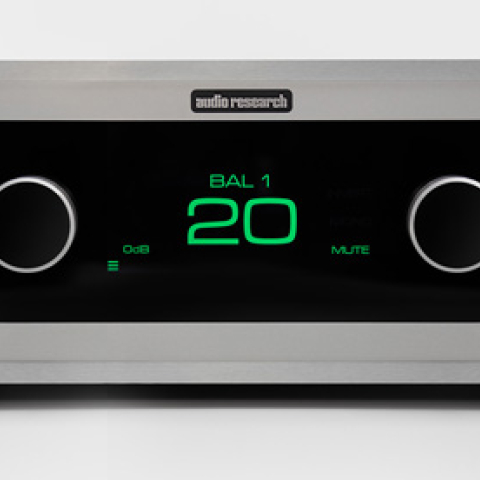
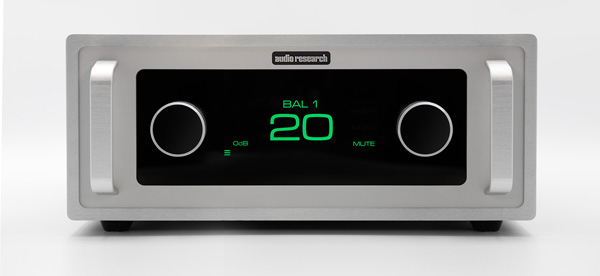
Shortly after I informed everyone that I would be taking time off to undergo surgery for recently detected mitral valve prolapse (footnote 1), I discovered that I would miss the debut of the new Reference 20 line-stage preamplifier ($48,000) from Audio Research (ARC). Given how much I loved the company's Reference 330M monoblock amplifiers, which will certainly receive my nomination for Amplification Product of the Year in the December issue, I emailed then-CEO Valerio Cora and VP of Sales Allan Haggar to express my regrets at being unable to cover the preamp's premiere.
Cora responded the very next day. "Whenever you're ready for a unit to enjoy, just let me know and I'll make it happen," he wrote. "A formal review isn't really the point—what matters to me is creating something that allows you to exhale, to drift a little, and to find a sense of calm and familiarity when it's needed most.
"I've always believed that music has a quiet way of holding us—of bringing comfort, clarity, and a kind of healing that words often can't reach. If I can play even a small part in that for you, it would mean a great deal to us."
Before I could respond, Haggar added, "We knew you were going through this, and that you had asked for some peace and quiet, but we didn't want you to feel left out."
Had this been a "normal" time in my life as a Stereophile reviewer, I would have declined the offer immediately. It is never appropriate for a reviewer for this publication to receive a unit "on spec" to see if it meets with their approval before accepting it for review. But this was not a normal time. I would be out of commission for months, and I was certain music would play a major role in my healing. If the REF20 preamp sounded nearly as good as the 330Ms, which I had recently installed, I knew I would be a happy camper. I replied, "This means I had better get better!!!!!! Even more to live for.
"I would need to receive and install by next Friday. It's tight. Once I install, I won't be able to switch cables back and forth. It will take a bit until I'm ready to walk up and down stairs that don't have a railing. Will it require much break-in time?"
Haggar responded, "Keep in mind that this is one of our initial 'release candidates.' The sonics are finalized, (footnote 2) but the cosmetics are not. It is not quite as fine-tuned as the production pieces will be. There is some break-in already on this unit, but it will benefit from some more. This preamp is a significant step up from the REF10. Even the new REF7, which is a step down from this, exceeds the performance of the 10; this REF20 exceeds it by even more!"
Thus assured, I said yes. In my music room, eight days before surgery, the REF20 preamp began to sing.
Another gift awaited. My wonderful surgeon, mitral valve specialist Dr. Craig Hampton, did not have to crack open my sternum. Instead, he entered my heart through my right side, between my ribs. I was walking from one intensive care ward to the other without assistance within three days.
I was released from the hospital a day earlier than expected. On my second day back home, I discovered I could easily descend the stairs to the detached music room and operate the system on my own. Decades of exercise had paid off. I was immensely thankful.
As my incisions mended and my repaired mitral valve passed oxygen-rich blood from my heart's left atrium to its left ventricle, my vitality returned, and Audio Research's REF20 and 330M supplied the soundtrack to my healing. Once I realized the magnitude of the gifts I had received, I could not imagine continuing to listen without sharing my joy via a review. After I got the okay from Jim Austin, Cora, and Haggar, I crossed my fingers that the many manufacturers and dealers whose reviews had been postponed would understand that, since I hoped to use the REF20 in future reviews, it was essential to move it to the front of the queue and describe its sound in a full review.
You may, if you wish, consider everything above a disclaimer. Stereophile reviews have never been about objectivity—not recently, and not in a narrow sense. Instead they are about the human experience of engaging with music, an experience with dimensions that should not be reined in. Sometimes human experiences collide. This review is one result. My recovered vitality is another. My gratitude is yet another. There can be no pretense of objectivity.
Thus I proceeded. Without taking notes. I didn't need to. All I needed to do was listen. Kinda. And therein lies the tale—one of many.

The Reference 20 tale
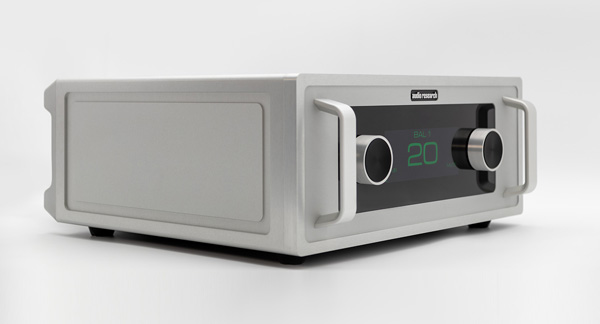
Kudos to Audio Research for a tastefully designed website that wastes no words making its points. Audio Research proclaims its Reference 20 line-stage preamplifier "the culmination of a singular objective: to advance beyond the established limits of preamplifier architecture and redefine what is possible in line-stage performance. Developed without constraint, it represents a complete rethinking of the line-stage preamplifier. ... The result is ... a new reference, not only for Audio Research, but for the category itself."
Mighty words, received with the same mixture of respect, curiosity, and skepticism I apply to all claims. Nonetheless, ARC's ensuing copy does convey several essential points of fact.
To address resonance and preserve low-level detail, Audio Research's traditional stamped chassis has been replaced with one made from layers of several metals to better disperse and control resonant energy. Critical circuits are mounted on custom suspended, mass-loaded boards. The REF20's power supply, "completely redesigned" with "next-generation film capacitors," is said to dramatically lower the noisefloor and produce "state of the art ... articulation and speed of dynamic onset."
There are other claims, of course. But rather than parrot them, I reference a Teams chat with Haggar and the preamp's chief designer, lead tube engineer Craig Myers. If I quote some of their words without noting who said what, it's because my transcription software capriciously assumed the identities of Fiordiligi and Dorabella, who, in Mozart's late opera, Così fan tutte, were incapable of discerning their male lovers' very different voices.
Either Myers or Haggar acknowledged the treble rolloff that John Atkinson and I detected in the discontinued REF6SE (now replaced by the REF7), and explained, "We wanted to resolve all of that and get that classic ARC sound back. Audio circuit topologies really haven't changed since the 1920s. Tubes still do the same things they've always done. But there are other areas where we can improve the sound while maintaining the classic Audio Research signature."
I asked what Audio Research had changed in its classic tube circuit. The answer: "Everything! Our team got together and asked, 'If we were to throw out the rulebook, yet retain the Audio Research sound and core circuit, what would we do to make a state-of-the-art preamplifier?'
"We looked at every single component, every piece of mechanical chassis. We evaluated and reevaluated and tested everything. Given that capacitor technology has advanced greatly in the last 10 years and prices have come down to attainable levels, we replaced our old electrolytic capacitors and completely redid our power supply technology. We have a lot more filtering than in previous designs, and the noisefloor on the B+ rail was dropped by almost two orders of magnitude."
The challenge ARC faced was that tubes are microphonic. If you tap on a tube or a piece of tube gear, you hear it through speakers. In our world of ever-evolving solid state, ARC had to address microphonics to up its game and compete with the best solid state.
"We worked with our US manufacturers to design and voice capacitors specifically for this circuit," Myers said. "To further reduce microphonics, we also worked with our hookup wire manufacturer to design new internal wire. Then, our mechanical engineering team created a multimetal chassis mix of aluminum and steel to spread out resonances. There's mass loading on the circuit boards, vibration mounting, RF shielding, and magnetic shielding. We've taken everything into account. Everything we've learned in the process will now trickle down to all new products moving forward, using the same in-house hand-soldering that we've used since 1970."

One, not two?
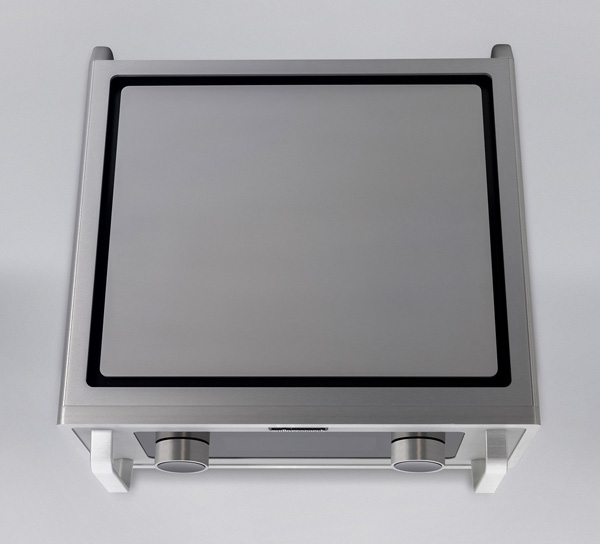
Audio Research enthusiasts may recall that the REF10 preamp needed two umbilicals. It had totally independent power supplies for the left and right channels. The REF20 uses a single supply but adds a filter between the two sides. In an all-out assault on the state of the preamp art, why not keep separate supplies? Don't separate supplies maintain superior separation? They do, but separate supplies have issues as well. "Separate supplies do have better separation," Myers said, "but they also lack tracking." The voltage in one channel could drift relative to the other, causing the channel balance to drift. "By adding a filter between left and right channels from a single supply, we isolate them to address the separation but also retain consistent voltage and transient response across both channels."
And what about chassis? The REF10 had two—a main chassis and a separate power supply—but the REF20 only has one. Why?
"We've just escalated our technological innovation," Haggar said. "The ceiling for solid state regulation efficacy has risen. The ceiling for single-chassis efficacy has risen. Our new power supply is almost 100 times quieter than its predecessors. We're getting more detail, blacker backgrounds, and more transients without adding an 8' chassis connector cable that's going to absorb noise from every cell phone and every Wi-Fi router in your building.
"ARC did initially have a prototype REF20 candidate with a double chassis, but it did not have the advanced multi-metal sandwich isolation platforms that the single-box REF20 has. The REF20 has a much more expensive box than the REF10, and the technology that went into it is greater than the technology that went into two lesser boxes. Price for performance has come down considerably. On paper, the REF20 may look like more money for less, but in the ear, it's a lot more for less money."
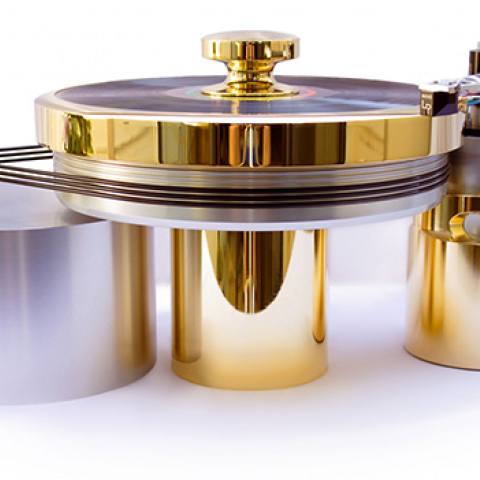
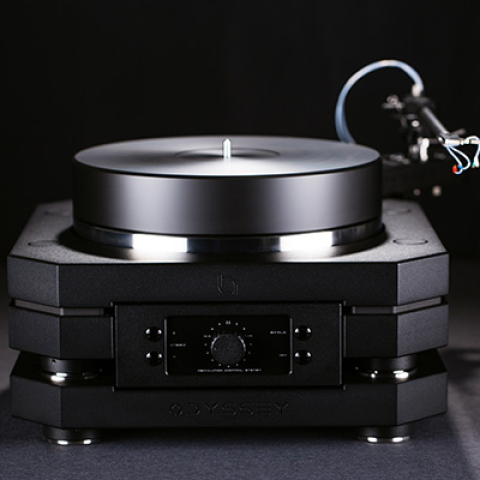
The inspiration for Audio Research's multi-metal-chassis solution lies in turntable plinth technology. Because turntables are very susceptible to vibration, the best plinths usually contain several materials, each with a different resonant peak. Because magnetic shielding plays such an important role in electrical design, and aluminum by itself isn't sufficient, ARC turned to steel.
"Putting those metals together was trial and error. Our engineering team worked with manufacturers, our own prototyping capabilities, and what was available. We utilized ARC tribal knowledge and tried a half-dozen different circuit board materials. At the end of the day, when you bolt a couple pounds of steel to a circuit board and isolate it from the main chassis, it doesn't matter what that circuit board is made of. It's dead quiet."
I asked Myers if, when he designed the REF20, he had a model ARC preamp sound he wanted to reproduce using more modern technology.
"Sound is an evolutionary design process," he replied. "We looked at constructive feedback on our forums, other forums, and in reviews and took everything into account. We also asked our service department, production crew, sales force, and dealers and integrators, 'If you could change something, what would you change?' We took their feedback and rolled everything into a flexible design. Besides coming up with a great-sounding preamp, we employed modular construction that is easier to assemble and service. We meet integrators' current requirements for what they want to see and how they want to use it.
"As a side gig, I used to run sound for live bands. When I design, I put myself back into that live space of old and listen for accurate reproduction. For example, I listen for the stick hitting the cymbal. Can I visualize the stick hitting the cymbal, or the decay in the guitar body? Can I hear when the vocalists move away from the microphone? That's what our old gear did, especially the REF5."
At conversation's end, I urged Myers and Haggar to say more about the sound they were after.
"The rolled-off sound of Audio Research over the previous 10 years may have been warmer, darker, and a little slow in the bass, but it had texture and was natural. The classic Audio Research sound, by contrast, is bold and dynamic and dimensional. It has authority.
"The REF7 had tons of resolution. You could hear very deep into the soundstage. What you didn't get as much with a REF7 as you get from a REF20 is the outer resolution—the fine detail way at the four outer corners of the rectangular soundstage—or the same authority. When the orchestra hits full force, the REF20 throws the hammer down and, when necessary, conveys music with far more hammerlike power than the REF7. That's the kind of quality we usually assign to big monoblock amps. Neither the 6 nor the 10 really had that."
Footnote 1: Only at my one-month post-surgery follow-up with my surgeon did I learn that the severity of my mitral valve prolapse, in which 60%–65% of my oxygen-rich blood leaked back into the left atrium, was classified as "heart failure." I'm so glad I didn't know that beforehand. No wonder I'd get so worn out covering events and audio shows.
Footnote 2: Mostly finalized. See "Essential listens, release-candidate conundrums" section that follows.