

Features
Although some who know me well may laugh at this, I'm a pretty simple fella. I don't need to preset volume levels for different material, name inputs after pets past and present, or change LCD display colors to match my décor, mood, socks, or gloves. Without a printed manual, and unaware that I could find said manual online, I was content adjusting the basics.
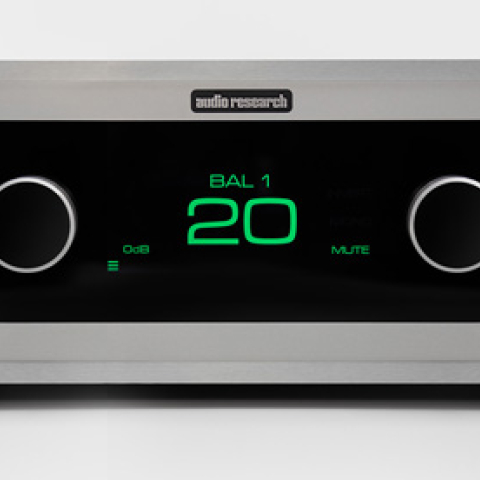
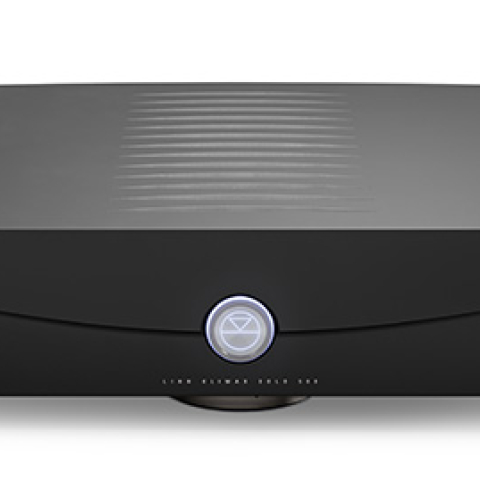
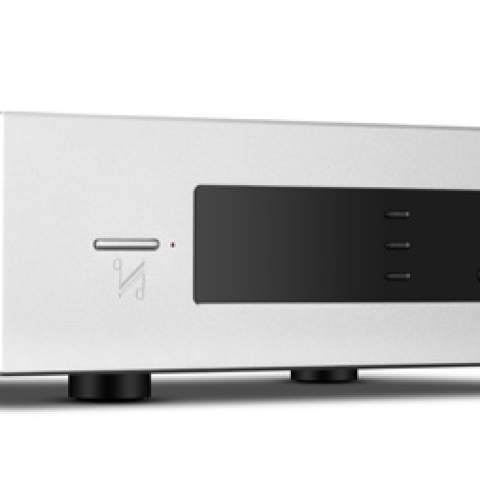
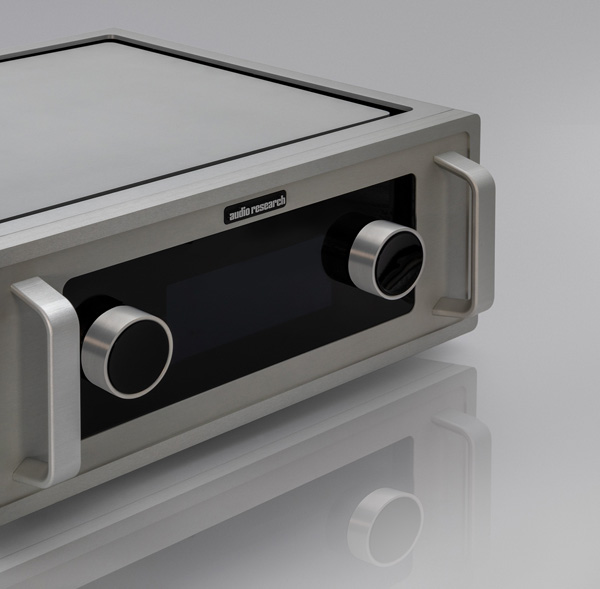
As you would expect, the two big knobs that flank the front-panel LCD control input selection and volume. An on/off button resides on the bottom of the chassis, directly below the display. These basic features and more can also be controlled from the sturdy and reliable remote control.
Most primary user choices, including input, volume, mute, phase (direct or inverted), balance, mono, and display brightness, are easily viewed on the display from far away; I listened from 11' and had no problem seeing. Via a small menu on the bottom left of the touchscreen, you can easily access other options including a choice of 10 display colors, naming and padding inputs, setting an input to processor bypass (available on every input), activating and adjusting auto-shutdown timing, and checking the firmware version and the number of hours on the current set of tubes.
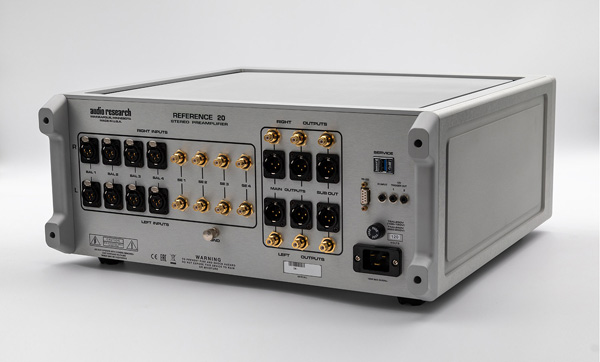
The rear-panel layout is intelligent, with large lettering to ensure that users remember that ARC places right inputs and outputs above left inputs and outputs. There are four pairs of XLR (balanced) and four pairs of RCA (single-ended) inputs. There are an astonishing six outputs: two sets each balanced and single-ended, and one subwoofer output balanced and single-ended. The 20A IEC connector is on the bottom right, away from everything else.
Apparently some REF6SE users complained that cheaper subwoofers loaded down the preamp's output tubes and changed the sound. So ARC added a separate, buffered "Sub Out" specifically for mid-fi consumer and studio subs with low-Z sub plate amplifiers. If you have a good subwoofer—my Wilson Lōkes have a high-enough 20k ohm input impedance—the second main outputs will deliver superior signal quality. "I would always use the second main out unless something sounded off," Myers said. So don't do as Serinus did and assume that "Sub Out" is the correct way to go.
The REF20 indicates its 90-second "power on" sequence with a blinking Mute indicator on the LCD. When warm-up is complete, you remain in mute—unless you press the mute button on the touchscreen during the warm-up sequence.

Essential listens, release-candidate conundrums
My first serious listens to the REF20 "release candidate" were extremely positive. I noted with joy how much richer, fuller, and more complete a midrange the REF20 delivered, and how much weightier and color-rich instruments and voices sounded, than with any preamp I'd tried since the far more expensive D'Agostino Relentless loaner ($165,000). It was as though I had moved forward in the concert hall, to a place where music sounded bigger and more colorful, nuanced, and complete. Not since the Relentless had I experienced such corporeal substance and range of colors from piano, double bass, amplified vocalists, dramatic soprano, even synthesized instrument or voice.
These improvements were not minor. Recordings I've played countless times had more impact; they touched me more. My appreciation, delight, and joy increased. I knew that many hours of discovery, rediscovery, and bliss lay ahead. Although the REF20 was sent out with no expectation, I also knew I had to review it. Because I was told that it needed more break-in, I ran music through it for another 24 or 48 hours. But when I returned for my next listen, something sounded off. Things sounded even worse the following day. After several email and text exchanges with Haggar and Editor Jim Austin, I called Haggar to say that I could not believe that I was hearing what Audio Research intended me to hear, especially since I knew what a magnificent job ARC had done with the 330M monoblocks.
Thus ensued many calls, emails, texts, and WhatsApp exchanges. New tubes were sent, which required more break-in. At Haggar's request, I removed the three Wilson Audio Pedestals I had placed under the REF20, listened, and then listened with them repositioned. Beyond question, the Pedestals delivered more natural-sounding air and three-dimensional staging. They were not the problem. Eventually, we identified two reasons for the sonic about-face:
1) During break-in, Audio Research gear goes through wide sonic swings until it stabilizes. It can sound fantastic one day, less so the next. Until the break-in cycle of approximately 200 hours is complete, all bets are off.
2) Shortly after I started listening, I had switched the output voltage on the dCS Varèse music system from the 6V some preamps need to the 2V said to work best with most preamps. The REF20 vastly prefers 6V. Once break-in was complete and I switched back to the Varèse's 6V output, everything sounded fine. More than fine. Far more than fine.
Nonetheless, Haggar wanted to make sure all was okay by sending a second, completely broken-in production model. His plan, which took a while to schedule, was to visit, listen thoroughly to the preproduction release candidate I'd auditioned, install the production model, and then listen again to see if it sounded better.
It did. Colors were even more saturated and vivid, with more vitality and presence. Why? Why would a "release candidate" with the same electronics, boards, and layout as the final production version not sound as good?
Audio Research's release candidates are manufactured in the last stage between prototype and final production model, Haggar told me. "Their parts and internal construction are the same, but hand soldering is done by the engineering team, not the production workers.
"The production workers' hand soldering is superior," Haggar said. "It's part of our secret sauce." (footnote 3)
The final REF20 sound
More than 18 years ago, I attended an intimate Sunday afternoon recital by countertenor David Daniels, accompanied by Martin Katz, in UC Berkeley's Hertz Hall. Even though it was mid-January, it was like summer inside. Daniels's voice seemed to grow warmer and more beautiful with every selection—he was in peak form—and everyone in the audience began to smile. The feeling was infectious. When Daniels smiled at our appreciation, we glowed in return. It was a mini lovefest.


One of my favorite Daniels recordings is of Beethoven's great love song "Adelaide," which he recorded with Katz in 2000 for the Virgin Classics album Serenade. But as many times as I've played the CD (and, of late, the 16/44.1 Qobuz stream), I've lamented that it never sounded remotely as beautiful as what I heard in Hertz Hall.
Until now. Through the Audio Research REF20/330M combo, Daniels's voice sounded as if kissed by the gods, as fresh as the dew on spring flowers. As he sang Beethoven's opening lines with consummate artistry—few non-French singers on record have connected words and notes so seamlessly and caressed vowels and consonants so immaculately—I rejoiced that for the first time I could re-experience, through my system, the beauty that warmed my heart on January 13, 2008. I was so moved by what I heard that when my husband David and I hosted a potluck a few weeks later, I urged two classical music–loving attendees to visit the music room and experience the recording. They were in awe.
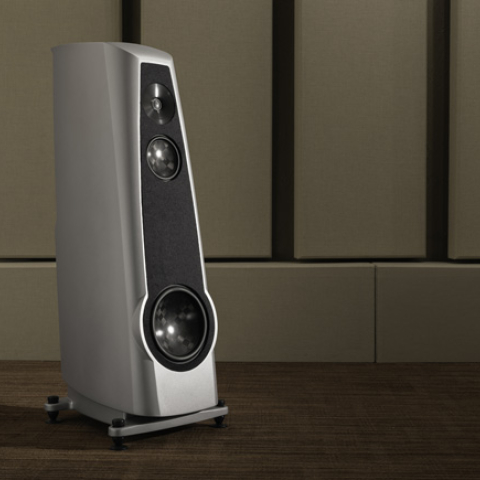
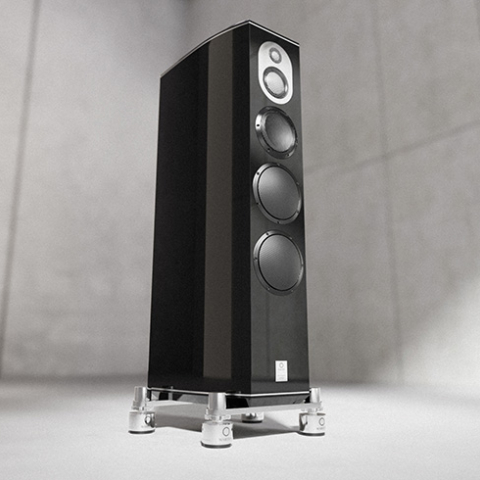
Then one of them fixated on the Wilson Alexia V/Lōke subwoofer combination. He wanted to hear what my subwoofers would do with Bach organ music. I explained that he would not hear the subwoofers per se—Loke subs are designed solely to reinforce the bass that the main speakers produce—and searched for a hi-rez recording of Bach's Toccata and Fugue in D minor (you know, the one everyone plays). I found a file of Erling With Aasgård (footnote 4) playing the 1741 Wagner organ in Nidaros Cathedral in Trondheim, Norway (24/192 FLAC, Nordic Sound/Qobuz). I put my friend in the sweet spot and slowly cranked the volume.
It sounded fabulous. True, the Alexia V can't deliver the wall-shaking bass that Jim Austin experienced from Wilson's XVX + Commander subs at High End Vienna (footnote 5), but the impressive low bass it delivered was perfectly in proportion with everything above it. In the loudest and most complex passages, the REF20 did the opposite of flinch: It presented this challenging, full-range, multi-octave tour de force with ease and absolute control. It also maintained tonal beauty and an unrestricted soundstage during the strongest of triple fortes. Organist Aasgård experienced a few awkward moments pulling stops, changing registers, and simultaneously playing low tones with the foot pedals. The REF20 captured all of it, presenting everything with aplomb and no compression or strain. When the music ended, my friend was in tears.
Cue ahead 12 days to visits from two candidates for County Commissioner that I was interviewing for my first local newspaper column postsurgery (footnote 6). After each interview, I asked, "What kind of music do you listen to?" Both presented opportunities to audition music not usually on my playlist. Candidate #1: Phish doing "Leaves" from the 2020 album Sigma Oasis (24/96 FLAC, JEMP/Qobuz) and "Pillow Jets" from 2024's Evolve (24/96 FLAC, JEMP/Qobuz). Verdict: really lovely music, good energy, wonderful sound. Then we listened to one of my faves, Jodie Devos's priceless, deeply touching take on Freddie Mercury's "You Take My Breath Away," from And Love Said (24/96 WAV download, Alpha). Once the track began, I realized it sounded more pristine, beautiful, and magical than ever.
Candidate #2: After a request for something by Pink Floyd, I found on my Nazaré server a DSD128 remaster of "Time," from an unknown source. Forget about telling this candidate to remain in the sweet spot. First she was sitting on the floor, bobbing her head. Next, after I managed to keep her on the couch for maybe 60 seconds, with ears in proper tweeter alignment, she urged me to turn up the volume to levels that left my ears burning. I marveled that I was not in pain. She rose and began dancing with eyes closed and tears running down her cheeks. She was the second guest within two weeks to tear up from the beauty and emotion that the Audio Research Reference 20 preamp, in conjunction with the other superb equipment, delivered without breaking a sweat.


In an "I gotta stop blissing out long enough to take notes" listening session with my dear friend Scott Campbell, we began with one of his favorites, the title track from the Modern Jazz Quartet's Pyramid (LP Version) (16/44.1 FLAC, Atlantic/Qobuz). The sound was arrestingly beautiful: warm, clear, and silent. On Ike Quebec's "Blues for Charlie" from his own Blue & Sentimental, remastered in 2007 as part of the Rudy Van Gelder Edition (24/192 FLAC, Blue Note/Qobuz), I enthused at the beauty and clarity of the sound, the color of the guitar, and the strong and fully controlled bass.
The first big test, from my perspective, was Lutosławski's Cello Concerto, performed by Jean-Guihen Queyras and the Luxembourg Philharmonic under Gustavo Gimeno, from Lutosł'awski: Concertos for Cello | for Orchestra • Bloch: Schelomo (24/192 WAV download, Harmonia Mundi). As much as I'm accustomed to silent backgrounds, the pristine nature of the REF20's silence brought the music's beauty to the fore. When the cello played solo, the REF20 (and the rest of the system) captured every dynamic nuance perfectly. It even nailed the resonant envelope that surrounded Queyras's 1727 Guarneri cello and the complexity of the unique wood resonance that makes his sound so special. "You can hear into the cello," I wrote. Every color was highlighted and unique, every barrier between me and the music removed. Sensational sound, absolutely controlled and flowing like water.
Just as mesmerizing was Richard Strauss's huge Alpine Symphony (Eine Alpensinfonie) from a recording by Strauss master Rudolf Kempe and the Munich Philharmonic (24/96 WAV download, MPHIL Recordings). Interpretively far superior to Edward Gardner's new, let-the-music-speak-for-itself recording with the London Philharmonic Orchestra (24/96 WAV download, LPO), Kempe's version filled a huge soundstage, every instrument thrillingly pinpointed and unique in color and presence. The thunderstorm was fabulous. I wished for better dynamics from the remastered analog recording, originally captured on tape in Herkulessaal der Residenz, Munich, on June 16, 1971, but I could only marvel at the interpretive and sonic magnificence I heard.


In summation
Second to none when it comes to silent backgrounds, clarity, and color, the REF20 portrays music with beauty and grace. Even if beauty is subjective and unquantifiable, it is something we humans can recognize in our core. When we take it in without resistance, it can take our breath away, open our hearts, and move us to tears.
The beauty with which the REF20 presents voices, instruments, and all genres of music is in my experience unique. Yes, it possesses the special "glow" of tubes, but it's not the tubes you hear. It's the music that glows, from within.
Is the Audio Research Reference 20 a better line stage than this preamp or that preamp? What I know for certain is that this engineering marvel earns my highest possible recommendation and my nomination for preamplifier of the year. I love how it sounds.
Footnote 3: After some unfortunate product failures in the 1980s where the review sample had been hand-assembled by the designers, I used to insist that review samples were taken from the production line for this very reason!—John Atkinson
Footnote 4: "With" is his middle name. I looked it up. Twice.—Jim Austin
Footnote 6: See the Industry Update section in the August 2026 issue of Stereophile. As I wrote in that piece, I was seated in the far back of a large space. If I'd really paid attention, I would have been able to tell that I was listening to XVXs and not the new Autobiographies, but I was busy listening, not looking, and I got it wrong in that article. This is also worth mentioning, because it's relevant to Jason's point, that during the session I heard in Vienna, the bass was so over the top that it shook the whole room, including the temporary risers we all sat on. Impressive as it was, it was not musical.—Jim Austin
Footnote 6: See ptleader.com.