I sometimes lament how much technological know-how is required for a consumer to successfully navigate the world of high end audio. Why do we have to wade through all this engineering mumbo jumbo just to enjoy great sound? I consider myself technically curious and at times even adept, but I have mostly resisted deep diving into design theory for hi-fi components. I've instead preferred to listen to music in the comfort of my orchard of unknowing, unburdened by knowledge of how the sausage is made.
Despite my best efforts to remain oblivious, I have inevitably picked up some knowledge along the way. (It takes a real Teflon brain to read Stereophile and not learn.) Recently, I've had to actively relinquish some of my cherished ignorance—poor me—to ensure I tell the readers the truth. But an area where I have managed to preserve my technical illiteracy is grounding. It's always seemed too prone to voodoo, but the arrival of the Soulnote A-3 Core ($19,490) cornered me and gave me no choice but to fill in my blissful blanks. I'm now about to drag you down with me.
Ground from the ground up
Voltage is always relative; it's defined that way. Ground is commonly what it's relative to, the reference point against which voltages are measured. As such, ground is often specified as 0V, even when it's higher than some other voltage. It's not—hardly ever—partly because the "ground" terminal connects to actual "earth" ground via conductors, and those conductors necessarily have resistance and inductance. They also carry current, so: QED.
An audio amplifier needs to get a lot of very small voltages very right, so a stable, uncontaminated ground is crucial. But in practice, ground is never exactly the same (the same 0V, as defined) everywhere at once. Ground can be, but doesn't have to be, the voltage of the literal ground. In many circuits, ground is connected via the power cable, wires, and a thick metal rod to actual soil. This is known as earth ground, and it's more for safety reasons than as a voltage reference.
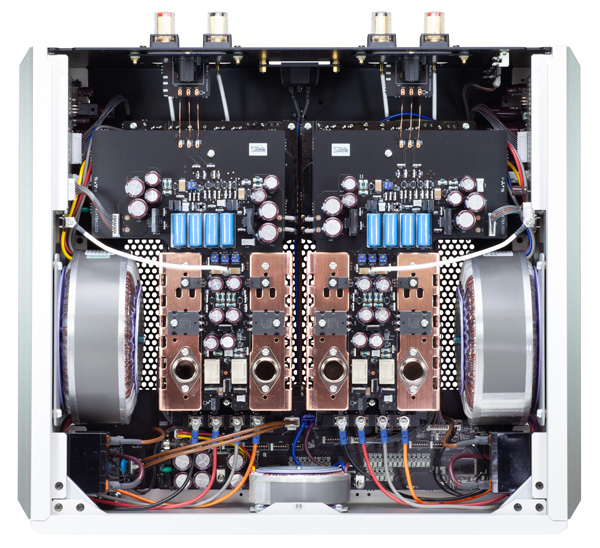
The Soulnote A-3 Core doesn't connect its actual amplification circuit to the planet—to earth. Its circuit is designed with a floating ground, which means it's isolated from actual earth ground. And here's the real kicker: Ground, or GND as it's referred to in a schematic, is not even connected to the chassis, which is, as required, connected to earth ground. In other words, GND is not connected to ground. It's rare to do this in a power amplifier, with its large currents, because grounding is a common way of ensuring stability and suppressing noise. If you float the ground, you've got to find other ways.
 But why?
Soulnote's Rube Goldberg approach to grounding has affected practically every aspect of the design. For one, transient currents through inductive components, which store energy in magnetic fields, like coils, can cause voltage spikes on the ground reference, so Soulnote eliminates all things inductive. Additionally, the current from one channel flowing through a shared ground impedance creates a voltage that appears in series with the other circuit's reference; this is known as common impedance coupling, and it's a source of ground-related distortion. Soulnote uses optocouplers to isolate the channels galvanically, meaning there is no physical path for ground between channels to corrupt the ground reference for the other one. Finally, negative feedback, which exists in some form in most amplifiers as a way to reduce distortion, interacts with the ground in ways that are sometimes complex. So, Soulnote uses no negative feedback in the A-3 Core.
Soulnote's claim is that all this yields better three-dimensionality and spaciousness in the sound. My still-rudimentary-at-best understanding of grounding doesn't let me judge whether their theories are sound, but the result is exactly what they claim: Music's depth and spaciousness were immediately so dumbfoundingly obvious that I felt I had to tell you about this aspect of the design.
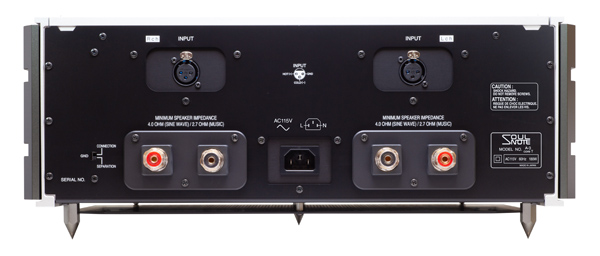
A design like this is presumably more susceptible to hum or other issues. Should that happen, the back of the amplifier has a switch that lets you defeat the nongrounding design and ground the two channels to the chassis. When activated, the power LED switches from blue to red, and the manual warns that this deteriorates sound quality. I spent very little time in this mode: A brief test sounded like the soundstage flattened, and you'll soon learn why that's an unusually big deal with this amplifier. I switched back and stayed in the recommended, sonically superior ungrounded mode throughout the review. Even with 92dB-sensitivity speakers in my room with ambient noise below 20dBA and the volume turned up high, I perceived no noise in ungrounded mode.
 But wait, there's more
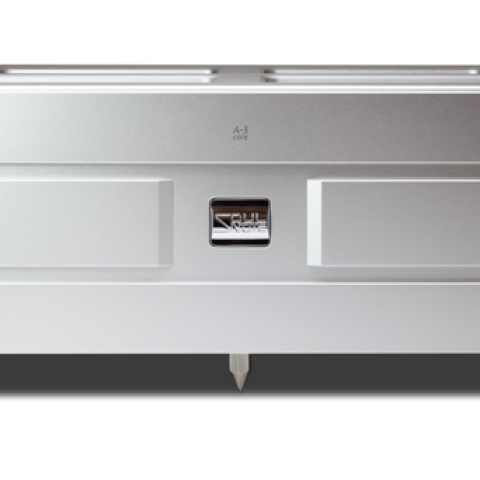
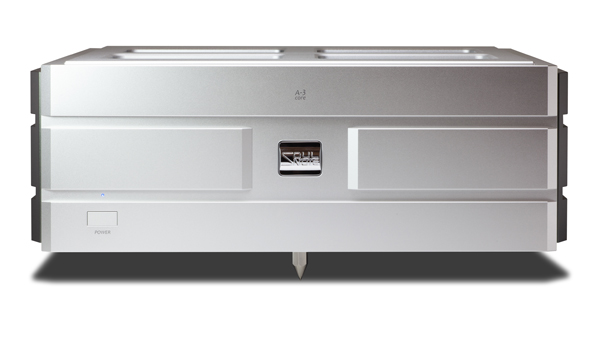
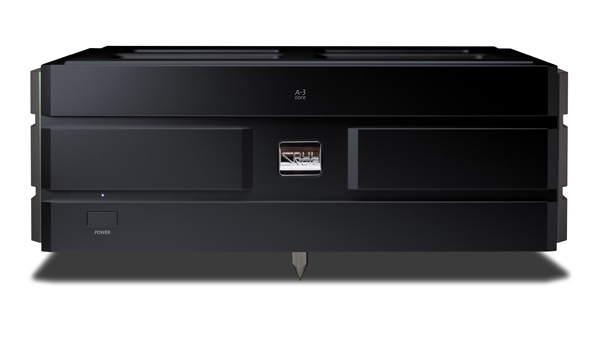
Soulnote products, including the A-3 Core, aren't visually extravagant or outlandish. I have a hunch that this is by design—that their utilitarian look is chosen as a Trojan horse for the exotic innards and their sonic effects. The uncustomary design choices don't end with the grounding scheme. One startling physical aspect of the amplifier is that everything is loose; it rattles when you touch it. The top lid, the speaker terminals, the XLR sockets, and the AC inlet are all loose. For some this might be genuinely difficult to come to terms with: Shouldn't solid state power amplifiers be built like ballistic warheads? Once the amp is set up, all this wiggly looseness is unnoticeable—but why would Soulnote deliberately do this? It has to do with another kind of grounding, the mechanical kind. Hideki Kato, Soulnote's chief designer, noted that his designs sounded better on the test bench with the lid off and wanted to preserve that sound. Hence the top lid's generous ventilation openings and how it rests on three spikes ( but remains captive—you can't simply lift it off ). For the back panel connections, his justification is that the jiggliness minimizes resonances transferred to and from the chassis via the connected cables (footnote 1). This continues internally, where vibration propagation has been fought with similar techniques (footnote 2).
You can choose to dismiss this as engineering homeopathy, and I might have leaned in that direction if not for the fact that the darn thing sounds so deeply and intoxicatingly right. And curiously, these esoteric design choices sit right next to things that seem—as far as I can tell—to be state-of-the-art best practices from a pure engineering standpoint. Kato clearly isn't afraid to go his own path when he thinks it's appropriate, but he's no pathological contrarian.
The manual and back plate state a very specific 2.7-ohm minimum for speakers connected to this amp. I don't have measurements for my Focal Scala Utopias, but their bigger brother, the Focal Maestro Utopia III, dipped to 1.7 ohms in John Atkinson's measurements. At no point did the A-3 Core seem to buckle with my Scalas, or any other speakers I had available, despite my best efforts.
Sushi can only be evaluated by eating it
Stereophile reviewers don't see the product's measurements until after we've handed in our reviews. This minimizes bias in that we don't listen for things we know should or shouldn't be there. In that spirit, I opted to not read Kato's elaborate dissertation on Soulnote's philosophy (footnote 3) until the A-3 Core had been in my system for several weeks and my understanding of its sound had begun to settle. Anyone with a serious interest in Soulnote's products should take the time to read this; it takes less than an hour. But seeing as you're already busy reading this review, let me share some nuggets.
The subhead above, quoted from Kato's document, is one of the more sublime jabs at the measurement-first crowd that I have encountered. Leaning into that analogy, it takes only a single bite of this amplifier to realize that it delivers flavor with a degree of nuance and richness that is extraordinary. There's a rightness to the sound that's immediately evident in my ears, but over time it accumulates in my emotional response to music. This is a machine for the heart and, yes, the tastebuds.
Here's another snippet I pasted into my notes: "Soulnote believes dynamic performance keeping accuracy of the original waveform on the time axis as the most important for music playback, which is, however, still unmeasurable by any of the conventional methods." Reading this just days after seeing Jim Austin's As We See It column titled "Time Is On My Side" felt serendipitous (footnote 4). Perhaps me noticing this is merely a Baader-Meinhof phenomenon at play, but maybe there's genuinely an industry-wide awakening to the importance of the time domain unfurling over the past few years.
One last delicious wisdom praline from this document: "There is no seasoning to restore freshness." Did I mention the amplifier has no negative feedback?
 Scale and proportion
If we reviewers described all sonic characteristics on a uniform scale, you'd think everything sounds the same, since the differences mostly lie in the margins we'd never pay much heed to. Instead, we use similes and metaphors as a magnifying glass to call attention to the often minuscule and nuanced differences we perceive. If the reader, in ingesting and interpreting the review, applies a compensatory offset to this—an interpretative RIAA curve—the magnitude of differences is restored to an appropriate scale in the grand scheme of things. I tell you this because I'm about to describe a trait of this amplifier that didn't require any magnification in the first place and should not be abated by perception-correction curves. Imagine you're in an art exhibit of naturalist paintings, admiring in each one the captured light and textures, the interplay of colors, the masterful compositions and perspectives, and the truthful renditions of the scenes. Now imagine one of the paintings not being a flat surface but a window, your eyes stereoscopically sensing the very real depth of the scene. This is, without much exaggeration, how I felt when I first connected the A-3 Core to my system. Make with the music
I want to go back to the issue of time-domain performance for a moment. My thinking is that this has to do with phase and related attributes, not necessarily the timing of musical events. Because how could those drift apart due to an amplifier's design? Either way, I wasn't sure I was hearing anything special in the amplifier's temporal behavior until I played Fabiano do Nascimento & Vittor Santos Orquestra's Vila (24/44.1 FLAC, Far Out Recordings/Tidal). This playful guitar and orchestra bossa fusion is bathed in all the amplifier's luxurious textures and in all its depth and spaciousness, but the shining highlight is the fantastic sense of rhythmic precision, lending the music both a flow and an intent that lets me feel it in my marrow the way other amps have failed to do. "Precision" might invoke associations to something mechanical or inflexible, but the opposite is true: There's a degree of relaxation and serenity that only emerges once microtiming is this right. This was sufficiently epiphanous that I've revisited Alex Halberstadt's Brilliant Corners columns, trawling for his recurring mentions of Brazilian music. A new world has opened for me.
Other worlds awaited. One of Roon's many delightful features is "listen later," a playlist I can add albums to even when I'm not at home, through Roon ARC. (No, Roon isn't sponsoring me. Unfortunately.) I've somehow managed to condition the algorithms puppeteering my social media feeds to the point where I can't open Instagram without being shown something I feel I need to hear. I'm sure the furnaces of enshittification will devour this little joy soon enough, but for now, I'm thriving.
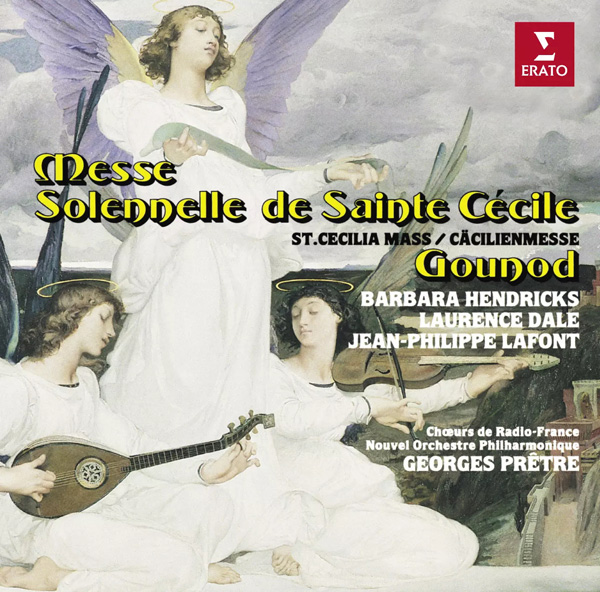 Here's where I'm going with this anecdote: I wish "listen later" would let me add notes, because I have no recollection where any recommendations come from, precluding me from giving credit to whoever led me to Barbara Hendricks, Laurence Dale, Jean-Philippe Lafont, and Georges Prêtre performing Gounod: Messe Solennelle de Sainte Cécile (16/44.1 FLAC, Warner Classics/Tidal). I've always considered myself allergic to opera; every reluctant attempt to push myself over the threshold has ended in rejection, regret, and an I'll-never-do-this-again aural hangover. But the drama, subtlety, dimensionality, and above all textural smoothness of this recording has at last made me see the light. The grainlessness of the sound here, which comes at no expense of sonic resolution or precision, was mindboggling. Soulnote's website includes the statement, "It realizes blur-free music reproduction from ultra-low to super-high frequencies." Indeed it does!
The phenomenal conveyance of texture and space led me to listen to plenty of experimental soundscapes far outside of conventional music. I could listen to the wind played back by this amplifier and find it revelatory. As one example of many, Yellow Swans' Going Places (16/44.1 FLAC, Type/Tidal) felt so potent that it ought to require a prescription; rattling and hiss and resonance and distortion enveloped me like a psychoactive storm. This is mostly digestible by drone standards, but it gradually builds to a dense wall of infernal noise in the second track before ebbing back again. If you're feeling adventurous, give it a go and see how far your tolerance allows you to go. With the A-3 Core, when I reached the very end, where it peaks into white-hot noise a second time, I felt sad that it was over.
I'm not alone in feeling that piano playback can tell you a lot about a component, and I've played probably 40 albums of piano music over the course of this review. They all sounded as good as or better than I've ever heard them sound. Jon Balke's Skrifum (24/96 FLAC, ECM/Qobuz) gets to be the single named example: It's sparse and restrained, but each note is so rich, right, and rewarding that it left me with the same sense of physical relaxation and contentment you get after a sublime full-body massage.
Unsurprisingly, ambient music thrived and blossomed through this amplifier's rendition of space and texture. I have literally hundreds of albums by ambient overlord Steve Roach. A recent title with Serena Gabriel, Entering Elysium (24/96 FLAC, Projekt/download), gets to represent all the sonic incense I bathed my consciousness in with the A-3 Core. I always listen to Steve Roach albums from beginning to end, but I'll call out the penultimate "First Rays" in particular. It's the sonic equivalent of letting your hand glide through black water off the side of a canoe on a still summer evening. This amplifier made it sound so rich, so substantial, with such inertia and heft, yet so lush and vast and liquid, that it was frankly hallucinatory.
Here's where I'm going with this anecdote: I wish "listen later" would let me add notes, because I have no recollection where any recommendations come from, precluding me from giving credit to whoever led me to Barbara Hendricks, Laurence Dale, Jean-Philippe Lafont, and Georges Prêtre performing Gounod: Messe Solennelle de Sainte Cécile (16/44.1 FLAC, Warner Classics/Tidal). I've always considered myself allergic to opera; every reluctant attempt to push myself over the threshold has ended in rejection, regret, and an I'll-never-do-this-again aural hangover. But the drama, subtlety, dimensionality, and above all textural smoothness of this recording has at last made me see the light. The grainlessness of the sound here, which comes at no expense of sonic resolution or precision, was mindboggling. Soulnote's website includes the statement, "It realizes blur-free music reproduction from ultra-low to super-high frequencies." Indeed it does!
The phenomenal conveyance of texture and space led me to listen to plenty of experimental soundscapes far outside of conventional music. I could listen to the wind played back by this amplifier and find it revelatory. As one example of many, Yellow Swans' Going Places (16/44.1 FLAC, Type/Tidal) felt so potent that it ought to require a prescription; rattling and hiss and resonance and distortion enveloped me like a psychoactive storm. This is mostly digestible by drone standards, but it gradually builds to a dense wall of infernal noise in the second track before ebbing back again. If you're feeling adventurous, give it a go and see how far your tolerance allows you to go. With the A-3 Core, when I reached the very end, where it peaks into white-hot noise a second time, I felt sad that it was over.
I'm not alone in feeling that piano playback can tell you a lot about a component, and I've played probably 40 albums of piano music over the course of this review. They all sounded as good as or better than I've ever heard them sound. Jon Balke's Skrifum (24/96 FLAC, ECM/Qobuz) gets to be the single named example: It's sparse and restrained, but each note is so rich, right, and rewarding that it left me with the same sense of physical relaxation and contentment you get after a sublime full-body massage.
Unsurprisingly, ambient music thrived and blossomed through this amplifier's rendition of space and texture. I have literally hundreds of albums by ambient overlord Steve Roach. A recent title with Serena Gabriel, Entering Elysium (24/96 FLAC, Projekt/download), gets to represent all the sonic incense I bathed my consciousness in with the A-3 Core. I always listen to Steve Roach albums from beginning to end, but I'll call out the penultimate "First Rays" in particular. It's the sonic equivalent of letting your hand glide through black water off the side of a canoe on a still summer evening. This amplifier made it sound so rich, so substantial, with such inertia and heft, yet so lush and vast and liquid, that it was frankly hallucinatory.
 Staying in the soft and subtle a while longer, I played Deaf Center's recent Through Time (24/48 FLAC, Sonic Pieces/Qobuz). Few can capture the delicate nuances of introspective Nordic melancholy like this Norwegian duo. This album at times both gave me goosebumps and made me hold my breath. Despite Swedish spring being in full bloom outside my windows, cherry blossoms and all, I felt enveloped in November dusk. It takes getting a lot of things right to achieve such convincing emotional transportation.
A matter of taste
Staying in the soft and subtle a while longer, I played Deaf Center's recent Through Time (24/48 FLAC, Sonic Pieces/Qobuz). Few can capture the delicate nuances of introspective Nordic melancholy like this Norwegian duo. This album at times both gave me goosebumps and made me hold my breath. Despite Swedish spring being in full bloom outside my windows, cherry blossoms and all, I felt enveloped in November dusk. It takes getting a lot of things right to achieve such convincing emotional transportation.
A matter of taste
A core aspect of this observational part of the review is to capture things that the objective measurements can't convey. In that spirit, I'll mention my synesthesia, where certain sensory stimuli bleed into other, unrelated cognitive pathways. This is mostly more of a handicap than a superpower, but for sound there's an aspect I find useful: I experience distinct tastes when midrange is especially liquid and—well—savory. It appears quite rarely and might depend on set and setting as much as sound alone, but the Deaf Center album triggered it. I tried it with other amps, and the effect was there, too, but with the Soulnote I was practically salivating. Now, this is a highly individual neurological bug, a leak across my sensorial lanes, and so of dubious value for the reader. But having lived with this my whole life, I trust it as a reliable indicator of sensorial pleasure, and this was as strong as I've ever experienced it. Can it do no wrong?
Is the A-3 Core all space and texture, then? Not at all: Dynamic punch and transient spikes are as snappy and incisive as I could want—for example, on Heilung's "Svanrand" from Futha (FLAC CD rip, Season of Mist SOM511). Does the vast, voluminous stereo image sacrifice spatial precision? Nope; it renders the soundstage like a Pythagorean proof rather than an illusory suggestion. But nothing is perfect, and despite my ecstatic praise, this goes for the A-3 Core too. Compared to the AGD Forte GaN FET class-D stereo power amplifier (review forthcoming), which was the primary point of comparison throughout this review, the Soulnote had less bass heft and extension. This quantitative difference disappears, and bass gets even more nuance, when the A-3 Core is paired with the Soulnote P-3 preamplifier (review forthcoming), but that's an additional $26,400. Perhaps you can achieve this for less, but I was surprised at how huge the improvement was with the P-3 compared to feeding the amplifier over directly from my Grimm MU2.
This power amplifier also likes to be turned on for a long time. If it's been off for a few days, it seems to take a full 24 hours to fully unveil the otherworldly magic I've tried to channel into words above. Not that it sounds bad cold, but it takes a long time to reach its extraordinary peak, so leave it turned on.
Conclusion
I didn't have to leave my orchard of unknowing to appreciate the sound of the A-3 Core. But venturing into the weeds taught me not just about grounding but also to be more open to designs that may at first seem arcane. Many of us have encountered systems that sound great but seem neurotically and needlessly over-engineered. Cable lifters made of exotic woods, supposedly resonance-damping crystal charms placed everywhere, wildly expensive power cables, and millimeter-precision placement of not just speakers but electronics, too. Individually, it's easy to dismiss these things as superstition. But perhaps sometimes, when even seemingly inconsequential details are obsessed over in the exact right way, the cumulative effect is something you can't get to otherwise. My younger self scoffed at this, but experience has eroded my dogmatic certainty. My time with this amplifier provided another nudge in this direction. I can't deny that Kato and Soulnote's obsession with every detail has resulted in a product that sounds astounding, regardless of whether I can argue in defense of each of their design choices. Perhaps I had subconsciously thought of amplifiers as more utilitarian than I should, before this box arrived. The visual appearance of the A-3 Core didn't change my mind, but once music flowed, that box bestowed the sound with an emotional potency I thought was reserved for sources, speakers, and live music. Remarkably, it did this while feeling supremely accurate, controlled, and unadorned. Maybe measurements will turn up technical flaws, find that it has distortions that could explain its sense of vast spatiality and tonal richness. I don't care—I want this sound forever, numbers be damned.
Footnote 1: Which introduces a possible reason—a nonelectrical reason—that different speaker cables may sound different from one another.—Jim Austin Footnote 2: This is somewhat reminiscent of an Art Dudley observation that led to maybe the best subhead in hi-fi history: "The Sirens of Tighten." Art wrote about how torquing down the screws too hard made his Shindo amp and preamp sound worse.—Jim Austin Footnote 3: You can read all about Kato-san's philosophy at soulnote.link/fileadmin/Downloads/SOULNOTE_Philosophy_en_ver2.pdf.
Footnote 4: If you don't know the concept—I didn't—this is a form of cognitive bias in which you suddenly notice a concept everywhere. Your brain is tricked into thinking its frequency has increased when in fact it's exactly the same.
Voltage is always relative; it's defined that way. Ground is commonly what it's relative to, the reference point against which voltages are measured. As such, ground is often specified as 0V, even when it's higher than some other voltage. It's not—hardly ever—partly because the "ground" terminal connects to actual "earth" ground via conductors, and those conductors necessarily have resistance and inductance. They also carry current, so: QED.
But why?Soulnote's Rube Goldberg approach to grounding has affected practically every aspect of the design. For one, transient currents through inductive components, which store energy in magnetic fields, like coils, can cause voltage spikes on the ground reference, so Soulnote eliminates all things inductive. Additionally, the current from one channel flowing through a shared ground impedance creates a voltage that appears in series with the other circuit's reference; this is known as common impedance coupling, and it's a source of ground-related distortion. Soulnote uses optocouplers to isolate the channels galvanically, meaning there is no physical path for ground between channels to corrupt the ground reference for the other one. Finally, negative feedback, which exists in some form in most amplifiers as a way to reduce distortion, interacts with the ground in ways that are sometimes complex. So, Soulnote uses no negative feedback in the A-3 Core.
But wait, there's moreSoulnote products, including the A-3 Core, aren't visually extravagant or outlandish. I have a hunch that this is by design—that their utilitarian look is chosen as a Trojan horse for the exotic innards and their sonic effects. The uncustomary design choices don't end with the grounding scheme. One startling physical aspect of the amplifier is that everything is loose; it rattles when you touch it. The top lid, the speaker terminals, the XLR sockets, and the AC inlet are all loose. For some this might be genuinely difficult to come to terms with: Shouldn't solid state power amplifiers be built like ballistic warheads? Once the amp is set up, all this wiggly looseness is unnoticeable—but why would Soulnote deliberately do this? It has to do with another kind of grounding, the mechanical kind. Hideki Kato, Soulnote's chief designer, noted that his designs sounded better on the test bench with the lid off and wanted to preserve that sound. Hence the top lid's generous ventilation openings and how it rests on three spikes ( but remains captive—you can't simply lift it off ). For the back panel connections, his justification is that the jiggliness minimizes resonances transferred to and from the chassis via the connected cables (footnote 1). This continues internally, where vibration propagation has been fought with similar techniques (footnote 2).
Stereophile reviewers don't see the product's measurements until after we've handed in our reviews. This minimizes bias in that we don't listen for things we know should or shouldn't be there. In that spirit, I opted to not read Kato's elaborate dissertation on Soulnote's philosophy (footnote 3) until the A-3 Core had been in my system for several weeks and my understanding of its sound had begun to settle. Anyone with a serious interest in Soulnote's products should take the time to read this; it takes less than an hour. But seeing as you're already busy reading this review, let me share some nuggets.
Scale and proportionIf we reviewers described all sonic characteristics on a uniform scale, you'd think everything sounds the same, since the differences mostly lie in the margins we'd never pay much heed to. Instead, we use similes and metaphors as a magnifying glass to call attention to the often minuscule and nuanced differences we perceive. If the reader, in ingesting and interpreting the review, applies a compensatory offset to this—an interpretative RIAA curve—the magnitude of differences is restored to an appropriate scale in the grand scheme of things. I tell you this because I'm about to describe a trait of this amplifier that didn't require any magnification in the first place and should not be abated by perception-correction curves. Imagine you're in an art exhibit of naturalist paintings, admiring in each one the captured light and textures, the interplay of colors, the masterful compositions and perspectives, and the truthful renditions of the scenes. Now imagine one of the paintings not being a flat surface but a window, your eyes stereoscopically sensing the very real depth of the scene. This is, without much exaggeration, how I felt when I first connected the A-3 Core to my system.
Make with the musicI want to go back to the issue of time-domain performance for a moment. My thinking is that this has to do with phase and related attributes, not necessarily the timing of musical events. Because how could those drift apart due to an amplifier's design? Either way, I wasn't sure I was hearing anything special in the amplifier's temporal behavior until I played Fabiano do Nascimento & Vittor Santos Orquestra's Vila (24/44.1 FLAC, Far Out Recordings/Tidal). This playful guitar and orchestra bossa fusion is bathed in all the amplifier's luxurious textures and in all its depth and spaciousness, but the shining highlight is the fantastic sense of rhythmic precision, lending the music both a flow and an intent that lets me feel it in my marrow the way other amps have failed to do. "Precision" might invoke associations to something mechanical or inflexible, but the opposite is true: There's a degree of relaxation and serenity that only emerges once microtiming is this right. This was sufficiently epiphanous that I've revisited Alex Halberstadt's Brilliant Corners columns, trawling for his recurring mentions of Brazilian music. A new world has opened for me.
Here's where I'm going with this anecdote: I wish "listen later" would let me add notes, because I have no recollection where any recommendations come from, precluding me from giving credit to whoever led me to Barbara Hendricks, Laurence Dale, Jean-Philippe Lafont, and Georges Prêtre performing Gounod: Messe Solennelle de Sainte Cécile (16/44.1 FLAC, Warner Classics/Tidal). I've always considered myself allergic to opera; every reluctant attempt to push myself over the threshold has ended in rejection, regret, and an I'll-never-do-this-again aural hangover. But the drama, subtlety, dimensionality, and above all textural smoothness of this recording has at last made me see the light. The grainlessness of the sound here, which comes at no expense of sonic resolution or precision, was mindboggling. Soulnote's website includes the statement, "It realizes blur-free music reproduction from ultra-low to super-high frequencies." Indeed it does!
The phenomenal conveyance of texture and space led me to listen to plenty of experimental soundscapes far outside of conventional music. I could listen to the wind played back by this amplifier and find it revelatory. As one example of many, Yellow Swans' Going Places (16/44.1 FLAC, Type/Tidal) felt so potent that it ought to require a prescription; rattling and hiss and resonance and distortion enveloped me like a psychoactive storm. This is mostly digestible by drone standards, but it gradually builds to a dense wall of infernal noise in the second track before ebbing back again. If you're feeling adventurous, give it a go and see how far your tolerance allows you to go. With the A-3 Core, when I reached the very end, where it peaks into white-hot noise a second time, I felt sad that it was over.
Staying in the soft and subtle a while longer, I played Deaf Center's recent Through Time (24/48 FLAC, Sonic Pieces/Qobuz). Few can capture the delicate nuances of introspective Nordic melancholy like this Norwegian duo. This album at times both gave me goosebumps and made me hold my breath. Despite Swedish spring being in full bloom outside my windows, cherry blossoms and all, I felt enveloped in November dusk. It takes getting a lot of things right to achieve such convincing emotional transportation.
A core aspect of this observational part of the review is to capture things that the objective measurements can't convey. In that spirit, I'll mention my synesthesia, where certain sensory stimuli bleed into other, unrelated cognitive pathways. This is mostly more of a handicap than a superpower, but for sound there's an aspect I find useful: I experience distinct tastes when midrange is especially liquid and—well—savory. It appears quite rarely and might depend on set and setting as much as sound alone, but the Deaf Center album triggered it. I tried it with other amps, and the effect was there, too, but with the Soulnote I was practically salivating. Now, this is a highly individual neurological bug, a leak across my sensorial lanes, and so of dubious value for the reader. But having lived with this my whole life, I trust it as a reliable indicator of sensorial pleasure, and this was as strong as I've ever experienced it.
Can it do no wrong?Is the A-3 Core all space and texture, then? Not at all: Dynamic punch and transient spikes are as snappy and incisive as I could want—for example, on Heilung's "Svanrand" from Futha (FLAC CD rip, Season of Mist SOM511). Does the vast, voluminous stereo image sacrifice spatial precision? Nope; it renders the soundstage like a Pythagorean proof rather than an illusory suggestion. But nothing is perfect, and despite my ecstatic praise, this goes for the A-3 Core too. Compared to the AGD Forte GaN FET class-D stereo power amplifier (review forthcoming), which was the primary point of comparison throughout this review, the Soulnote had less bass heft and extension. This quantitative difference disappears, and bass gets even more nuance, when the A-3 Core is paired with the Soulnote P-3 preamplifier (review forthcoming), but that's an additional $26,400. Perhaps you can achieve this for less, but I was surprised at how huge the improvement was with the P-3 compared to feeding the amplifier over directly from my Grimm MU2.
I didn't have to leave my orchard of unknowing to appreciate the sound of the A-3 Core. But venturing into the weeds taught me not just about grounding but also to be more open to designs that may at first seem arcane. Many of us have encountered systems that sound great but seem neurotically and needlessly over-engineered. Cable lifters made of exotic woods, supposedly resonance-damping crystal charms placed everywhere, wildly expensive power cables, and millimeter-precision placement of not just speakers but electronics, too. Individually, it's easy to dismiss these things as superstition. But perhaps sometimes, when even seemingly inconsequential details are obsessed over in the exact right way, the cumulative effect is something you can't get to otherwise. My younger self scoffed at this, but experience has eroded my dogmatic certainty. My time with this amplifier provided another nudge in this direction. I can't deny that Kato and Soulnote's obsession with every detail has resulted in a product that sounds astounding, regardless of whether I can argue in defense of each of their design choices. Perhaps I had subconsciously thought of amplifiers as more utilitarian than I should, before this box arrived. The visual appearance of the A-3 Core didn't change my mind, but once music flowed, that box bestowed the sound with an emotional potency I thought was reserved for sources, speakers, and live music. Remarkably, it did this while feeling supremely accurate, controlled, and unadorned. Maybe measurements will turn up technical flaws, find that it has distortions that could explain its sense of vast spatiality and tonal richness. I don't care—I want this sound forever, numbers be damned.
Footnote 1: Which introduces a possible reason—a nonelectrical reason—that different speaker cables may sound different from one another.—Jim Austin Footnote 2: This is somewhat reminiscent of an Art Dudley observation that led to maybe the best subhead in hi-fi history: "The Sirens of Tighten." Art wrote about how torquing down the screws too hard made his Shindo amp and preamp sound worse.—Jim Austin Footnote 3: You can read all about Kato-san's philosophy at soulnote.link/fileadmin/Downloads/SOULNOTE_Philosophy_en_ver2.pdf.