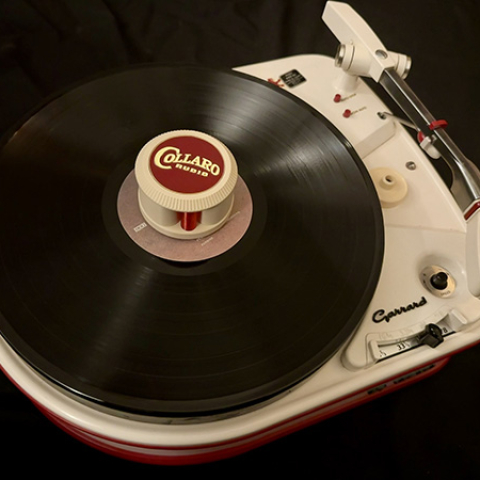

I have considered myself to be an audiophile for pretty much my entire life, since long before I had even heard the word. As a toddler, I would play records on the family Garrard record changer, so when my parents moved the record player to a higher shelf to get it out of my reach, I climbed up the bookcase to get to it.
My dad never had any real interest in audio beyond providing a means for listening to his favorite records, but he recognized my passion and interest. When I was 11, he took me to the 1973 Brussels Hi-Fi Show at the massive Brussels Exposition Center, near the famous Atomium landmark. This opened my eyes to a world I barely knew existed and had only experienced through pictures and ads in magazines.
In 1973, hi-fi was starting to go mainstream, expanding beyond its hobbyist roots into something found in most homes. Standouts I remember from the show (53 years later) include the Nakamichi 1000 cassette deck and a Dual turntable that was being flipped around as it played a record, held in a big jig kind of like a Tilt-A-Whirl. This was intended to demonstrate the benefits of its dynamically balanced tonearm.
Around the same time, I met my first true audiophile. Heinrich—Henry to us Yankees—was my friend Gregg's dad. A German with six kids to keep in line, he projected a stern image that reminded me a bit of James Bond villain Auric Goldfinger. Once you got past Henry's gruff outer shell, he was a sweet man who loved to play classical records on his gorgeous hi-fi system. The Thorens TD 125 turntable with its SME 3009 tonearm and Shure V15 Type III cartridge was considered a classic, top-of-the-line combination in 1973, and I would always grab a peek at that beauty whenever I was visiting. I was fascinated by the delicate-looking tonearm with its unrecognizable, fiddly, dangling bits clustered near the back. Henry made it clear that looking was fine but touching, especially when he wasn't around, was off-limits.
Gregg had his own little system up in his bedroom, including a Dual 1219 turntable and a pair of the legendary Sennheiser HD 414 headphones. Here I was free to do what I wanted and would bring my own records over to play, blown away by how much better they sounded with Gregg's setup than through our modest family system at home. I was hooked and wanted more.
When I was 13, I was sent away to boarding school in England. That makes it sound a bit like I was dragged away kicking and screaming, but I actually asked my parents if I could go. The Catholic school I had been attending in Belgium was fine for elementary school, but the high school section they were slowly expanding one year at a time was less of a sure thing. Besides, both of my siblings were already at the boarding school in England.
One problem with boarding schools is that you can't bring a whole hi-fi into your dorm room, so most kids brought some kind of stereo cassette boom box, with the richer kids bringing the fanciest ones. Boom boxes were a status item kids used to flex their wealth.
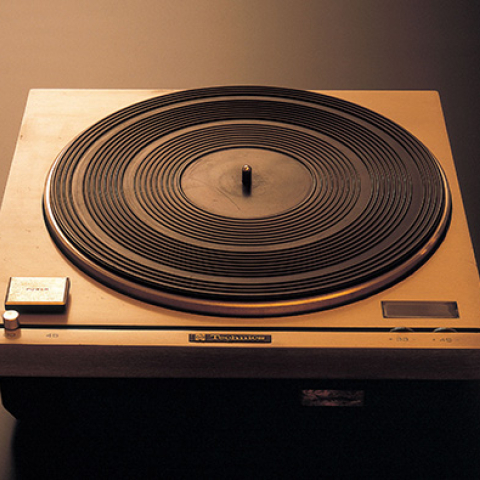
Seeking access to a proper hi-fi system, where I could do things like copy my friend's records onto cassettes, I soon learned that the school's music department had a room with a fancy hi-fi rig that was rarely used. Despite not being a music school student, I was able to ingratiate myself with the department through Mr. Harries, my assistant housemaster and the number-two person in the music department, so I gained access to the hi-fi room sanctuary. I soon became their audio guy, recording school concerts on the Revox A77 reel-to-reel and being allowed to use the two Technics direct-drive turntables, Leak amp, and big Celestion Ditton 66 loudspeakers whenever I wanted.
I didn't have a system I could call my own until I returned to the US in 1980 to attend college in upstate New York. Earlier this year, in Spin Doctor #37, I talked about my initial efforts to cobble a system together at college, between my roommate's gear and mine. Before that, back at boarding school in England, I got my audio fix by reading the British hi-fi magazines of the day, including Hi-Fi News, Hi-Fi Answers, Popular Hi-Fi, Practical Hi-Fi, and HiFi for Pleasure. I bought them all and studied every page. My friends called them my hi-fi pornos. I wasn't aware at the time that most of these magazines had a biased editorial stance, heavily promoting British brands and equipment—Linn, Naim, and Rega—while denigrating imported brands, especially those from the US. Then at some point in the early '80s, the dam broke. Some reviewers for those magazines started using gear from American brands like Krell and Audio Research in their own systems.
It was too late: All those hi-fi pornos had turned me into a Flat Earther. Flat Earthers built their systems around those British brands and doggedly followed the golden rule of system building being promoted by Linn: No component can perform any better than the component that precedes it in the chain. So for a record-playing system, the priority was always turntable first, followed by the tonearm, cartridge, preamp, amp, and, finally and least importantly, the speakers. (Cynics will point out that Linn's first product was a turntable.)
In 1985, the system I assembled followed this rule to a T: Linn LP12 turntable, Ittok tonearm, Karma cartridge, Naim NAC 32.5 preamp, Hi-Cap power supply, and NAP 135 mono amps driving a pair of Linn's smallest speakers, the Kans. It sounded wonderful in a lot of ways, though now I understand just how far out of balance that system was.
My priorities changed dramatically a few months later when I started working at the New York City high-end audio retailer Sound by Singer, but that's a story for another day.
Earlier this year, in Spin Doctor #35, I wrote about how my thinking has evolved on the relative importance of the three main component parts of a turntable system. When Steve Guttenberg, YouTube's Audiophiliac, asked me about my current thinking, I confessed that I'm now convinced that the tonearm has the most difficult job in a turntable system and plays the biggest role in its performance. That is why I have reviewed more tonearms in this column than any other category of product.
Reviewing tonearms is a logistical nightmare. You have to figure out which turntable you're going to use them with, which cartridges you're going to install in them. You have to assemble the various armboards and mounting hardware needed to put it all together. And then you have to set up and fine-tune the combination. Connecting a CD player or amplifier for review is a snap in comparison. We persevere.
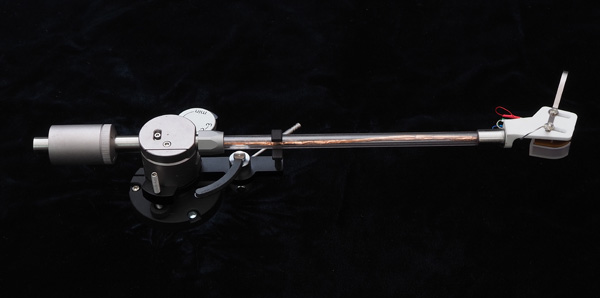 Korf Audio TA-CF9 Series II tonearm
Three years ago, in Spin Doctor #7, I reviewed Korf 's first tonearm, the TA-SF9R. I was impressed by its exceptional performance and its fine value. We were scrambling to find good, affordable separate tonearms following the closure of Japan's ubiquitous Jelco and the withdrawal of SME from the tonearm market. The Korf proved to be a worthy successor, and in the years since, the company has expanded its range to seven models (footnote 1).
All Korf arms are designed around the same basic bearing structure, with a zero-stiction flexure bearing for the horizontal axis and silicon nitride rolling bearings for the vertical axis. The main structure of all seven Korf arms has now been upgraded to Series II specification, with improvements to the materials used in the arm's main pillar, a newly designed azimuth adjustment mechanism, some cosmetic changes, and a longer, three-year warranty. The range has also been expanded upmarket, first a couple of years ago with ceramic armtubes on the TA-AF9 and TA-AF10, and now with the sapphire-tubed TA-CF9 and TA-CF10, launched at the 2025 High End show in Munich.
Another thing that has improved is the distribution of Korf products in the US. Back then, Americans had to pay in euros directly to Austria and then play roulette with whatever tariffs Washington was imposing that week. Now US customers can pay in dollars and have their products shipped directly from Korf 's Florida facility: No more customs delays or surprise duty payments. Korf is now also offering its tonearms through a handful of retail dealers, bringing all the benefits a local brick-and-mortar dealer can offer at the same prices as direct sales.
Slovenia's Kuzma Ltd. made a splash in 2022 when it launched the Safir 9, the first tonearm with a pure sapphire armtube. The Safir's frosted armtube was almost comically massive; the resulting arm had an effective mass of around 60gm. I reviewed it in Spin Doctor #21, and it remains one of the best-sounding arms I have ever encountered. But that huge effective mass means that you need to take care when choosing a cartridge to pair it with. Then there's its $23,000 price tag. The Safir 9 is and will always be a very exclusive product.
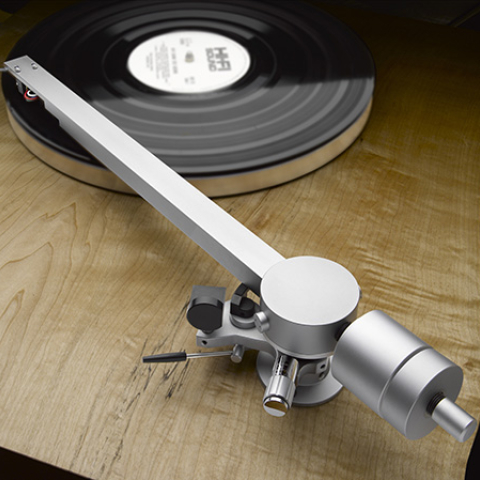
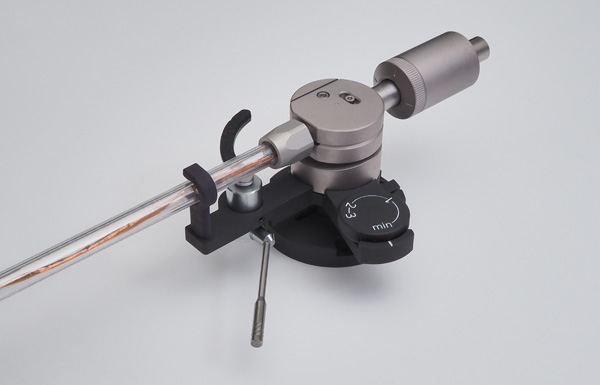 I don't know whether Korf owner and designer Alexey Korf was inspired by the Safir, but as with that arm, the heart of the 9" TA-CF9 and 10" TA-CF10 is a sapphire armtube. The Korf armtube is made from what is described as monocrystalline sapphire, and while the description on the Korf website never mentions any other brand by name, reading between the lines suggests that the Safir 9's armtube is made from polycrystalline sapphire, which is about 14% less stiff. Stiffness is the cornerstone of Korf 's approach, pushing resonances well above the audible frequency range.
Korf is very proud of this armtube. Every TA-CF tonearm comes with a signed certificate of authenticity from the subcontractor who made it.
The armtube looks like it's made from clear glass, without the frosted finish and chunky thickness that make the Safir 9 so arresting. As on all Korf arms, the headshell is ceramic. To maintain rigidity, it is fitted to the armtube with two steel inserts bonded in place with a special adhesive. No floppy, detachable SME-style headshells here!
While it may seem like a bit of a stretch to call a $6100 tonearm a bargain, it is about a quarter the cost of the other sapphire arm.
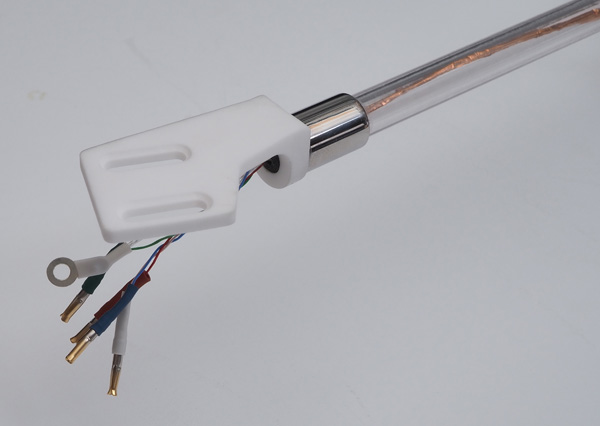 The CF9's standard internal wiring is Cardas 33AWG copper, terminating in a five-pin tonearm DIN plug at the base of the arm. Silver wire is available for an extra $270, and Cardas Clear and Zavfino are available at additional cost. Contact Korf for availability and pricing. No tonearm cable is included, but Korf offers its TC-125 Series II for $125. I used my Cardas Clear. Because the armtube is clear, the wiring can be seen running inside the tube from the headshell to the bearing. Ceramic and sapphire are not good electrical conductors, so a fifth headshell wire is added to ground the cartridge body, and this should be attached to one of the cartridge-mounting screws.
Mounting options for the CF9 are the same as for the SF9R I reviewed earlier, with a choice between a round JIS mounting base and an SME-style mount with a sliding mounting insert for an additional $230. The JIS base is commonly called a Linn/Jelco mount, but you need a mounting distance of 214mm, which is a little different from Linn's 211mm distance.
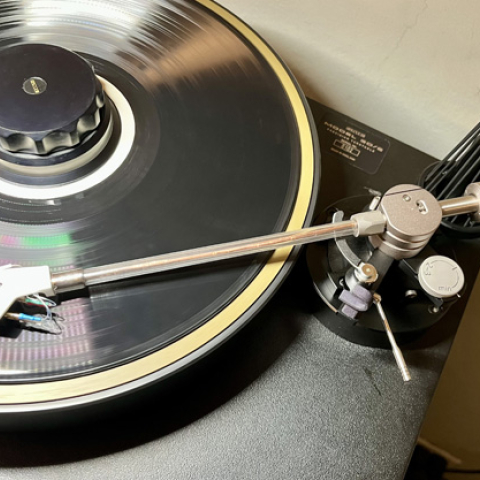
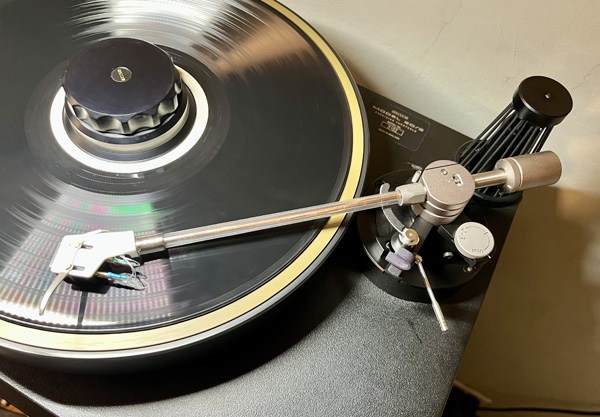
At Alexey's request, I fitted the CF9 to my SME Model 30/2 turntable. As I had discovered with the SF9R, on the 30/2 turntable, clearance is tight, with just enough room behind the counterweight to clear the SME's right-rear suspension tower.
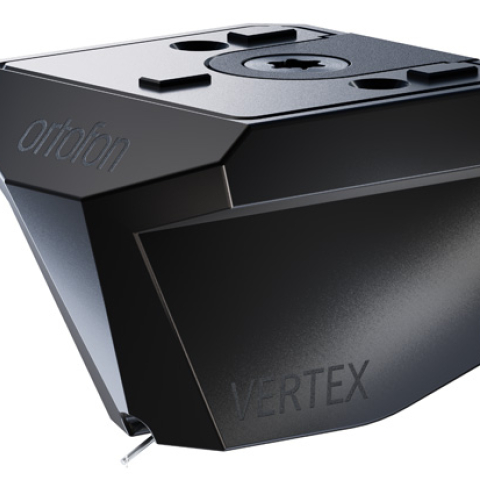
Korf is partial to SME because it matches his philosophy, using rigidity and stiffness to control energy and resonances rather than employing softer, better-damped materials like MDF and compliant isolation. He felt that this would allow me to hear the benefits of the sapphire armtube and its extraordinary stiffness more clearly. I used the SME when reviewing the SF9R, mainly with the low-compliance Zu Denon DL-103 cartridge because it matched up well with the SF9R's high effective mass. With its fixed headshell, the TA-CF9 actually has a lower effective mass, around 28gm, which puts it in the medium-high range. So, for this review, I also used my Ortofon MC 90X, aiming to dig a bit deeper into the subtlest detail than the Denon is capable of.
Alexey Korf has done a lot of research into the relationship between effective mass and cartridge compliance, challenging many of the standard assumptions we have been using for more than 50 years. I highly recommend reading the Korf blog on its website and using the nifty compliance calculator, where you can see how your cartridge will behave in arms of different effective mass.
Setting up the TA-CF9: Installing and fine-tuning the TA-CF9 was straightforward. A clip-on headshell alignment tool is provided, facilitating an alignment that's similar to, but not exactly the same as, Stevenson. Korf says this alignment takes full advantage of the arm's ability to control the cartridge while minimizing inner-groove distortion on longer LP sides. The arm's rotation point is marked on the top of the bearing housing, making it easier to use a different protractor, like a Feickert or SMARTractor. Azimuth is adjusted by rotating the armtube, while the arm height is adjustable with a stop screw to make small height changes easier to control. The magnetic antiskating is adjusted using a calibrated dial, and a check with the WallySkater showed the markings to be accurate. The counterweight is not calibrated, so you will need to use your own gauge to set the downforce.
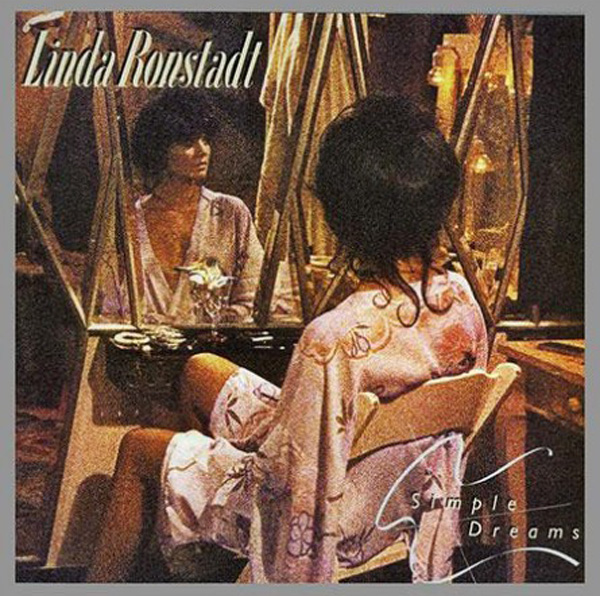 Listening: Korf told me that the CF9's ability to control the cartridge's energy and position would allow it to track even notoriously difficult records. To test this, I played Linda Ronstadt's cover of Roy Orbison's "Blue Bayou" from her album Simple Dreams (LP, Asylum 6E-104). This difficult-to-track song can catch out many cartridge-arm combinations. It starts quiet and easy, with Linda singing softly in her lower register, accompanied by bass and some gentle percussion. When the first chorus rolls around, she changes to her belting upper register and challenges the cartridge to keep up.
Playing this with the Ortofon MC 90X in the Korf CF9, I quickly forgot to listen for mistracking because I was distracted by the deep reach and texture of the solo bass at the beginning and the chocolatey sumptuousness of Linda's lower register. When she started to belt it out in the chorus, there was no hint of hardness or mistracking, just a startling jump in dynamics. My attention was also drawn to the plinky guitar string sounds stretched along the sides of the soundstage. I had always known they were there, but this combination gave me added insight into the color and texture of the sound.
I was at the Chesky session in 1991 when McCoy Tyner recorded his New York Reunion album (LP, Chesky JR51) with Joe Henderson, Ron Carter, and Al Foster. It was a long time ago, but I haven't completely lost the memory of how this performance sounded live in the studio. My most vivid mental image is watching Joe Henderson play while standing high on a wooden crate next to Tyner's piano, to get the exact soundstage the Chesky crew wanted.
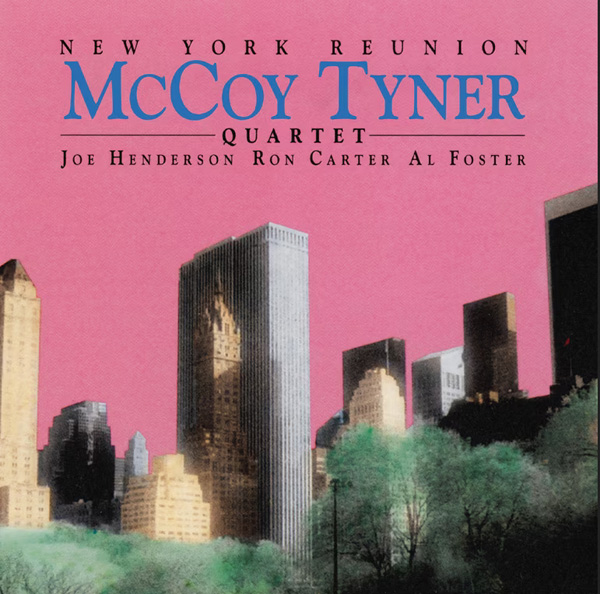 The album was recently reissued on vinyl as a double LP that includes the entire session, but my copy is the Chesky original, which only has four of the eight tracks recorded. (The original CD had all eight.) But they're the best ones—that's why they used them—and the sound is wonderful. On "Miss Bea," a beautiful, lilting waltz dedicated to Tyner's mother and composed for this session, we heard Henderson's tenor sax positioned slightly to the right of the piano. The tone of Tyner's piano was bright and clear, with space and air between him and the other players. Henderson's tenor had detail and a natural rasp and bite. Drummer Al Foster starts out playing with brushes, then after the exposition transitions to sticks, and it almost felt like you could watch him doing it.
I'm starting to understand what Korf was saying about how the CF9 arm is able to extract a level of performance from a cartridge that you really didn't know was there. The sound is exceptionally fast, clear, and detailed, with no extra color from the tonearm. The arm is beautifully made, easy to set up and use, and it allows your cartridge to shine.
I started listening to the CF9 before I checked the price. In my mind I was thinking it was around $11,000. Imagine my delight when I found it cost just a bit over half that amount.
Footnote 1: Korf Audio GmbH, Urberweg 34, 3400 Klosterneuburg, Austria. Tel: (484) 457-8855. Email: info@korfaudio.com. Web: korfaudio.com
Korf Audio TA-CF9 Series II tonearmThree years ago, in Spin Doctor #7, I reviewed Korf 's first tonearm, the TA-SF9R. I was impressed by its exceptional performance and its fine value. We were scrambling to find good, affordable separate tonearms following the closure of Japan's ubiquitous Jelco and the withdrawal of SME from the tonearm market. The Korf proved to be a worthy successor, and in the years since, the company has expanded its range to seven models (footnote 1).
I don't know whether Korf owner and designer Alexey Korf was inspired by the Safir, but as with that arm, the heart of the 9" TA-CF9 and 10" TA-CF10 is a sapphire armtube. The Korf armtube is made from what is described as monocrystalline sapphire, and while the description on the Korf website never mentions any other brand by name, reading between the lines suggests that the Safir 9's armtube is made from polycrystalline sapphire, which is about 14% less stiff. Stiffness is the cornerstone of Korf 's approach, pushing resonances well above the audible frequency range.
Korf is very proud of this armtube. Every TA-CF tonearm comes with a signed certificate of authenticity from the subcontractor who made it.
The armtube looks like it's made from clear glass, without the frosted finish and chunky thickness that make the Safir 9 so arresting. As on all Korf arms, the headshell is ceramic. To maintain rigidity, it is fitted to the armtube with two steel inserts bonded in place with a special adhesive. No floppy, detachable SME-style headshells here!
The CF9's standard internal wiring is Cardas 33AWG copper, terminating in a five-pin tonearm DIN plug at the base of the arm. Silver wire is available for an extra $270, and Cardas Clear and Zavfino are available at additional cost. Contact Korf for availability and pricing. No tonearm cable is included, but Korf offers its TC-125 Series II for $125. I used my Cardas Clear. Because the armtube is clear, the wiring can be seen running inside the tube from the headshell to the bearing. Ceramic and sapphire are not good electrical conductors, so a fifth headshell wire is added to ground the cartridge body, and this should be attached to one of the cartridge-mounting screws.
Mounting options for the CF9 are the same as for the SF9R I reviewed earlier, with a choice between a round JIS mounting base and an SME-style mount with a sliding mounting insert for an additional $230. The JIS base is commonly called a Linn/Jelco mount, but you need a mounting distance of 214mm, which is a little different from Linn's 211mm distance.
Listening: Korf told me that the CF9's ability to control the cartridge's energy and position would allow it to track even notoriously difficult records. To test this, I played Linda Ronstadt's cover of Roy Orbison's "Blue Bayou" from her album Simple Dreams (LP, Asylum 6E-104). This difficult-to-track song can catch out many cartridge-arm combinations. It starts quiet and easy, with Linda singing softly in her lower register, accompanied by bass and some gentle percussion. When the first chorus rolls around, she changes to her belting upper register and challenges the cartridge to keep up.
Playing this with the Ortofon MC 90X in the Korf CF9, I quickly forgot to listen for mistracking because I was distracted by the deep reach and texture of the solo bass at the beginning and the chocolatey sumptuousness of Linda's lower register. When she started to belt it out in the chorus, there was no hint of hardness or mistracking, just a startling jump in dynamics. My attention was also drawn to the plinky guitar string sounds stretched along the sides of the soundstage. I had always known they were there, but this combination gave me added insight into the color and texture of the sound.
The album was recently reissued on vinyl as a double LP that includes the entire session, but my copy is the Chesky original, which only has four of the eight tracks recorded. (The original CD had all eight.) But they're the best ones—that's why they used them—and the sound is wonderful. On "Miss Bea," a beautiful, lilting waltz dedicated to Tyner's mother and composed for this session, we heard Henderson's tenor sax positioned slightly to the right of the piano. The tone of Tyner's piano was bright and clear, with space and air between him and the other players. Henderson's tenor had detail and a natural rasp and bite. Drummer Al Foster starts out playing with brushes, then after the exposition transitions to sticks, and it almost felt like you could watch him doing it.
I'm starting to understand what Korf was saying about how the CF9 arm is able to extract a level of performance from a cartridge that you really didn't know was there. The sound is exceptionally fast, clear, and detailed, with no extra color from the tonearm. The arm is beautifully made, easy to set up and use, and it allows your cartridge to shine.
Footnote 1: Korf Audio GmbH, Urberweg 34, 3400 Klosterneuburg, Austria. Tel: (484) 457-8855. Email: info@korfaudio.com. Web: korfaudio.com