Making a turntable's platter spin at exactly 331/3 rotations per minute sounds like it should be an easy task, but in fact it's hard to do precisely. Just getting the platter to turn is easy enough, but there are two forces trying to stop the platter that you need to overcome: friction from the bearing that supports the platter, and friction from the stylus riding in the groove.
With most turntables, you can perform a couple of simple tests to see these forces in action. First, remove any connection to the drive system so that the platter will spin freely. On a belt-drive turntable, simply remove the belt. Most idler drives have a neutral position between the speed selections where the idler wheel is not engaged. Direct-drive turntables are more varied, but with most, switching off the power disengages the platter brake, allowing free platter rotation.
Now spin the platter by hand up to what seems like roughly 33rpm and release it, then use a timer and record how long it spins. That time will depend on two factors that work against each other: the inertia of the platter, which keeps it turning, and the friction in the bearing, which tries to make it stop. Sometimes when I want to make this test more scientific, I will put a strobe disc on the platter so I can see when it's spinning at exactly 331/3 rpm; that lets me time exactly how long it takes to spin down from 331/3 rpm. The best result I've ever achieved is just over 9 minutes; that was a vintage Roksan Xerxes whose bearing I had just cleaned and lubricated.
People are skeptical when I tell them that a stylus sitting in the record groove, with just 2gm of pressure, can slow a platter. The test for checking this is very similar to the spin-down test described above, only this time put a record on the platter. Lower the stylus onto the record when it's spinning at 331/3 rpm. Again, this is done with the system turned off and the drive mechanism disengaged. Time how long it takes for the platter to come to a stop.
Shorter, right? Stylus friction is real, and unlike bearing friction, which tends to be constant, stylus friction varies with musical content. The grooves on a loudly cut UK-pressed 12" single of Grace Jones's "Slave to the Rhythm" generate more friction than a long LP side of flute sonatas.
This matters to the current discussion because some drive mechanisms are better at overcoming that friction moment to moment than others are. I'll get back to this point.
And then there's the matter of vibrations. Rega founder Roy Gandy once described a turntable as a vibration-measuring machine. The difficulty is that the turntable has no way to differentiate between the wanted vibration generated by the stylus tracing the record groove and unwanted vibration from other sources. These can include vibration from the turntable's motor, from friction in the bearing, and even from speakers playing in the room, whether the vibrations arrive through the air or through the structure that supports the turntable. Any unwanted vibration that reaches the stylus can obscure and distort the subtlest low-level details being retrieved from the groove. One of the key differences between a good turntable and a great one is its ability to minimize any unwanted sources of vibration, which then allows the subtle details in the recording to be heard more clearly.
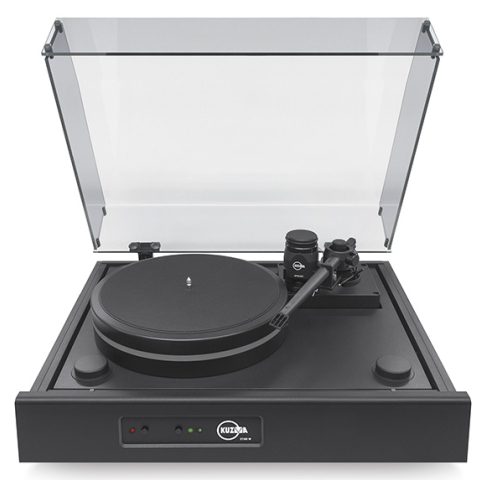
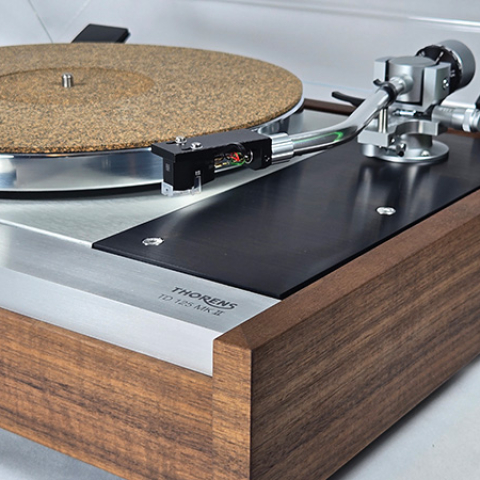
For the last 70 years, almost all turntables have used one of three approaches to driving the platter (or in one famous case, the Thorens TD 124, two of the three approaches). In chronological order of introduction, they are idler drive, belt drive, and direct drive. While new turntables using all these drive methods are still being made, belt drive has become the de facto standard, with direct drive being somewhat less common, and new idler-drive turntables positively rare.
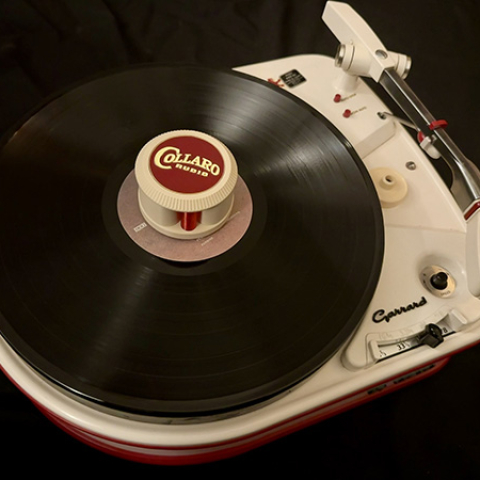
Each approach has its strengths and weaknesses, and while most turntables aspiring to high-end performance use belt drive, some of the most ambitious an expensive turntables available today are direct drive. Idler-drive models also have a devoted fan base, but they mostly involve restoring and modifying a handful of vintage models from the 1950s and 1960s, such as the Garrard 301 and 401, the Lenco L75, and the Thorens TD 124, which is a hybrid of idler and belt drive.
By the 1950s, most turntable manufacturers had settled on some form of idler drive, moving on from the myriad drive methods employed before World War II. Idler drive offers excellent torque for quick startup (and to overcome speed reductions that could otherwise result from groove friction), a decent amount of mechanical isolation between the motor and the pickup, and easy speed switching as the "battle of the speeds" between Columbia's 331/3, RCA's 45, and the old 78rpm records was raging.
Starting in the early '60s, belt-drive turntables rapidly gained popularity, with models like the AR-XA from Boston's Acoustic Research selling in massive numbers. This move was mostly prompted by a less-than-obvious reason: the launch of stereo records.
With an idler-drive turntable, the motor is quite tightly coupled to the platter it's driving, with just a stiff rubber idler wheel acting as an isolating buffer between the two. The result is that noise from the motor is still being transferred into the platter, where it can make its way to the critical record-stylus interface. This is less of a problem when you're playing a mono record with a mono cartridge, because a mono cartridge is deaf to vertical vibrations. But once stereo is added to the picture, vertical motion becomes a crucial part of the signal. With some idler-drive turntables, especially the cheaper ones, the switchover to stereo playback meant you could hear low-frequency rumble for the first time. The best-engineered turntables used precision parts with quieter motors and better isolation to minimize this problem, but belt drive proved a cheap and easy-to-implement solution.
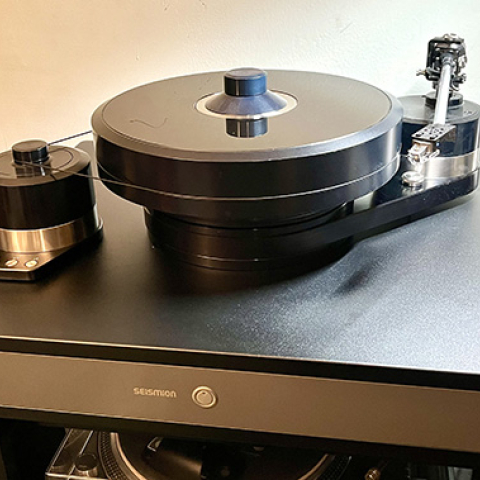
Belt drive makes it easier to isolate the platter from motor noise, since the belt absorbs vibrations instead of transmitting them as an idler wheel does. But the stretchy rubber belt significantly lowers the torque, so the motor is much worse at compensating for variations in platter speed resulting from increasing friction in loud and complex passages. One solution is to increase the platter's mass and thereby its inertia, allowing it to shrug off momentary increases in friction without noticeably slowing. This is why so many high-end belt-drive turntables have truly massive platters. Other clever fixes for this problem include stiffer belts, as seen on the TechDAS turntables from Japan; using two or more motors and more belts—the Audio Note TT-Three uses three of each—and allowing the motor to rotate on its own axis to eliminate changes in belt tension, as on the Roksan and Vertere turntables designed by Touraj Moghaddam.
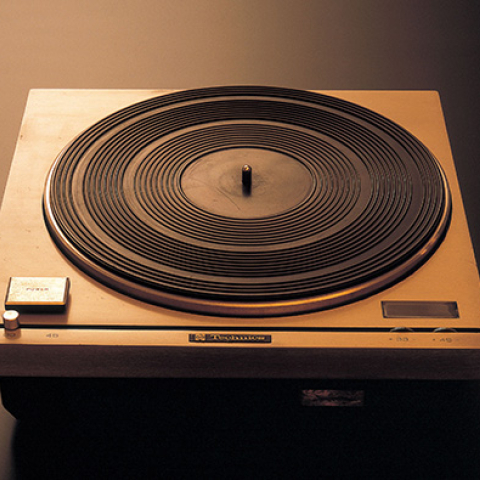
In some ways, direct drive, which was introduced by Technics in the early 1970s, seems like the perfect solution. It isn't always quiet, but it can be. It can deliver gobs of torque. And when carefully controlled, it can deliver superb speed control, far beyond what the other methods can provide. The problem is that direct drive is very hard to do well.
I'm convinced that the main reason smaller high-end companies didn't embrace direct drive in the 1970s is that they lacked the resources to implement it successfully. This was accompanied by predictable pushback: Many of them then argued that direct drive didn't sound "musical," or that it lacked transparency. The word "cogging" was coined to describe microscopic speed changes, a sort of mechanical jitter. They convinced the subjective audio press to tell everyone that direct drive sucked.
They weren't totally wrong: Plenty of direct-drive turntables had problems, but as a blanket statement this is nonsense. The few direct-drive turntables available from smaller high-end manufacturers 45 years ago were typically modifications of an existing turntable made by a mainstream company. Even the highly regarded Goldmund Studio started life with a self-designed solution using a Papst motor, then switched to a fully engineered setup made by JVC when the Papst version proved troublesome. Even today, if you dig into the guts of some of the most expensive direct-drive turntables from small boutique manufacturers, you will find parts made by Technics lurking deep inside.
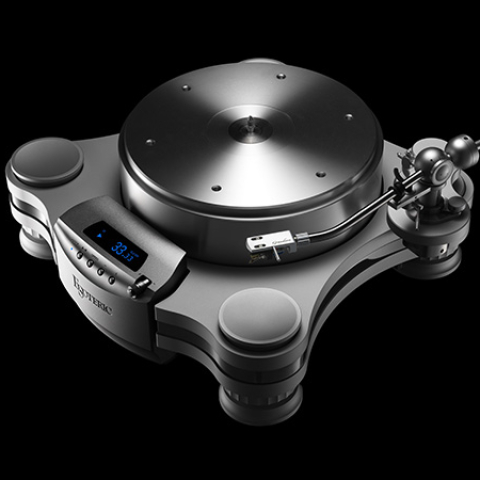
The Esoteric Grandioso T1
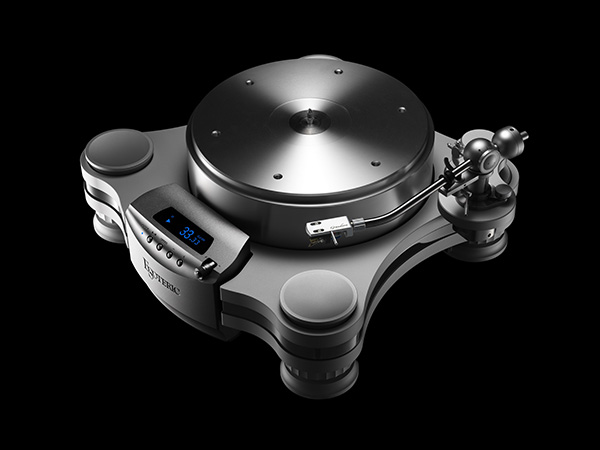
The Esoteric Grandioso T1 (footnote 1) uses a completely new drive system, designed to combine all the advantages of the various existing systems with none of the downsides. The T1 drive system can be fine-tuned to deliver the presentation the user prefers, from the punchy forward momentum of the best idler turntables to the more relaxed sound and quiet transparency of a great belt-drive rig. Physically, the Esoteric Grandioso T1 lives up to its grand name. It's solid, purposeful, and impeccably built. It looks elegant and expensive, which it is: $92,000 including the TA-9D arm, $85,000 with no arm. It is compact enough to fit comfortably on most audio furniture, yet, including its power supply, it weighs a shelf-flexing 140lb; it will test the strength not only of your shelving but also of the person or people putting it together.
To make things easier to manage, it arrives in three large boxes, none of which weighs much more than 50lb.
The T1 is split into four basic components: the main chassis, the motor assembly, the platter, and the power supply; the tonearm is also available as an optional fifth component. Up to three tonearms can be accommodated, and Esoteric offers more than a dozen predrilled armboards to handle just about any arm you can throw at it. The review sample came equipped with Esoteric's TA-9D tonearm, an OEM version of the superb IT-345 tonearm from Tokyo-based Ikeda Sound Labs.
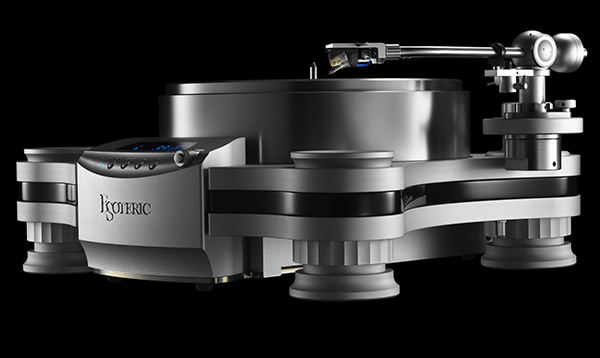 Setting up the T1 is straightforward if you follow the excellent instructions. Position the main chassis on your stand. Lower the platter into position using a pair of screw-in lifting handles, making sure you line up two marks to ensure level rotation. The T1's platter bearing includes a magnetic lift system that Esoteric calls MagneFloat, which uses opposing magnets on the underside of the platter and the top of the plinth to support about 80% of the platter's 42lb weight. This greatly reduces the stress on the bearing and any resulting friction, making the drive system's job easier. By limiting magnetic support to 80% of the platter's weight, the T1 avoids a potential problem I have occasionally encountered with magnetically opposed bearings that support the entire platter weight. With those 100%-levitation bearings, there is no contact point to define the height of the platter, so they are susceptible to platter bounce as people walk around the room, especially in older wood-frame buildings with bouncy floors like those common here in North America.
Many European manufacturers must design and test their turntables in buildings made from rock-solid brick and concrete; apparently they don't anticipate such problems. Esoteric, which is based in Japan, is familiar with this issue, so it gave the T1 a fixed platter height and fancy isolating footers that use a combination of a coil spring and elastomer damping materials to give the T1 exceptional immunity to external interference, including footfalls.
In part because of this levitation, friction from the T1's bearing is exceptionally low. Using the spin-down test I described above, the T1 took more than 7 minutes to stop from 331/3 rpm. That's a little shy of the Roksan I mentioned, but the Roksan uses an unusual bearing with a very narrow shaft to minimize the contact area. Given its much larger-diameter bearing, the T1 is as good as it gets.
MagneDrive—distinct from MagneFloat, described above—is the T1's most distinctive feature. It spins the platter with zero physical contact between it and the motor. The motor assembly is housed in a long box that slides under the main chassis without contacting it. At the front of the motor assembly is an upright section that contains the motor, the controls, and a display. Attached to the motor—in place of the expected pulley—is what Esoteric calls a magnetic driver: a cylinder fitted with a set of alternating-polarity magnetic strips around its perimeter. Attached to the bottom of the platter opposite the magnetic driver is what Esoteric calls an induction wheel: a series of vertical indentations cut into the lower edge of the platter that interact with the magnetic driver to pull the platter in the desired direction. In order for this to work as intended, the spacing between the magnetic driver and the induction wheel must be set precisely. A set of plastic spacers allows you to position the motor assembly precisely so that the magnetic driver is very close to, but never touching, the induction wheel.
Setting up the T1 is straightforward if you follow the excellent instructions. Position the main chassis on your stand. Lower the platter into position using a pair of screw-in lifting handles, making sure you line up two marks to ensure level rotation. The T1's platter bearing includes a magnetic lift system that Esoteric calls MagneFloat, which uses opposing magnets on the underside of the platter and the top of the plinth to support about 80% of the platter's 42lb weight. This greatly reduces the stress on the bearing and any resulting friction, making the drive system's job easier. By limiting magnetic support to 80% of the platter's weight, the T1 avoids a potential problem I have occasionally encountered with magnetically opposed bearings that support the entire platter weight. With those 100%-levitation bearings, there is no contact point to define the height of the platter, so they are susceptible to platter bounce as people walk around the room, especially in older wood-frame buildings with bouncy floors like those common here in North America.
Many European manufacturers must design and test their turntables in buildings made from rock-solid brick and concrete; apparently they don't anticipate such problems. Esoteric, which is based in Japan, is familiar with this issue, so it gave the T1 a fixed platter height and fancy isolating footers that use a combination of a coil spring and elastomer damping materials to give the T1 exceptional immunity to external interference, including footfalls.
In part because of this levitation, friction from the T1's bearing is exceptionally low. Using the spin-down test I described above, the T1 took more than 7 minutes to stop from 331/3 rpm. That's a little shy of the Roksan I mentioned, but the Roksan uses an unusual bearing with a very narrow shaft to minimize the contact area. Given its much larger-diameter bearing, the T1 is as good as it gets.
MagneDrive—distinct from MagneFloat, described above—is the T1's most distinctive feature. It spins the platter with zero physical contact between it and the motor. The motor assembly is housed in a long box that slides under the main chassis without contacting it. At the front of the motor assembly is an upright section that contains the motor, the controls, and a display. Attached to the motor—in place of the expected pulley—is what Esoteric calls a magnetic driver: a cylinder fitted with a set of alternating-polarity magnetic strips around its perimeter. Attached to the bottom of the platter opposite the magnetic driver is what Esoteric calls an induction wheel: a series of vertical indentations cut into the lower edge of the platter that interact with the magnetic driver to pull the platter in the desired direction. In order for this to work as intended, the spacing between the magnetic driver and the induction wheel must be set precisely. A set of plastic spacers allows you to position the motor assembly precisely so that the magnetic driver is very close to, but never touching, the induction wheel.
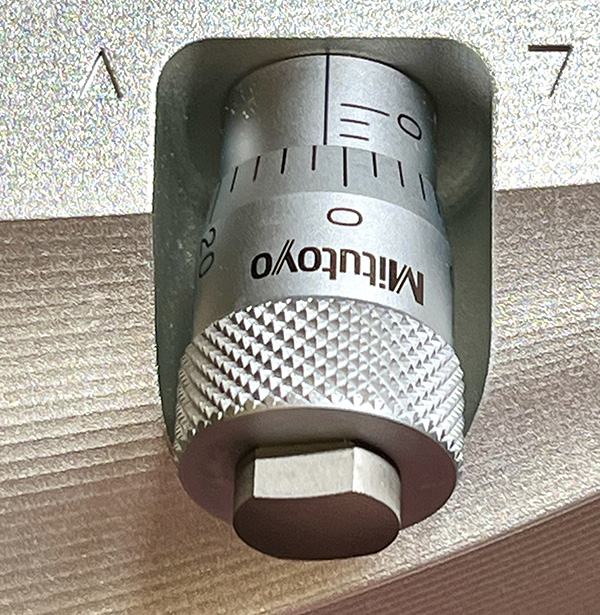 That's all very neat, but the real party trick is the T1's micrometer adjuster. This is a screw knob next to the display that lets you fine-tune the distance between the magnetic driver and the induction wheel, changing the coupling strength, hence the torque of the drive system. By moving the magnetic driver closer to the induction wheel, the drive system behaves more like an idler-drive turntable, with lots of torque, or you can spread them farther apart for a looser coupling that's more like a belt drive (footnote 2).
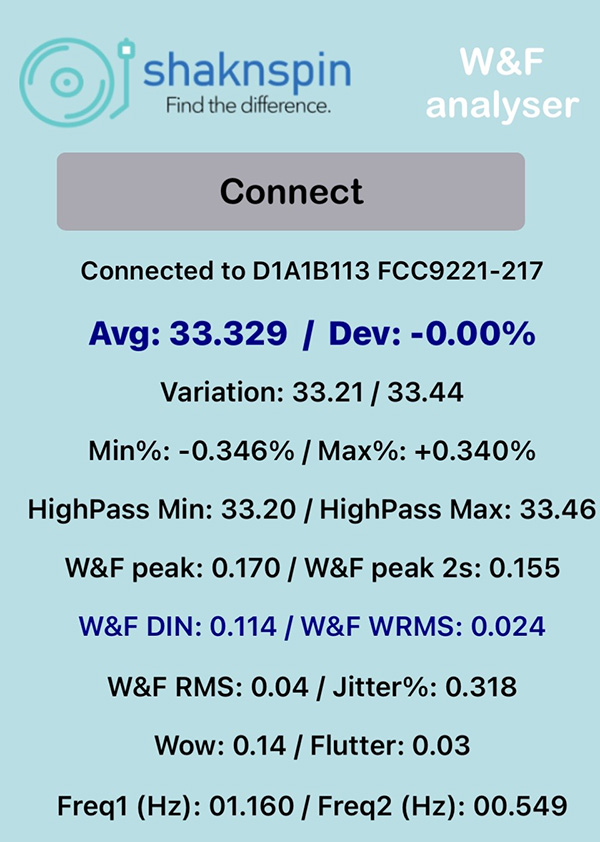
I measured the T1 using the Shaknspin2 at both extremes of the torque-adjustment range and found no measurable difference. I could hear a difference, though, and feel it if I tried to slow the platter with my hand.
That's all very neat, but the real party trick is the T1's micrometer adjuster. This is a screw knob next to the display that lets you fine-tune the distance between the magnetic driver and the induction wheel, changing the coupling strength, hence the torque of the drive system. By moving the magnetic driver closer to the induction wheel, the drive system behaves more like an idler-drive turntable, with lots of torque, or you can spread them farther apart for a looser coupling that's more like a belt drive (footnote 2).
I measured the T1 using the Shaknspin2 at both extremes of the torque-adjustment range and found no measurable difference. I could hear a difference, though, and feel it if I tried to slow the platter with my hand.
 The startup time of the T1 is set to be quite slow, as the magnets work to get the platter turning in the right direction. I measured just under 40 seconds from rest to 331/3 rpm, so deejay use is not recommended. The platter is topped with an ultrathin mat made from Japanese washi paper, but no clamp or weight is provided. The spindle is quite tall, so many aftermarket weights and dampers might not fit, but the Collaro Triscription damping weight I recently reviewed was an excellent match. With no screw-down clamp, I found it was easiest to just leave the platter spinning while changing records, avoiding the 40-second delay as it got back up to speed.
Esoteric is probably best known for its advanced electronics, so it's no surprise that the circuitry driving the T1's motor is highly specialized. The external power supply is bigger and heavier than many powerful amplifiers, but its role is simply to deliver ultrapure DC power to the drive circuitry located inside the motor assembly. There, a 10MHz oscillator is used to generate the three-phase AC waveform that drives the motor.
You can take things one step further by adding an external clock; an input is provided to connect the Esoteric G1X, a $31,000 clock more often used with its digital components. The G1X has five clock outputs, so if you already have one in an all-Esoteric system, you can use a spare output to drive your T1's motor controller. I didn't have a G1X on hand, so I can't report what changes it brings.
The startup time of the T1 is set to be quite slow, as the magnets work to get the platter turning in the right direction. I measured just under 40 seconds from rest to 331/3 rpm, so deejay use is not recommended. The platter is topped with an ultrathin mat made from Japanese washi paper, but no clamp or weight is provided. The spindle is quite tall, so many aftermarket weights and dampers might not fit, but the Collaro Triscription damping weight I recently reviewed was an excellent match. With no screw-down clamp, I found it was easiest to just leave the platter spinning while changing records, avoiding the 40-second delay as it got back up to speed.
Esoteric is probably best known for its advanced electronics, so it's no surprise that the circuitry driving the T1's motor is highly specialized. The external power supply is bigger and heavier than many powerful amplifiers, but its role is simply to deliver ultrapure DC power to the drive circuitry located inside the motor assembly. There, a 10MHz oscillator is used to generate the three-phase AC waveform that drives the motor.
You can take things one step further by adding an external clock; an input is provided to connect the Esoteric G1X, a $31,000 clock more often used with its digital components. The G1X has five clock outputs, so if you already have one in an all-Esoteric system, you can use a spare output to drive your T1's motor controller. I didn't have a G1X on hand, so I can't report what changes it brings.
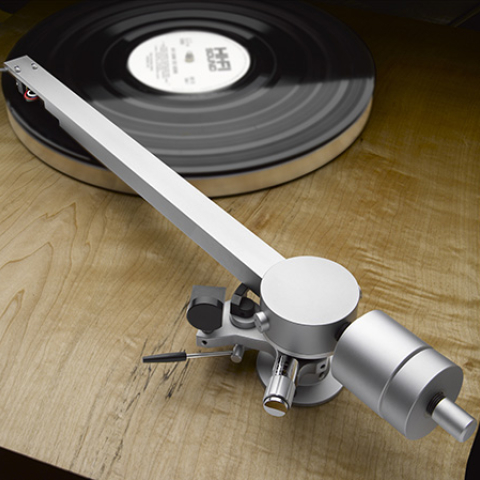
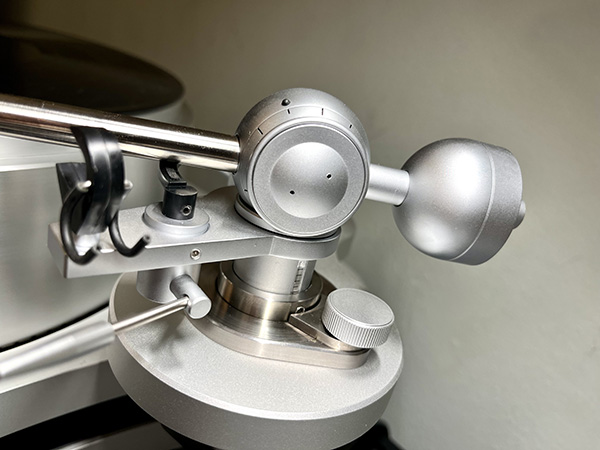
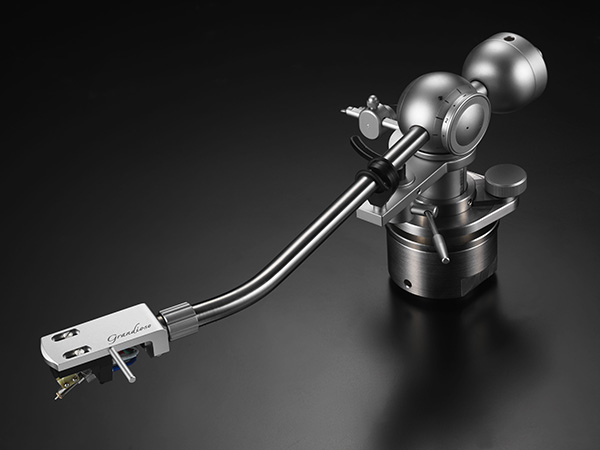 I auditioned the T1 as a package with the TA-9D tonearm, a beautifully finished 9" gimbal-bearing design that employs an H-4 SME-style headshell, a design that dates to the 1950s. You give up the last nth degree of rigidity in exchange for the versatility of easy cartridge swapping. Having said that, the TA-9D's implementation of this headshell interface fits about as tightly and precisely as any I have encountered, and you always have the option of fitting a different arm. Because the TA-9D is not supplied with a lead-out cable, I used my DIN-to-RCA Cardas Clear cable.
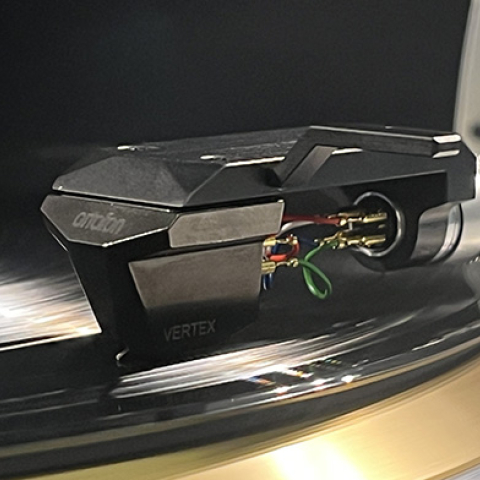
I mostly used the TA-9D with my familiar Lyra Atlas λ Lambda cartridge, though just before I handed in this report, I was able to have a short listening stint with the new Ortofon flagship, the Vertex. Stay tuned.
I auditioned the T1 as a package with the TA-9D tonearm, a beautifully finished 9" gimbal-bearing design that employs an H-4 SME-style headshell, a design that dates to the 1950s. You give up the last nth degree of rigidity in exchange for the versatility of easy cartridge swapping. Having said that, the TA-9D's implementation of this headshell interface fits about as tightly and precisely as any I have encountered, and you always have the option of fitting a different arm. Because the TA-9D is not supplied with a lead-out cable, I used my DIN-to-RCA Cardas Clear cable.
I mostly used the TA-9D with my familiar Lyra Atlas λ Lambda cartridge, though just before I handed in this report, I was able to have a short listening stint with the new Ortofon flagship, the Vertex. Stay tuned.
 How does it sound? Some of my favorite modern rock records were made by the late great Steve Albini, a man who bristled at being called a record producer, who made it his mission to capture the raw sound of a band without adding his own fingerprint. He's probably best remembered for recording Nirvana's In Utero. His recordings are typically stripped down and raw, allowing the true sound of the band to shine through.
A great example of this sound is PJ Harvey's second album, Rid of Me (LP, Island ILPS-8002), specifically the song "Missed." Playing it on the T1, I immediately felt like I was sitting in the room with the band, with audible images so well-defined that I could draw a picture showing the precise dimensions of the (rather small) space and exactly where everyone was within it. The timbre of Polly Jean's voice is beautifully captured. Albini obviously used some kind of stereo mike setup to capture Harvey's voice, putting her right in the room with the rest of the band.
This was the best I've heard this record in my system and room; it somehow managed to combine the transparency and resolution of the Brinkmann, the dynamics and bass drive of the SME, and the PRaT (pace, rhythm, and timing) of the Roksan.
How does it sound? Some of my favorite modern rock records were made by the late great Steve Albini, a man who bristled at being called a record producer, who made it his mission to capture the raw sound of a band without adding his own fingerprint. He's probably best remembered for recording Nirvana's In Utero. His recordings are typically stripped down and raw, allowing the true sound of the band to shine through.
A great example of this sound is PJ Harvey's second album, Rid of Me (LP, Island ILPS-8002), specifically the song "Missed." Playing it on the T1, I immediately felt like I was sitting in the room with the band, with audible images so well-defined that I could draw a picture showing the precise dimensions of the (rather small) space and exactly where everyone was within it. The timbre of Polly Jean's voice is beautifully captured. Albini obviously used some kind of stereo mike setup to capture Harvey's voice, putting her right in the room with the rest of the band.
This was the best I've heard this record in my system and room; it somehow managed to combine the transparency and resolution of the Brinkmann, the dynamics and bass drive of the SME, and the PRaT (pace, rhythm, and timing) of the Roksan.
 Jazz musician Ira Sullivan lived at a time that bridged the divide between the classic era, when he played with Charlie Parker and many other greats, and the modern era. He continued to perform and record all the way into the 2010s before passing away in 2020 at age 89. A versatile multi-instrumentalist, he was equally comfortable playing trumpet, saxophone, and flute, although I remember him best playing the trumpet's close cousin, the flugelhorn.
On the track "Circumstantial" from his self-titled album (LP, Flying Fish FF-075) the rich textures and burnished midrange glow of Sullivan's horn were presented in clear relief against an exceptionally quiet background. Simon Salz's electric guitar is closely miked; the T1 presented the clean sound and resonant body of his instrument in vivid tonal color. It's not that such details were missing when I've played this record on other turntables, but with the T1, they are easier to hear and follow.
I keep several turntables to use in my reviewing process—SME 30/2, Brinkmann La Grange, Roksan TMS, Garrard 301, plus a few others—because each one offers a different set of strengths. The Esoteric T1 is the first turntable I've heard in my system that I feel could replace all of them on a sonic—though not a personal—level. I liked the T1 best when the torque was cranked up to deliver the most PRaT, though the more relaxed sound resulting from lower torque seemed more appropriate for some music. Yes, the asking price is crazy, but presumably if you're shopping in this price range, you're not digging through the couch cushions looking for a few lost pennies. It's good to see companies pushing the limits of what's possible; hopefully we'll soon see some of this technology trickle down to more approachably priced 'tables. If the T1 is within your budget, I can't think of a better option.
Jazz musician Ira Sullivan lived at a time that bridged the divide between the classic era, when he played with Charlie Parker and many other greats, and the modern era. He continued to perform and record all the way into the 2010s before passing away in 2020 at age 89. A versatile multi-instrumentalist, he was equally comfortable playing trumpet, saxophone, and flute, although I remember him best playing the trumpet's close cousin, the flugelhorn.
On the track "Circumstantial" from his self-titled album (LP, Flying Fish FF-075) the rich textures and burnished midrange glow of Sullivan's horn were presented in clear relief against an exceptionally quiet background. Simon Salz's electric guitar is closely miked; the T1 presented the clean sound and resonant body of his instrument in vivid tonal color. It's not that such details were missing when I've played this record on other turntables, but with the T1, they are easier to hear and follow.
I keep several turntables to use in my reviewing process—SME 30/2, Brinkmann La Grange, Roksan TMS, Garrard 301, plus a few others—because each one offers a different set of strengths. The Esoteric T1 is the first turntable I've heard in my system that I feel could replace all of them on a sonic—though not a personal—level. I liked the T1 best when the torque was cranked up to deliver the most PRaT, though the more relaxed sound resulting from lower torque seemed more appropriate for some music. Yes, the asking price is crazy, but presumably if you're shopping in this price range, you're not digging through the couch cushions looking for a few lost pennies. It's good to see companies pushing the limits of what's possible; hopefully we'll soon see some of this technology trickle down to more approachably priced 'tables. If the T1 is within your budget, I can't think of a better option.
Footnote 1: Esoteric-TEAC Corporation, 1-47 Ochiai, Tama-shi, Tokyo, Japan 206-8530. Tel: (81) 42-356-9156. Web: www.esoteric.jp/en/. US distributor: Playback Distribution, 3257 Wildlife Tr., Zionsville, IN 46077. Tel: (844) 472-3478. Web: playbackdistribution.com Footnote 2: You can achieve something similar with an idler drive with a high-torque AC motor: Just lower the voltage you send to the motor while keeping the frequency precisely at 60Hz. The lower the voltage, the lower the torque. Boutique-built aftermarket power supplies are available that do exactly this; some also allow you to vary AC frequency, which alters the rotation speed of your vintage 'table.—Jim Austin
The Esoteric Grandioso T1The Esoteric Grandioso T1 (footnote 1) uses a completely new drive system, designed to combine all the advantages of the various existing systems with none of the downsides. The T1 drive system can be fine-tuned to deliver the presentation the user prefers, from the punchy forward momentum of the best idler turntables to the more relaxed sound and quiet transparency of a great belt-drive rig. Physically, the Esoteric Grandioso T1 lives up to its grand name. It's solid, purposeful, and impeccably built. It looks elegant and expensive, which it is: $92,000 including the TA-9D arm, $85,000 with no arm. It is compact enough to fit comfortably on most audio furniture, yet, including its power supply, it weighs a shelf-flexing 140lb; it will test the strength not only of your shelving but also of the person or people putting it together.
Setting up the T1 is straightforward if you follow the excellent instructions. Position the main chassis on your stand. Lower the platter into position using a pair of screw-in lifting handles, making sure you line up two marks to ensure level rotation. The T1's platter bearing includes a magnetic lift system that Esoteric calls MagneFloat, which uses opposing magnets on the underside of the platter and the top of the plinth to support about 80% of the platter's 42lb weight. This greatly reduces the stress on the bearing and any resulting friction, making the drive system's job easier. By limiting magnetic support to 80% of the platter's weight, the T1 avoids a potential problem I have occasionally encountered with magnetically opposed bearings that support the entire platter weight. With those 100%-levitation bearings, there is no contact point to define the height of the platter, so they are susceptible to platter bounce as people walk around the room, especially in older wood-frame buildings with bouncy floors like those common here in North America.
That's all very neat, but the real party trick is the T1's micrometer adjuster. This is a screw knob next to the display that lets you fine-tune the distance between the magnetic driver and the induction wheel, changing the coupling strength, hence the torque of the drive system. By moving the magnetic driver closer to the induction wheel, the drive system behaves more like an idler-drive turntable, with lots of torque, or you can spread them farther apart for a looser coupling that's more like a belt drive (footnote 2).
I measured the T1 using the Shaknspin2 at both extremes of the torque-adjustment range and found no measurable difference. I could hear a difference, though, and feel it if I tried to slow the platter with my hand.
The startup time of the T1 is set to be quite slow, as the magnets work to get the platter turning in the right direction. I measured just under 40 seconds from rest to 331/3 rpm, so deejay use is not recommended. The platter is topped with an ultrathin mat made from Japanese washi paper, but no clamp or weight is provided. The spindle is quite tall, so many aftermarket weights and dampers might not fit, but the Collaro Triscription damping weight I recently reviewed was an excellent match. With no screw-down clamp, I found it was easiest to just leave the platter spinning while changing records, avoiding the 40-second delay as it got back up to speed.
I auditioned the T1 as a package with the TA-9D tonearm, a beautifully finished 9" gimbal-bearing design that employs an H-4 SME-style headshell, a design that dates to the 1950s. You give up the last nth degree of rigidity in exchange for the versatility of easy cartridge swapping. Having said that, the TA-9D's implementation of this headshell interface fits about as tightly and precisely as any I have encountered, and you always have the option of fitting a different arm. Because the TA-9D is not supplied with a lead-out cable, I used my DIN-to-RCA Cardas Clear cable.
How does it sound? Some of my favorite modern rock records were made by the late great Steve Albini, a man who bristled at being called a record producer, who made it his mission to capture the raw sound of a band without adding his own fingerprint. He's probably best remembered for recording Nirvana's In Utero. His recordings are typically stripped down and raw, allowing the true sound of the band to shine through.
A great example of this sound is PJ Harvey's second album, Rid of Me (LP, Island ILPS-8002), specifically the song "Missed." Playing it on the T1, I immediately felt like I was sitting in the room with the band, with audible images so well-defined that I could draw a picture showing the precise dimensions of the (rather small) space and exactly where everyone was within it. The timbre of Polly Jean's voice is beautifully captured. Albini obviously used some kind of stereo mike setup to capture Harvey's voice, putting her right in the room with the rest of the band.
Jazz musician Ira Sullivan lived at a time that bridged the divide between the classic era, when he played with Charlie Parker and many other greats, and the modern era. He continued to perform and record all the way into the 2010s before passing away in 2020 at age 89. A versatile multi-instrumentalist, he was equally comfortable playing trumpet, saxophone, and flute, although I remember him best playing the trumpet's close cousin, the flugelhorn.
On the track "Circumstantial" from his self-titled album (LP, Flying Fish FF-075) the rich textures and burnished midrange glow of Sullivan's horn were presented in clear relief against an exceptionally quiet background. Simon Salz's electric guitar is closely miked; the T1 presented the clean sound and resonant body of his instrument in vivid tonal color. It's not that such details were missing when I've played this record on other turntables, but with the T1, they are easier to hear and follow.
Footnote 1: Esoteric-TEAC Corporation, 1-47 Ochiai, Tama-shi, Tokyo, Japan 206-8530. Tel: (81) 42-356-9156. Web: www.esoteric.jp/en/. US distributor: Playback Distribution, 3257 Wildlife Tr., Zionsville, IN 46077. Tel: (844) 472-3478. Web: playbackdistribution.com Footnote 2: You can achieve something similar with an idler drive with a high-torque AC motor: Just lower the voltage you send to the motor while keeping the frequency precisely at 60Hz. The lower the voltage, the lower the torque. Boutique-built aftermarket power supplies are available that do exactly this; some also allow you to vary AC frequency, which alters the rotation speed of your vintage 'table.—Jim Austin