This article was co-written by Ken Micallef's brother, Jon McAuliffe.
Forget the slick 1970s country-folk rock of the Eagles, America, or Pure Prairie League. The Band was the real deal. Their sound—a blend of Appalachian folk, Cajun, blues, rock'n'roll, country, and R&B—was earned in the trenches, gigging through the rural South and learning the ropes from the masters of that music.
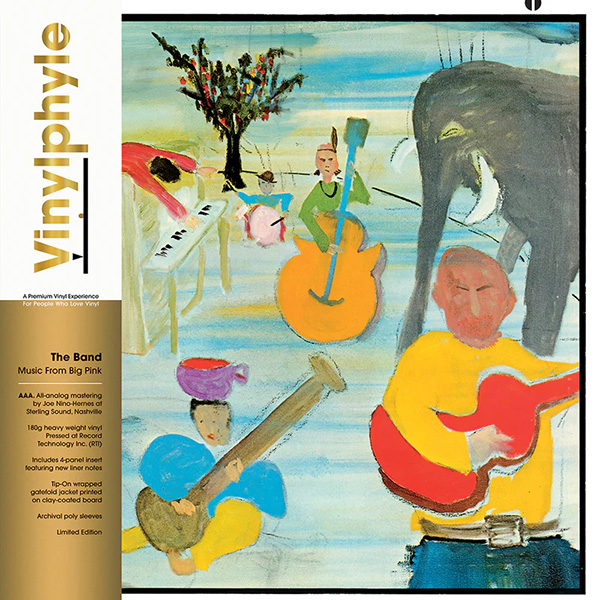
The Band's 1968 debut, Music from Big Pink (Capitol Records SKAO-2955), came together in the basement of their house in West Saugerties, New York; Bob Dylan contributed the primitive cover art and cowrote two of the album's songs. While bubblegum Top-40 hits like "Take It to the Limit," "A Horse with No Name," and "Amie" would make waves a few years later, The Band's "The Weight," "King Harvest," and "Up on Cripple Creek" set the standard, just as vital as the hits they inspired but formed from something deeper: Farmers. Drifters. Civil War losers. Miners. People scuffling through life on empty, with no wing or prayer.
Influencing The Beatles, Little Feat, Emmylou Harris, Eric Clapton, and even Pink Floyd, Music from Big Pink was a watershed in American music even though 80% of The Band was Canadian.
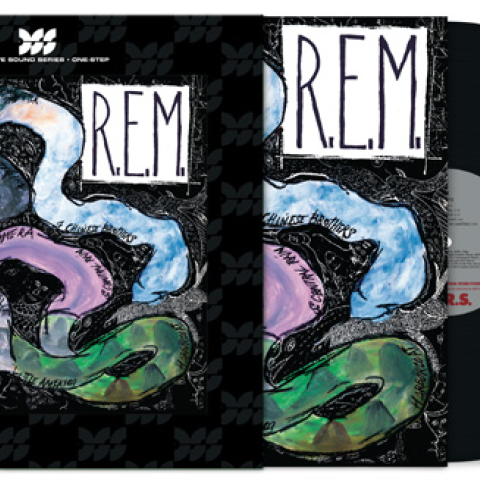
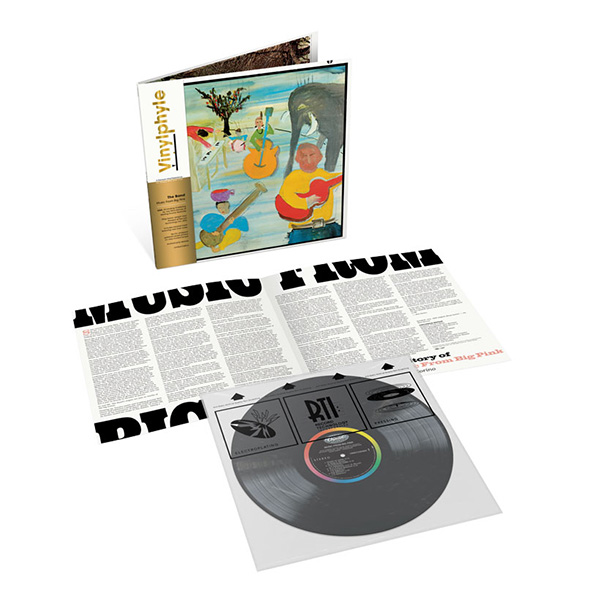
Pressed in a limited batch of 3000 at RTI, this UMe Vinylphyle reissue (Capitol Records/UMe 199957336406) was cut from the original analog tapes by Joe Nino-Hernes at Sterling Sound, Nashville, in a new edition remastered in an all-analog chain, featuring a gatefold tip-on jacket, a four-panel insert, and original tape-box scans.
One of us—Ken—was 11 years old when Music from Big Pink hit the local record store in Charlotte. The other—Ken's big brother, Jon McAuliffe—was already gigging in New York City, part of Greenwich Village's folk scene, which would soon spawn Jon's band Thirty Days Out and their two releases, Thirty Days Out (Reprise Records RS 6450) and Miracle Lick (Reprise Records MS 2085). Jon would visit the family in North Carolina and regale them with stories about lunch with The Band's manager, Albert Grossman, who introduced him to Robbie Robertson, or conversations about critics with Richard Carpenter while both were tracking at A&M Studios in Los Angeles. For those deep in that scene, the arrival of Music from Big Pink was pivotal.
Prior to the release of Music from Big Pink, interest had been building, due primarily to the fact that The Band, formerly Ronnie Hawkins's band The Hawks ("Mary Lou," "Need Your Lovin'," more), had been Bob Dylan's backing band for his 1966 world tour. What perhaps had not been established during the Dylan tour was just how unique and eclectic The Band and its music would be.
Hovering around The Band's overall personality was guitarist Robbie Robertson's songwriting and drummer Levon Helm's gestalt, which would signify some of American music's first iteration of Americana. The music initially struck listeners as an assemblage of something real but also timeless. Folk music, country, blues, basic rock'n'roll, and more were all intimated, but something else was going on here, and its attraction grew quickly.
Big Pink would go on to become one of Americana's most influential recordings, with tunes like "The Weight" projecting a vision that was not common to popular music at the time. Written by Robertson, it tended more toward the personality of Helm, with its Southern American roots and sly lyricism suggesting sneaky moves and enigmatic conclusions.
Despite the popularity of "The Weight," all 11 tracks vie for attention and receive it. The mindset of these songs and their somewhat strange subject matter held listeners in a kind of stylistic suspense that was very new at the time. Characters like Miss Fanny, Crazy Chester, Carmen, The Devil, and more weren't common in pop music then, and the situations portrayed in the lyrics were the stuff of movie scripts. Listening to transitions like the traditional "Long Black Veil" into the horror movie music intro of "Chest Fever" left listeners with a sense of isolation followed by explosion.
The Band had a stylistic component that, coupled with John Simon's production, shone out starkly. Their combined vocals, kind of sloppy yet tuneful and tight, had a natural but surprising effect. It was endemic to their style but unique, and it went on to influence the genre.
Like happening upon a Sunday night church social led by Preacher Harry Powell from The Night of the Hunter, Big Pink comes on crotchety, spooky, mysterious, and spirited.
 Probably the cleanest, clearest iteration of an album that has seen at least 131 vinyl versions, this Vinylphyle disc reveals the full depth of Garth Hudson's harrowing organ mastery, Levon Helm's deep-boweled drums, Richard Manuel's and Rick Danko's curious vocals, and the liquid mercury guitar of Robbie Robertson, all set within a deep soundstage that lets each player breathe.
Fifty-eight years after its release, there's no denying the idiosyncratic, spooky, dreamy nature of Big Pink's 11 songs. The music leaps off the grooves like a spirit confession—drums booming and dropping like drunken slugs to the stomach, transients sharp and immediate, decays short and palpable. The Hammond B3 organ offers richness, relief, and spectral sound effects, its harmonics blooming with tube-driven Leslie-cabinet generosity as vocal harmonies intertwine like prison inmates holding on to faith, each voice clean, free of smear, and tonally deep. The music lurches and leaps, its odd rhythmic cadences spitting and coughing, all held together by unforgettable melodies and deceptively quirky performances: old-time tales as universal as the idea of America itself, rendered with jewel-box clarity, clear-headed warmth, and rich tonal density.
Probably the cleanest, clearest iteration of an album that has seen at least 131 vinyl versions, this Vinylphyle disc reveals the full depth of Garth Hudson's harrowing organ mastery, Levon Helm's deep-boweled drums, Richard Manuel's and Rick Danko's curious vocals, and the liquid mercury guitar of Robbie Robertson, all set within a deep soundstage that lets each player breathe.
Fifty-eight years after its release, there's no denying the idiosyncratic, spooky, dreamy nature of Big Pink's 11 songs. The music leaps off the grooves like a spirit confession—drums booming and dropping like drunken slugs to the stomach, transients sharp and immediate, decays short and palpable. The Hammond B3 organ offers richness, relief, and spectral sound effects, its harmonics blooming with tube-driven Leslie-cabinet generosity as vocal harmonies intertwine like prison inmates holding on to faith, each voice clean, free of smear, and tonally deep. The music lurches and leaps, its odd rhythmic cadences spitting and coughing, all held together by unforgettable melodies and deceptively quirky performances: old-time tales as universal as the idea of America itself, rendered with jewel-box clarity, clear-headed warmth, and rich tonal density.
Probably the cleanest, clearest iteration of an album that has seen at least 131 vinyl versions, this Vinylphyle disc reveals the full depth of Garth Hudson's harrowing organ mastery, Levon Helm's deep-boweled drums, Richard Manuel's and Rick Danko's curious vocals, and the liquid mercury guitar of Robbie Robertson, all set within a deep soundstage that lets each player breathe.