When I began writing for Stereophile in 2014, I decided not to mention Audio Note. I decided this because during the best part of the 1990s, I enthusiastically represented both Audio Note UK and Audio Note Japan (Kondo). I did not want my new readers thinking my Stereophile review stories were biased by my previous affiliations.
During that time in the '90s, I had a pretty swell home system featuring German-made Avantgarde Trio loudspeakers powered by an Ongaku amplifier in which the silver-foil capacitors, cold-drawn silver wire, and silver-wired output transformers were designed and hand-fashioned by AN Japan's founder Hiroyasu Kondo and his small cadre of talented associates. Also made by hand was ANJ's IO II moving coil phono cartridge, which had a very low output (less than 1mV) and a compliance so low we used to clean the stylus with our oily middle fingers. (Try that on your hoity-toity MC.) I used that cartridge daily, at shows and at home, for almost four years, during which time the IO wired my brain to think that was the most down-to-earth real LPs could sound. It also wired my brain to think many competing moving coils sounded frilly and overstated, with excessive, etched detail and fake "air." Even my beloved Koetsus lacked the meat-and-potatoes the original made-in-Japan IO II could generate. That cartridge birthed, fostered, and cemented my taste for what properly reproduced music should sound like.
Even though I've never reviewed an Audio Note product, I was and still am biased by my experiences listening with Peter Qvortrup and by the aesthetic of their products, especially the Ongaku and the IO II, both of which made playing records feel like reading great books. Which is why good memories and curiosity forced me to break my longstanding taboo and audition the latest version of this low-output moving coil cartridge from Audio Note UK. I was curious to see how much my taste had evolved during the intervening decades.
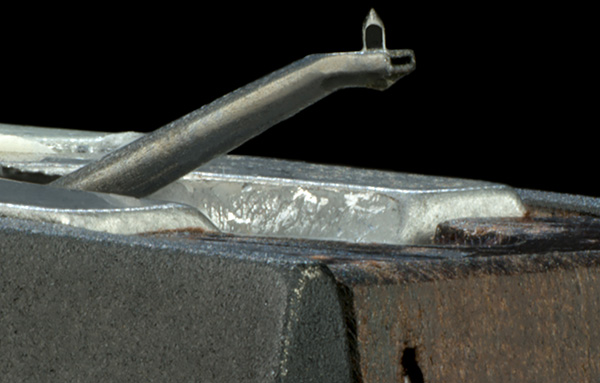 The IO II
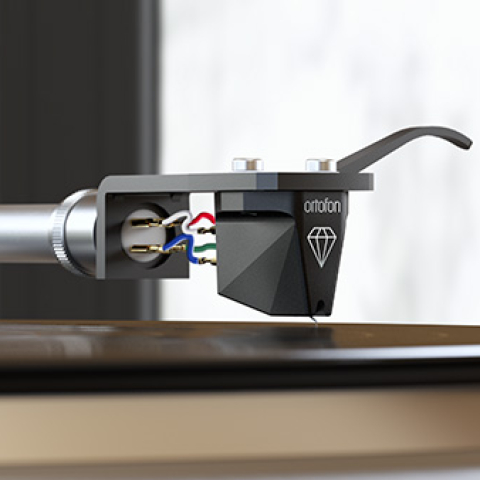
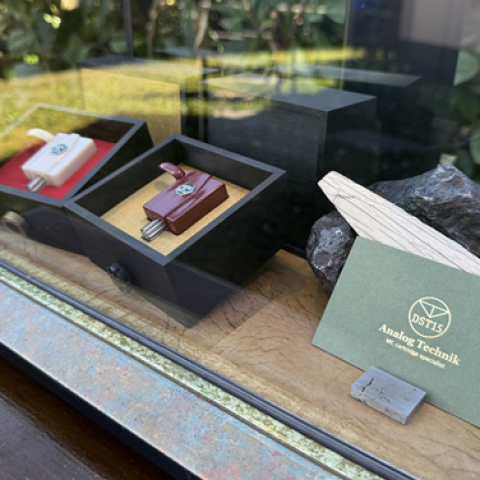
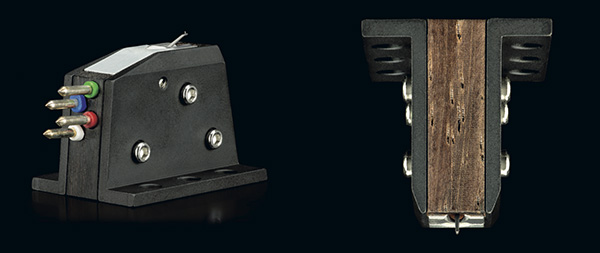
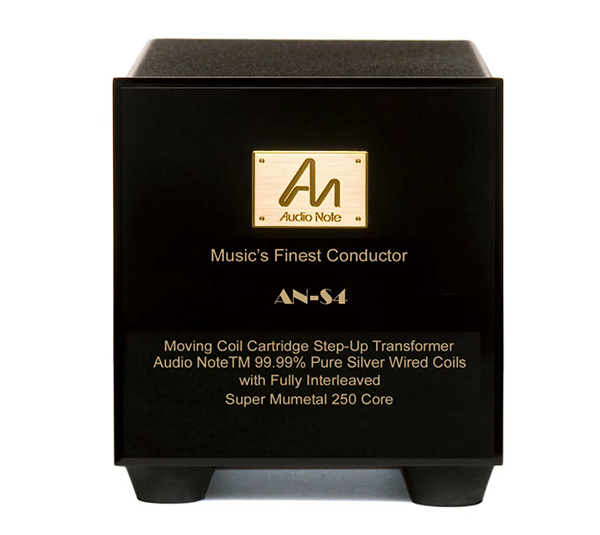
Audio Note offers three moving magnet cartridges: the IQ I, IQ II, and IQ III; and four moving coils: IO I, IO II, IO Gold, and IO Ltd. According to their website (footnote 1), the 18gm IO II is heavier than the IO I (11gm). The additional mass is due to the use of gunmetal rather than aluminum for the outer binding plates. The IO II is fitted with a higher quality AN Type 1 diamond. What does Type 1 mean? "In 1995, we contracted a company to develop a process which would allow them to cut and polish a perfect, natural octagon to a level of the best surgical instruments used for eye and other fine surgery, on a diamond less than half the size of the closest, readily available option at that time. This remains, to the best of our knowledge, the finest diamond in use on any cartridge available today." What does it achieve? "The improvements over any standard diamonds used in other cartridges can be briefly described as better tracking of high frequencies, lower surface noise, lower record wear, longer stylus life, smaller tip mass and lower tracking force." Like the IO I, the IO II has a titanium cantilever and puts out an extremely low 0.04mV, with an internal impedance of a ghostly 1 ohm. It uses alnico magnets, and the recommended load impedance is 3–4 ohms. Compliance is a low 5–10µm/mN. The recommended tracking force is 2.5gm. The IO II has an MSRP of $8452.50. Also supplied for this column was an AN-S4L step-up transformer ($8746.50). According to the 10-page "Owner's Information" booklet that came with it, "The internal transformers used in the AN-S4 are manufactured by Audio Note exclusively. Each transformer is made from Super Mumetal 250 and wound with 99.99% pure silver wire. Each transformer is then housed in a Mumetal screening canister to minimize noise and interference." That canister is encased in a thick copper chassis.
Audio Note makes four versions of the AN-S4, wound to support moving coil cartridges with source impedances starting very low (like the IO II) and up to 16 ohms. The S4L I have is "for cartridges with an internal impedance of 1 ohm, primarily designed for use with the Audio Note (UK) IO range."
 Setup
Setup
The IO II's low compliance and heavy body inspired me to reach for the stiffest, heaviest, most rigid tonearm and headshell I have: the content/listening-135-abis-sa-12">Sorane SA-1.2 with adjustable effective mass (15 to 45gm), equipped with DS Audio's superstiff 10.5gm Ultra duralumin HS-001 headshell. The phono cartridge feeds AudioQuest's Yosemite tonearm cable, which, to start, I connected directly to the MC input of the Lab12 Melto2 phono stage. This sounded nice, in a too-normal sort of way. I was not experiencing the IO II I remembered from my Audio Note days, so I installed the AN-S4L. I used short, shielded copper interconnect by Bob's Devices between the S4's output and the Lab12's MM input. The result with my 83dB-sensitive Falcon Gold Badge speakers was near silence at all volume levels.
 Listening
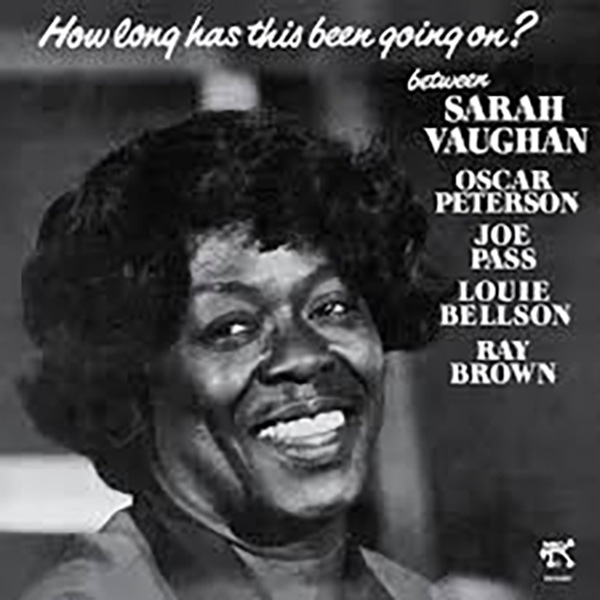
The first disc I played with the newly installed IO II was How Long Has This Been Going On? featuring Sarah Vaughan on vocals, Oscar Peterson on piano, Joe Pass playing a sublime guitar, Ray Brown playing an incredibly live-sounding bass, and Louis Bellson on drums (Pablo LP 2310-821). I heard the pitch-perfect tone, unrestrained tempos, and relaxed, natural transient response I remembered from the 1990s. During that Sarah Vaughan recital, density, immediacy, and flow stood out as the IO II's most obvious traits. I played this disc repeatedly as I tried different loads with the IO feeding the MC input of the Lab12 Melto2 phono stage. I ended up running it through the Lab12's Lundahl step-up transformer set to 27 ohms. I heard some low-level noise, but the IO II punched like a boxer, solid and quick. The second and third discs I played came from a 2015 Decca reissue of Jean Sibelius's The Complete Symphonies with Anthony Collins conducting the London Symphony Orchestra (Decca 478 8497), recorded in Kingsway Hall in 1954. I have not given up trying, but I can't say I "get" this important Finnish composer. His music seems overstated and overtly programmatic. Listening to these symphonies as conducted by Anthony Collins is like watching a dialog-driven film. But forget the music! I played these discs with the IO because I enjoy the sound of the sound on these Decca reissues. As I had hoped, the IO II presented these recordings with an architectural clarity that let me study how each symphony was built. I didn't need to switch in the Decca curve on the Melto2 phono stage because these discs are RIAA. And they are mono, which, in my system, with the Falcon LS3/5a, creates images with a sharper edge-to-edge top-to-bottom focus than stereo.
Those stereo images I've been staring at my whole life are strange phenomena, which I don't fully understand and don't recall "seeing" anywhere else. Stereophonic apparitions are recorded sounds that have been separated by some method into two separate, related sources and manipulated to impress listeners as three-dimensional forms between two speakers. And they are invisible, right? I mean, what kind of voodoo witch doctor shit is that?
Sometimes audio images resemble those fata morgana mirages described by Arctic explorers: stacked and layered—more focused in the horizontal plane than the vertical plane. Like stereophonic hi-fi images, fata morgana images float just above the ground, reaching their maximum density and focus in a relatively narrow horizontal band that fades quickly as it approaches its outer limits.
These Arctic mirage effects do not happen so often with mono because my mind reads mono as a vertical waterfall of equally defined energy particles. Mono (even with two speakers) is equally focused in the vertical and horizontal planes. Performers and their instruments seem more convincingly rendered in mono, with performers standing their full height, feet on the floor. Playing mono with the IO II, there was a wide display of densely packed detail from my floor to almost my ceiling. Meanwhile ...
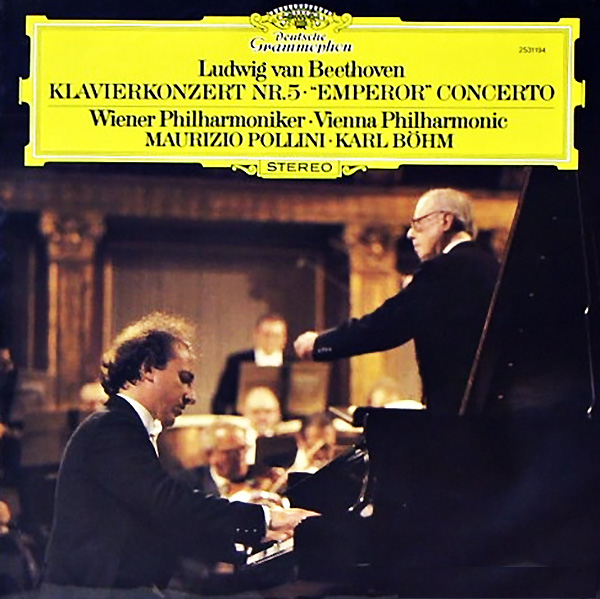 I dare you to find a classical composition or a performance or a recording with more historic audacity or culture-bending ferocity than Maurizio Pollini playing Beethoven's Piano Concerto No.5 in E-flat with the Vienna Philharmonic, Karl Böhm conducting. This 120gm 1979 Deutsche Grammophon disc (DG LP 2531 194) contains an all-out riveting performance that, by the end of side 2, had me panting with exhaustion. I played it now to see how the IO II + AN-S4 combo would hold up to this level of power-signal assault. I am happy to report that the Audio Note cartridge sailed through this record's challenges with spot-on tone and no congestion, confusion, sorting irregularities, glare, or hardness. It never flinched while sorting out sounds.
WASHI reversible turntable sheet
I dare you to find a classical composition or a performance or a recording with more historic audacity or culture-bending ferocity than Maurizio Pollini playing Beethoven's Piano Concerto No.5 in E-flat with the Vienna Philharmonic, Karl Böhm conducting. This 120gm 1979 Deutsche Grammophon disc (DG LP 2531 194) contains an all-out riveting performance that, by the end of side 2, had me panting with exhaustion. I played it now to see how the IO II + AN-S4 combo would hold up to this level of power-signal assault. I am happy to report that the Audio Note cartridge sailed through this record's challenges with spot-on tone and no congestion, confusion, sorting irregularities, glare, or hardness. It never flinched while sorting out sounds.
WASHI reversible turntable sheet
While I was repeat-playing that Pollini-Beethoven disc, an unexpected box arrived at my door. Inside, under an ocean of packing peanuts, I found what at first glance appeared to be an LP. Except on the cover, next to some bold Japanese ink writing, it said, "WASHI Reversible Turntable Sheet." It also said "Made in Japan." At the bottom was a TEAC logo. The TEAC website (footnote 2) says "WASHI is a traditional Japanese paper made from the fibers of mulberry trees. With natural durability, it's been widely used for ukiyo-e printings and paper currency for centuries."
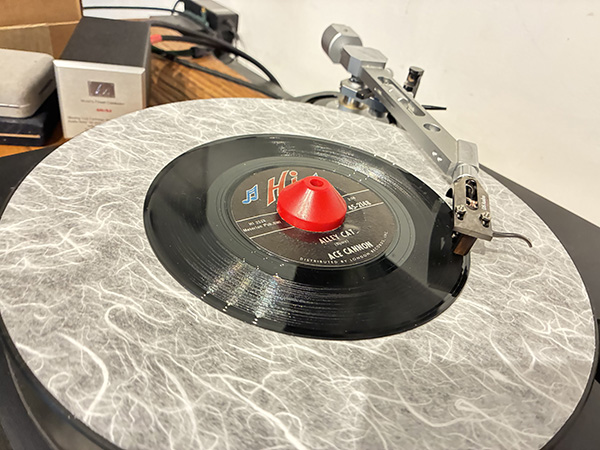 The main thing this thin, light turntable mat is designed to do is reduce the static charge between the record and the turntable platter. I noticed the dust-inhibiting effects of this static reduction immediately. It will take longer to see if this platter mat compromises the bond between a clamped record and the Dr. Feickert Delrin platter, but for the moment, the WASHI's static charge between the record and the turntable platter. I noticed the dust-inhibiting effects of this static reduction immediately. It will take longer to see if this platter mat compromises the bond between a clamped record and the Dr. Feickert Delrin platter, but for the moment, the WASHI's static reduction and dust prevention are welcome blessings.
TEAC's website says the WASHI mat ($39.99) can do more: "Anti-warpage or planarity (aka flatness) is another essential issue for a turntable sheet to keep the stylus pressure equal. In order to satisfy this condition, the TA-TS30UN employs two layers of WASHI, one on each side of a slightly heavier synthetic 'Stone-paper' sheet made from 80% calcium carbonate and 20% high-density polyethylene for core material. The Stone-paper has higher specific weight—compared to conventional paper made from pulp—which means it gives a moderate weight for a thin sheet. Most importantly, this stone-paper inner sheet keeps its planarity under high humidity conditions."
It seemed perfect for my Dr. Feickert Blackbird turntable. It covers up those bright brass weights and prevents mounds of platter-stored dust from being statically applied to every disc I set down.
No doubt, those weights contribute to the Dr. Feickert's excellent sense of drive, but they trap ponds of dust and blind me with reflections as I cue up 7" 45s, so I was glad to see them disappear beneath the WASHI. When I played the abovementioned Beethoven concerto, I thought I noticed the disc playing a touch quieter and gentler. More supple.
I left the WASHI mat on the platter because I liked how it looked, and I was curious how it would hold up to my scrutiny over time.
Naturally, with the new mat, I had to play a big-hole 45. I get a special pleasure playing 7" 45rpm discs because they are EQed for radio play and jukebox presence, and I respond well to that kind of immediacy.
With the IO II, my like-new copy of Ace Cannon's 1968 instrumental hit "Alley Cat" (Hi Records 45-2148) dramatically separated the sound of each instrument and placed it strategically inside the mono image.
Ace's real-sounding sax showed a strong presence in front of the drums, piano, and guitar. Each instrument was more solid and distinct than I remember from previous plays. This triggered memories of "Alley Cat" prancing out of big dashboard speakers.
The IO II played this disc very much like the Tzar DST Black Knight Corian cartridge does; I described the Black Knight Corian in Gramophone Dreams #106. The Tzar is also a heavy (18–25gm), exceptionally rigid, low-compliance device that tracks well at 2.5gm (or higher). Heavy, rigid, and low compliance are uncommon traits in today's world of 9gm high-compliance MCs with no bodies.
I've never been a "classic rock" kind of guy; it doesn't match my wardrobe. But I am a natural-born "Béla Bartók" person. I grew up on Bach, blues, Elvis, and Mr. Chuck Berry, but during college, I was seduced by Bartók's heady visions. His deeply felt, abstractly constructed music appeals to my right and left brain equally.
Bartók's creative achievements are difficult to explain to the uninitiated but easy to understand while listening. His compositions employ startling volume, rhythm, and energy shifts that trigger (in my mind) images of logjams breaking and rhythmic flows powering up.
The main thing this thin, light turntable mat is designed to do is reduce the static charge between the record and the turntable platter. I noticed the dust-inhibiting effects of this static reduction immediately. It will take longer to see if this platter mat compromises the bond between a clamped record and the Dr. Feickert Delrin platter, but for the moment, the WASHI's static charge between the record and the turntable platter. I noticed the dust-inhibiting effects of this static reduction immediately. It will take longer to see if this platter mat compromises the bond between a clamped record and the Dr. Feickert Delrin platter, but for the moment, the WASHI's static reduction and dust prevention are welcome blessings.
TEAC's website says the WASHI mat ($39.99) can do more: "Anti-warpage or planarity (aka flatness) is another essential issue for a turntable sheet to keep the stylus pressure equal. In order to satisfy this condition, the TA-TS30UN employs two layers of WASHI, one on each side of a slightly heavier synthetic 'Stone-paper' sheet made from 80% calcium carbonate and 20% high-density polyethylene for core material. The Stone-paper has higher specific weight—compared to conventional paper made from pulp—which means it gives a moderate weight for a thin sheet. Most importantly, this stone-paper inner sheet keeps its planarity under high humidity conditions."
It seemed perfect for my Dr. Feickert Blackbird turntable. It covers up those bright brass weights and prevents mounds of platter-stored dust from being statically applied to every disc I set down.
No doubt, those weights contribute to the Dr. Feickert's excellent sense of drive, but they trap ponds of dust and blind me with reflections as I cue up 7" 45s, so I was glad to see them disappear beneath the WASHI. When I played the abovementioned Beethoven concerto, I thought I noticed the disc playing a touch quieter and gentler. More supple.
I left the WASHI mat on the platter because I liked how it looked, and I was curious how it would hold up to my scrutiny over time.
Naturally, with the new mat, I had to play a big-hole 45. I get a special pleasure playing 7" 45rpm discs because they are EQed for radio play and jukebox presence, and I respond well to that kind of immediacy.
With the IO II, my like-new copy of Ace Cannon's 1968 instrumental hit "Alley Cat" (Hi Records 45-2148) dramatically separated the sound of each instrument and placed it strategically inside the mono image.
Ace's real-sounding sax showed a strong presence in front of the drums, piano, and guitar. Each instrument was more solid and distinct than I remember from previous plays. This triggered memories of "Alley Cat" prancing out of big dashboard speakers.
The IO II played this disc very much like the Tzar DST Black Knight Corian cartridge does; I described the Black Knight Corian in Gramophone Dreams #106. The Tzar is also a heavy (18–25gm), exceptionally rigid, low-compliance device that tracks well at 2.5gm (or higher). Heavy, rigid, and low compliance are uncommon traits in today's world of 9gm high-compliance MCs with no bodies.
I've never been a "classic rock" kind of guy; it doesn't match my wardrobe. But I am a natural-born "Béla Bartók" person. I grew up on Bach, blues, Elvis, and Mr. Chuck Berry, but during college, I was seduced by Bartók's heady visions. His deeply felt, abstractly constructed music appeals to my right and left brain equally.
Bartók's creative achievements are difficult to explain to the uninitiated but easy to understand while listening. His compositions employ startling volume, rhythm, and energy shifts that trigger (in my mind) images of logjams breaking and rhythmic flows powering up.
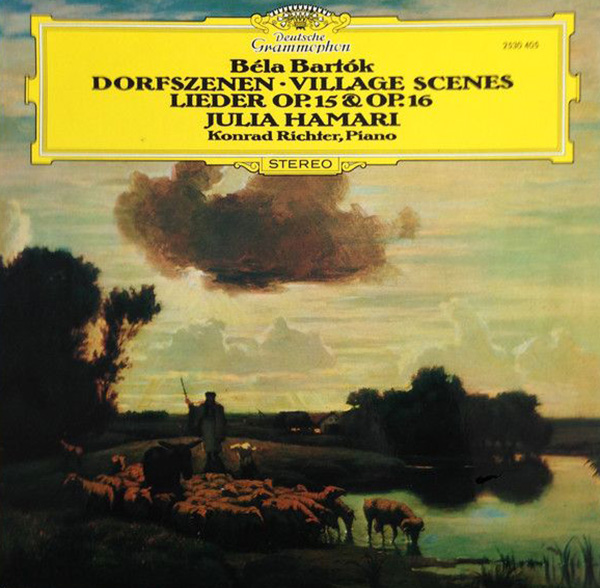 I never thought disconcerting could be so comforting until I found my promo copy of a 1974 Deutsche Grammophon recording, Dorfszenen—Village Scenes, Lieder Op.15 & Op.16, with mezzo-soprano Julia Hamari accompanied by Konrad Richter on piano (DG 2530 405). This is dark, wild Bartók, upsetting at its core, but the more I play it, the more it shows me peace. With this disc, the IO II kept tones and tempos in a taut and structured but natural-feeling order. Bartók's compositional elements were easy to discern. Julia Hamari's fierce vocal expressions transcended the romantic pale, as did Konrad Richter's accompaniment. Together they delivered Bartók's Slavic folk songs as imaginatively formed, precisely structured avant-garde poetry. There is nothing overt or flashy about the way the IO II presents recordings. It reads the grooves like a calm, controlled truth-teller, but the truths it tells free my mind to access the performance's structural and poetic content.
Nagatron AG9200 "Z Coupler"
I never thought disconcerting could be so comforting until I found my promo copy of a 1974 Deutsche Grammophon recording, Dorfszenen—Village Scenes, Lieder Op.15 & Op.16, with mezzo-soprano Julia Hamari accompanied by Konrad Richter on piano (DG 2530 405). This is dark, wild Bartók, upsetting at its core, but the more I play it, the more it shows me peace. With this disc, the IO II kept tones and tempos in a taut and structured but natural-feeling order. Bartók's compositional elements were easy to discern. Julia Hamari's fierce vocal expressions transcended the romantic pale, as did Konrad Richter's accompaniment. Together they delivered Bartók's Slavic folk songs as imaginatively formed, precisely structured avant-garde poetry. There is nothing overt or flashy about the way the IO II presents recordings. It reads the grooves like a calm, controlled truth-teller, but the truths it tells free my mind to access the performance's structural and poetic content.
Nagatron AG9200 "Z Coupler"
Nagatronics Corp. was located in Baldwin, New York, but the label on the bottom of my friend Richard's Nagatron AG9200 "Z Coupler" SUT says "Made in Japan" (footnote 3). Rumor has it that Kondo wound this no-longer-available SUT with his own "chemically pure" 99.99% silver wire. The specs on the Z Coupler's label say its input impedance is 3 ohms and its output impedance is 33k ohms. It says it should be loaded by 47k ohms or more and that it makes 40dB of gain (1:100), which is just what the IO II specs are asking for. Listen now, sinners, you'd better let them chickens loose, 'cause Doc Watson on Stage with his son Merle (Vanguard VSD-9/10) will put you right in front of those pearly gates. See the blinding white light, with angels with trumpets circling overhead, and remember, God knows you stole those chickens.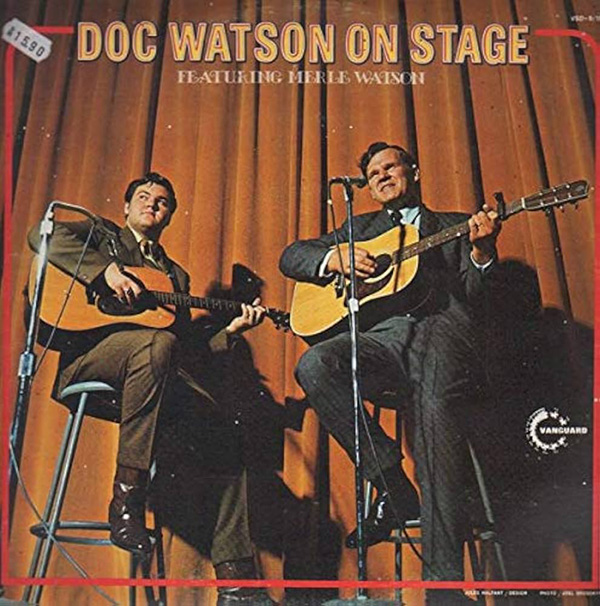 It was interesting to play this live 1970 recording made at Cornell University because I would bet all my headphones and half my chickens there were Crown DC-300 amplifiers somewhere in the recording chain. DC-300 power amps have this hard, clean-to-the-extreme, high-contrast sound that typified early transistor amps. The first time I heard DC-300s, they were driving a pair of DCM Time Windows, and I thought, man, those amps are steel-fisted. It was hearing those Crown amps that steered my thoughts toward directly heated triodes.
With this Doc and Merle Watson recording, the hard sound didn't interfere with my enjoyment because these performances are so divinely inspired that I'm just grateful they got saved. And to its supreme credit, the IO II and Z Coupler put hi-fi sonics in the next room and Doc and Merle's mastery of these traditional songs right there in front of me.
With the Audio Note IO II connected to the Nagatron Z Coupler, playback seemed fundamentally accurate in that I was hearing what I imagined was pretty close to what Vanguard's engineers probably heard. The performances felt like Doc and Merle were having a milestone one-for-the-ages moment. Whenever the recording would glare or flare, my brain would cringe for a second then return quickly to father and son putting it all out there.
The Z Coupler did not soften or repress the effects of the massive amounts of feedback those Crown amps were imbued with. If anything, the AG9200 accentuated the brightness and hardness. But it was clear from the start that the IO II used the Z's 3 ohm load to pull out maximum small-scale data. Unrepressed, frosty clear, and distinctly bright is a good description of the sound of the IO II through the Nagatron Z Coupler.
It was interesting to play this live 1970 recording made at Cornell University because I would bet all my headphones and half my chickens there were Crown DC-300 amplifiers somewhere in the recording chain. DC-300 power amps have this hard, clean-to-the-extreme, high-contrast sound that typified early transistor amps. The first time I heard DC-300s, they were driving a pair of DCM Time Windows, and I thought, man, those amps are steel-fisted. It was hearing those Crown amps that steered my thoughts toward directly heated triodes.
With this Doc and Merle Watson recording, the hard sound didn't interfere with my enjoyment because these performances are so divinely inspired that I'm just grateful they got saved. And to its supreme credit, the IO II and Z Coupler put hi-fi sonics in the next room and Doc and Merle's mastery of these traditional songs right there in front of me.
With the Audio Note IO II connected to the Nagatron Z Coupler, playback seemed fundamentally accurate in that I was hearing what I imagined was pretty close to what Vanguard's engineers probably heard. The performances felt like Doc and Merle were having a milestone one-for-the-ages moment. Whenever the recording would glare or flare, my brain would cringe for a second then return quickly to father and son putting it all out there.
The Z Coupler did not soften or repress the effects of the massive amounts of feedback those Crown amps were imbued with. If anything, the AG9200 accentuated the brightness and hardness. But it was clear from the start that the IO II used the Z's 3 ohm load to pull out maximum small-scale data. Unrepressed, frosty clear, and distinctly bright is a good description of the sound of the IO II through the Nagatron Z Coupler.
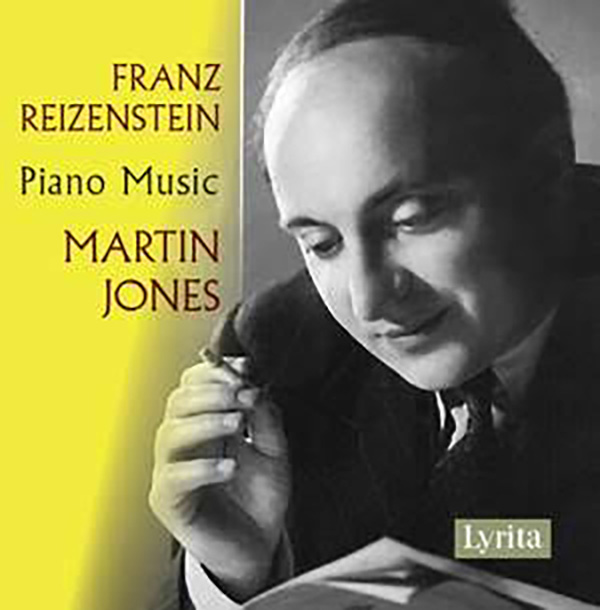 The only way for me to gauge what the Z was doing was to replace it with the Audio Note AN-S4 step-up. That change made for a calmer, richer, fuller, more complete-sounding presentation. The S4's sound was wetter, darker, denser, and deeper with more atmospherics and an emphasis on force and energy movement. On a 1960 Lyrita recording (RCS.19) with Franz Reizenstein (German, 1911–1968) playing his own compositions, Piano Sonata in B, Op.19, and Legend, Op.24, I could feel the power coming off the piano and the weight of Reizenstein's Germanness.
Listening to the Reizenstein disc reminded me of this basic audio truth: How an audio reproduction device stores and releases energy determines the sonic thumbprint it imposes on the music passing through it. The IO II stores energy as other cartridges do, but the IO II is slower to release it. By the time the stored energy finally oozes out, its power is so low it's irrelevant.
The best thing about the IO II + AN-S4 is how straightforward it sounded. Nothing ever seemed exaggerated.
The only way for me to gauge what the Z was doing was to replace it with the Audio Note AN-S4 step-up. That change made for a calmer, richer, fuller, more complete-sounding presentation. The S4's sound was wetter, darker, denser, and deeper with more atmospherics and an emphasis on force and energy movement. On a 1960 Lyrita recording (RCS.19) with Franz Reizenstein (German, 1911–1968) playing his own compositions, Piano Sonata in B, Op.19, and Legend, Op.24, I could feel the power coming off the piano and the weight of Reizenstein's Germanness.
Listening to the Reizenstein disc reminded me of this basic audio truth: How an audio reproduction device stores and releases energy determines the sonic thumbprint it imposes on the music passing through it. The IO II stores energy as other cartridges do, but the IO II is slower to release it. By the time the stored energy finally oozes out, its power is so low it's irrelevant.
The best thing about the IO II + AN-S4 is how straightforward it sounded. Nothing ever seemed exaggerated.
 Dimanche à la campagne
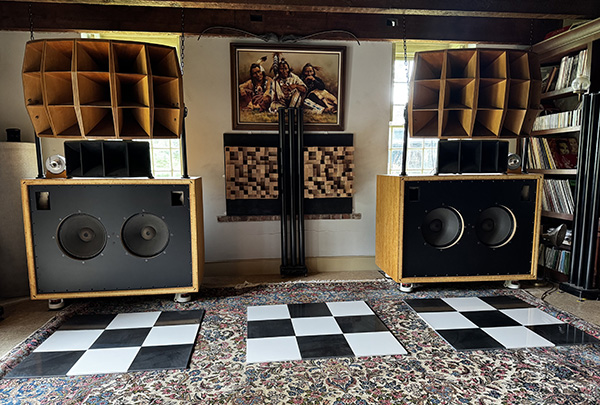
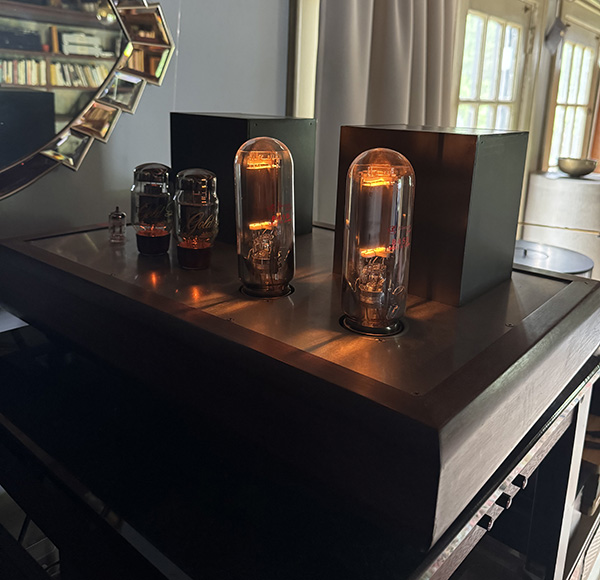
I call it the French Farm because it belongs to my French friends Cyrille and his wife Nashay, but this exotic pond-centered acreage is officially called Ice Pond Farm. It is located in Stony Point, New York. After I started this IO II report, I found myself once again relaxing in Cyrille's 200-year-old, stone-floored farmhouse (footnote 4) eating farm-fresh fixins and getting ready to audition his full, four-way, quad-amped, made-in-Japan Onken horn system designed by Onken founder Eijiro Koizumi. This visit was different from my last because now the bass cabinets were powered by my favorite push-pull amplifier of all time: Noriyasu Komuro's direct-coupled 845 monoblock. The first thing I noticed with the first record was the scale, power, and realistic dynamics of the bass. Komuro's PP845s were powering double Altec 416-16A drivers in vintage Onken cabinets with elite control and finesse. The rest of the speaker was Onken's MS 200 low-mid horn with 255 ES compression drivers and MS 500 high-mid horn with 456 ES compression drivers. On top was an Onken 5000T tweeter, which came across clear and relaxed. The crossover was a Goto EPH-4002 with 6dB/octave slopes at 250Hz/1200Hz/8kHz.
 Other than the Komuro amps, what I wanted to hear was Cyrille's newly acquired, Kondo-made IO-J phono cartridge. As I auditioned the Audio Note UK IO II, I became curious if I could spot the IO-J fronting Cyrille's system. And guess what? Despite the infinite differences between C's system and my own, a heavy cartridge with low compliance and a low output manufactured weight, body, and descriptive authority that proved difficult to hide.
In my friend's system, the IO-J was mounted on a Mørch DP-8 tonearm. It fed Kondo's SFz step-up transformer, which in turn fed a Kondo phono stage. Being familiar with this level of Kondo componentry, I was not surprised to see the IO-J punching through all these variables and setting a vivid, easily recognizable tone for the whole system.
The IO-J sound I thought I recognized had a slightly dry, brightly lit clarity that felt breathy and vibrant pushing through Cyrille's horns. The system struck a perfect balance: never too soft or too dull, never too bright or too hard. The system spoke with a clear, certain voice that played every type of disc and genre of music with equal facility. Cyrille played records for three hours and not once was their performative content upstaged by a misbehaving hi-fi.
Back at home, in my tiny system, with the UK IO II with the AN-S4, records sounded denser, richer, more focused, and more architecturally rendered than what I heard at Cyrille's. Images were a fraction of the size they had been in the Onken system, but their inner workings and immediacy were more pronounced in my nearfield setting.
In the end
Other than the Komuro amps, what I wanted to hear was Cyrille's newly acquired, Kondo-made IO-J phono cartridge. As I auditioned the Audio Note UK IO II, I became curious if I could spot the IO-J fronting Cyrille's system. And guess what? Despite the infinite differences between C's system and my own, a heavy cartridge with low compliance and a low output manufactured weight, body, and descriptive authority that proved difficult to hide.
In my friend's system, the IO-J was mounted on a Mørch DP-8 tonearm. It fed Kondo's SFz step-up transformer, which in turn fed a Kondo phono stage. Being familiar with this level of Kondo componentry, I was not surprised to see the IO-J punching through all these variables and setting a vivid, easily recognizable tone for the whole system.
The IO-J sound I thought I recognized had a slightly dry, brightly lit clarity that felt breathy and vibrant pushing through Cyrille's horns. The system struck a perfect balance: never too soft or too dull, never too bright or too hard. The system spoke with a clear, certain voice that played every type of disc and genre of music with equal facility. Cyrille played records for three hours and not once was their performative content upstaged by a misbehaving hi-fi.
Back at home, in my tiny system, with the UK IO II with the AN-S4, records sounded denser, richer, more focused, and more architecturally rendered than what I heard at Cyrille's. Images were a fraction of the size they had been in the Onken system, but their inner workings and immediacy were more pronounced in my nearfield setting.
In the end
I was correct in remembering how dense, direct, and perfectly tone-truthful vintage AN IO cartridges are. What I had forgotten was how soignée, voguish, and urbane they could be. In my system, the AN UK IO II gave me most of the realism, weight, and locomotion of Robyatt Audio's Tzar DST V1 Black Knight Corian but with considerably more nuance and sophistication, more depth, layering, and sparkle. During the months of May and June, I used the IO II primarily with the AN-S4 silver-wire–wound transformer, but I also tried at least six other SUTs. A couple were silver-wound and sounded pretty nice but were gain-challenged. The rest were flat, boring, and also gain-challenged. The only transformer that was not gain-challenged was the Nagatron AG9200, which was raw, punch-and-slam exciting, and hyper-detailed but also glary and flary and fatiguing. Obviously, the IO II demands a very specific loading profile, which the AN-S4 was created to satisfy. I would not buy an IO II without its matching step-up.
If you are a card-carrying Dynavector, Lyra, or Ortofon fan, this Audio Note moving coil may not suit you. If you're a DS Audio fan, it might. If you're a Grado, Goldring, or Nagaoka moving magnet fan (as I am), the AN IO II could be the upgrade cartridge of your wildest dreams. It and Neumann's DST 62 are my favorite cartridges from the stereo era
Footnote 1: Audio Note (UK) Ltd., Viscount House, Star Road, Star Trading Estate, Partridge Green, West Sussex RH13 8RA, United Kingdom. Tel: +44 (0) 1273 830800. Email: info@audionote.co.uk. Web: audionote.co.uk. Footnote 2: See teacusa.com/products/ta-ts30un-turntable-sheet. TEAC, 1-47 Ochiai, Tama-shi, Tokyo 206-8530, Japan. Tel: (042) 356-9100. US distributor: Playback Distribution, 3257 Wildlife Tr., Zionsville, IN 46077. Web: playbackdistribution.com.
Footnote 3: See Gramophone Dreams #104.
Footnote 4: See Gramophone Dreams #89.
The IO IIAudio Note offers three moving magnet cartridges: the IQ I, IQ II, and IQ III; and four moving coils: IO I, IO II, IO Gold, and IO Ltd. According to their website (footnote 1), the 18gm IO II is heavier than the IO I (11gm). The additional mass is due to the use of gunmetal rather than aluminum for the outer binding plates. The IO II is fitted with a higher quality AN Type 1 diamond. What does Type 1 mean? "In 1995, we contracted a company to develop a process which would allow them to cut and polish a perfect, natural octagon to a level of the best surgical instruments used for eye and other fine surgery, on a diamond less than half the size of the closest, readily available option at that time. This remains, to the best of our knowledge, the finest diamond in use on any cartridge available today." What does it achieve? "The improvements over any standard diamonds used in other cartridges can be briefly described as better tracking of high frequencies, lower surface noise, lower record wear, longer stylus life, smaller tip mass and lower tracking force." Like the IO I, the IO II has a titanium cantilever and puts out an extremely low 0.04mV, with an internal impedance of a ghostly 1 ohm. It uses alnico magnets, and the recommended load impedance is 3–4 ohms. Compliance is a low 5–10µm/mN. The recommended tracking force is 2.5gm. The IO II has an MSRP of $8452.50. Also supplied for this column was an AN-S4L step-up transformer ($8746.50). According to the 10-page "Owner's Information" booklet that came with it, "The internal transformers used in the AN-S4 are manufactured by Audio Note exclusively. Each transformer is made from Super Mumetal 250 and wound with 99.99% pure silver wire. Each transformer is then housed in a Mumetal screening canister to minimize noise and interference." That canister is encased in a thick copper chassis.
SetupThe IO II's low compliance and heavy body inspired me to reach for the stiffest, heaviest, most rigid tonearm and headshell I have: the content/listening-135-abis-sa-12">Sorane SA-1.2 with adjustable effective mass (15 to 45gm), equipped with DS Audio's superstiff 10.5gm Ultra duralumin HS-001 headshell. The phono cartridge feeds AudioQuest's Yosemite tonearm cable, which, to start, I connected directly to the MC input of the Lab12 Melto2 phono stage. This sounded nice, in a too-normal sort of way. I was not experiencing the IO II I remembered from my Audio Note days, so I installed the AN-S4L. I used short, shielded copper interconnect by Bob's Devices between the S4's output and the Lab12's MM input. The result with my 83dB-sensitive Falcon Gold Badge speakers was near silence at all volume levels.
ListeningThe first disc I played with the newly installed IO II was How Long Has This Been Going On? featuring Sarah Vaughan on vocals, Oscar Peterson on piano, Joe Pass playing a sublime guitar, Ray Brown playing an incredibly live-sounding bass, and Louis Bellson on drums (Pablo LP 2310-821). I heard the pitch-perfect tone, unrestrained tempos, and relaxed, natural transient response I remembered from the 1990s. During that Sarah Vaughan recital, density, immediacy, and flow stood out as the IO II's most obvious traits. I played this disc repeatedly as I tried different loads with the IO feeding the MC input of the Lab12 Melto2 phono stage. I ended up running it through the Lab12's Lundahl step-up transformer set to 27 ohms. I heard some low-level noise, but the IO II punched like a boxer, solid and quick. The second and third discs I played came from a 2015 Decca reissue of Jean Sibelius's The Complete Symphonies with Anthony Collins conducting the London Symphony Orchestra (Decca 478 8497), recorded in Kingsway Hall in 1954. I have not given up trying, but I can't say I "get" this important Finnish composer. His music seems overstated and overtly programmatic. Listening to these symphonies as conducted by Anthony Collins is like watching a dialog-driven film. But forget the music! I played these discs with the IO because I enjoy the sound of the sound on these Decca reissues. As I had hoped, the IO II presented these recordings with an architectural clarity that let me study how each symphony was built. I didn't need to switch in the Decca curve on the Melto2 phono stage because these discs are RIAA. And they are mono, which, in my system, with the Falcon LS3/5a, creates images with a sharper edge-to-edge top-to-bottom focus than stereo.
I dare you to find a classical composition or a performance or a recording with more historic audacity or culture-bending ferocity than Maurizio Pollini playing Beethoven's Piano Concerto No.5 in E-flat with the Vienna Philharmonic, Karl Böhm conducting. This 120gm 1979 Deutsche Grammophon disc (DG LP 2531 194) contains an all-out riveting performance that, by the end of side 2, had me panting with exhaustion. I played it now to see how the IO II + AN-S4 combo would hold up to this level of power-signal assault. I am happy to report that the Audio Note cartridge sailed through this record's challenges with spot-on tone and no congestion, confusion, sorting irregularities, glare, or hardness. It never flinched while sorting out sounds.
WASHI reversible turntable sheetWhile I was repeat-playing that Pollini-Beethoven disc, an unexpected box arrived at my door. Inside, under an ocean of packing peanuts, I found what at first glance appeared to be an LP. Except on the cover, next to some bold Japanese ink writing, it said, "WASHI Reversible Turntable Sheet." It also said "Made in Japan." At the bottom was a TEAC logo. The TEAC website (footnote 2) says "WASHI is a traditional Japanese paper made from the fibers of mulberry trees. With natural durability, it's been widely used for ukiyo-e printings and paper currency for centuries."
The main thing this thin, light turntable mat is designed to do is reduce the static charge between the record and the turntable platter. I noticed the dust-inhibiting effects of this static reduction immediately. It will take longer to see if this platter mat compromises the bond between a clamped record and the Dr. Feickert Delrin platter, but for the moment, the WASHI's static charge between the record and the turntable platter. I noticed the dust-inhibiting effects of this static reduction immediately. It will take longer to see if this platter mat compromises the bond between a clamped record and the Dr. Feickert Delrin platter, but for the moment, the WASHI's static reduction and dust prevention are welcome blessings.
TEAC's website says the WASHI mat ($39.99) can do more: "Anti-warpage or planarity (aka flatness) is another essential issue for a turntable sheet to keep the stylus pressure equal. In order to satisfy this condition, the TA-TS30UN employs two layers of WASHI, one on each side of a slightly heavier synthetic 'Stone-paper' sheet made from 80% calcium carbonate and 20% high-density polyethylene for core material. The Stone-paper has higher specific weight—compared to conventional paper made from pulp—which means it gives a moderate weight for a thin sheet. Most importantly, this stone-paper inner sheet keeps its planarity under high humidity conditions."
It seemed perfect for my Dr. Feickert Blackbird turntable. It covers up those bright brass weights and prevents mounds of platter-stored dust from being statically applied to every disc I set down.
I never thought disconcerting could be so comforting until I found my promo copy of a 1974 Deutsche Grammophon recording, Dorfszenen—Village Scenes, Lieder Op.15 & Op.16, with mezzo-soprano Julia Hamari accompanied by Konrad Richter on piano (DG 2530 405). This is dark, wild Bartók, upsetting at its core, but the more I play it, the more it shows me peace. With this disc, the IO II kept tones and tempos in a taut and structured but natural-feeling order. Bartók's compositional elements were easy to discern. Julia Hamari's fierce vocal expressions transcended the romantic pale, as did Konrad Richter's accompaniment. Together they delivered Bartók's Slavic folk songs as imaginatively formed, precisely structured avant-garde poetry. There is nothing overt or flashy about the way the IO II presents recordings. It reads the grooves like a calm, controlled truth-teller, but the truths it tells free my mind to access the performance's structural and poetic content.
Nagatronics Corp. was located in Baldwin, New York, but the label on the bottom of my friend Richard's Nagatron AG9200 "Z Coupler" SUT says "Made in Japan" (footnote 3). Rumor has it that Kondo wound this no-longer-available SUT with his own "chemically pure" 99.99% silver wire. The specs on the Z Coupler's label say its input impedance is 3 ohms and its output impedance is 33k ohms. It says it should be loaded by 47k ohms or more and that it makes 40dB of gain (1:100), which is just what the IO II specs are asking for. Listen now, sinners, you'd better let them chickens loose, 'cause Doc Watson on Stage with his son Merle (Vanguard VSD-9/10) will put you right in front of those pearly gates. See the blinding white light, with angels with trumpets circling overhead, and remember, God knows you stole those chickens.
It was interesting to play this live 1970 recording made at Cornell University because I would bet all my headphones and half my chickens there were Crown DC-300 amplifiers somewhere in the recording chain. DC-300 power amps have this hard, clean-to-the-extreme, high-contrast sound that typified early transistor amps. The first time I heard DC-300s, they were driving a pair of DCM Time Windows, and I thought, man, those amps are steel-fisted. It was hearing those Crown amps that steered my thoughts toward directly heated triodes.
The only way for me to gauge what the Z was doing was to replace it with the Audio Note AN-S4 step-up. That change made for a calmer, richer, fuller, more complete-sounding presentation. The S4's sound was wetter, darker, denser, and deeper with more atmospherics and an emphasis on force and energy movement. On a 1960 Lyrita recording (RCS.19) with Franz Reizenstein (German, 1911–1968) playing his own compositions, Piano Sonata in B, Op.19, and Legend, Op.24, I could feel the power coming off the piano and the weight of Reizenstein's Germanness.
Listening to the Reizenstein disc reminded me of this basic audio truth: How an audio reproduction device stores and releases energy determines the sonic thumbprint it imposes on the music passing through it. The IO II stores energy as other cartridges do, but the IO II is slower to release it. By the time the stored energy finally oozes out, its power is so low it's irrelevant.
The best thing about the IO II + AN-S4 is how straightforward it sounded. Nothing ever seemed exaggerated.
Dimanche à la campagneI call it the French Farm because it belongs to my French friends Cyrille and his wife Nashay, but this exotic pond-centered acreage is officially called Ice Pond Farm. It is located in Stony Point, New York. After I started this IO II report, I found myself once again relaxing in Cyrille's 200-year-old, stone-floored farmhouse (footnote 4) eating farm-fresh fixins and getting ready to audition his full, four-way, quad-amped, made-in-Japan Onken horn system designed by Onken founder Eijiro Koizumi. This visit was different from my last because now the bass cabinets were powered by my favorite push-pull amplifier of all time: Noriyasu Komuro's direct-coupled 845 monoblock. The first thing I noticed with the first record was the scale, power, and realistic dynamics of the bass. Komuro's PP845s were powering double Altec 416-16A drivers in vintage Onken cabinets with elite control and finesse. The rest of the speaker was Onken's MS 200 low-mid horn with 255 ES compression drivers and MS 500 high-mid horn with 456 ES compression drivers. On top was an Onken 5000T tweeter, which came across clear and relaxed. The crossover was a Goto EPH-4002 with 6dB/octave slopes at 250Hz/1200Hz/8kHz.
Other than the Komuro amps, what I wanted to hear was Cyrille's newly acquired, Kondo-made IO-J phono cartridge. As I auditioned the Audio Note UK IO II, I became curious if I could spot the IO-J fronting Cyrille's system. And guess what? Despite the infinite differences between C's system and my own, a heavy cartridge with low compliance and a low output manufactured weight, body, and descriptive authority that proved difficult to hide.
In my friend's system, the IO-J was mounted on a Mørch DP-8 tonearm. It fed Kondo's SFz step-up transformer, which in turn fed a Kondo phono stage. Being familiar with this level of Kondo componentry, I was not surprised to see the IO-J punching through all these variables and setting a vivid, easily recognizable tone for the whole system.
The IO-J sound I thought I recognized had a slightly dry, brightly lit clarity that felt breathy and vibrant pushing through Cyrille's horns. The system struck a perfect balance: never too soft or too dull, never too bright or too hard. The system spoke with a clear, certain voice that played every type of disc and genre of music with equal facility. Cyrille played records for three hours and not once was their performative content upstaged by a misbehaving hi-fi.
I was correct in remembering how dense, direct, and perfectly tone-truthful vintage AN IO cartridges are. What I had forgotten was how soignée, voguish, and urbane they could be. In my system, the AN UK IO II gave me most of the realism, weight, and locomotion of Robyatt Audio's Tzar DST V1 Black Knight Corian but with considerably more nuance and sophistication, more depth, layering, and sparkle. During the months of May and June, I used the IO II primarily with the AN-S4 silver-wire–wound transformer, but I also tried at least six other SUTs. A couple were silver-wound and sounded pretty nice but were gain-challenged. The rest were flat, boring, and also gain-challenged. The only transformer that was not gain-challenged was the Nagatron AG9200, which was raw, punch-and-slam exciting, and hyper-detailed but also glary and flary and fatiguing. Obviously, the IO II demands a very specific loading profile, which the AN-S4 was created to satisfy. I would not buy an IO II without its matching step-up.
Footnote 1: Audio Note (UK) Ltd., Viscount House, Star Road, Star Trading Estate, Partridge Green, West Sussex RH13 8RA, United Kingdom. Tel: +44 (0) 1273 830800. Email: info@audionote.co.uk. Web: audionote.co.uk. Footnote 2: See teacusa.com/products/ta-ts30un-turntable-sheet. TEAC, 1-47 Ochiai, Tama-shi, Tokyo 206-8530, Japan. Tel: (042) 356-9100. US distributor: Playback Distribution, 3257 Wildlife Tr., Zionsville, IN 46077. Web: playbackdistribution.com.