I believe that every question has only one right answer. And that most of us are pretty challenged when it comes to knowing what it is. I know I am. To redeem myself, I've devoted my life to thinking up dumb questions.
I pose a lot of questions to my friend Michael Trei, and whenever I ask one, I preface it by saying, "And here's my dumb question." What I mean is, I am sure the answer is so obvious that everyone except me knows it.
Today I asked two turntable gurus, Chad Stelly of Acoustic Sounds and our own Spin Doctor Trei, "How much should a remastered recording sound like a first pressing?"
Michael's answer was, "That's a deep debate. I have long argued that the reissue should sound better, without the compromises made to make it more playable on cheap equipment."
Stelly expanded on Trei's view. "To answer the question of whether or not a remaster should be close to the original really depends on how good the original is to begin with. If the original has obvious faults, then it is preferable to have a remaster achieve improved fidelity.
"If I could put words into [Acoustic Sounds' and Analogue Productions'] Chad Kassem's mouth, I believe he would say 'crankability' is an ultimate goal on any reissue: the ability to turn it up without pain.
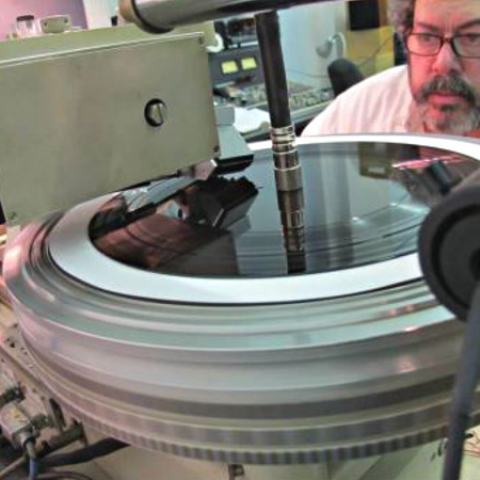
"With a reissue, there can be improvements on both the mastering, which is the entire playback chain up to the cutting of a lacquer as well as the production side of things from the plating to the pressing and packaging of the final jacketed disc.
"Short answer: Remastering should be as close as possible to the original if the original was perfect. Lowest noise and preserved dynamics are goals.
"Luckily, tapes are generally okay when accessible."
After Chad, I put this question to a seasoned master tape collector, and he said, "If it doesn't sound like a good dub from the original, who needs it?"
I am wondering about these things because I am listening to a test pressing of the Acoustic Sounds remastering of Skip James's Devil Got My Woman (CROO982 A2/B3), which I received as a reminder to sound the trumpets announcing Chad Kassem's "Inaugural Vinyl Summit," to be held in Salina, Kansas, October 15–18, 2026, to celebrate Acoustic Sounds' 40th anniversary. This four-day event is billed as "A landmark gathering of craft, community and analogue sound." It will include manufacturers, record collectors, and black disc intelligentsia from around the globe. I picture smart folks chatting behind the scenes sharing stories and networking. Chad Kassem is promising a record fair, a hi-fi show, and live performances by an "Array of Acoustic Sounds-approved artists including Taj Mahal, Chico Freeman, Big Mud Morganfield, and others." We are all invited.
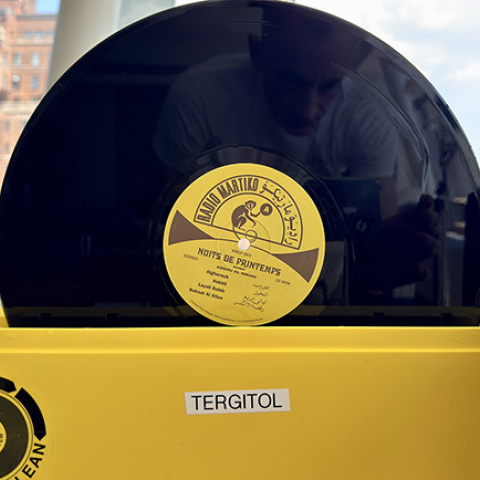
 Back to that test pressing of Acoustic Sounds' remastering of Skip James's Devil Got My Woman album. I'm playing this 200gm disc with an Audio Note UK IO II moving coil loaded by Audio Note's AN-S4 step-up transformer, and it is sounding quite different from the Vanguard record I've been listening to several times a year since it came out in 1968 (VSD 79273). Not to mention the countless times I've used this nicely made Vanguard disc as a demo album at audio shows, which means I've heard Devil Got My Woman through a hundred different sound systems. That means the sound of that old 100gm 79273-version is burned onto my DNA.
This new CROO982 plays fresh, clean, bright, and quiet, but it sounds significantly different from the original. The part that's most different is Skip James's voice: His otherworldly falsetto reads more like a chesty Chicago blues voice (like Muddy Waters for example) than it does a kissing cousin to that biblical apparition Robert Johnson, whose voice and lyrics are also famously haunting. Chad Kassem's new version stifles most of the fabulous plate reverb thrown off by the original. It plays drier and very slightly thickened. Most obviously, it rounds and solidifies James's voice in a manner I believe 99% of humans will find more appealing than the original. This modern-sounding remaster might find James a broader audience because it removes some of the original recording's old-timey feel.
When I turn the new version up loud, it does indeed rock the room, with zero fatigue. But Skip James is not the kind of artist that gets more exciting at higher volumes. His music asks to be played at moderate volumes and studied carefully.
On the remastering, frequency extremes are more present (and pleasant) than they are on the original. I sensed a smiley curve EQ and selective compression. The first pressing harks my brain back to road house country blues on a Paramount 78. The remastering sounds more like Chicago blues on a Chess Records disc.
Back to that test pressing of Acoustic Sounds' remastering of Skip James's Devil Got My Woman album. I'm playing this 200gm disc with an Audio Note UK IO II moving coil loaded by Audio Note's AN-S4 step-up transformer, and it is sounding quite different from the Vanguard record I've been listening to several times a year since it came out in 1968 (VSD 79273). Not to mention the countless times I've used this nicely made Vanguard disc as a demo album at audio shows, which means I've heard Devil Got My Woman through a hundred different sound systems. That means the sound of that old 100gm 79273-version is burned onto my DNA.
This new CROO982 plays fresh, clean, bright, and quiet, but it sounds significantly different from the original. The part that's most different is Skip James's voice: His otherworldly falsetto reads more like a chesty Chicago blues voice (like Muddy Waters for example) than it does a kissing cousin to that biblical apparition Robert Johnson, whose voice and lyrics are also famously haunting. Chad Kassem's new version stifles most of the fabulous plate reverb thrown off by the original. It plays drier and very slightly thickened. Most obviously, it rounds and solidifies James's voice in a manner I believe 99% of humans will find more appealing than the original. This modern-sounding remaster might find James a broader audience because it removes some of the original recording's old-timey feel.
When I turn the new version up loud, it does indeed rock the room, with zero fatigue. But Skip James is not the kind of artist that gets more exciting at higher volumes. His music asks to be played at moderate volumes and studied carefully.
On the remastering, frequency extremes are more present (and pleasant) than they are on the original. I sensed a smiley curve EQ and selective compression. The first pressing harks my brain back to road house country blues on a Paramount 78. The remastering sounds more like Chicago blues on a Chess Records disc.
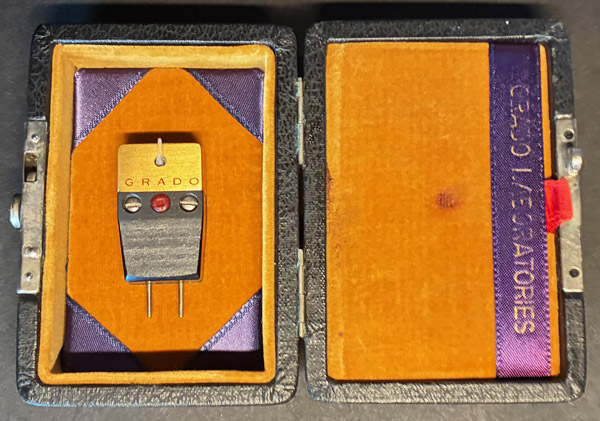 The 1957 Grado
The 1957 Grado phono cartridge (footnote 1) I have in front of me has only two output pins. It comes in a satin-and velveteen-lined box that's covered in leatherette. Its bronze body weighs approximately 15gm. It could be purchased with a choice of three interchangeable styli, with different dimensions: 0025 (blue) is standard for 33rpm records; 0.001 (white) is for microgroove discs; and 0.003 (yellow) is for 78s.
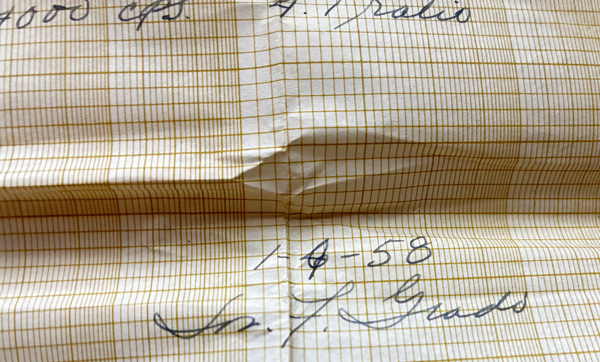
The frequency response of this "electro dynamic phonograph cartridge" is measured and drawn with a fine-line ink pen on a now-faded sheet of graph paper—by Grado Labs founder Joe Grado, who also measured distortion at four recording velocities and signed the paper "Joe F. Grado 1-9-58." Handwritten at the top of this sheet, it says "Grado Lab Series #2967" and "tracking force 5 grams." A sticker on top of the cartridge said "2964," but nowhere was there a name or model number.
The frequency response of this new old stock mono Grado is specified as "18–28,000 cps." Its output is listed as 3mV at 5cm/s. Its DC resistance is 600 ohms, and its total impedance is 600 ohms. The recommended tracking force is 3–7gm. It weighs "approximately 15 grams," and its compliance is "Adjustable at the factory." The last specification on the printed sheet states, "Static eliminator—Radium active sulfate impregnated into gold and silver. Ionization and static elimination effective to 1½. Half life to 1600 years." More than a spec sheet, this is a view into the mindset of a 1950s audiophile, showing what they thought was important. Speaking of:
I must share this priceless quote from the 1957 Grado's installation instructions: "If a stylus force gauge is not available, a fairly accurate setting may be achieved by following these instructions: Place the two mounting screws in the tonearm WITHOUT THE CARTRIDGE. Tape 3 pennies (U.S.A. currency) to the end of the tonearm directly over the space the cartridge would ordinarily occupy. Adjust the vertical balance until the tip of the tonearm is suspended 1/8" above the record. Without changing the adjustment, remove the pennies and install the cartridge. This will result in a tracking force of 5 or 6 grams."
Another very interesting quote: "The GRADO cartridge has more than ample input voltage for most preamplifiers. For installations where more voltage is required, a HIGH QUALITY TRANSFORMER of 600 ohms primary input impedance may be used."
 I am quoting all these Grado words because they offer today's audiophiles an intimate view of what it was like to be an audiophile in 1958. More amazing still is that my sample of the 1957 Grado came with a teeter-totter stylus pressure gauge. One side of the teeter-totter is for stacking copper pennies.
I love record collectors
I am quoting all these Grado words because they offer today's audiophiles an intimate view of what it was like to be an audiophile in 1958. More amazing still is that my sample of the 1957 Grado came with a teeter-totter stylus pressure gauge. One side of the teeter-totter is for stacking copper pennies.
I love record collectors
Once again, I want to encourage you, my readers, to at least dip your toe into what I'm calling period-correct listening. I hang with a cadre of hard-core record collectors, and these dudes are young, well-heeled, and over-the-top passionate about acquiring rare discs. They curate their sometimes valuable collections to follow a very specific path of their own choosing. Almost none of them read Stereophile or listen to anything digital, but many of them collect carefully preserved vintage print magazines with record reviews from the periods they collect. Every one of them uses equipment from the period of the discs they collect. They especially like having the gear they see their favorite artists pictured with, or radio station equipment from the era of their specialization.
What these record collectors' systems do that many audiophile systems don't do is play a wide range of musical genres and recording styles with equal engagement and satisfaction. The last thing record collectors want is a system that's fussy about sound quality.
Last night, I was talking to a handsome, well-dressed 30-something guy whose wife is expecting a baby in a month. His system consisted of a Thorens TD 124 turntable in a fancy plinth with an Ortofon banana arm and an SPU cartridge. This fed a Fisher 500B receiver and a pair of original JBL L100 speakers with brown grilles to match his and his wife's earth-toned living room. With him, he had about 10 records in a cloth bag. He told me that he paid $450 for the cheapest one, $4000 for the most expensive. His specialties included records made and pressed in Africa before 1970 and jazz on obscure labels from before 1980. He has never read Stereophile or The Absolute Sound.
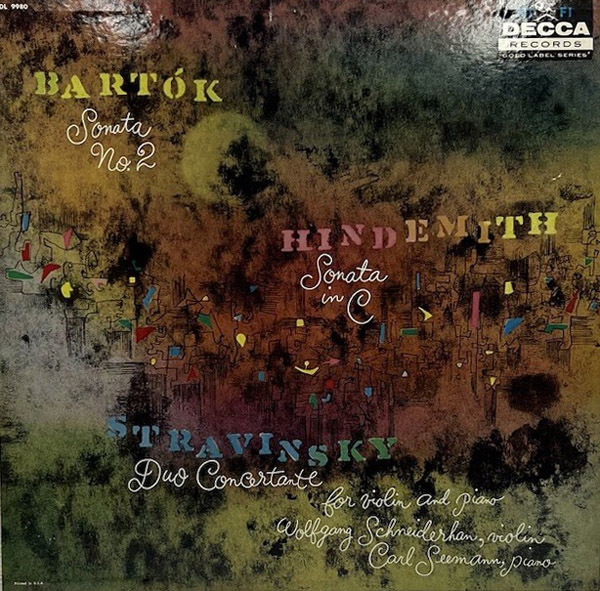 The first disc I played with the 1957 Grado cost $4.50 at Academy Records in NYC. It featured Bartók's Sonata 2, Hindemith's Sonata in C (1939), and Stravinsky's Duo Concertante for violin and piano with Wolfgang Schneiderhan on violin and Carl Seemann playing piano (1932). It was a Gold Label series Decca (LP, DL 9980), and it never sounded more in-my-room present than it did with the gold-colored Grado. It came out of my speakers like a heavenly chorus, trumpets blaring. A genuine spectacle of the aural variety.
I hooked Grado's '57 up to play my right speaker only, the one facing me directly about 6' from my desk where I sit as I type this. The result was Herb-scaled monophonic listening, where images are huge, as I stare at the grille of one Gold Badge LS3/5a. What I experienced with the Grado music and sound-wise was room-filling big and compellingly exotic, like something no one had ever heard before. Dare I say, the Decca Gold disc sounded exactly like the gold-brass Grado looked. By that I mean bright, bold, and colorful, like Kodachrome pictures of Marilyn Monroe.
The first disc I played with the 1957 Grado cost $4.50 at Academy Records in NYC. It featured Bartók's Sonata 2, Hindemith's Sonata in C (1939), and Stravinsky's Duo Concertante for violin and piano with Wolfgang Schneiderhan on violin and Carl Seemann playing piano (1932). It was a Gold Label series Decca (LP, DL 9980), and it never sounded more in-my-room present than it did with the gold-colored Grado. It came out of my speakers like a heavenly chorus, trumpets blaring. A genuine spectacle of the aural variety.
I hooked Grado's '57 up to play my right speaker only, the one facing me directly about 6' from my desk where I sit as I type this. The result was Herb-scaled monophonic listening, where images are huge, as I stare at the grille of one Gold Badge LS3/5a. What I experienced with the Grado music and sound-wise was room-filling big and compellingly exotic, like something no one had ever heard before. Dare I say, the Decca Gold disc sounded exactly like the gold-brass Grado looked. By that I mean bright, bold, and colorful, like Kodachrome pictures of Marilyn Monroe.
 One of my favorite Teresa Sterne–produced Nonesuch recordings, Johann Sebastian Bach Sinfonia, BWV 1046A (Nonesuch H-1129), filled my room with spirited, lively sound, floor to ceiling, wall to wall. Once again there was vibrant color, with well-delineated, natural-sounding transients producing solid images and delectable details I'd never heard with newer, fancier cartridges. The sound from this disc was studio quality and conspicuously neutral in tone. This was a period-correct view of what war-vet audiophiles were hearing around 1960.
While I was listening, I ordered the stereo version of this record (H-71129) on eBay, because I wondered how it would sound played with Shure's M3D (a stereo cartridge, also issued in 1958). This beautiful Grado is a luxury-class mono cartridge issued right at the dawn of the stereo era.
What I have been describing is highly immersive, mind-invigorating rabbit holes that teem with my favorite kind of people: crazy, passionate collectors. Unlike foxholes, no one I know has died in a period-correct rabbit hole.
One of my favorite Teresa Sterne–produced Nonesuch recordings, Johann Sebastian Bach Sinfonia, BWV 1046A (Nonesuch H-1129), filled my room with spirited, lively sound, floor to ceiling, wall to wall. Once again there was vibrant color, with well-delineated, natural-sounding transients producing solid images and delectable details I'd never heard with newer, fancier cartridges. The sound from this disc was studio quality and conspicuously neutral in tone. This was a period-correct view of what war-vet audiophiles were hearing around 1960.
While I was listening, I ordered the stereo version of this record (H-71129) on eBay, because I wondered how it would sound played with Shure's M3D (a stereo cartridge, also issued in 1958). This beautiful Grado is a luxury-class mono cartridge issued right at the dawn of the stereo era.
What I have been describing is highly immersive, mind-invigorating rabbit holes that teem with my favorite kind of people: crazy, passionate collectors. Unlike foxholes, no one I know has died in a period-correct rabbit hole.
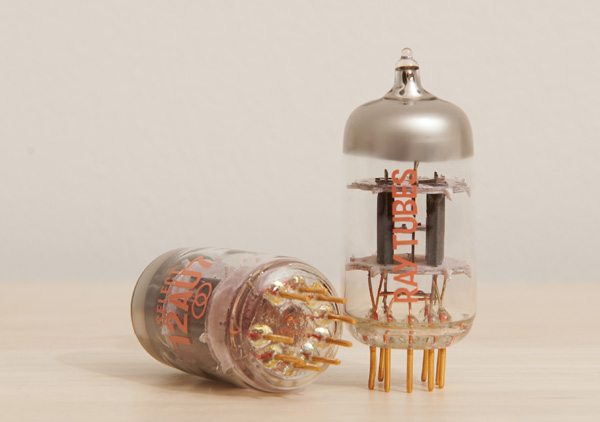 Ray Tubes
In NYC's East Village, there's a famous pizza parlor named Ray's. One of my acquaintances owns a fashionable watering hole named Ray's Hometown Bar. America's boondocks are filled with diners, speed shops, and other stores named Ray's. One of my old amp-designer friends, Roger A. Modjeski, who died in 2019, founded (in 1981) a company called RAM Labs, the parent company of RAM Tubes and Music Reference. Modjeski was an exceptionally clever engineer. When I was designing amplifiers, I used him as a go-to mentor for circuit-design questions. For RAM Tubes, he created a "computer signal tube tester using proprietary software that he designed for use on an Apple II computer." This tester measured a longer list of parameters than previous testers, allowing Roger to select the quietest and likely most durable 12AU7s, 12AX7s, 6DJ8s, and 6922s. Compared to regular old NOS and new-manufacture tubes, RAM's carefully screened tubes (which could be NOS or new) were the quietest and most dynamic. RAM Tubes is still operating. Headed by Nelson Wu and based in Chino, California, Ray Tubes (footnote 2) has a business model similar to RAM Tubes's. Wu works with tube manufacturers "across Europe and Asia" and has tubes built to Ray Tubes specifications, overseeing the process and screening the resulting tubes for quality.
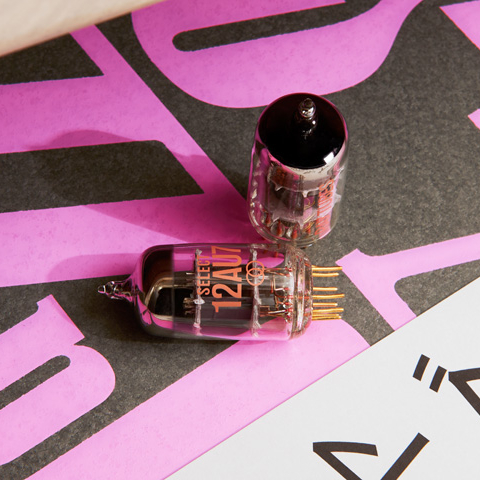
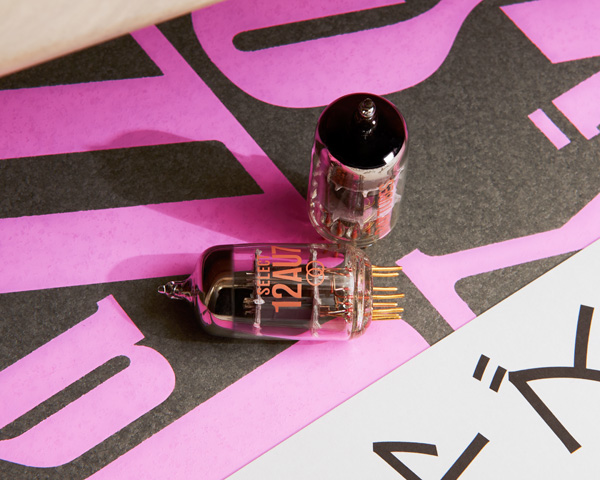
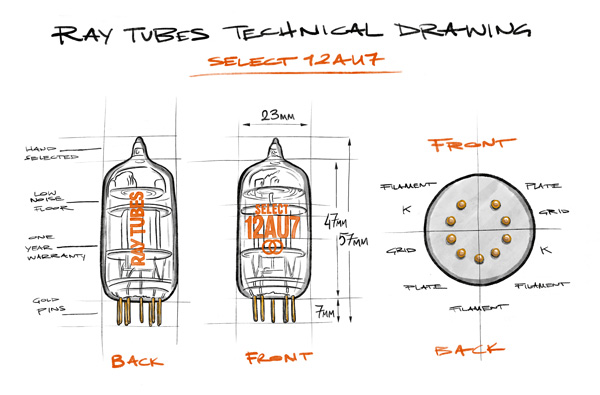
I was using my RAM Lab's 12AU7s in my Elekit TU-8900 when Ray Tubes' Nelson Wu sent me two of his "Select" 12AU7s ($92/pair and up), and two "Reserve" 300Bs ($450 each or $960 for a matched pair), in a very deluxe box.
When I replaced the RAM Labs 12AU7s with Ray Tubes' Select 12AU7s, my Elekit amp got noticeably quieter. The improvement was not subtle, and the Ray Tubes were as much lively fun as the daily-driver Brimars I recently replaced with the RAM Labs tubes because the Brimars were getting noisy. This deathly-quiet-but-still-bright-and-lively effect is what Ray Tubes specialized in. And I am guessing this is why Ray Tubes are sold through familiar brick-and-mortar dealers like In Living Stereo (in Manhattan's NoHo neighborhood) and Adam Wexler's Resolution Audio (in Red Hook, Brooklyn; footnote 3). It's also why they are able to offer a one-year warranty, unusual for tubes. When your amp's stock tubes get dull or noisy after their pathetic 90-day warranty expires, you can upgrade to something quiet, exciting, and potentially long lasting.
When I first opened the Reserve 300B, I was surprised how closely it resembled my Psvane 300Bs, except for the labeling. I was even more surprised when I put the Ray Tubes tubes in, and they sounded exactly the same as the Psvanes I'd just taken out.
I wrote Nelson Wu asking what's up with this? "Are you just rebranding stock Psvanes?"
His answer: It was "impossible" that his tubes sounded the same as mine because his were structurally and "fundamentally" different. Skeptical me rolled my eyes.
Nelson wrote saying his engineering team wanted to know the exact version of Psvane's 300Bs I was using, adding that his people would describe the exact differences between my Psvane and the Reserve tubes they sent me. I wrote back saying "T Series Mark II." After a week he replied.
"Hi Herb,
"Happy Monday. Hope you had a great weekend!
"In the week since your questions, the lead of my product team went straight to PSVANE to dig into the exact tubes you have. The packaging you showed in the photo was enough for them to pin it down.
"What you've got is a hand-selected batch of T-series MKII 300B. PSVANE confirmed these were made in limited numbers even while the line was still running, and the T-Series MKII 300B has been out of production for two years now. So, you're not listening to a typical PSVANE 300B. What you have is arguably the best version of that tube PSVANE ever made.
"Our RESERVE 300B starts from that same platform. Where it splits off is in how it's built:
• The anode coating is our own, not PSVANE's. We work with an outside supplier on it directly, a more advanced formulation that cuts down on outgassing, and it's not cheap.
• The solder is ours, too, lead-free and silver-bearing, for stronger, more conductive joints.
• Getting PSVANE to run a longer pump-down"—that's the vacuum pump stage—"took some arm-twisting. It's well outside their standard process, but a more thorough vacuum lowers the noise floor and improves the tube's long-term stability.
• We run a full 24-hour burn-in before selection, so the tube settles past the early window where parameters drift most. What we keep is far less likely to move on you as you put more hours on it.
"The changes we made are the kind that show over time, not in a quick comparison. The coating and the longer pump-down are there to slow the degradation every tube goes through with heat cycles, so RESERVE holds its character and stability over a longer life.
"Thanks for pushing me on this, Herb. Let me know how the RESERVE 300B and the SELECT 12AU7 treat you once they've got some hours on them.
"In the meantime, I wish you an awesome rest of the week.
"Nelson Wu"
 Nelson wrote that a "more thorough vacuum lowers the noise floor and improves long-term stability," which allows Ray Tubes to offer a one-year warranty. So, yes, they are made by Psvane, but they are made to a significantly higher spec than other Psvane 300B tubes.
Western Electric offers a 5-year warranty on its 300Bs, reflecting even more confidence in their evacuation methods and other QC. Their 300Bs cost $699/each or $1499 for a matched pair (footnote 4).
When people ask me how long they should expect the tubes in their new amp to last, I always answer, "As long as the warranty."
A 1942 RCA 2A3 may outlast me, while new-manufacture tubes may start misbehaving—get hashy, sputtery, or dull—in a matter of weeks. Even when new tubes last, they may have weak tone or drowsy sonics.
Psvane is my favorite among the current tube manufacturers in China. My T-Series MK IIs have a few hundred hours on them and are showing no signs of being tired or wilting.
Despite what I wrote earlier, the Psvane and Ray Tubes Reserve 300Bs don't sound exactly the same. The Ray Tubes Reserve 300Bs sound more brightly lit, with deeper bass and bigger spaces, and they're breathtakingly quiet. They are the quietest, most vivid new-manufacture 300Bs I've ever used.
Other than the bass color and lettering, the chief visual difference between the Ray Tubes and my MK II Psvanes is the electric blue clouds that hover above the Ray Tubes' anodes. When I bought and sold Western Electric 300Bs, I paid sellers by their transconductance measurement in micromhos, but I learned that the most vibrant-sounding ones displayed electric blue clouds. In my mind, the blue cloud indicates a more perfect vacuum. It tells me that the getter is working and the cathode is turbocharged, spewing electrons all over the place. My current new-production Western Electric 300Bs have strong blue clouds and have worked perfectly since 2021. These Ray Tubes Reserve 300Bs have blue clouds just above the smoked part of their glass; I take that as a good sign.
If I were a brick-and-mortar audio dealer selling moderately priced tube amps to customers trying their first tubes, I'd stock up on Ray Tubes replacements and be ready on a moment's notice to keep these customers digging tubes
Nelson wrote that a "more thorough vacuum lowers the noise floor and improves long-term stability," which allows Ray Tubes to offer a one-year warranty. So, yes, they are made by Psvane, but they are made to a significantly higher spec than other Psvane 300B tubes.
Western Electric offers a 5-year warranty on its 300Bs, reflecting even more confidence in their evacuation methods and other QC. Their 300Bs cost $699/each or $1499 for a matched pair (footnote 4).
When people ask me how long they should expect the tubes in their new amp to last, I always answer, "As long as the warranty."
A 1942 RCA 2A3 may outlast me, while new-manufacture tubes may start misbehaving—get hashy, sputtery, or dull—in a matter of weeks. Even when new tubes last, they may have weak tone or drowsy sonics.
Psvane is my favorite among the current tube manufacturers in China. My T-Series MK IIs have a few hundred hours on them and are showing no signs of being tired or wilting.
Despite what I wrote earlier, the Psvane and Ray Tubes Reserve 300Bs don't sound exactly the same. The Ray Tubes Reserve 300Bs sound more brightly lit, with deeper bass and bigger spaces, and they're breathtakingly quiet. They are the quietest, most vivid new-manufacture 300Bs I've ever used.
Other than the bass color and lettering, the chief visual difference between the Ray Tubes and my MK II Psvanes is the electric blue clouds that hover above the Ray Tubes' anodes. When I bought and sold Western Electric 300Bs, I paid sellers by their transconductance measurement in micromhos, but I learned that the most vibrant-sounding ones displayed electric blue clouds. In my mind, the blue cloud indicates a more perfect vacuum. It tells me that the getter is working and the cathode is turbocharged, spewing electrons all over the place. My current new-production Western Electric 300Bs have strong blue clouds and have worked perfectly since 2021. These Ray Tubes Reserve 300Bs have blue clouds just above the smoked part of their glass; I take that as a good sign.
If I were a brick-and-mortar audio dealer selling moderately priced tube amps to customers trying their first tubes, I'd stock up on Ray Tubes replacements and be ready on a moment's notice to keep these customers digging tubes
Footnote 1: Grado Labs, 4614 Seventh Ave., Brooklyn, NY 11220. Tel: (718) 435-5340. Web: gradolabs.com. Footnote 2: Ray Tubes, Chino, California. Email: sales@raytubes.audio. Web: raytubes.audio. Footnote 3: Ray Tubes also sells online at apos.audio. Footnote 4: See Gramophone Dreams #48.
Back to that test pressing of Acoustic Sounds' remastering of Skip James's Devil Got My Woman album. I'm playing this 200gm disc with an Audio Note UK IO II moving coil loaded by Audio Note's AN-S4 step-up transformer, and it is sounding quite different from the Vanguard record I've been listening to several times a year since it came out in 1968 (VSD 79273). Not to mention the countless times I've used this nicely made Vanguard disc as a demo album at audio shows, which means I've heard Devil Got My Woman through a hundred different sound systems. That means the sound of that old 100gm 79273-version is burned onto my DNA.
This new CROO982 plays fresh, clean, bright, and quiet, but it sounds significantly different from the original. The part that's most different is Skip James's voice: His otherworldly falsetto reads more like a chesty Chicago blues voice (like Muddy Waters for example) than it does a kissing cousin to that biblical apparition Robert Johnson, whose voice and lyrics are also famously haunting. Chad Kassem's new version stifles most of the fabulous plate reverb thrown off by the original. It plays drier and very slightly thickened. Most obviously, it rounds and solidifies James's voice in a manner I believe 99% of humans will find more appealing than the original. This modern-sounding remaster might find James a broader audience because it removes some of the original recording's old-timey feel.
The 1957 GradoThe 1957 Grado phono cartridge (footnote 1) I have in front of me has only two output pins. It comes in a satin-and velveteen-lined box that's covered in leatherette. Its bronze body weighs approximately 15gm. It could be purchased with a choice of three interchangeable styli, with different dimensions: 0025 (blue) is standard for 33rpm records; 0.001 (white) is for microgroove discs; and 0.003 (yellow) is for 78s.
I am quoting all these Grado words because they offer today's audiophiles an intimate view of what it was like to be an audiophile in 1958. More amazing still is that my sample of the 1957 Grado came with a teeter-totter stylus pressure gauge. One side of the teeter-totter is for stacking copper pennies.
I love record collectorsOnce again, I want to encourage you, my readers, to at least dip your toe into what I'm calling period-correct listening. I hang with a cadre of hard-core record collectors, and these dudes are young, well-heeled, and over-the-top passionate about acquiring rare discs. They curate their sometimes valuable collections to follow a very specific path of their own choosing. Almost none of them read Stereophile or listen to anything digital, but many of them collect carefully preserved vintage print magazines with record reviews from the periods they collect. Every one of them uses equipment from the period of the discs they collect. They especially like having the gear they see their favorite artists pictured with, or radio station equipment from the era of their specialization.
The first disc I played with the 1957 Grado cost $4.50 at Academy Records in NYC. It featured Bartók's Sonata 2, Hindemith's Sonata in C (1939), and Stravinsky's Duo Concertante for violin and piano with Wolfgang Schneiderhan on violin and Carl Seemann playing piano (1932). It was a Gold Label series Decca (LP, DL 9980), and it never sounded more in-my-room present than it did with the gold-colored Grado. It came out of my speakers like a heavenly chorus, trumpets blaring. A genuine spectacle of the aural variety.
One of my favorite Teresa Sterne–produced Nonesuch recordings, Johann Sebastian Bach Sinfonia, BWV 1046A (Nonesuch H-1129), filled my room with spirited, lively sound, floor to ceiling, wall to wall. Once again there was vibrant color, with well-delineated, natural-sounding transients producing solid images and delectable details I'd never heard with newer, fancier cartridges. The sound from this disc was studio quality and conspicuously neutral in tone. This was a period-correct view of what war-vet audiophiles were hearing around 1960.
While I was listening, I ordered the stereo version of this record (H-71129) on eBay, because I wondered how it would sound played with Shure's M3D (a stereo cartridge, also issued in 1958). This beautiful Grado is a luxury-class mono cartridge issued right at the dawn of the stereo era.
Ray TubesIn NYC's East Village, there's a famous pizza parlor named Ray's. One of my acquaintances owns a fashionable watering hole named Ray's Hometown Bar. America's boondocks are filled with diners, speed shops, and other stores named Ray's. One of my old amp-designer friends, Roger A. Modjeski, who died in 2019, founded (in 1981) a company called RAM Labs, the parent company of RAM Tubes and Music Reference. Modjeski was an exceptionally clever engineer. When I was designing amplifiers, I used him as a go-to mentor for circuit-design questions. For RAM Tubes, he created a "computer signal tube tester using proprietary software that he designed for use on an Apple II computer." This tester measured a longer list of parameters than previous testers, allowing Roger to select the quietest and likely most durable 12AU7s, 12AX7s, 6DJ8s, and 6922s. Compared to regular old NOS and new-manufacture tubes, RAM's carefully screened tubes (which could be NOS or new) were the quietest and most dynamic. RAM Tubes is still operating. Headed by Nelson Wu and based in Chino, California, Ray Tubes (footnote 2) has a business model similar to RAM Tubes's. Wu works with tube manufacturers "across Europe and Asia" and has tubes built to Ray Tubes specifications, overseeing the process and screening the resulting tubes for quality.
Nelson wrote that a "more thorough vacuum lowers the noise floor and improves long-term stability," which allows Ray Tubes to offer a one-year warranty. So, yes, they are made by Psvane, but they are made to a significantly higher spec than other Psvane 300B tubes.
Western Electric offers a 5-year warranty on its 300Bs, reflecting even more confidence in their evacuation methods and other QC. Their 300Bs cost $699/each or $1499 for a matched pair (footnote 4).
Footnote 1: Grado Labs, 4614 Seventh Ave., Brooklyn, NY 11220. Tel: (718) 435-5340. Web: gradolabs.com. Footnote 2: Ray Tubes, Chino, California. Email: sales@raytubes.audio. Web: raytubes.audio. Footnote 3: Ray Tubes also sells online at apos.audio. Footnote 4: See Gramophone Dreams #48.