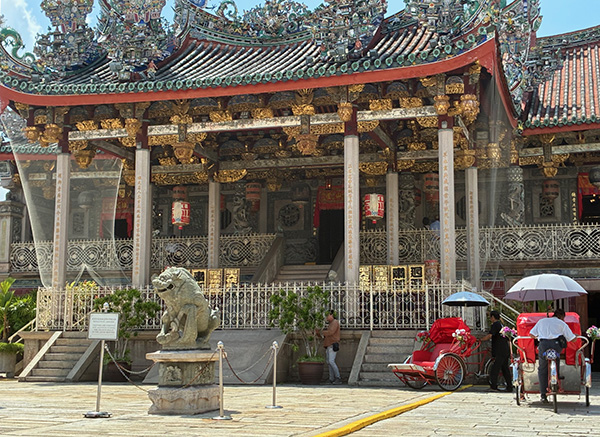
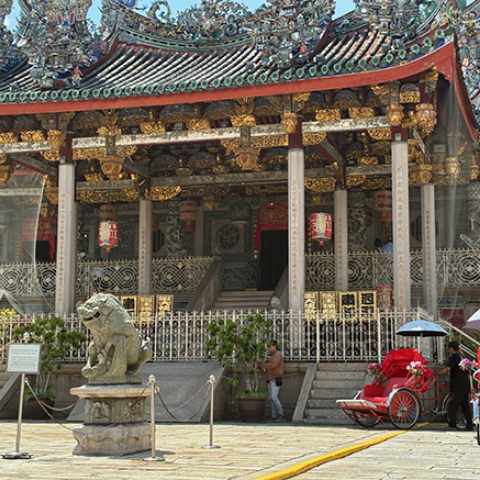
Leong San Tong Khoo Kongsi, "one of the most exquisitely grand clan houses in Southeast Asia."
I was walking with my neighbor, guide, old friend, and fabled "blue saloon" limo driver Beau Ranheim when I heard a shout from afar. It was another old friend, Todd Garfinkle of M•A Recordings, yelling over the din in the crowded marketplace at Capital Audiofest 2025. "Hey Herb! Are you ready to go to Japan?"
To which I shouted back, "Absolutely!" A week later, there was an itinerary in my email.
First to Penang, Malaysia, to tell stories about our audio hobby at the Northern International Audio & Visual Show 2026, then to Wat Pho in Bangkok, followed by ancient Thai ruins in Ayutthaya, then to ResurRec, the only record-pressing plant in Thailand. In Tokyo, I was to stay in a house with shoji screens and tatami mats, while eating three meals a day of gourmet Japanese food, visiting Shinto shrines and Zen temples, and getting lost at Tokyo's National Museum. On Sunday, I was scheduled to do a Q&A session with Devon Turnbull of OJAS at the
MJ Audio Technology festival. When I read all that, I panicked. Then I went into training.
I had gotten a new hip only six months prior, so every day before the trip, I walked three miles, did leg lifts, and practiced standing on one foot.
Four months later, on my first day in Penang, Malaysia, I'm riding in a rickshaw, something I've always wanted to do, and we're cranking through the narrow passages of Cannon Street in the shophouse district of George Town (the capital city of Penang). We were on our way to Leong San Tong Khoo Kongsi, billed as "one of the most exquisitely grand clan houses in Southeast Asia." This fantastic-looking architectural complex is arranged around a large, granite-paved courtyard. It features a main temple, an opera stage, a meeting hall, a large gong, and scores of terrace houses, all grand in scale and heavily gold-ornamented, as befits the most powerful surname-based clan among the Malay Chinese.
After a delicious lunch of Indian food, our state-provided van took me and a small group of foreign reporters to The Habitat Penang Hill, which, at its peak, reaches 2600' above sea level.
Now folks. I've been in a couple of rain forests, but they were suburban backyards compared to this living, breathing monster. Halfway though the 1.6 mile walk, I was clinging in deathly fear to the handrail of a 750' narrow bridge called "Langur Way Canopy Walk," 130' up in the treetops of the most biodiverse rain forest on the globe. The temperature was 97°. The temperature-humidity index indicated that it felt like 111°F.
Imagine bright-colored birds that exist nowhere else on earth, small venomous snakes that look visitors straight in the eye, tiny poisonous spiders on the plant right next to you, very small high-speed squirrels, and dusky leaf monkeys.
March 30 was my 77th birthday, and by anyone's measure, I've lived a wild life and seen a lot of things, but this adventure took wild & exotic travel experiences to a level I never dreamed possible. My view of The World and the people in it changed dramatically in only 21 days.
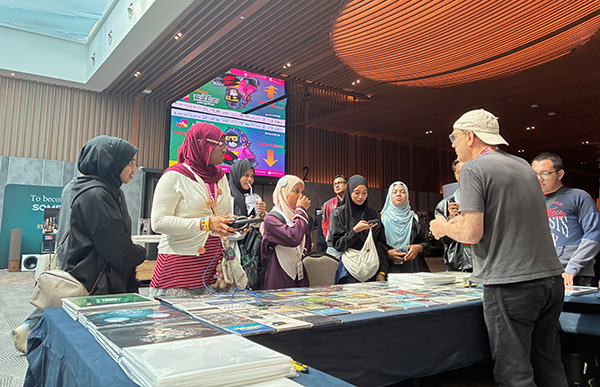
Todd Garfinkle sells his M•A Records in Penang.
What—rather, who—brought me to the state of Penang was a young, dapper fella called Wilson Teoh, pilot of his own company, Gryphon Production. Teoh was the organizer of the Northern International Audio Visual Show 2026, which took place at the Setia SPICE Convention Centre, Penang. Wilson plotted with Todd Garfinkle of M•A Recordings fame to bring me to speak three days in a row at the Northern International Audio Visual Show (footnote 1).
This invitation, plus Todd's generosity and multilingual expertise, allowed me to experience Asia for the first time in my life. I used to teach world art history to college students, and this trip was my chance to visit some of the UNESCO heritage sites I put on their slide exams.
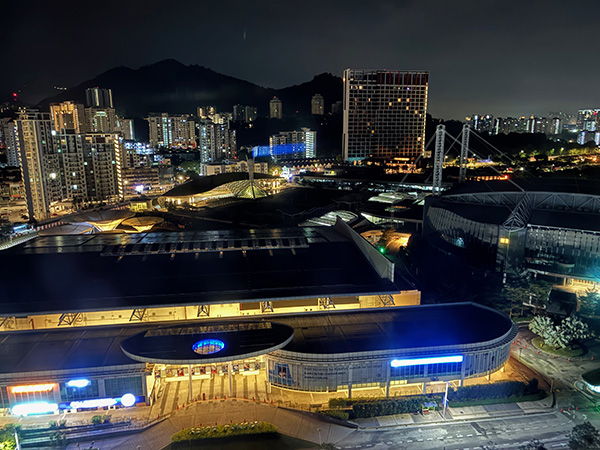
The Spice Convention Center in Penang, Malaysia.
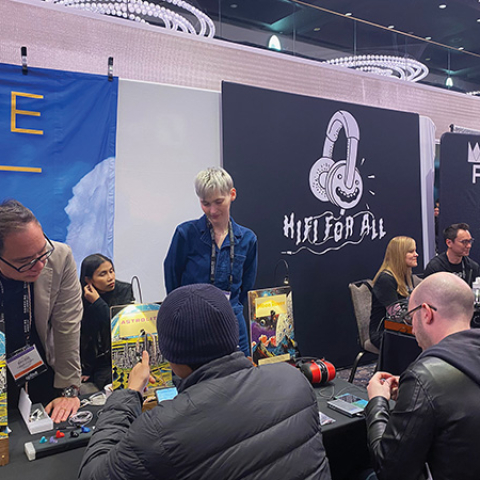
My first day at the Northern International Audio & Visual Show was a real eye-opener. The space was enormous (see photo above), and Todd's M•A Recordings booth was right at the main entrance. Every showgoer had to walk past it as they entered. The showgoers I saw were evenly distributed between the ages of one and 90. All day long, most visitors were full families: mom, dad, children, grandparents. Mothers and daughters stopped and listened at length to Todd's recordings with Sony WH-1000XM5 noise-canceling headphones and Shanling's incredible-sounding, almost free ($142) M0 Pro media player (review in the works; footnote 2). One attendee, a 26-year-old coffee shop owner named ShuShu on vacation from Xiamen, China, sat and listened, almost motionless, for three hours. Girl gangs in hijabs stopped and listened together and chattered about their favorite music. Most importantly, this diverse crowd of showgoers, teens and parents, were buying CDs and filling listening rooms. The reason was obvious: live popular music, free admission, free parking, all exhibits and listening rooms on one floor, so no wait for elevators.
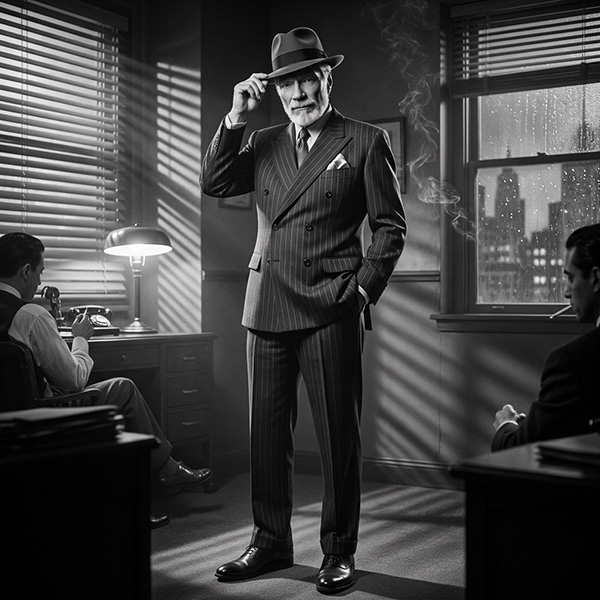
Herb's AI makeover.
Top-shelf home theater and high-end automotive audio were among the attractions, as were cast-iron toys, AI makeovers (above), fresh-baked bread, and foodie-level pastries. It took me three days to meet and greet every exhibitor.
How do we encourage future generations to enjoy audiophile audio? Simple. Make it fun and start them young. Bring them to an audio show like this that has live hourly performances of music (dubbed "groove sessions") the whole family can enjoy, and featured speakers like yours truly talking about how to enjoy music in words teens and tweens and grannies can understand (after translation at least).
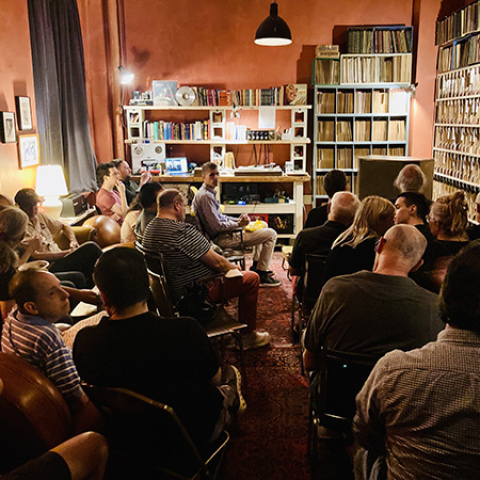
My first talk went on after what must have been the Taylor Swift of Malaysia. The room was filled with bubbling young adults. Most were female and under the age of 30. This does not happen when it costs $40 each plus parking to enter, or when the kids have that wish-they-were-anywhere-else look on their faces.
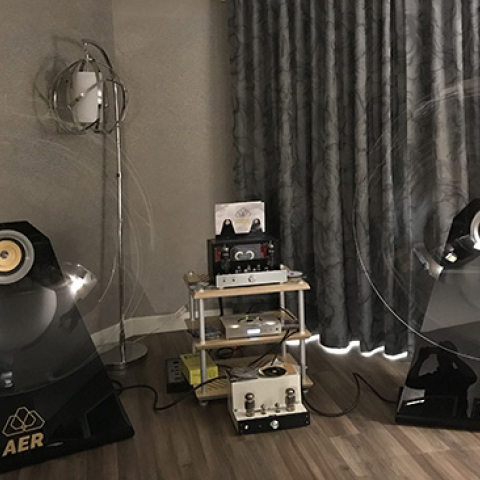
Every high-end audio exhibitor at Northern International Audio & Visual Show had its own quiet, purpose-built room, with Rockwool-filled wooden panel walls and air conditioning. Scores of big-name companies from Europe, America, and Japan were exhibiting. The music source was mostly streaming, supplemented in the most upscale rooms by CDs and LPs. In one room, I was able to compare 220VAC at 50Hz to the same voltage at 60Hz. I think I preferred 60Hz, but it was close. I saw people's sons and daughters listening to KEF, Piega, Sony, or DALI speakers powered by Pass Labs, Denon, or McIntosh amplifiers while sitting next to their mom and dad. The rooms were full, and everyone looked happy to be there.
My "Best Sound" award went to Leong Wei Hang's NOTBRAND "Pursuer" in-ear monitors. They feature beryllium drivers that kissed my ears sweetly with a fresh, breezy clarity and no beryllium fatigue. I met a lot of beautiful people at the show, including a trio of siblings that included a doctor the same age as me, her sister who raises roses (like me), and her brother, who designs headphone amplifiers in Kagoshima, Japan. They sat near the front at two of my storytelling sessions. Now we swap stories via WhatsApp. Life is good!
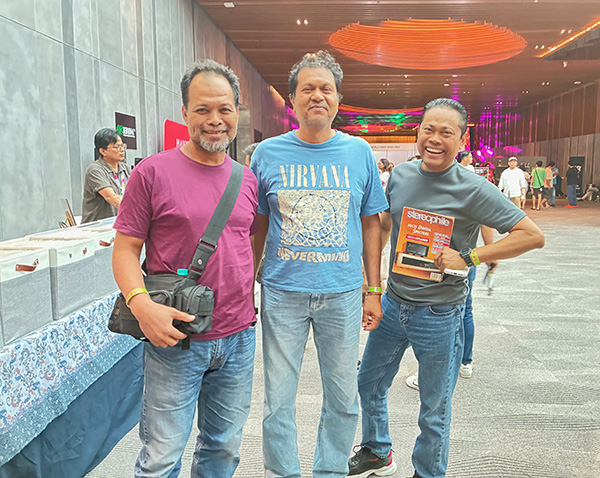
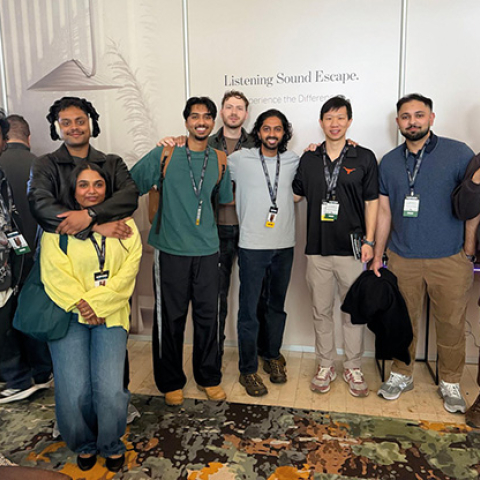
Stereophile fans in Penang.
I asked them and other serious locals how they envisioned Penang's future, to which everyone alluded to chip and semiconductor manufacturing, calling Penang "Silicon Hill." The Sony WH-1000XM5 headphones Todd was using were manufactured in Malaysia, as were the linen shirts I wore and the Technics CD player I review elsewhere in this issue.
I told Wilson I was in awe of what he was creating and was glad I could help.
Next stop, Bangkok!
I could live in Bangkok, Thailand. It's a Herb place. Its diversity and chaos aesthetic resemble where I live in Brooklyn. It has hip style, colorful characters, countless weed shops and massage parlors, plus long-tailed boats, temple cats, and crazed demons on motor scooters. It's the opposite of suburban or pastoral. Add monkeys, tuk tuks, ruins, and river boats, and Bangkok becomes transcendent. And of course, just like Penang, there's Anthony Bourdain–level street food.
On my first day in Bangkok, Todd and I took two boats on the Chao Phraya river to visit Wat Pho, with its gold-leafed, 46m-long, 15m-high reclining Buddha. On the second day, we took a 20 baht (62 US cents), 90-minute local train ride to the Ayutthaya ruins. These are popular tourist sites, but we arrived during "low season," so visitors were scarce and looked to be mainly locals.
This giant gold-leafed Buddha and the ruins at Ayutthaya Historical Park in Ayutthaya are UNESCO World Heritage sites. As such, they are places every human that can needs to experience. They allow interested visitors to picture and imagine their way into the minds and spirits of ancient cultures. These sites helped me to form a broader, more detailed picture of the diverse humanity I share the globe with.
My Malaysian studies were enhanced by listening to a beautifully packaged (all unbleached rag paper) CD entitled
Oh! My Penang, a collaborative project that showcases the diversity of contemporary Malaysian music.
The Heritage site I connected with most was the Ayutthaya Historical Park, which is located where three ancient rivers converge. The vibe of those ruins was extreme silence punctuated by bird calls. Underneath the profound silence, I sensed a low, ancient tone. Sitting under a tree in the shade on the bank of a bright, algae-green river taught me more about the earth and its workings than the science courses I took in college.
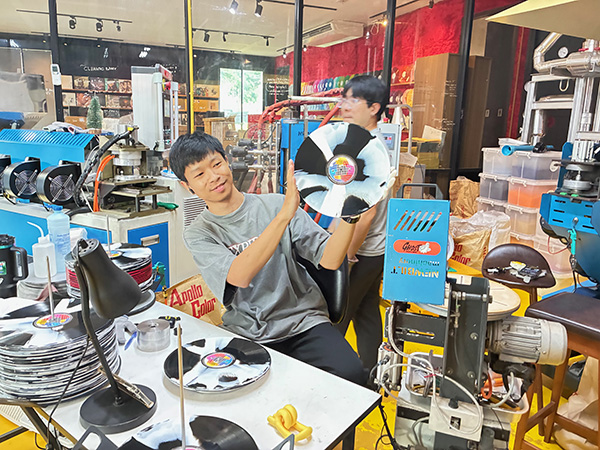
Fresh-pressed vinyl at ResurRec Records.
After ruins and temple meditations came a visit to the ResurRec boutique vinyl lab, a full-service LP-pressing operation specializing mostly in colored vinyl (see photo above). Michaels Trei and Fremer are experts in this area, but I had never seen a record being pressed, so I had a lot of questions, which were answered in detail by ResurRec plant manager Wanuwat Klinkhajohn. Primary among my questions were, what causes discs to come out off-center? Wanuwat maintained that it is "impossible" for records to be pressed off-center because "the spindle on the press is stable and properly sized." (footnote 3) What makes vinyl warp? "Shortened cooling times are always the culprit." Why do some discs play quieter than others? Several factors including bad stampers, poor-quality vinyl beads, and—again—accelerated cooling.
An aside: I favor black discs made in Europe and America between 1950 and 1965 because I can
feel the thoughtful craft and material quality of their manufacture.
Then a plane delivered us to Tokyo
When I entered graduate school for painting, my teacher gave each of his students two books:
The Collected Poems of William Carlos Williams and
The Way of Chinese Painting: Its Ideas and Technique by Maimai Sze. For more than 50 years, the latter book has dominated my life as a practicing artist. It is constantly next to me at my desk. I've given scores of these vintage, red-covered paperbacks to friends and lovers.
The Way of Chinese Painting includes selections from the 17th century
Mustard Seed Garden Manual of Painting. It would be accurate to say that I've devoted my life, from my teens to the present, to becoming an avant-garde painter in the manner of a traditional Chinese landscape painter. I've copied how they make their trees and rocks and boats and huts and pavilions. But I do them my own dark way, with thinned oil paint and charcoal on small wood panels. My hope is to project the same feelings of animism I recognize in Chinese art. I aspire to their high, landscape-based sentiments.
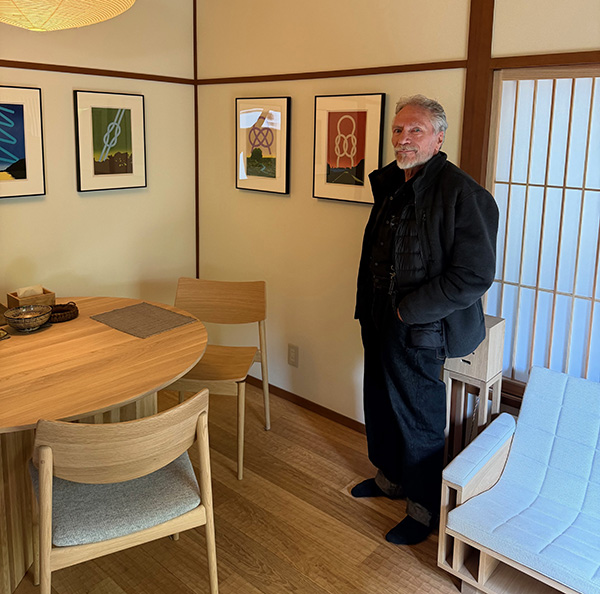
Herb Reichert arrives in Tokyo.
Those Chinese art studies instigated my Japanese art studies, which focused on pottery and printmaking in the manner of Edo period (1603–1868) Ukiyo-e artists. That's when I decided to paint pictures of my vision of a "floating world." That's a different attitude than I learned from Mai-mai Sze.
All the while, as I studied these things, I was repairing and building tube amplifiers for a living. One day I discovered two volumes of schematics by Isamu Asano (1914–1981). These books changed my life. Asano was a banker who built amplifiers as a hobby. All his creations are documented in full detail in these two volumes (footnote 4). Chassis layout is shown in blueprint form. Transformers, capacitors, resistors, and wire are specified. Splendid color photos of the inside and outside of the finished chassis are included with each design.
These books showed me everything I needed to make scores of push-pull and single-ended tube amplifiers. Very quickly, they took a central place in my daily life. During the 1980s, I went all in with Japanese amp building, subscribed to
MJ Audio Technology magazine, and the next thing I knew, I had a Japanese business partner named Ryo Kimura and was exporting vintage Marantz and Western Electric components to Western Labo, a company with a full-page ad in the back of every issue of
MJ. I was doing this while importing Japan-made Tango Transformers and Nichicon Black Gate capacitors to my little company on Staten Island, Eddie Electric.
For at least 10 years,
MJ magazine served as my primary guide to what mattered in Japanese audio. I've been able to touch and experience most of what was pictured in those Western Labo ads, and those fortunate experiences formed the core of my audio-engineering viewpoint. Even today, 50 years later, I am still advocating for full-range paper-cone drivers, alnico iron, giant horns, field-coil magnets, open baffles, and multicell horns. Like I said, I went all in with Japanese audio culture.
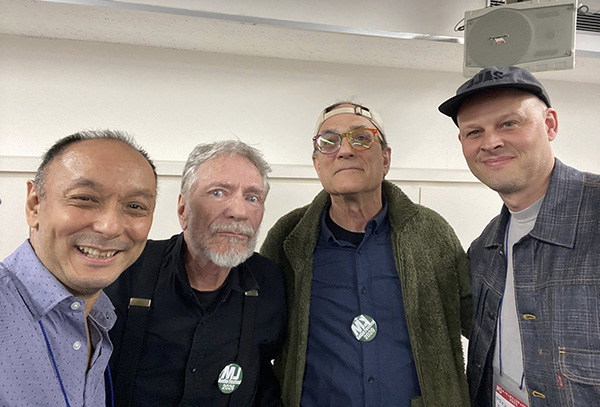
L–R. Naotaka Tsunoda, Herb Reichert, Todd Garfinkle, Devon Turnbull.
Now there I was in Tokyo with my old friends Naotaka Tsunoda and Todd Garfinkle, both of whom are fluent in English, Japanese, and several other languages, getting ready to chat with my Brooklyn neighbor Devon Turnbull (OJAS) in front of a group of legendary amplifier designers at the 2026
MJ Audio Festival. I was nervous and could hear my mother's voice saying "Stand up straight! Don't mumble. Talk slowly. Look everybody in the eye."
Devon asked interesting questions, and I felt at ease being up there, in front of a room full of makers. People who cut and drilled and soldered. People who used their hands and tools and workbenches to explore our audio hobby. I was hanging with the drill pressers and wrench twirlers, and I felt like I fit in. I was grateful my life had followed a path that led me to be there that day.
Thank you, Todd and Wilson.
Footnote 1: See northern-av.com. As this article went to press, there wasn't much up yet on the homepage about the 2026 show, but the deejay monkey is cute.—
Jim Austin
Footnote 2: See en.shanling.com/product/429.
Footnote 3: From the perspective of the record press itself, Wanuwat may be correct: There's little opportunity for a major (ec) centricity error in the record-pressing step. From my research—which is far from authoritative, so I welcome correction by well-informed sources—the more likely culprit is stampers in which the spindle hole, used to center the stamper on the record press, is cut off center. I may well revise this opinion as I learn more.—
Jim Austin
Footnote 4: See jelabs.blogspot.com/2015/05/asano-mj-and-stereo-sound-tube-kingdom.html.