When I was a child, my favorite trips were on a northwest-bound train called the Red Arrow. My parents and I left Moscow in the early evenings. I loved everything about the sleeper cars: the glasses of hot tea in their shiny metal holders, the black bread–and-butter sandwiches my mother packed, which we ate with exaggerated relish, and best of all being rocked to sleep while the moonlit countryside flashed by behind drawn curtains.
In the mornings we arrived in Vilnius, the Lithuanian city where my mother had grown up. Everything there looked different. Back in Moscow, we lived in one of the identical cinderblock apartment towers that circled the city; they were built a few years before I was born but were already falling apart. In Vilnius, there were whole streets lined with baroque houses painted in pale yellows and pinks and blues, with terracotta shingles and wrought-iron balconies, and sometimes we walked past the brick towers of St. Anne's, possibly the prettiest Gothic church in existence, which had captivated Napoleon so much that he reportedly said he wanted to "bring it back to Paris in the palm of [his] hand."
In summers, my maternal grandparents and I took a commuter train from Vilnius to the beach town of Palanga. On the way, we passed Lithuania's pristine old-growth forests and roadside stands where women sold chanterelles and glasses of little wild strawberries. (If you haven't tasted a wild strawberry, there's nothing I can do for you.) The beaches were dotted with amber, and we swam in the Baltic's cold water while the boundless sky seemed to never get dark due to the northern latitude and because, when we are children, time passes more slowly than it ever will again.
June is my favorite time to visit Vilnius, when the nights are cool and the streets smell of lilac, and if you walk far enough from the city center, you can still pass a house with a crank well and chickens skittering in the front yard. In the North, summer nights feel like drawn-out celebrations, and on nearly every corner you'll see the colorful umbrellas of outdoor cafes, where even after a few lagers the revelers keep their conversations oddly low. Someone on the sidewalk is likely to be playing a violin or a clarinet, and everything feels a little unreal. Once, while walking down a Vilnius side street at about 3am, lost in thought, I nearly bumped into a young girl riding a spotted gray mare.
I've dragooned you into this sentimental memory trip to talk about the wares of Aidas Svazas, an artisan residing in Lithuania's second largest city, Kaunas. Today, the small Baltic nation is home to an ever-growing number of hi-fi manufacturers with a global reach, such as Reed and Audio Solutions. Svazas started out as a cartridge repairman, and our first encounter took place when, on a friend's recommendation, I sent him a Fairchild 225-A, a mono cartridge from the 1950s, to be restored.
What I got back was something different and altogether better than what I'd mailed him. Svazas didn't just retip the cartridge with a new spherical diamond but also replaced the damper and suspension with more compliant materials, so now the cartridge tracks not at the specified 4–8gm but at 3.2gm, a downforce more useful given today's lighter tonearms. Better yet, the Fairchild sounded notably clearer, faster, and more dynamic than the very clean stock version of the same cartridge I compared it to.
I soon stumbled on another testimonial to Svazas's knowledge and abilities. Trying to avoid sending another Fairchild to Lithuania, I reached out to a well-regarded cartridge repairman in the US to perform the same service. He informed me that what I was requesting was not only wrong— he likened it to putting truck tires on a sedan—but also, he assured me, completely impossible.
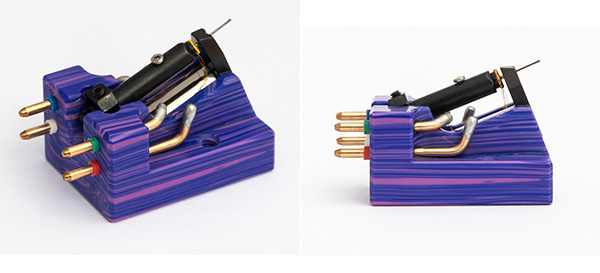
These experiences made me curious to hear the cartridges Svazas has been designing and manufacturing under the Aidas brand (footnote 1), and after a brief email exchange, two packages from Kaunas arrived here in Brooklyn. The first contained the Tru Stone Violet Gold, a low-output moving coil with a dazzling body streaked with violet and blue, reportedly made of a mix of pulverized semiprecious stones and resin, a material that, according to Svazas, has distinctive damping properties.
Nearly all Aidas cartridges use the same boron cantilever, MicroRidge stylus, and generator assembly from the Adamant Namiki Precision Jewel Company (recently rebranded as Orbray) and the same suspension and alnico magnets. What vary from model to model are the body material and coil wire. The Violet belongs to the top-of-the-line AU series, which features coils wound with solid gold. The cartridge sports an output of 0.28mV, an internal impedance of 3 ohms, a lowish compliance of 10µm/mN, and a recommended VTF of 2gm. It retails for $7025, a sum that raises a lump in my throat.
The Violet's long, easy-to-see cantilever made dialing in overhang and zenith with the Dr. Feickert protractor almost fun. Its body is tapped with threaded holes, so mounting and aligning it in the DS Audio headshell proved just as easy. Soon, with the Violet looking the business in the Schick 12" tonearm mounted on my Garrard 301 turntable, we were ready to play.
After the first 15 or so hours, during which the Violet sounded a bit uptight and small, things got interesting.
 Listening to the Violet
Hardly a month goes by when I don't listen to something by the late Shane MacGowan. The frontman of the Pogues and owner of the most upsetting maxillary teeth in rock'n'roll, he managed to fuse Irish folk and punk without reducing either to a cliché. Better yet, he was a first-rate songwriter and singer who could inhabit a tune as reliably as Billie Holiday.
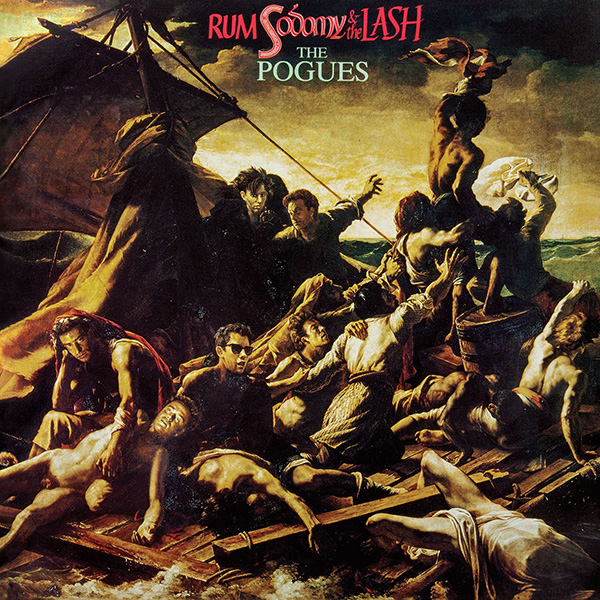
The Pogues's most satisfying record might be 1985's Rum Sodomy & the Lash, not least because of the exquisitely bad taste of its cover art: a detail from Géricault's monumental painting The Raft of the Medusa. In the tableau of an infamous naval disaster, whose castaways reportedly resorted to cannibalism, the band members' faces are superimposed over those of the painting's ravaged survivors.
Tracing "The Old Main Drag," MacGowan's harrowing yet somehow winsome dirge about a teenage hustler down on his luck in London, the Violet took no time at all to reveal its personality. At the song's outset, it rendered James Fearnley's accordion and Jem Finer's banjo explicit in a way I hadn't experienced, by which I mean the instruments sounded shockingly clear, their timbral and textural information presented in ultrahigh definition. MacGowan's vocal—sounding alternately rousing, melancholy, and piss-drunk—rang out with more vividness and filigree than I believed this album contained. I wish you could have been there to hear the spit and disdain in MacGowan's voice when he sang the very unlyrical word "Tuinal."
On the same album side, listening to "I'm a Man You Don't Meet Every Day," a music hall song from the 1870s, I found it easier than ever to discern that Cait O'Riordan's vocal had been double tracked, which doesn't diminish the purity and expressiveness of her small but distinctive voice. Also enjoyable was the life-size scale of the musicians and their precisely drawn contours. Throughout, the Violet elevated this Elvis Costello–produced gem—by no means an audiophile recording—into an audiophile experience.
Contributing to this arresting sensation of clarity was the cartridge's silence in the groove. Like Mike Trei, who's written about the Aidas Durawood Copper and Malachite Silver cartridges in these pages, I was often surprised by the loudness of the music that burst out of my speakers. I assumed my preamp had been turned down, because the groove rush I associate with higher volumes simply wasn't there. One of the reasons for this uncanny effect must be the attention Svazas lavishes on aligning the styli.
Happily, this minutely detailed, high-contrast presentation does not come with a tipped-up treble or bleached, mechanical sound. In fact, I'd describe the Violet's tonal character as saturated and lustrous. Using it to play a first stereo pressing of Kenny Burrell's Guitar Forms, his underrated, underknown 1965 outing with arranger Gil Evans, proved both instructive and fun. On "Lotus Land," a jazz concerto that inevitably brings to mind Sketches of Spain, Ron Carter's bass sounded nimble and deep, without a hint of bloat or boom. And I'd never heard Burrell's guitar so clearly delineated in pitch, decay, timbre, texture, and tone.
I have heard it sound denser. I am insufferably upfront about tending to enjoy fleshiness, overt presence, and burnished color, which endears me to cartridges like the various Ortofon SPUs and Miyajimas. The Aidas takes a different tack. Its sound is decidedly more delicate, detailed, and refined, but with just as much color, though applied with a fine watercolor brush. It plays back records with elegance and a vernal beauty. If the SPU is a great cask-strength bourbon (like Booker's), then the Aidas is a great vintage Chardonnay champagne (like Pierre Péters "Les Chétillons"). Or maybe theirs is the difference between John Boorman's Deliverance and Yasujiro Ozu's Late Spring. Or maybe analogies are just a shitty way to write.
No component can master everything, and the area where I found some cartridges to best the Violet is dynamics. Both the Ortofon SPU Royal N and the Dynavector XV-1s hit harder, sound more exciting, and cost significantly less. On the other hand, the Violet offers meaningfully higher resolution and speed than the Ortofon and sounds harmonically richer and more musical than the Dynavector.
What the Violet's nontrivial price buys you is cutting-edge detail extraction, superb tracking, and deep silences married to gorgeous tonality and a relaxed, easy-to-listen-to presentation. It offers sonic explicitness without skimping on musical insight. And it traffics in a tangible beauty that I found addictive. Lowering the Aidas onto a record is like walking into a room filled with fresh flowers.
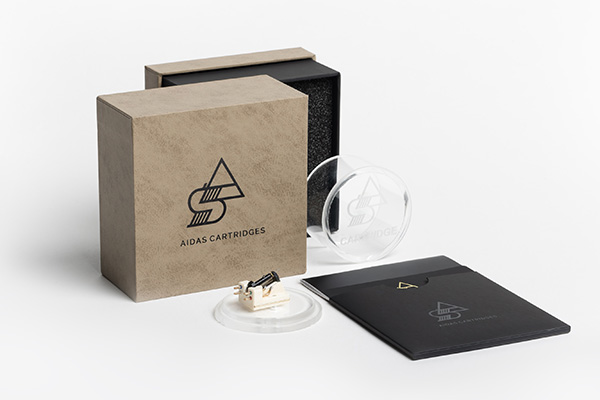 Aidas goes mono!
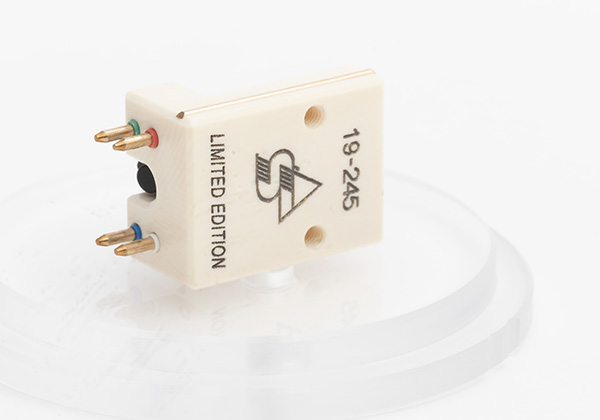
Remember that second box I mentioned? Inside it I discovered one of the most exotic objects I've held in my hands. The Aidas Mammoth Gold Mono LE cartridge, the company's first single-channel transducer, is made from the 21,000-year-old tusk of a Siberian wooly mammoth, which Svazas believes to be the best sounding material for building cartridge bodies. It is perhaps an omen of civilizational collapse that it isn't the only cartridge made from mammoth tusk that's currently in my home: two Neumann DST-style cartridges made in Germany by Daniel Kim of Analogtechnik use the prehistoric material in their cantilevers. I will be writing about them in an upcoming column.
The Mammoth Gold Mono is a lovely and mysterious-looking thing, with nearly identical specs to the Violet, a slightly higher output of 0.4mV, a newly designed suspension, and a cantilever and MicroLine stylus from Japan's Ogura. Not surprisingly, it has one solid-gold coil instead of two. The LE in the model name stands for Limited Edition, though I'm told that the public interest it's inspired has caused it to be upgraded to a permanent member of the company's product line. It retails for a spectacular $11,250, making it one of the most expensive mono cartridges I'm aware of.
Somewhat surprisingly, both the Violet and the Mammoth Mono seemed to dislike the Consolidated Audio step-up transformer I use in my system and turned up their noses at every SUT I tried, regardless of ratio. Both cartridges sounded unambiguously better routed directly through the resistive input of the Manley Steelhead. And while the enclosed manual recommends a loading of 100–300 ohms for both cartridges, in practice they preferred a load of 470 ohms, which allowed their beautifully extended top ends to sound airy, the bass to remain satisfyingly deep, and the music to breathe.
On "A Fine Romance" from the wonderful Mel Tormé Sings Fred Astaire, the Mammoth Mono rendered Tormé's voice particularly creamy and luminous and the brass of arranger Marty Paich's 10-piece ensemble as distinct and finely drawn as I've experienced. The Lithuanian cartridge left nothing to be desired in terms of scale, pace, and frequency response and was better by a mile than any mono cartridge I've heard at manifesting fine detail, which it did with the same easeful manner and grace as the Violet.
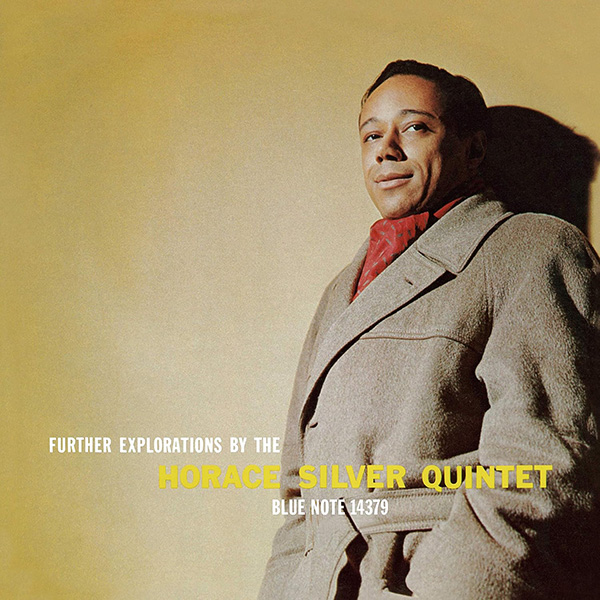 And it exceeded its stereo sibling in both dynamics—albeit slightly—and color saturation, as I discovered when listening to the first pressing of Further Explorations by the Horace Silver Quintet. On "Moon Rays," the Mammoth Mono captured every bit of the trumpet's tart resonance during Art Farmer's solo and was thrillingly precise in communicating the coppery sheen of Louis Hayes's cymbals. It was even more adept at illuminating the resonant signature of the EMT 140 plate reverb Rudy Van Gelder used in his Hackensack living room studio. And it played music with more wallop than the Violet, giving the bassline a more satisfying punch. Like many mono cartridges, the Aidas was terrific at rejecting surface noise and minimizing the effect of scratches, though in this regard it didn't quite equal the best I've heard.
Essentially, the Mammoth Mono offers something rather unusual: the technical abilities of a modern supercartridge in a single-channel transducer. I can certainly imagine listeners who might want just such a thing, particularly those who listen primarily to the glorious classical recordings from the mono microgroove era. In fact, I can't think of a better cartridge for listening to that music.
In many systems, the 1954 recording of Stravinsky's Le Sacre du Printemps by the Minneapolis Symphony Orchestra conducted by Antal Doráti can sound a bit small and thin, especially compared to the same orchestra's celebrated stereo version from 1959. But the Mammoth Mono turned a first vinyl pressing of the ballet score into a sonic spectacular. I was tickled by how surely it separated and clarified the six violas on "Cercles Mysteriéux des Adolescentes."
And it exceeded its stereo sibling in both dynamics—albeit slightly—and color saturation, as I discovered when listening to the first pressing of Further Explorations by the Horace Silver Quintet. On "Moon Rays," the Mammoth Mono captured every bit of the trumpet's tart resonance during Art Farmer's solo and was thrillingly precise in communicating the coppery sheen of Louis Hayes's cymbals. It was even more adept at illuminating the resonant signature of the EMT 140 plate reverb Rudy Van Gelder used in his Hackensack living room studio. And it played music with more wallop than the Violet, giving the bassline a more satisfying punch. Like many mono cartridges, the Aidas was terrific at rejecting surface noise and minimizing the effect of scratches, though in this regard it didn't quite equal the best I've heard.
Essentially, the Mammoth Mono offers something rather unusual: the technical abilities of a modern supercartridge in a single-channel transducer. I can certainly imagine listeners who might want just such a thing, particularly those who listen primarily to the glorious classical recordings from the mono microgroove era. In fact, I can't think of a better cartridge for listening to that music.
In many systems, the 1954 recording of Stravinsky's Le Sacre du Printemps by the Minneapolis Symphony Orchestra conducted by Antal Doráti can sound a bit small and thin, especially compared to the same orchestra's celebrated stereo version from 1959. But the Mammoth Mono turned a first vinyl pressing of the ballet score into a sonic spectacular. I was tickled by how surely it separated and clarified the six violas on "Cercles Mysteriéux des Adolescentes."
 Yet given my musical diet and sonic predilections, I find the Mammoth Mono to be a more ambiguous proposition than its stereo counterpart. While I fell in love with the Violet, I find the lavishly detailed, elegantly refined Aidas sound to be less convincing when applied to certain mid–20th century mono LPs. For me, the advantages of the simpler recording processes of the time are most vividly expressed in these sides' tonal density, unrestrained dynamics, and uncannily lifelike presence.
The Mammoth Mono playing Big Maybelle singing "Say It Isn't So" from her first long player, Big Maybelle Sings (recorded by Van Gelder in that same Hackensack living room in 1957), offers much to recommend it, but the volcanically dynamic vocal doesn't nail me to my seat or sound as flesh-and-bone physical as it does when played back with the Miyajima Zero Mono or, especially, the Aidas-modified Fairchild 225-A. I feel the same about mono sides by Roy Acuff and Django Reinhardt. Using the Mammoth Mono to play these records felt like putting on a tuxedo to attend a fish fry.
The new Aidas mono cartridge does certain things better than any other cartridge I'm aware of. It is quite probable that a higher-performing tonearm than my transcription-length Schick would have elicited even more filigree and ambiance than I experienced. But if you're considering this very exotic, very expensive piece of gear, be sure to think carefully about your taste in music and audio playback. When it comes to this lofty level of reproduction, one size definitely does not fit all.
Yet given my musical diet and sonic predilections, I find the Mammoth Mono to be a more ambiguous proposition than its stereo counterpart. While I fell in love with the Violet, I find the lavishly detailed, elegantly refined Aidas sound to be less convincing when applied to certain mid–20th century mono LPs. For me, the advantages of the simpler recording processes of the time are most vividly expressed in these sides' tonal density, unrestrained dynamics, and uncannily lifelike presence.
The Mammoth Mono playing Big Maybelle singing "Say It Isn't So" from her first long player, Big Maybelle Sings (recorded by Van Gelder in that same Hackensack living room in 1957), offers much to recommend it, but the volcanically dynamic vocal doesn't nail me to my seat or sound as flesh-and-bone physical as it does when played back with the Miyajima Zero Mono or, especially, the Aidas-modified Fairchild 225-A. I feel the same about mono sides by Roy Acuff and Django Reinhardt. Using the Mammoth Mono to play these records felt like putting on a tuxedo to attend a fish fry.
The new Aidas mono cartridge does certain things better than any other cartridge I'm aware of. It is quite probable that a higher-performing tonearm than my transcription-length Schick would have elicited even more filigree and ambiance than I experienced. But if you're considering this very exotic, very expensive piece of gear, be sure to think carefully about your taste in music and audio playback. When it comes to this lofty level of reproduction, one size definitely does not fit all.
 Finding a cure for footfall
After 13 bounce-free years in my Red Hook loft, I've moved into an old house with sprung wooden floors. The first time I played an LP and got up to flip it, it skipped. When my partner walked into the room, it skipped again. Goddammit. The advice one usually hears when confronted with a footfall problem is to install a wall-mounted shelf. For a variety of reasons, in my room this simply isn't practical. Applying mass cannot be the solution, either: In its stacked plywood plinth, the Garrard 301 weighs 66lb, and my double-wide Box Furniture rack is plenty heavy as well. The spring-loaded Townshend Audio platform I usually enjoy under my Garrard 301 only made the footfall worse. Various other footers and platforms—relying on air bladders, roller balls, or even good old Sorbothane—are just as useless against a floor that behaves like a trampoline. In my desperation, I reached out to this magazine's resident analog witch doctor, Mike Trei. Trei has set up hundreds if not thousands of record players and has run up against every conceivable problem: rumble caused by underground trains, assorted hums, mysterious static, possibly even mice gnawing the phono cables or electromagnetic fields caused by passing UFOs. When I described my problem, Mike told me that, from the point of view of a record player, the most problematic deflection caused by footfall isn't vertical but horizontal. And that "grounding" the audio rack to the wall would probably help with my predicament.
As a start, Mike suggested wedging a few paperbacks between the rack and the wall; this experiment proved promising, so we continued. Next, he suggested ordering a pair of adjustable bed support legs from Amazon. Designed to stop your bed from sagging, the two pieces of these heavy-duty plastic cylinders screw into one another, enabling the support to extend from 4.1"–7.3". They are marketed under the unlovely brand name Nenowond, cost $15, and arrived the next day. While not exactly attractive, they are at least inconspicuous.
I installed the risers between the rack's middle shelf and the wall, making sure they fit snugly, then checked that the turntable was level. Then I put on a record and lumbered around the room like a drunk coming home after a bender. No skips. I'm happy to say, there haven't been any since. Thank you, Mike, you're a lifesaver.
Footnote 1: Aidas Cartridges, Kaunas, Lithuania. Email: aidascartridges@gmail.com Web: aidascartridges.com. US Distributor: Notable Audio Products, 115 Park Ave. Suite 2, Falls Church, VA 22046. Tel: (855) 966-8225. Email: info@notableaudio.com. Web: notableaudio.com.
Listening to the VioletHardly a month goes by when I don't listen to something by the late Shane MacGowan. The frontman of the Pogues and owner of the most upsetting maxillary teeth in rock'n'roll, he managed to fuse Irish folk and punk without reducing either to a cliché. Better yet, he was a first-rate songwriter and singer who could inhabit a tune as reliably as Billie Holiday.
Aidas goes mono!Remember that second box I mentioned? Inside it I discovered one of the most exotic objects I've held in my hands. The Aidas Mammoth Gold Mono LE cartridge, the company's first single-channel transducer, is made from the 21,000-year-old tusk of a Siberian wooly mammoth, which Svazas believes to be the best sounding material for building cartridge bodies. It is perhaps an omen of civilizational collapse that it isn't the only cartridge made from mammoth tusk that's currently in my home: two Neumann DST-style cartridges made in Germany by Daniel Kim of Analogtechnik use the prehistoric material in their cantilevers. I will be writing about them in an upcoming column.
And it exceeded its stereo sibling in both dynamics—albeit slightly—and color saturation, as I discovered when listening to the first pressing of Further Explorations by the Horace Silver Quintet. On "Moon Rays," the Mammoth Mono captured every bit of the trumpet's tart resonance during Art Farmer's solo and was thrillingly precise in communicating the coppery sheen of Louis Hayes's cymbals. It was even more adept at illuminating the resonant signature of the EMT 140 plate reverb Rudy Van Gelder used in his Hackensack living room studio. And it played music with more wallop than the Violet, giving the bassline a more satisfying punch. Like many mono cartridges, the Aidas was terrific at rejecting surface noise and minimizing the effect of scratches, though in this regard it didn't quite equal the best I've heard.
Essentially, the Mammoth Mono offers something rather unusual: the technical abilities of a modern supercartridge in a single-channel transducer. I can certainly imagine listeners who might want just such a thing, particularly those who listen primarily to the glorious classical recordings from the mono microgroove era. In fact, I can't think of a better cartridge for listening to that music.
In many systems, the 1954 recording of Stravinsky's Le Sacre du Printemps by the Minneapolis Symphony Orchestra conducted by Antal Doráti can sound a bit small and thin, especially compared to the same orchestra's celebrated stereo version from 1959. But the Mammoth Mono turned a first vinyl pressing of the ballet score into a sonic spectacular. I was tickled by how surely it separated and clarified the six violas on "Cercles Mysteriéux des Adolescentes."
Yet given my musical diet and sonic predilections, I find the Mammoth Mono to be a more ambiguous proposition than its stereo counterpart. While I fell in love with the Violet, I find the lavishly detailed, elegantly refined Aidas sound to be less convincing when applied to certain mid–20th century mono LPs. For me, the advantages of the simpler recording processes of the time are most vividly expressed in these sides' tonal density, unrestrained dynamics, and uncannily lifelike presence.
The Mammoth Mono playing Big Maybelle singing "Say It Isn't So" from her first long player, Big Maybelle Sings (recorded by Van Gelder in that same Hackensack living room in 1957), offers much to recommend it, but the volcanically dynamic vocal doesn't nail me to my seat or sound as flesh-and-bone physical as it does when played back with the Miyajima Zero Mono or, especially, the Aidas-modified Fairchild 225-A. I feel the same about mono sides by Roy Acuff and Django Reinhardt. Using the Mammoth Mono to play these records felt like putting on a tuxedo to attend a fish fry.
The new Aidas mono cartridge does certain things better than any other cartridge I'm aware of. It is quite probable that a higher-performing tonearm than my transcription-length Schick would have elicited even more filigree and ambiance than I experienced. But if you're considering this very exotic, very expensive piece of gear, be sure to think carefully about your taste in music and audio playback. When it comes to this lofty level of reproduction, one size definitely does not fit all.
Finding a cure for footfallAfter 13 bounce-free years in my Red Hook loft, I've moved into an old house with sprung wooden floors. The first time I played an LP and got up to flip it, it skipped. When my partner walked into the room, it skipped again. Goddammit. The advice one usually hears when confronted with a footfall problem is to install a wall-mounted shelf. For a variety of reasons, in my room this simply isn't practical. Applying mass cannot be the solution, either: In its stacked plywood plinth, the Garrard 301 weighs 66lb, and my double-wide Box Furniture rack is plenty heavy as well. The spring-loaded Townshend Audio platform I usually enjoy under my Garrard 301 only made the footfall worse. Various other footers and platforms—relying on air bladders, roller balls, or even good old Sorbothane—are just as useless against a floor that behaves like a trampoline. In my desperation, I reached out to this magazine's resident analog witch doctor, Mike Trei. Trei has set up hundreds if not thousands of record players and has run up against every conceivable problem: rumble caused by underground trains, assorted hums, mysterious static, possibly even mice gnawing the phono cables or electromagnetic fields caused by passing UFOs. When I described my problem, Mike told me that, from the point of view of a record player, the most problematic deflection caused by footfall isn't vertical but horizontal. And that "grounding" the audio rack to the wall would probably help with my predicament.
Footnote 1: Aidas Cartridges, Kaunas, Lithuania. Email: aidascartridges@gmail.com Web: aidascartridges.com. US Distributor: Notable Audio Products, 115 Park Ave. Suite 2, Falls Church, VA 22046. Tel: (855) 966-8225. Email: info@notableaudio.com. Web: notableaudio.com.