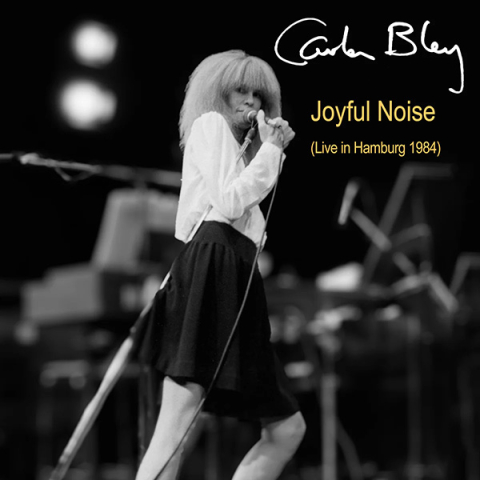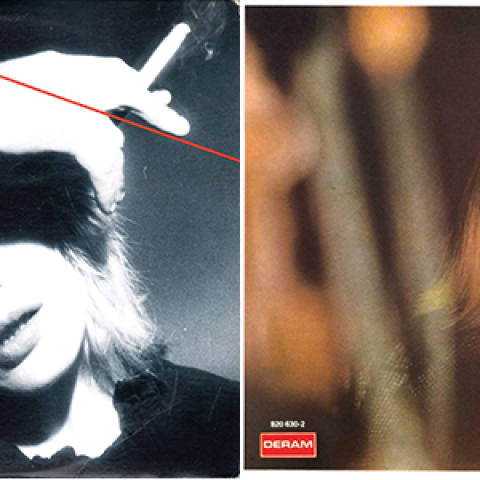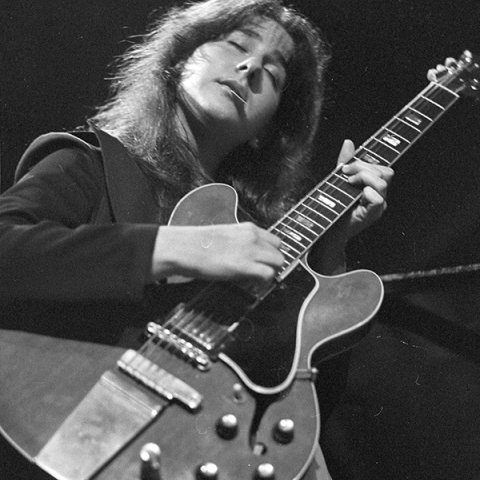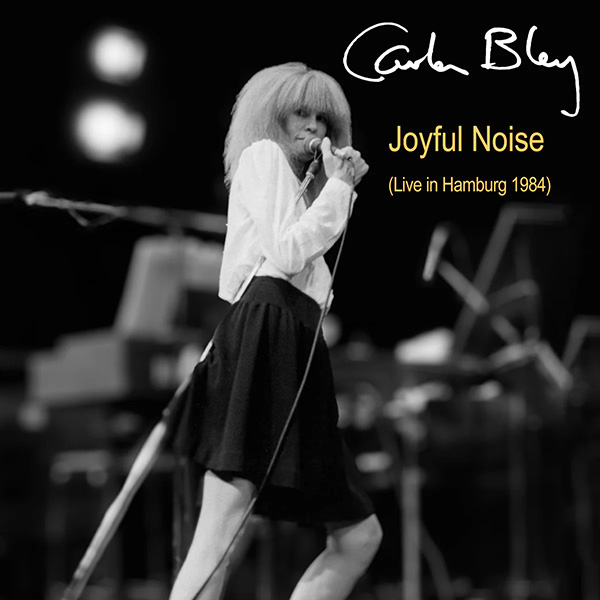
Proof of her prowess with the pen (if any is needed after such magnum opi as Escalator Over the Hill and European Tour 1977) comes via Joyful Noise (Live in Hamburg 1984), a live recording from the famed Norddeutschen Rundfunks Jazz Workshop series, held in Hamburg, Germany, for decades since 1958 and curated for many years by German keyboard player and producer Michael Naura.
The nearly two-hour two-disc set draws its material mostly from albums Bley made earlier in the decade: 1980's Social Studies, 1981's Live!, and 1983's I Hate to Sing and Heavy Heart, all released on WATT, the label founded by Bley and trumpeter Michael Mantler. (The two also established the now-defunct but important New Music Distribution Service, which brought their own and others' less commercial music to the "masses"—just one more reason she became the fourth nonvocalist woman to be named a National Endowment for the Arts Jazz Master.)
In addition to music from those albums is "La Paloma," an excerpt from her soundtrack to the 1983 Claude Miller–directed French cop flick Mortelle Randonnée; an arrangement of Monk's "Misterioso," which appeared as a track on the period A&M release That's the Way I Feel Now— A Tribute to Thelonious Monk; and what would become the title track to 1988's Fleur Carnivore, here called "Venus Fly Trap" and introduced by Bley in rickety German as "This is your flesh eating plant." "Ups and Downs" now gets its earliest documentation; it would appear later on both Fleur Carnivore and another 1988 album, Duets, with electric bassist Steve Swallow.
Bley's band at this performance was an unusual 10-piece aggregate. Mantler is on board. The other horns are Gary Valente (trombone), Vincent Chancey (French horn), Bob Stewart (tuba), Steve Slagle (alto and soprano saxophone, flute), and Tony Dagradi (tenor saxophone and clarinet). Bley herself is heard only on organ and glockenspiel; piano duties are handled by Ted Saunders. The rhythm section is rounded out by Swallow and drummer Victor Lewis. Mantler had performed on all the albums mentioned above. Valente, Slagle, Swallow, and Lewis were stalwart members of her bands. Chancey and Stewart were off-and-on collaborators. Dagradi and Saunders are less familiar names, but both were already well into what would be long careers, and both had worked with Bley often. All the musicians navigate her alien topography with aplomb and offer compelling individual transmissions, most notably Valente, who is unconscionably underrated.
Some pieces are pithy and focused, others are lengthy and sprawling, yet each is a saga, rich in detail and vigor. Bley's odd, self-effacing on-stage banter, delivered in a cracking voice, adds to the set's appeal: She starts things off by promising a new piece written for the evening—then noting that it wouldn't be performed until the second half. When she says "First, you have to listen to old music," it almost seems like a threat.
"La Paloma" is a Viennese waltz that mutates into a darkly funky groove, fringed with tuba and organ. "Talking Hearts" is not, as you might expect, an exchange of sweet nothings but drinking buddies becoming more aggressive with every shot they drink.
The title track, which Bley says she "thinks would be a very good theme for a television show but it isn't, it's nothing," has a breeziness from simpler times, especially in its flute exposition and bass solo. "To Ya" (aka "The Lord Is Listenin' to Ya, Hallelujah!") is a keening gospel service with Valente, in his solo, in full televangelist mode. "Light or Dark" could also be a TV theme, but it would be for a life-on-the-line game show. Its ominous rhythm and lurching feel unsettling.
The first set ends with "Misterioso," which starts as though it is being played by an android chorus—then, during solos, it's stretched like taffy. The second half opens with "Venus Fly Trap," which Bley dedicates to Ellington. "Fly Trap" mines a rich blues vein, until it hits a deposit of pure funny dance. The mopey ballad "Ending It" is another chance to hear Valente at peak emotive abilities. "Starting Again/Ups and Downs" is increasingly urgent samba for a Saunders solo and heavy swing for Slagle and Dagradi. "Battleship," a hip descending groove propelled by organ, was intended to evoke the then-recent Falklands War; it devolves at its center into a wild, atonal ride and later quotes of "My Country, 'Tis of Thee" and "Taps." Closing out the date is a grease-fest called "Copyright Royalties."
The gem of this date, "Nu Derection," shines brighter for being previously undocumented. The second piece of the second set and the longest performance of the evening, it premiered just 14 weeks earlier in Hartford, Connecticut, as a commission for the Creative Improvisors Orchestra, which played it on that date. It opens with more than a minute of manic drums then drops into a section replete with horn fanfares. A disjointed rhythmic vamp emerges for solos from the saxophones; Swallow's dizzying slides along the neck are especially effective in this section. Things then quiet down and congeal to become brisk and sarcastically martial. A spacy segment features Mantler, with Lewis setting the tone with florid cymbal work; this segues into anthemic bedrock over rimshots and breakbeats, then a fervid Swallow solo: Here and throughout the evening, Swallow shows himself to be the band's unassuming hero. "Nu Derection" is a 14-and-a-half-minute masterclass in American music history, big band composing, ensemble dynamics, and not taking yourself too seriously in a serious way.