

Balanced Audio Technology VK-P10 phono preamplifier
Some of the most innovative thinking on hybrid circuit design these days seems to come from Russian designers. As a group, they are technically very well educated, pragmatic, and unfettered by American high-end didacticism.
Belleson Brilliance phono preamplifier

My oldest aural memory is my mother singing nursery rhymes to send me off to sleep. After that, it's vinyl records. Being the third child, I benefited from a constant stream of audio-related hand-me-downs, starting with a 1960s kiddie phonograph and a pile of well-worn records from my older brothers.
Boulder 2008 phono preamplifier & 2010 preamplifier

It's not every Consumer Electronics Show that someone introduces a $29,000 solid-state phono preamplifier—and I miss it. The 2002 CES was one. My show report in the April issue made it seem as if I'd found out about it there, but the fact is, someone clued me in after I'd returned home. I needed to come clean on that.
Boulder Amplifiers 1008 phono preamplifier

Why bother with three phono preamps most of us can't afford? For the same reason the enthusiast automobile magazines cover the newest Ferraris and Lamborghinis: just reading about them is fun.
Brilliant Corners #1: Auditorium 23, EMIA, Murasakino, and Sound Tradition Live! phono step-ups

The first audiophile I met lived near a sewage treatment plant on the outskirts of Moscow. It was a few months after the Soviet Union collapsed, in 1992, when I was a college senior, and I recall walking with my father to his home past block after block of the identical dingy white tenements that encircle most Eastern European cities.
Brilliant Corners #10: Tron Electric Convergence Signature & PrimaLuna EVO 100 phono stages
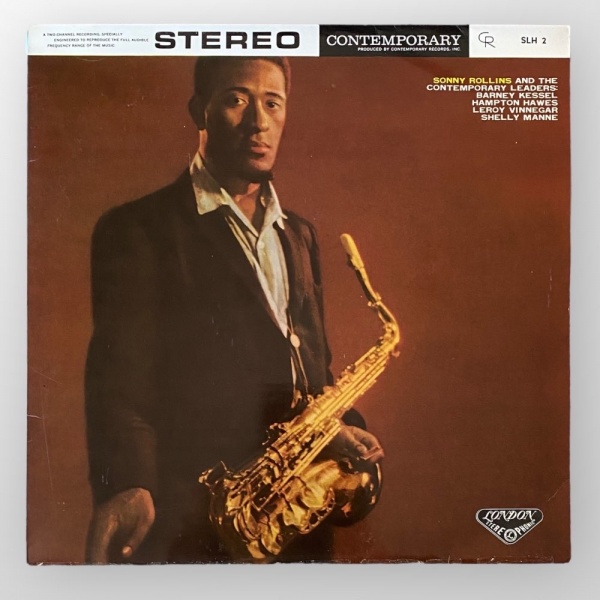
"The phonograph record is an art form itself," Lester Koenig wrote in March 1959, "and one of its advantages is the performance that exists uniquely of, by and for the record." Remarkably, when Koenig included this pronouncement in his liner notes to Sonny Rollins and the Contemporary Leaders, the 12" long-play record had been the dominant carrier of recorded music for less than a decade, and stereo discs had been mass-produced for just over a year.
For Koenig, this issue wasn't merely academic. Before making his name as head of Contemporary Records in Los Angeles, he had attended Yale Law School, worked as a screenwriter and producer at Paramount, and gotten blacklisted by the House Committee on Un-American Activities. At Contemporary, he set out to become a leading practitioner of the art of phonography.
Brilliant Corners #2: Manley Steelhead RC phono preamplifier

The other day it occurred to me that the main difference between audiophiles and more reasonable adults isn't our gear. Plenty of people have impressive hi-fis simply because they can afford them and are running out of things to buy. No, what makes someone an audiophile is the willingness to sit down in front of a pair of speakers (or with a pair of headphones clamped over their ears) and focus the entirety of their attention on listening.
Brilliant Corners #22: Sutherland Dos Locos and Manley Oasis phono stages

"Give me the seduction, give me the pleasure," Ron Sutherland was nearly shouting into the phone. "I want to turn off the analytical mind and just enjoy myself!"
Sutherland speaks in the chipper Midwestern cadences of a comic character actor from the 1940s, sort of like a grown-up Eddie Bracken from The Miracle of Morgan's Creek, and I'd never heard him sound so excited. He was talking about his new phono stage, the Dos Locos, the first product he's designed collaboratively, having enlisted a group of audiophile friends who listened to and critiqued each iteration. "These friends are excellent listeners," Sutherland related, "whereas I'm a gearhead, and don't have the patience or discernment for that kind of listening. Sometimes I'd change something and they'd say, 'You made it worse!'" It sounded like he preferred the group dynamic. "There was something very intimate about this back-and-forth process," he told me. "And compared to working alone, it was a lot more fun!"
Brilliant Corners #24: Consolidated Audio "Monster Can" & Fairchild 235 MC Step-Up Transformers

One of my favorite things about this pastime is the modesty of its aims. Despite the sometimes-astronomical sums spent on gear, and the small handful of drama queens who populate various corners of this hobby, all we're doing is trying to enjoy recorded music at home. No one here is reversing planetary warming or solving the Riemann hypothesis. The sole purpose of the pursuit we write about in these pages is to please, enlighten, and entertain. I like that about it.
This means that aesthetics matter. During a recent trip to Japan, I found myself marveling at the many vintage audio components used in both public listening spaces and people's homes, and the high prices these meticulously restored devices command. I found many of them lovely, the patina of age only adding to their allure. In the West, where we believe in eternal progress, it's common to ask whether these components' performance is up to contemporary standards. "Sure, it looks cool, but how does it sound?" we might ask, as though the physical beauty of the gear is a distraction or, worse, a ploy. Recall the old audiophile joke about the initials of the design-forward Danish manufacturer Bang & Olufsen standing for "beauty only."
Brilliant Corners #37: A Lejonklou System
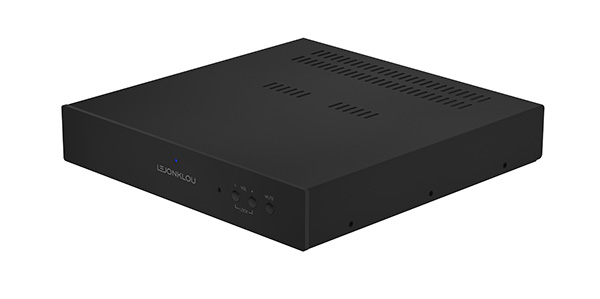
The more I listen—to gear I'm reviewing as well as other people's hi-fis—the more I believe in intangibles. One of these intangibles is the art of system building.