

Gramophone Dreams #80: Mobile Fidelity Electronics MasterPhono
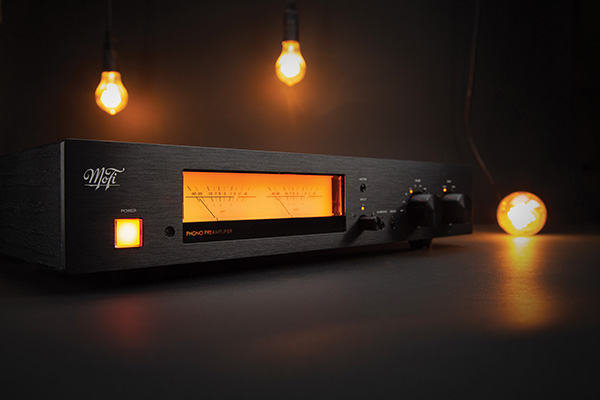
During my cub reporter days at Stereophile, I was always on the lookout, casting about for midlevel analog components I might latch on to, ones that could join my long-term daily-driver reference system by complementing the character of my midlevel DeVore Fidelity Orangutan O/93 and Falcon LS3/5a loudspeakers. I was searching for these basic traits: alive and vigorous, clear and well-sorted, relaxed and natural. One of my first-ever Stereophile reviews, in the October 2014 issue, was of Sentec's EQ11 phono preamplifier, which featured six EQ choices, selectable from the front panel, Bakelite knobs, Switchcraft switches, and a gray Hammerite-paint finish.
When I reviewed the Sentec, I owned three turntables and about 300 records. But phono stagewise, I was a beggar and a borrower, hoping a friend's phono pre or some review product would jump out of the deck and become my reference.
Gramophone Dreams #85: Let the Right Brain In; the Hagerman Audio Labs Piccolo Zero head amp
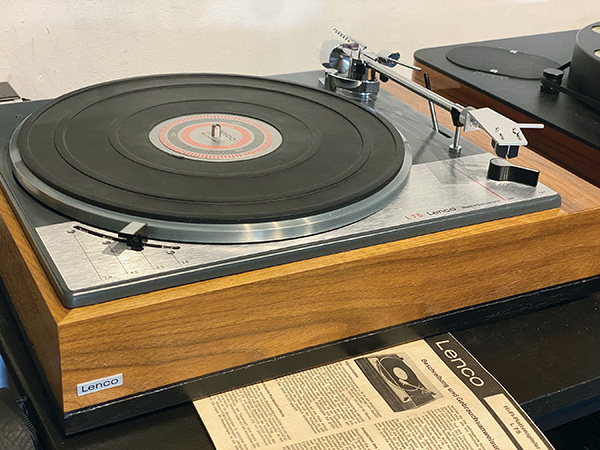
In the months since I told my Lenco story in Gramophone Dreams #79, two of my friends have bought L75s, and now they're enjoying them more than their shiny movie-star decks. One told me he has put more than $2000 into a Lenco L75 he bought online for $350. When I asked how his hot-rodded Lenco compared to his fancy belt drive, he replied, "You can feel it. The Lenco's motor pulls like a team of Clydesdales. It makes my belt drive feel like a pony pulling a child's cart."
When I asked him what he thought his rebuilt Clydesdale deck, with its new bearing, Jelco tonearm, and Grado Prestige Gold cartridge, was doing that his well-regarded belt drive was not, he replied, in a low, serious voice, "I think it gets more of the first part of a note."
Gramophone Dreams #91: Mobile Fidelity, PrimaLuna, and First Watt Redux
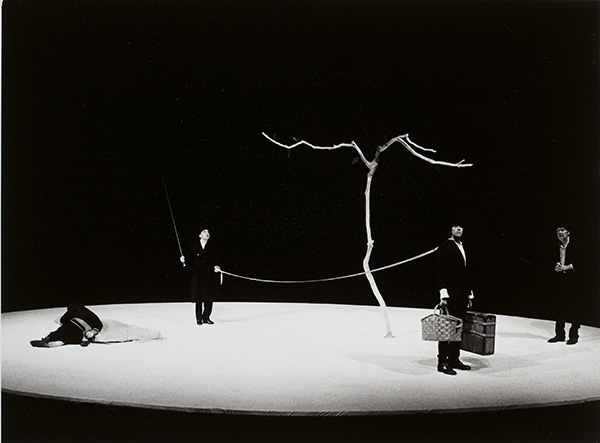
Herb waits for Godot
It's important for readers to remember that I've spent my adult life as an artist and mechanic. Making things. Working as a tradesperson during the day then at an easel or workbench at night.
When I finished high school, all I wanted to do was work in a fancy, well-equipped shop building drag race engines. Engine building was something I had already shown a talent for, but my parents insisted I go to college. Unfortunately, my high school grade point average was so low I was turned down by every college I applied to. Consequently, my parents forced me to attend Wright Junior College in Chicago, a place where teachers rolled joints for their students. And I got straight A's. Those easy A's got me into Western Illinois University, a small state college in a tiny rural town called Macomb near the Mississippi River. My mother was so proud, she told everybody she knew that her son was accepted into "university," but she could never remember which one.Gramophone Dreams #99: Schiit Audio Stjarna phono preamplifier

I'd been building and repairing tube amplifiers for a few years when my first Altec A5 Voice of the Theater speakers arrived. I bought them to help me evaluate the sound of low-powered triode amps—but whoa! The moment I turned that VOT system on, I heard from 30' away the sound of either a waterfall or a large AM radio tuned between stations . . . What's the best tube tester? A 107dB/watt speaker!
Heed Audio Quasar phono preamplifier

As a kid growing up in Milford, Michigan, my big brother always had the classiest clothes, latest records, and sharpest gear. He danced in Cuban-heeled leather boots, I climbed trees in lace-up Keds. He spun Rolling Stones vinyl on a fabric-wrapped Zenith portable with detachable speakers, I blasted the Beatles from a tinny transistor radio. Ten years my senior, big bro drove a Buick bomb (which, late one night, mysteriously caught fire in the garage) and had a girlfriend, Gail, whose plump cheeks and smart clothes embodied modern mid-century Midwestern appeal. I like to think that my brother and I have both aged gracefully. And lately, he's taken to high-end hi-fi with a passion.
Herron Audio VTSP-1 preamplifier & VTPH-1MC phono preamplifier

This is an era in which products and websites are "launched," but in the past two years Herron Audio has sort of oozed its way into the public ear. With little visible promotion or splashy advertising, Herron is now spoken of within an ever-widening audiophile circle.
Jeff Rowland Design Group Coherence preamplifier & Cadence phono stage
The Jeff Rowland Design Group has long been renowned for the exquisite quality of its chassis. The company was one of the first to promote fully balanced topologies in preamplifiers and amplifiers in the high-end market, one of the first to offer a sonically acceptable remote control, and one of the few to offer a battery power option for their amplifier line.
Krell KPE & KPE Reference phono preamplifiers

The Krell">http://www.stereophile.com/solidpreamps/694krc2">Krell KRC-2 can be regarded as a remote-controlled successor to Krell's successful KSL preamplifier of a few years back. The outboard Krell Phono Equalizer (KPE) is a separate box powered from the KRC-2. Priced at $850, it contains a printed circuit board very similar, in fact, to the $499 unit that can be fitted within the KRC. The KPE and KRC phono stages are well-designed universal units; if someone has the need for a stand-alone phono equalizer of Krell KRC standard, a separate power supply may be purchased for the KPE. It is also an advantage to be able to locate the KPE head amplifier in a hum-free zone near the LP turntable.
Lamm LP2 Deluxe phono preamplifier

In an ideal world, I'd have every phono section I've reviewed in the past 16 years on hand to compare with these three and with all that arrive in the future. But because I have a life, I don't, and I wouldn't even if I could, though some readers (and one retailer) have insisted that that's the only way that I could possibly be of any use to them. Ha! And for those who are concerned that I've neglected the Manley Steelhead, not so! It's still my reference.
Leben RS-30EQ phono preamplifier

The Leben RS-30EQ phono preamplifier ($2695) incorporates a pair of common dual-triode tubes (12AT7) for phono gain, but breaks with tradition by using a CR-type equalization circuit rather than the more common negative-feedback type. Total gain is specified as 23.5dB, which is sufficient for moving-magnet pickups; an external transformer is recommended for use with moving-coil types. A silicon full-wave rectifier supplies heater voltage, while the rail is supplied by a 6X5GT rectifier tube.