

Spica TC-50 loudspeaker
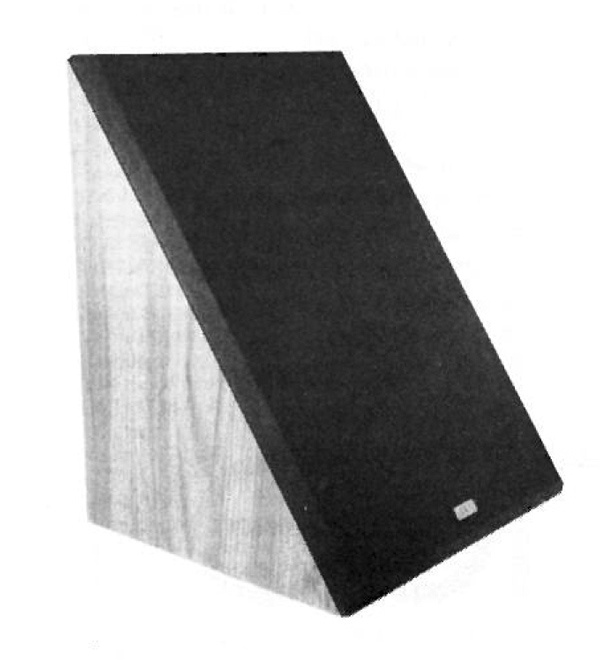
High-quality, low-cost loudspeaker systems are not an everyday blessing. The Rogers LS3/5a has survived for more than a decade precisely because so few US manufacturers sought musical accuracy as distinguished from high output and powerful bass. The economics of loudspeaker manufacture also don't lend themselves to economy. The cost of woodwork is driving the price of speakers up almost as fast as the cost of sheet-metal work is escalating the price of electronics.
Stop Digital Madness!
The title of this month's column is the legend Sheffield">http://www.stereophile.com//asweseeit/194/">Sheffield Labs emblazoned on a T-shirt a couple of years ago, to promote their jaundiced view of digital audio. Since then, even Sheffield's reactionary perfectionists softpedalled their anti-digital crusade, perhaps because of the number of CDs they've been selling! Their personnel no longer wear those T-shirts at CES, which is unfortunate. Although most people in the audio field no longer see digital audio as madness, digital denouncing is still very much with us.
Subjective Loudspeaker Testing
One of the most firmly-established audio platitudes is the one which says "The specs don't tell the whole story." One reason for this, of course, is the fact that most manufacturers, preferring to sell their products on the basis of emotional appeals in ads rather than on hard, cold performance claims, do not attempt to make their specs tell the whole story.
Surround Sound: High Tech Meets the Beast Within Us

It's a tense moment during a suspense thriller. A cannibalistic serial killer has escaped from a maximum-security detention unit and eluded capture for long enough to work up a healthy appetite. Two small children are playing hide-and-seek in an overgrown lot behind their home.
Surrounded By Space
During the late 1950s, when high fidelity exploded into a multimillion-dollar industry, product advertisements bragged about bringing the orchestra into your living room. Apparently, no one realized what an absurd concept it was, but there are still many people today who believe that's what audio is all about. It isn't. There is no way a real orchestra could fit into the average living room, and if it could, we would not want to be around when it played. Sound levels of 115dB are just too loud for most sane people, and that's what a full orchestral fortissimo can produce in a small room.
Test Your Hi-FiQ
How do you rate as an audio expert? Test yourself on these 25 questions.
All of the following are multiple-choice questions, dealing with things that every audio hobbyist should know, either before or after completing the test. Most of them are easy, but take your time in answering and don't jump to conclusions. Some of the questions are quite tricky, and wrong answers will be subtracted from your final score, so read them and the possible answers carefully before committing yourself. Don't guess if you aren't fairly sure.
The 1965 New York Audio Show
Note: As our coverage of the 2016 New York Audio Show has just been posted, I thought it would be interesting to post our report from the 1965 show, in particular to see which brands are still around 50 years later.John Atkinson
The 1965 New York hi-fi show was, to these observers, most notable for the marked increase in the number of exhibits which featured goodie, classicalmusic for demonstration purposes. In the past, only about a half dozen of the exhibitors played any thing of musical worth, the rest of them evidently figuring they could make more noise with wild brass-and-percussion "demo" records.
The Absolute Sound of What?
One of the things that distinguishes a dedicated audiophile from Joe Q. Public is that he has some notion of what audio fidelity is all about.
The Acoustical Standard (with follow-up)
From time to time in this column, I have alluded to what appears to be a loss of direction in high-end audio. It's not that the state of the audio art has stopped advancing; the technology is improving in many ways, as is obvious every time we listen to a new preamplifier or cartridge or loudspeaker that has better this, that, or the other thing than anything which has come before. The problem is that these improvements don't really seem to be getting us anywhere. And I believe the reason for this is that the audio community no longer agrees about where audio is supposed to be going in the first place.
The Advent Loudspeaker
After a number of years of equipment reviewing, one gets rather blasé about "compact" loudspeakers. The appearance of yet another one that looks like hundreds of others and embodies no radically new innovations to pique one's curiosity is likely to be greeted with a passionate Ho-Hum.