

Recording of June 1964: Joan Baez In Concert, Part 2

Joan Baez In Concert, Part 2
Joan Baez, vocals, guitar
Vanguard VTC-1679 (tape), VSD-2123 (LP). Maynard Solomon, prod., Reice Hamel, eng. TT: 48:00. Well, we finally got ourselves equipped to review 4-track open-reel tapes, via a slightly modified Ampex F-44. All the tapes we have auditioned had noticeably higher hiss than the average stereo disc, but this was not loud enough to be distracting except when the tapes were reproduced at very high levels. Even then, we found the smooth, even hiss to be less objectionable than the ticks and pops from some discs played at the same level.
Joan Baez, vocals, guitar
Vanguard VTC-1679 (tape), VSD-2123 (LP). Maynard Solomon, prod., Reice Hamel, eng. TT: 48:00. Well, we finally got ourselves equipped to review 4-track open-reel tapes, via a slightly modified Ampex F-44. All the tapes we have auditioned had noticeably higher hiss than the average stereo disc, but this was not loud enough to be distracting except when the tapes were reproduced at very high levels. Even then, we found the smooth, even hiss to be less objectionable than the ticks and pops from some discs played at the same level.
Recording of November 1962: Berlioz: Symphonie fantastique
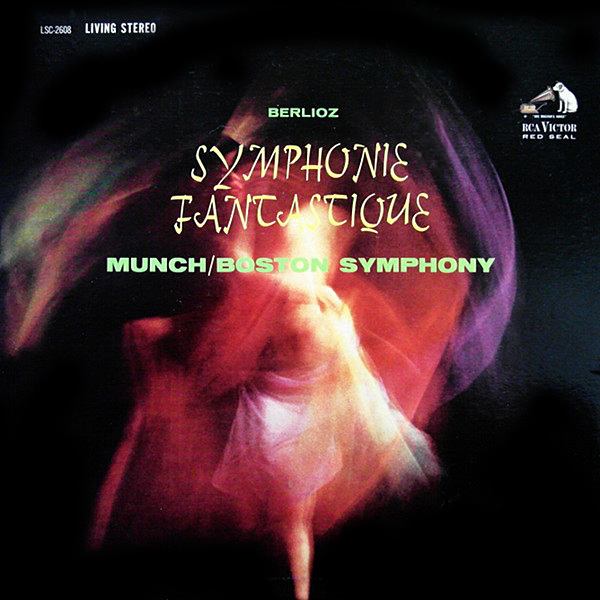
Berlioz: Symphonie fantastique
Boston Symphony Orchestra, Charles Munch, conductor
RCA Victor LSC-2608 (LP). TT: 48:40 It is easy to forget that the hi-fi movementsthe "March to the Scaffold" and the "Dream of a Witches' Sabbath"comprise barely a third of the music in the Symphonie fantastique, yet when we listen to most of the available versions of this, we can understand why the first three movements are usually passed up by the record listener. Two are slow and brooding, one is a wispy sort of waltz, and all three require a certain combination of flowing gentleness and grotesquerie that few orchestras and fewer conductors can carry off. It is in these first three movements where most readings of Berlioz' best-known work fall flat. Either they are too sweetly pastoral or too episodic and choppy, or they degenerate into unreliered dullness.
Boston Symphony Orchestra, Charles Munch, conductor
RCA Victor LSC-2608 (LP). TT: 48:40 It is easy to forget that the hi-fi movementsthe "March to the Scaffold" and the "Dream of a Witches' Sabbath"comprise barely a third of the music in the Symphonie fantastique, yet when we listen to most of the available versions of this, we can understand why the first three movements are usually passed up by the record listener. Two are slow and brooding, one is a wispy sort of waltz, and all three require a certain combination of flowing gentleness and grotesquerie that few orchestras and fewer conductors can carry off. It is in these first three movements where most readings of Berlioz' best-known work fall flat. Either they are too sweetly pastoral or too episodic and choppy, or they degenerate into unreliered dullness.
Revox A-77 open-reel tape recorder
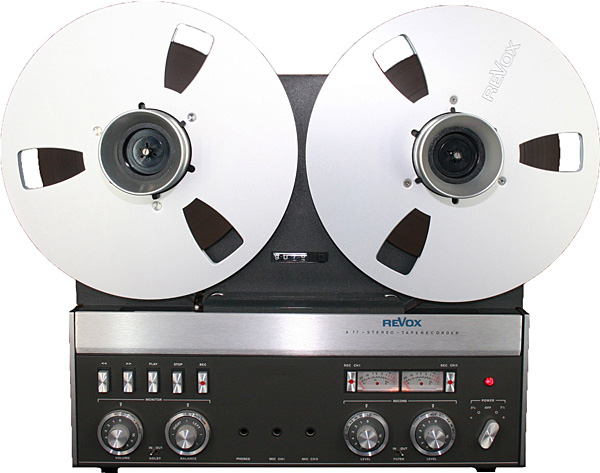
The Revox A-77 has extremely good speed regulation, vanishingly low wow and flutter, very low noise, superb tape handling, and the smoothest, widest-range frequency response of any recorder we have ever tested.
The portable version, with built-in monitor amps and speakers, is very compact for a machine with 10½ reel capacity, and is easily carried by one person. Now that the later version is equipped with a flutter-filtering tension arm, our only criticism of the A-77 is its use of three-circuit jacks for the micro phone inputs instead of the XLR-type receptacles that are considered to be "standard" in the US for on-location audio recording.
Revox G-36 open-reel tape recorder
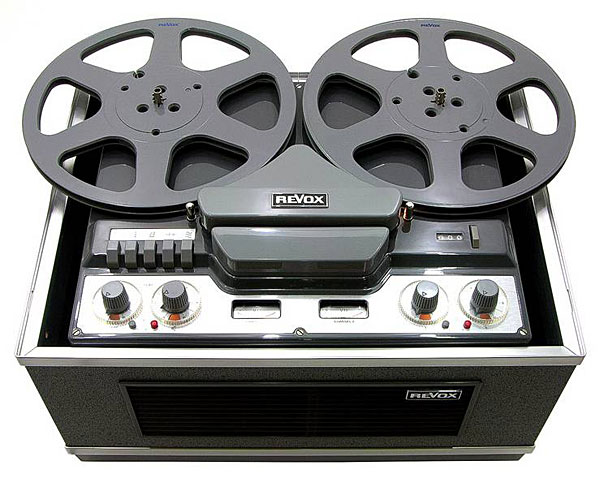
The Swiss-made G-36 recorder had earned an enviable reputation among perfectionists during the few years that it has been available in the US, and our inability to test one (because of a backlog of other components for testing) became increasingly frustrating to us with each glowing report we heard from subscribers who owned them. Now that we have finally obtained one through the courtesy of ELPA (footnote 1), we can see what all the shouting was about, but we also have some reservations about it.
Sellout!?
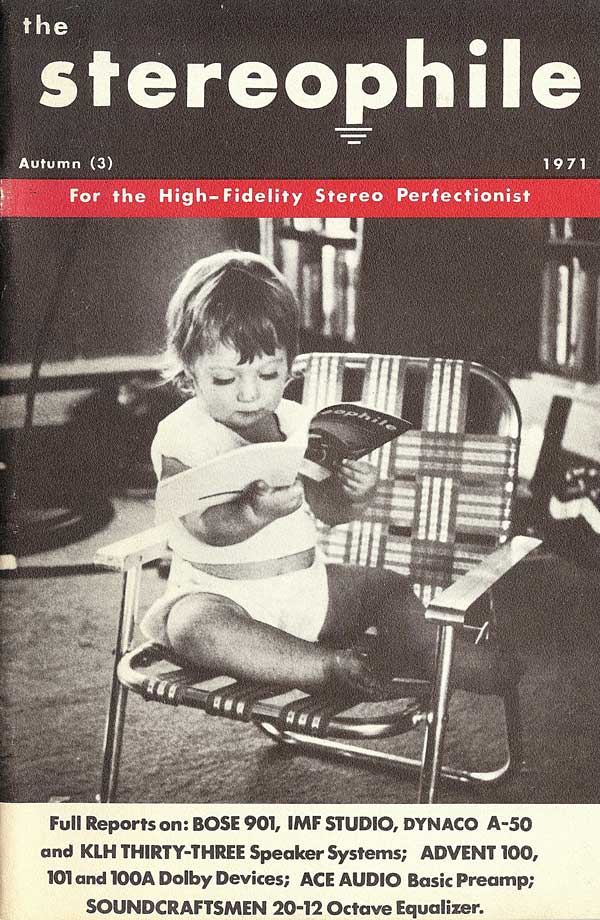
Alicia Holt, aged 18 months, devours her father's magazine
After much searching of soul and of bank account, we have reached an earth-shattering decision. The Stereophile is going to start taking ads. Snell Type A loudspeaker
One of the less-glamorous speaker systems around today, these have more to offer the critical listener in terms of satisfaction than do most of the more-exotic designs.
Snob Appeal
A number of recent letters have accused us of snobbishness and elitism because we devote so much space to reports about components that "common folk" can't afford. We are "snobbish" because we seem to look down on anything less perfect than a Wilson WAMM speaker system or an Audio Research SP-10 preamplifier. And we are "elitist" because we seem to show little interest in any components which fall short of state of the art. Far from being chastened by these letters, I am proud, to declare that they are right on target.
Sony CDP-101 Compact Disc Player
Our long-awaited laser-audio disc player (usually called the CD, for "Compact Disc") finally arrived, along with a real bonanza of software: two discs—a Polygram classical sampler of material from Decca, Deutsche Grammophon and Philips, and a Japanese CBS recording of Bruckner's 4th Symphony, with Kubelik.
Sony DTC-1000ES R-DAT recorder & Sony PCM-1630 A/D converter

With the furor over the launch of DAT (digital audio tape), it is worth remembering that commercial digital recorders have been with us for some time now: it is now nearly a decade since studio PCM converters were first successfully used for audio recording in conjunction with a VCR (which uses a helical spiral recording via a spinning drum to achieve the high writing speed).
Sony PCM F1 Digital Audio Converter

In 1978, when I reviewed Sony's first audiophile-type PCM-1 converter, I earned the undying scorn of a large segment of audiophilia by reporting that, on the basis of a rather short testing period (which did however include some live recording), I was unable to hear anything the matter with its sound. Four years later, but after substantially more testing, I am obliged to report the same thing about the PCM-l's son, the PCM-Fl.