

Analog Corner #230: Transfiguration Proteus MC phono cartridge

I've lost track of how many Transfiguration cartridges I've reviewed over the years. In all that time I've never met their designer, Immutable Music's Seiji Yoshioka, but every year he sends me an exceptionally tasteful holiday greeting card. I've never reciprocated. The truth isn't always pretty.
The Transfiguration cartridges I've reviewed, too, have always conveyed a midrange musical truth that hasn't been flashy or pretty. But it's always been honest and convincing, particularly of the reality of voices. If you said that the Transfigurations lacked character, you wouldn't be wrongunless you intended it as a criticism.
Analog Corner #232: HiFiction Simplicity II tonearm, Miyajima Labs Madake phono cartridge, Rogers High Fidelity PA-1A phono preamplifier
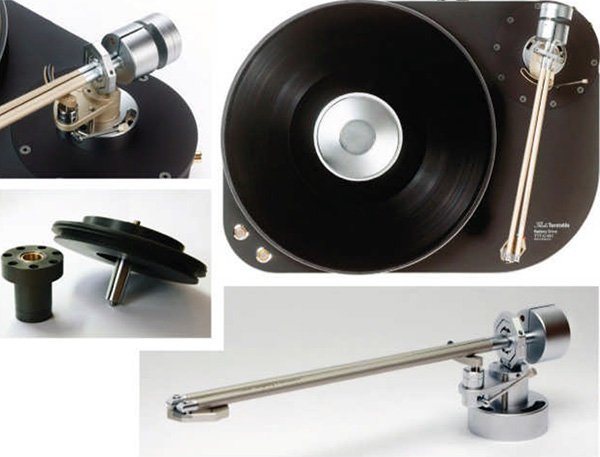
In my January 2014 column, I reviewed HiFiction's Thales TTT-Compact turntable and Simplicity tangential-tracking pivoted tonearm, an intriguing combo from Micha Huber, a talented Swiss watchmaker turned turntable designer.
The TTT-Compact's particulars, including its battery-powered motor and exceptional ease of setup, are described in detail in that review, which includes a link to a useful animation that shows how the design, as Huber says, "reduces the perfectly tangential tracking to pivot points, while the pick-up cartridge is taken and aligned on the Thales' Circle."
Suffice it to say that while the HiFiction tonearm is named Simplicity, its design is anything but.
Analog Corner #235: Kiseki & Lamm
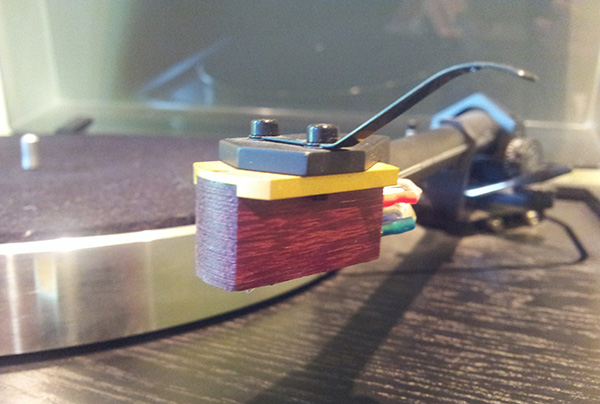
At the 2011 Consumer Electronics Show, Herman van den Dungen handed me a surprise: a brand new Kiseki Blue cartridge manufactured from new-old-stock parts. It wasn't mine to take homeonly to look at, to prove it was real.
Herman van den Dungen may not be a household name even for audiophiles, but his products are: his PrimaLuna electronics are exported from the Netherlands to the US and distributed by tube connoisseur and collector Kevin Deal for PrimaLuna USA.
In the 1980s, Kiseki was legendary among audiophiles, even if their cartridges' prices were beyond the reach of most. But the brand's history is less well knownand younger analog devotees may not have heard of Kiseki at all.
Analog Corner #236: Clearaudio Maestro V2 phono cartridge

Clearaudio began making moving-coil cartridges in the 1970s, and only later got into the moving-magnet business. Moving-magnet cartridge designers must now be mindful that most of today's tonearms are of medium to high mass and that therefore, to be compatible, their MMs must be of low to medium compliance and of higher mass than those of the 1960s and '70s.
Analog Corner #237: Ortofon MC A95 phono cartridge, Brinkmann Audio Spyder turntable and 12.1 tonearm
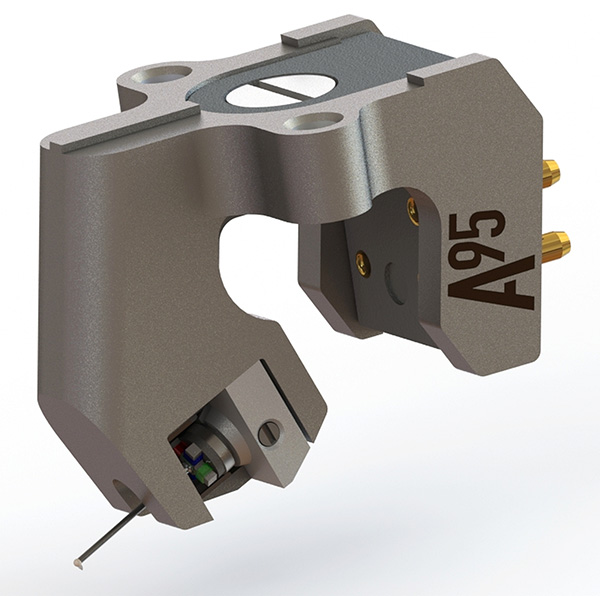
It's difficult to believe that more than five years have passed since Ortofon introduced its ground-breaking MC A90 moving-coil cartridge ($4200 when last available). The limited-edition MC A90, with its radically shaped body made of powdered stainless steel Selective Laser Melting (SLM), celebrated Ortofon's 90th year in business. The MC A95 ($6500), celebrating their 95th year, retains the A90's seductive shape, but the new body is built of powdered titanium, and thus is even more effectively self-damped.
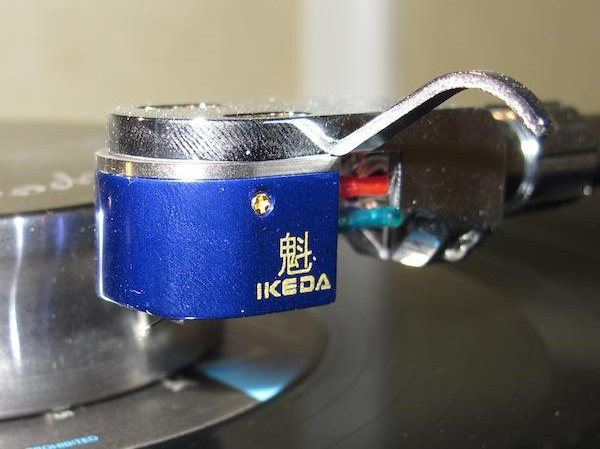
Analog Corner #238: A Tale of Two Cartridges from Ikeda and Ortofon
But first, the blowback I expected following my February 2014 column on Synergistic Research's Uniform Energy Field Technology room treatments never arrivedin fact, quite the opposite. My own positive experience of the UEF devices was confirmed by e-mails from readers who'd already used them, and from those who'd taken up Synergistic's offer of a money-back guarantee. Skeptics will charge that what I and these readers heard is evidence of confirmation bias, but people say this about any positive remarks made about audio components priced above $500.
Analog Corner #241: DS Audio DS-W1 optical phono cartridge
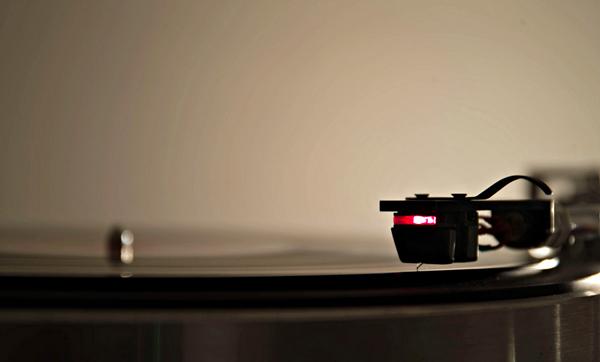
Using light to read data from a disc sounds a lot like the technology behind the Compact Discbut you may be happy to hear there's nothing digital about DS Audio's optical phono cartridge. The DS-W1 uses the motions of a Shibata stylus and boron cantilever to modulate the output of its externally powered light-emitting diode (LED).
This Analog Corner is reprinted on Stereophile's sister site Analog Planet website.
Analog Corner #242: Cornering the Vinyl Scoffers; Fuuga & Air Tight Phono Cartridges
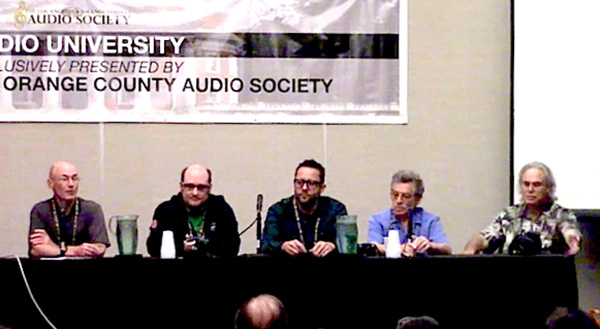
The "Meet the Editors" panel at T.H.E. Show Newport Beach 2015. (LR): Robert Harley, Chris Connaker, John Darko, Michael Fremer, David W. Robinson.
Add to the deniers of the Holocaust and Climate Change those who say that the vinyl resurgence isn't happening.
Seriously, the pushback was bound to happen, and the bigger this so-called "hipster fad" gets, the more the scoffers sweat. In 2014, according to my sourcesrepresentatives of the world's largest pressing plantsmore than 73,985,000 LPs were pressed. That's correct: almost 74 million LPs. Taking into consideration such things as multi-LP boxed sets like The Beatles in Mono (which might be counted as a single record in terms of sales), defective discs rejected by consumers or retailers, and unsold records, of which there surely are many in the pipeline, we could cut the number in halfand still have around 35 million. That's more than a 40% increase worldwide over 2013.Analog Corner #249: LKV Research Veros One phono preamp, Triangle Art Apollo MC cartridge
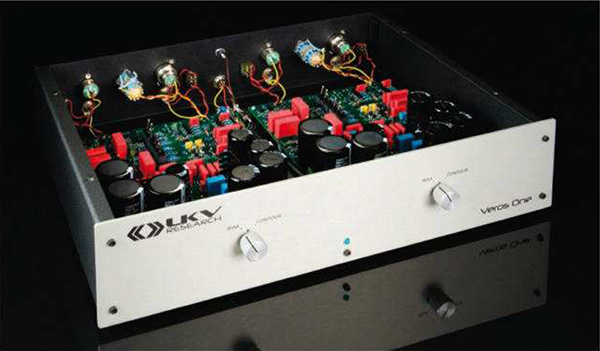
Designer Bill Hutchins, of LKV Research, builds the 2-SB moving-magnet/moving-coil phono preamplifier in North Conway, in the White Mountains of New Hampshire; he uses as many US-sourced parts as possible, and sells his products factory direct. I reviewed the 2-SB in March 2014, on AnalogPlanet.com: the 2-SB's sound was exceptionally fineespecially if you like refined, solid-state quiet and detail, and especially considering its then-price of $2500. Since that review's publication, the 2-SB has been upgraded with a version of the third gain stage from LKV's JFET-based Veros One phono preamp ($6500; see below), and its price has risen to a still-reasonable $3000.
In May 2014, Bill Hutchins introduced the Veros One phono preamplifier ($6500).
Analog Corner #250: Ikeda 9mono, van den Hul Crimson XGW cartridges, PBN GrooveMaster Vintage Direct turntable
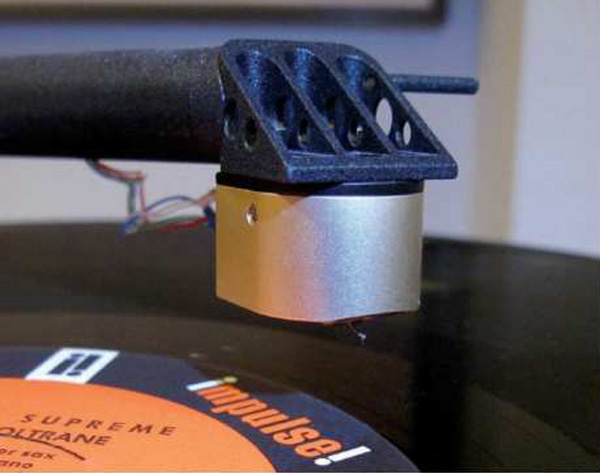
The review gear piles up, and it's time for a late spring cleaningnot that any dust has gathered on the uniformly excellent products covered in this column. I'll start with two very different phono cartridges.