

Analog Corner #253: Mikey Gets Ortofon SPU'd
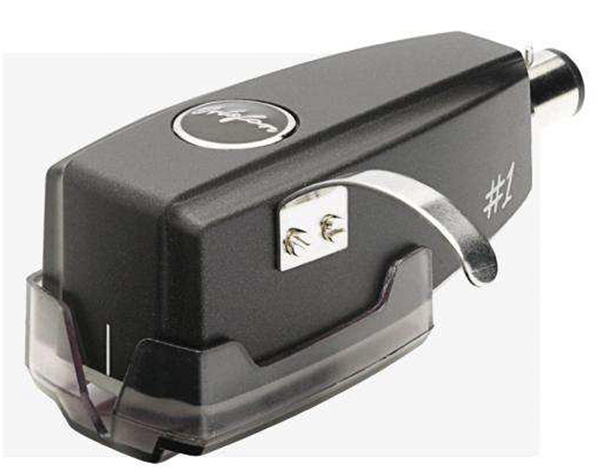
Last spring, at the High End show in Munich, I met with Leif Johannsen, R&D manager and chief designer of Ortofon, who walked me through the company's exhibition. Among the new products he showed me were two low-cost, low-output SPU (stereo pickup) moving-coil cartridges.
Leif Johannsen told me that Ortofon decided to produce two low-priced SPUs so that more people could afford them and enjoy their particular sound. Their new SPU #1 comes in two flavors: the SPU #1S with spherical stylus ($599), and the SPU #1E with elliptical stylus ($659)hence the model names.
Analog Corner #254: Audio-Technica AT-ART1000 phono cartridge
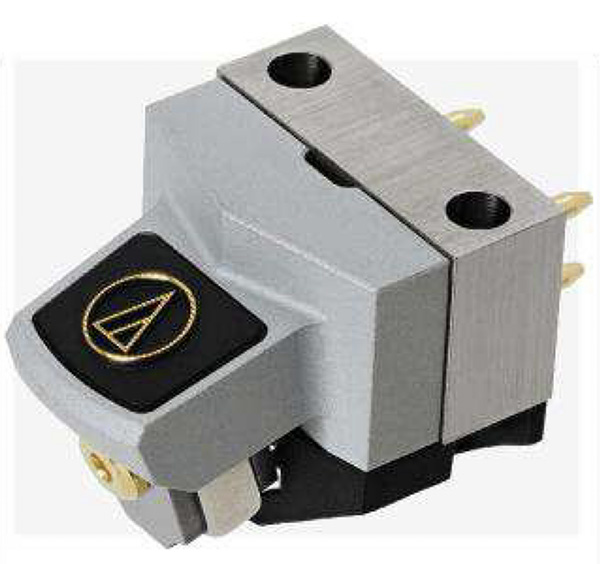
Recently, after 36 years at Audio-Technica, Mitsuo Miyata retiredby which time he'd run out of business cards. Nonetheless, when I met him in early July at A-T's headquarters, in Machida, Japan, he handed me a card. A line had been drawn through the original cardholder's name; under it, handwritten, was Miyata's name.
Japanese culture is so formal that there is a precise etiquette of how to offer one's business card: Hold the card lengthwise in both hands, gripping it between thumbs and index fingers, and present it with a slight bow. For someone with so long and distinguished a career and multiple patents to his name, Miyata's offering was casual. Later, an A-T staffer told me, with a laugh, that he'd never before seen Miyata in a tie and jacket, both of which he wore for our meeting.
Today, the inventor of Audio-Technica's new AT-ART1000 cartridge is better known around company headquarters as a gentleman farmera grower of legendary blueberries, Japanese eggplants, and corn. His home-built stereo system is also said to be pretty special. I had been invited to meet him, and to get an exclusive look at the challenges of assembling and testing the AT-ART1000.
Analog Corner #258: Dan D'Agostino Momentum Phonostage & Gold Note Tuscany Gold MC cartridge
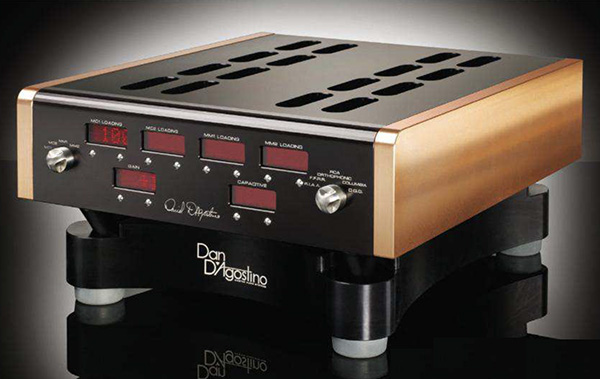
At the beginning of this century, when the vinyl resurgence was at best nascent and few believed it would be as strong as it is today, Boulder Amplifiers manufactured a phono preamplifier that cost $29,000. I reviewed that model, the 2008 (now discontinued), in the July 2002 issue. With a power supply that would probably be more than adequate for a high-wattage power amp, it was built to a standard approached by few other makers of phono preamps...
With his lines of power amplifiers and preamplifiers well established, Dan D'Agostinothe founder, CEO, and chief designer of the company that bears his nameset about designing a phono preamplifier.
Analog Corner #264: Ortofon Windfeld Ti Cartridge

Ortofon (footnote 1), which turns 100 in 2018, launched the original Windfeld cartridge nearly a decade ago. Named for cartridge designer Per Windfeldwho had just retired at age 75, after 30 years with the companythat top-of-the-line cartridge cost $3400 at the time of its introduction.
Analog Corner #268: Grado Lineage Epoch phono cartridges

Brooklyn-based Grado Labs has been in business for 64 years, manufacturing moving-iron phono cartridges, headphones, and, for a while, even a unipivot tonearm with a wooden armwand, as well as the sophisticated, S-shaped Signature Laboratory Standard arm.
Analog Corner #271: Koetsu Rosewood Mono, Kuzma CAR-50 and CAR-60 phono cartridges

In 1964, Shure Brothers shook up the cartridge market by introducing the original V-15 moving-magnet cartridge, which then cost $67, equivalent to about $530 today. It came packaged in a deluxe, wooden, jewelry-style boxcommon practice for today's cartridges, but back then unheard of.
Analog Corner #272: Kuzma CAR, Miyajima Madake Snakewood, TechDAS TDC01 Ti phono cartridges

At Stereophile, we don't generally allow Mulligansreview do-overs. Usually, we take a second look at a product we've reviewed only when the first sample turns out to have been defective, especially if it was damaged in shippingand we rarely do even that.
Analog Corner #273: Soundsmith Hyperion phono cartridge & AudioQuest AC power products

Peter Ledermann, founder and chief designer of Soundsmith, Inc., began his adventures in phono cartridges by reverse-engineering Bang & Olufsen's Moving Micro-Cross moving-iron cartridges for customers B&O had abandoned when it got out of the LP player business, and putting them into production. The B&O cartridges were of the direct plug-in variety; once they were no longer made, a worn or broken B&O cartridge would render a B&O turntable unusable.
Analog Corner #276: van den Hul The Grail phono preamplifier & Colibri Signature Stradivarius phono cartridge

Among the electrically connected, the phrase short circuit induces panic and horrific images of tripped breakers, blown fuses, acrid blue smoke, and melted circuit boards. Nonetheless, near short circuits are becoming popular among the analog set. Moving-coil cartridges of an inductance and impedance so low they're nearly short circuits are now more common, thanks to powerful neodymium magnets that help produce more and more electrical output from fewer and fewer turns of coil wire. Perhaps the most extreme example of this is the Haniwa HCTR01 Mk.II cartridge, which has an internal impedance of 0.4 ohm and an inductance of 0.3µH.
Analog Corner #278: Swedish Analog Technologies LM-09 tonearm; DS Audio Master1 optical cartridge

Despite one website's recent claim that "Vinyl's Revival Is Already Fading," Nielsen SoundScan recently announced that vinyl sales for the first half of 2018 were up 19.2% over 2017, led by Jack White's Boarding House Reach, with 37,000 copies sold so far (and we know that N/S misses a great deal of the action). While on the West Coast looking for business, a friend of mine who's about to open a major vinyl-pressing plant on the East Coast was told by everyone that they're experiencing "double-digit vinyl growth." No one was seeing a slowdown ahead.