

Linn Klimax LP12 Record-Playing System

Playing records is a delight-filled chore. The simple, quiet act of lowering a tonearm places one's mind at the ready for something marvelous to happen. Surely, this gentle ritual initiates a higher mode of psychic connectedness than poking absentmindedly at a side-facing equilateral triangle on a piece of cheap plastic.
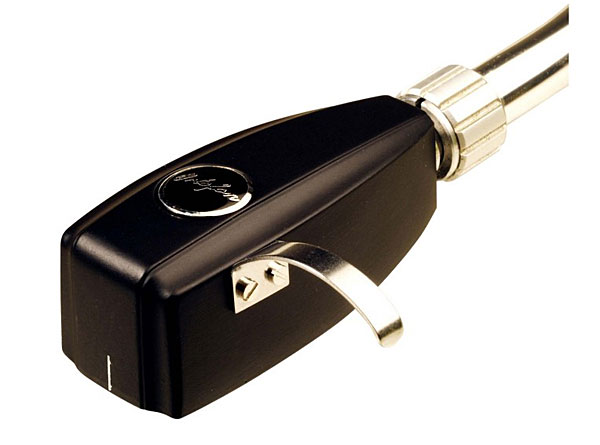
Linn Sondek LP12 turntable & Klyde phono cartridge

If you asked me to name a single specific high-end audio component that could make or break a system, I'd name the Linn LP12 turntable. Of all the thousands of hi-fi products I've heard over the years, not a one of 'em—not a speaker, amplifier, or digital processor—has been able to draw me into the music, no matter what the associated componentry, like the LP12. I've heard the most highly regarded speakers/amps/processors fall flat in certain situations due to a lack of synergy with their surrounding systems, but I've never heard an LP12-based system that didn't put a smile on my face and make me green with envy.
Linn Troika MC phono cartridge
Some six or so years ago, the Linn Asak cartridge set new standards for imaging and soundstage reproduction. I can remember the first time I heard an Asak in a system using Quad">http://www.stereophile.com/floorloudspeakers/416">Quad ESL-63s—I had never experienced such depth of soundstage and solidity of imaging from any system, and that with Quad amplification! The Asak was relatively quickly overshadowed in this area, however, and in any case, soundstaging precision by itself didn't seem to be a high priority for the Linn design team, who were apparently more concerned with dynamics and a musical integration of the sound across the frequency range.
Listening #1
Even poor people fly. You see them getting on and off planes with their NASCAR hats and their poor friends and their poor relatives waving to them at the gate. Flying is what everybody does nowadays, but it used to be just for the rich. It's hard to remember a time when the phrase jet set was charged with something other than irony.
Listening #108

I set out on a fishing trip but returned less than an hour later, empty-handed. You asked me, reasonably enough, "What happened?"
"I spent a half-hour digging in the garden for worms, but couldn't find any."
"You could have driven to Mr. Zetterstrum's farm, knocked on his door, asked his permission, and spent a few hours overturning the cowflops in his pasture. I'm sure you would have found one or two worms that way."
"You're right. I guess I didn't want to go fishing that badly."
Listening #110
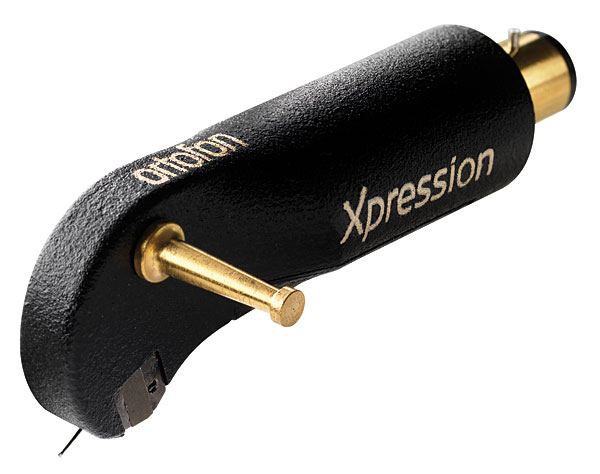
Phono cartridgesalong with mothballs, hobnails, laundry bluing, hot-water bottles, lighter fluid, fur coats, and typewritersare among the most outdated of consumer goods: To most people who make their living in the world of consumer electronics, every new cartridge that hits the shelves is little more than a coughing spasm from the death-room down the hall. You can imagine, then, the welcome accorded new samples of the even more anachronistic pickup head, which combines phono cartridge, headshell, and barbell into a product one seldom sees outside the school librarian's junk drawer. New pickup heads, which tend to look the same as old pickup heads, are manufactured in pessimistically small quantities, and seldom get much attention.
Listening #148
"Too much Stokowski."Sergei Rachmaninoff in 1940, reacting to a demonstration of a stereo recording of Leopold Stokowski conducting the Philadelphia Orchestra
I don't remember when, but at some point during the past few years I realized that, in my home, mono cartridges outnumber their stereo counterparts. A few weeks ago, my collection of phono equipment took another step in the same strange direction: After receiving from Ortofon a sample of their CG 25 DI Mk.II mono pickup head ($902) for review, I was so impressed with its sound that I asked if I could buy the review sample. Now, having put check in mail, I own twice as many mono cartridges as stereo ones. Take that, multichannelism.
Listening #156

Just as John Atkinson has a special telephone on his desk, by means of which the late J. Gordon Holt expresses his displeasure at this magazine's continuing decline into latitudinarianism, my own desk is littered with a dozen or so windup timers, each set to remind me how long it's been since I last wrote about this or that hi-fi eccentricity. Each timer has its own distinctive ring: The one labeled "LOWTHER" is a bit shrill, especially at certain humidity levels, while the one marked "QUAD ESL" can be heard to best advantage only when sitting in a particular spotand even I have to admit that my "CARTRIDGE ALIGNMENT" timer seems to go off rather too often.
Listening #157
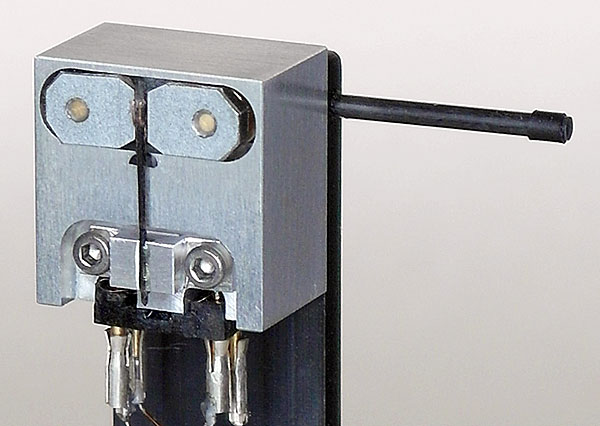
In a typical phono cartridge, the stylus is at one end of an oversize cantilever (oversize in comparison with the cartridge's other moving parts), the fulcrum of which is nearer the cantilever's other end. That design makes possible a certain amount of mechanical compliance that, when the cartridge is lowered to the record surface, helps the stylus seat itself in the groove rather than bounce or skip all over the place. Without at least a modicum of springiness, cueing up a record would be more difficult, and jukeboxes and automatic record changers might never have been possible. Imagine!
Listening #168: Ortofon SPU #1S phono cartridge

I'm a progressive who enjoys the company of his conservative friends, a Catholic who's thankful for his atheist friends, and a carnivore who cherishes his vegetarian friends. I'm also a vintage-audio enthusiast who loves his audiophile friends who aren't so inclinedso I was doubly happy to see, in the September 2016 edition of Michael Fremer's "Analog Corner," a hearty endorsement of Ortofon's latest SPU: a 58-year-old phono-cartridge design that, like the coelacanth, continues to thrive despite expectations.
Mikey is a longtime friend who harbors no love for vintage phonographyyet after playing his first record with the new SPU #1E ($659), he wrote: "I immediately, and much to my surprise, got what the SPU cult is all about."