

Gramophone Dreams #91: Mobile Fidelity, PrimaLuna, and First Watt Redux
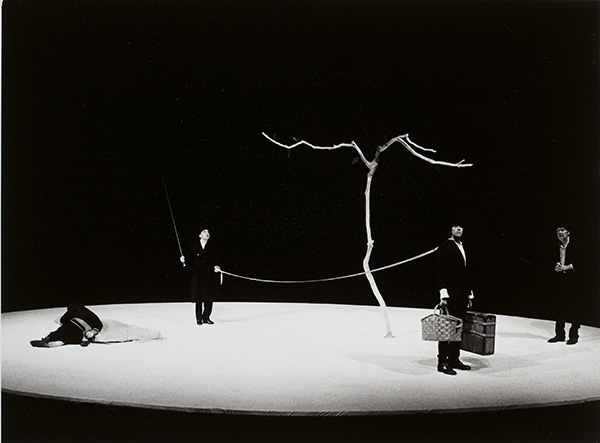
Herb waits for Godot
It's important for readers to remember that I've spent my adult life as an artist and mechanic. Making things. Working as a tradesperson during the day then at an easel or workbench at night.
When I finished high school, all I wanted to do was work in a fancy, well-equipped shop building drag race engines. Engine building was something I had already shown a talent for, but my parents insisted I go to college. Unfortunately, my high school grade point average was so low I was turned down by every college I applied to. Consequently, my parents forced me to attend Wright Junior College in Chicago, a place where teachers rolled joints for their students. And I got straight A's. Those easy A's got me into Western Illinois University, a small state college in a tiny rural town called Macomb near the Mississippi River. My mother was so proud, she told everybody she knew that her son was accepted into "university," but she could never remember which one.Gramophone Dreams #93: The Kalman R Experience, Audio-Technica ART20 Phono Cartridge
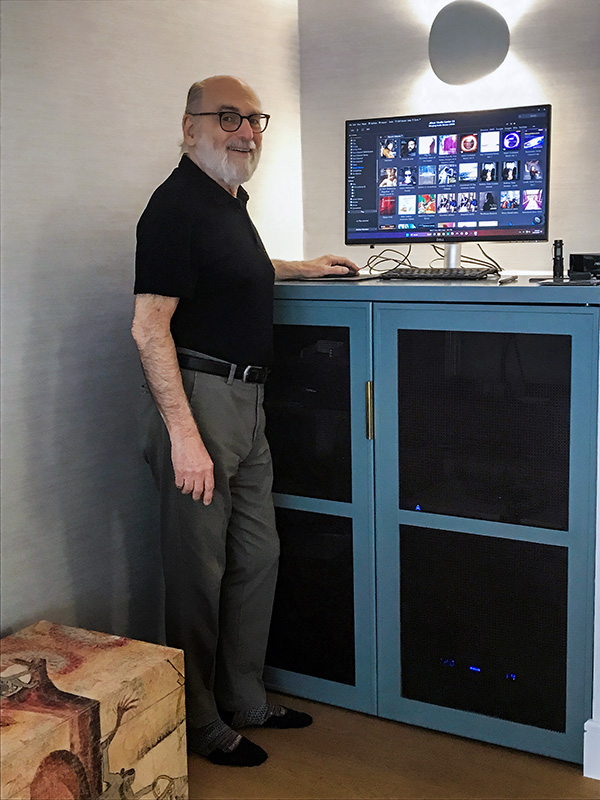
The day I visited Stereophile Senior Contributing Editor Kalman Rubinson, I arrived back home with a headful of new understandings, but before I could ponder those things, I made a cup of tea and sat down to read a few New York Times obituaries.
While Kal and I sat chatting on his couch, he told me that reading obituaries was not only fascinating but had actually helped him find out what happened to a few people he had lost touch with. I told him I hadn't read Times obits in years but when I did, I did it to enjoy the quality of writing. We agreed that the Times's obituaries (as well as their Sports, Food, and Arts & Leisure pages) are good places to find inspired bits of pure journalism.
After some raving about our favorite journalists, we began telling when-we-were-kid stories about how we used to stare through the grille cloths on table radios, where inside by the speaker we would see the announcer's face, and sometimes whole orchestrasin miniatureon a dark stage where the speaker cone morphed into a concert shell.
Gramophone Dreams #96: Falcon 2024 Limited Edition LS3/5a loudspeaker, Lyra Delos phono cartridge
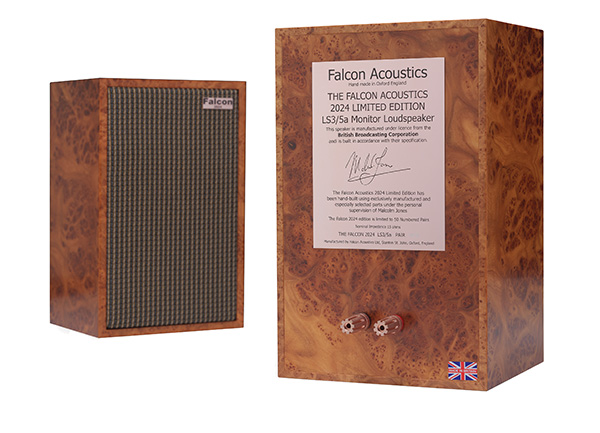
The story goes that starting in 1962, Malcolm Jones was KEF's "first employee," where he "did most of the design and development of the legendary KEF drive unitsthe B139, B200, B110, T15, T27and the systems in which they were incorporated. Malcolm left KEF in 1974, having just completed the Reference Series 104 system and work on an active professional monitor to work full time at Falcon Acoustics Ltd."
Fast-forward a few years. I bought my first BBC LS3/5a in 1980. It was a Falcon Acoustics kit I saw advertised in the back of Speaker Builder magazine. Fingers crossed, I sent a postal money order in a thin Air Mail envelope to what I imagined was a garden shed in England. But of course it wasn't.
Gramophone Dreams #98: Woo WA24 headphone amplifier, Lyra & Hana phono cartridges
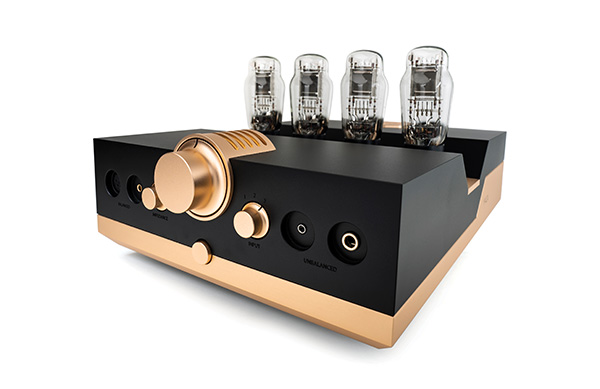
Woo Audio's 20th Anniversary WA24 headphone amplifier comes in a distinctive, low-slung chassis that welcomes the eye with gentle angular volumes and bright, frosty-surfaced, copper-toned controls. In the always-crowded WooJPS LabsStax room at CanJam 2025, Woo's new $12,999 flagship caught everybody's eye, sitting on a table next to its similar-looking stablemate, the $8999 WA23 LUNA, a tube-rectified single-ended amplifier that, unlike the new WA24, uses 2A3 tubes.
Kiseki Blue Goldspot Phono Cartridge
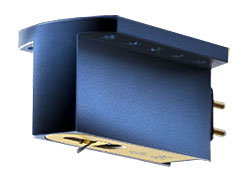 Koetsu. Kiseki. Keebler. Products from all of these firms are shrouded in at least a bit of mystery. Do I believe that Koetsu cartridges are hand-built by an octogenarian samurai swordsmith, or that Kisekis are imported from the planet Vulcan, or that Keebler's cookies are baked by elves? Not really. But it does help to liven up the domestic audio scene.
"Look, sonsee what Scottie just beamed down."
"Gee, Dad, it's big and blue with a gold spot on the front, and it kind of looks like a cartridge."
"Nice guess, son. No ordinary cartridge, this one. Let me tell you about the Vulcan analog freak in Hong Kong..."
Koetsu. Kiseki. Keebler. Products from all of these firms are shrouded in at least a bit of mystery. Do I believe that Koetsu cartridges are hand-built by an octogenarian samurai swordsmith, or that Kisekis are imported from the planet Vulcan, or that Keebler's cookies are baked by elves? Not really. But it does help to liven up the domestic audio scene.
"Look, sonsee what Scottie just beamed down."
"Gee, Dad, it's big and blue with a gold spot on the front, and it kind of looks like a cartridge."
"Nice guess, son. No ordinary cartridge, this one. Let me tell you about the Vulcan analog freak in Hong Kong..."Koetsu Black MC phono cartridge
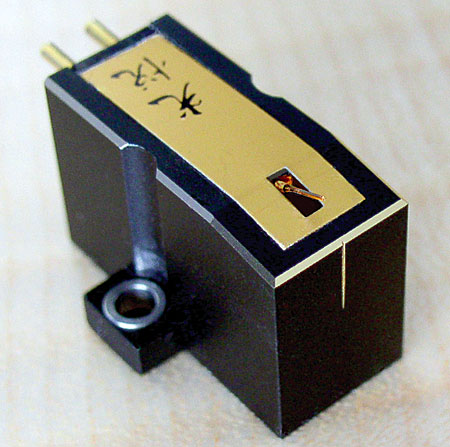
Every two or three years my family and I travel to Disney World in Orlando, Florida—one of those places I used to think I'd hate, but which I always enjoy in spite of myself. No such trip would be complete without visiting the Mitsukoshi department store at Epcot Center, which represents the pinnacle of Japanese consumer culture. At the Epcot Mitsukoshi store—the 430-year-old company's only US location—one can buy the finest of everything, including the rarest and most expensive writing papers and inks, the most exquisitely crafted pottery, and the loveliest freshwater pearls on Earth. Young shoppers are accommodated with the latest toys, trends, and technology—but there's nothing frantic or cheap about the manner in which they're offered. The watchword at Mitsukoshi is quality, and the presentation borders on being artistic.
Koetsu Rosewood Signature Platinum moving-coil cartridge
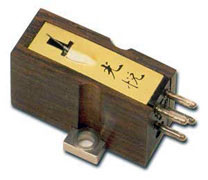
Among the more intriguing audio-related announcements this year was that Koetsu phono cartridges were once again available in the States. In fact, they're being handmade in limited quantities by the sons of founder Yoshiaki Sugano.
Koetsu Urushi MC phono cartridge

What makes a phono cartridge worth $3500 or $4000? Pride of ownership? Snob appeal? Sound? Tracking ability? Exotic materials? Styling? Labor cost for skilled artisans? Special ether? Cool wooden box? All of the above?
Linn Akiva MC phono cartridge
The observation has been made, often and well, that audio writers are out of touch when it comes to judging value for money. For one thing, we get to live with exotic gear for months at a time, without spending a penny. For another, when we do decide on a more permanent upgrade, we usually get the opportunity to buy at wholesale—at a so-called "industry accommodation price," extended to us because, after all, we are a part of the industry.
Linn Arkiv B phono cartridge

Ten years ago, I'd probably have got pretty good odds from industry insiders on a bet that Stereophile would still be reviewing phono cartridges into the new millennium. Linn's Arkiv B may not be a brand-new design—I heard my first sample in mid-1997—but phono-cartridge technology is about as stable as anything in hi-fi today. This Stereophile review is long overdue.