

Gramophone Dreams #50: Kitsuné HiFi LCR-1 MK5 phono preamplifier, Sumiko Songbird & Starling phono cartridges

In my world, the quiet ritual of choosing a record and placing it carefully on the platter is always followed by a sequence of three rough sounds.
With the volume at listening level, I hear the bristle-by-bristle rasping of my stylus brush as it drags across the exposed tip of the cartridge cantilever. Next, as I dip the diamond in Onzow gel, I hear a little suction cup pop and feel the compliance of the cantilever's rubber-tire suspension. Finally, my brain registers that sizzle sound as the stylus contacts the grooved surface. These sounds are tattooed on my brain. They "cue up" my consciousness, preparing it for attentive listening.
Gramophone Dreams #54: DS Audio DS003 optical cartridge & EMIA, Lundahl, Koetsu, Sculpture A step-up transformers

In the household I grew up in, telling a lie was a death-penalty offenseworse than murder or leaving crumbs on the kitchen counter. So, believe me when I tell you that way more than a year ago, Musical Surroundings' Garth Leerer sent me DS Audio's lowest priced optical cartridge, the DS-E1 ($2750 with energizer/equalizer, footnote 1). He said, "You need to know about this." Then every few months he would write and politely inquire how I was liking it. Each time I would write back saying, "I'm sorry Garth, I haven't tried it yet, but I'll install it right after deadline."
Gramophone Dreams #67: Grado Platinum3 and Goldring Eroica H phono cartridges; Herbie's Way Excellent II turntable mat

In last month's Gramophone Dreams, I explained why doing any sort of empirical study of high-quality digital sources was extremely difficult. That any success I might achieve as a reporter would boil down to my ability to employ metaphors to describe a DAC's clarity and dynamic personality. Concocting metaphors for DAC reviews is risky because it assumes readers will be familiar with the sound of my amplifier and speakers and, ideally, with one of the DACs I'm using in the comparison. That's a lot to assume.
Gramophone Dreams #70: Sutherland Engineering SUTZ & Lounge Audio Copla headamps, Dynavector DV-20X2 & XX-2 MKII phono cartridges

As an upstart journalist-flâneur, my basic urge is to step on the gas and let my '54 Buick careen down the freeway, crashing into guardrails on both sides. Old Buicks were built for that, and I would love to take readers on one of those kinds of rides.
But when I write this monthly column, I find myself aiming for a different feel, more like driving cross-country in a '70s Ford station wagon, documenting motels and gas stations. A trip where it's fun to roll easy, take in the views, and stop at every car museum, snake farm, and stalactite cave.
This month, I'm going to put some miles on the Ford's odometer as I investigate the effects of Ron Sutherland's newest current-drive creation: a $3800 transimpedance moving coil headamp called the SUTZ. Along the way, I will also re-review Dynavector's $1250 DV-20X2 moving coil cartridge and examine what might be the sweetest spot in Dynavector's cartridge lineup: the $2150 XX-2 MKII.
Gramophone Dreams #76: Lounge Silver Copla, Grado Platinum3 High, Benz Gullwing SLR, Shure V-15 Type III

I'm going to tell a story about blind listening, because it illustrates what I consider the most important issue in today's audiophile environment. I'm going to skip the names of the participants because you probably know them. And I'm not going to name the components, because their role in this story is merely as symbols of their type. Here is what I'll reveal: We were playing LPs through an expertly curated, six-figurepriced sound system in a largish room that suited the large speakers perfectly.
The occasion was a "listening party" at a friend's apartment. The guest list included me and four of the most experienced listeners I know. The plan was for everyone to nosh lightly, drink good wine, and weigh in on a new, unnamed, not-free low-output MC phono cartridge, only available on a limited, made-to-order basis.
Gramophone Dreams #78: The EMT Experience

If you've read any of my previous Dreams, you no doubt realize that I am an empiricist by tradethat I believe in the value of relaxed, mindful observation, especially if my solitary observances are independently corroborated by others. Whenever possible, I test my observations by getting either the Spin Doctor, the Audiophiliac, or my Russian neighbor to listen and tell me what they notice. If they notice the same things I noticed, independently, I relax. Corroboration is important because when I submit a review, I have an obligation to get it right. I need to be confident that readers, when they listen, will likely hear the same thing I heard, for themselves.
Gramophone Dreams #83: Benz Micro Gullwing SLR, Goldring Ethos phono cartridges, Meze 109 Pro headphones

It was almost Christmas, a perfect, chilly, blue-sky day to visit the Met Museum and see the Manet/Degas show before it ended. On my way, walking north on Madison Avenue, I passed the uptown branch of Gagosian Gallery and noticed a brightly lit poster behind thick glass announcing their exhibition of American artist Brice Marden's last paintings. The title of the show was "Let the painting make you," which sounded like an invite and a challenge, so of course I had to go in. I was in the perfect mood to ride in Gagosian's swanky private elevator and see how a famously serious painter with a six-decade career chose to communicate his last thoughts.
Gramophone Dreams #87: Deejay Coolosities, AudioQuest Yosemite tonearm cable, Nagaoka MP-110 phono cartridge
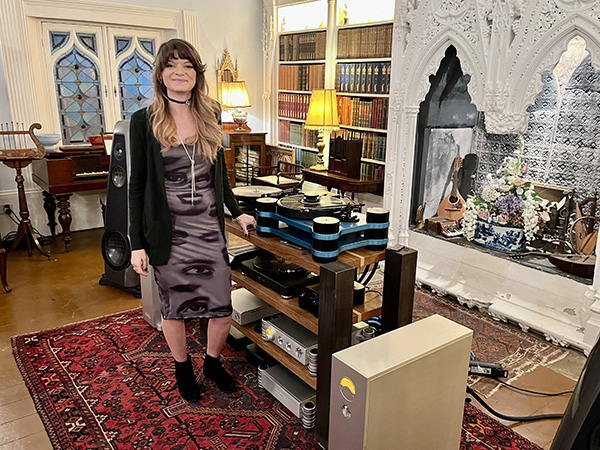
SME’s Kathryn "Kat" Ourlian deejays a turntable shootout. Photo by Michael Trei.
One August night in 1965, I parked in the driveway of my best friend Derf Marko's house and let myself in the back door. As I entered, I could see to the bottom of the basement stairs, where I observed a loud pulsing darkness with plumes of agreeably acrid smoke floating up through the stairwell. Back in the darkness, I heard Derf/Fred and another person making declarative statements in loud unintelligible bursts. When I reached the bottom of the stairs, Marko's basement rec room looked like a trashed-out tiki bar illuminated by a single red Christmas light hanging just above a Dual turntable. The room was dark to a point where it was impossible to walk without stepping on records or to make out who was there and what was going on. I slouched on a couch, closed my eyes, and let my mind follow the sounds of rock drummers wailing like angry cats.
Soon it was obvious: Marko was frantically playing one drum solo after another while some crazy old dude kept hollering for the next solo before the last one finished. The revved-up stranger kept slapping his knees, muttering, and drumming along with each different drummer. Stacks of unsleeved LPs littered the linoleum floor and pink wool couch I was slumping on. But unbelievably, Marko adeptlywithout cursing, fumbling, or hesitationlocated every solo he wanted.
I found out later that the crazed "old guy" was Ginger Baker!Gramophone Dreams #9
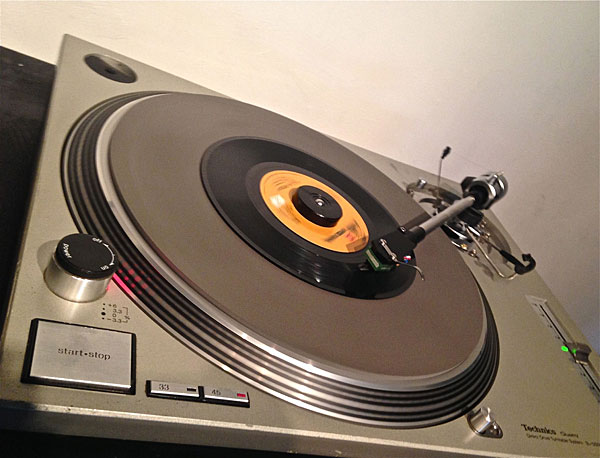
"Hail, Neophyte!"
That's what members of the Smoky Basement Secret Audio Society would exclaim in unison at the end of each ceremony admitting a new devotee. It was called the Smoky Basement Society not because everyone smoked (though they did), but because its members believed that whenever an audio designer finally got a design dialed in just right, he or she had metaphorically "let the smoke out." They exclaimed, "Hail, Neophyte!" because they believed that the most important aspect of being an audio engineer was to have a fully open "beginner's mind." In Zen practice, this is called Shoshin, or beginner's heart.
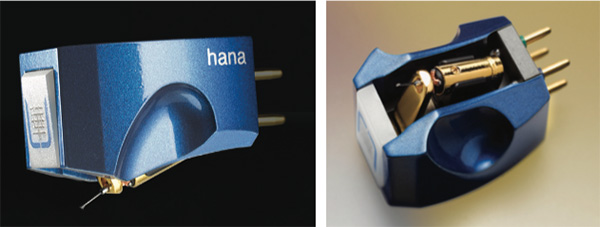
Gramophone Dreams #90: Collecting Phono Cartridges, Hana, MoFi
In a video on his YouTube channel Jazz Vinyl Audiophile, Stereophile contributing editor Ken Micallef asks Jeffrey Catalano of High Water Sound how he manages to be so consistenthow his rooms wrangle "top 2% sound" at every audio show. The first words out of Jeffrey's mouth are "I know how to listen."
"It's one of my greatest strengths. I know what music sounds like. I just go inside the music and let it tell me how it's supposed to be alive, how it's supposed to live in that space. I know that sounds simplistic and maybe somewhat esoteric, or pretentious evenbut it's not.