

Ortofon M15 Super phono cartridge
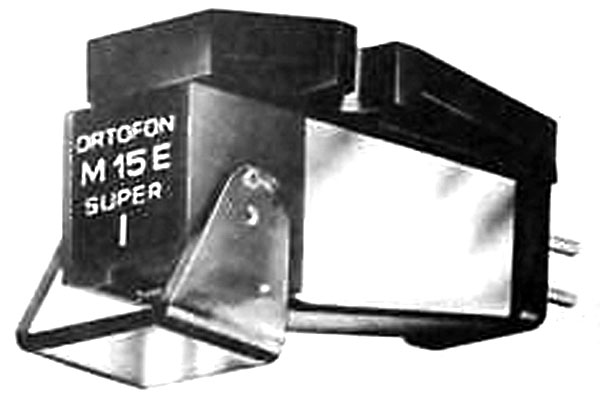
The M15 Super is the first high-output pickup to come from Ortofon. Previous ones required either step-up transformers or a booster preamp, and it is only fairly recently that either kind of step-up device was available with high-enough quality to avoid a noticeable degradation of the sound. Early step-up transformers muddied the bass, and previously-available booster preamps added noise or hardness or both to the sound. Now that there are excellent transformers available from Ortofon and other sources, and at least one extraordinarily good booster preamp (the Mark Levinson, at an extraordinarily high price$170), Ortofon's latest and best pickup doesn't require the use of either.
Ortofon MC Century phono cartridge
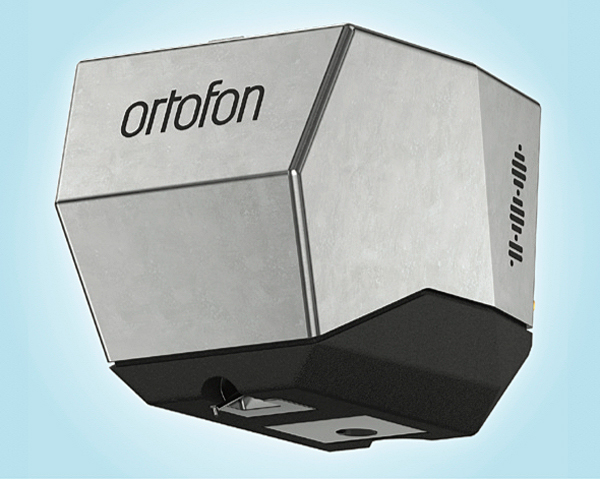
A few years ago, Leif Johannsen, Ortofon's chief officer of acoustics and technology, was tasked with designing new products to commemorate the company's 100th anniversary, in 2018 (footnote 1). Ten years ago, to celebrate Ortofon's 90th, he came up with the radical A90 moving-coil cartridge, which used Selective Laser Melt (SLM) technology to laser-weld together microparticles of stainless steel, layer by layer, to produce a 3D-printed metal body whose shape would have been impossible to machine.
Ortofon MC-2000 MC phono cartridge
Although the idea of a $1000 moving-coil cartridge no longer shocks audiophiles, it is still not exactly what I'd call "Mainstream Hi-Fi." Audio magazine's 1984 Equipment Directory—the most complete such compendium published in the US—lists only 10 models in this price range, not counting the Kiseki Lapis Lazuli at a whopping three-and-a-half grand! I have not tested most of these, nor have I tried any of the current models from the Japanese Koetsu firm, which was first with the gall to put a $1000 price tag on a cartridge. But I have tested a couple of one-granders during the past few years, and was sufficiently unimpressed to be hesitant about testing any more samples of what were beginning to look like nothing more than monumental ripoffs. So when Ortofon sent us the MC-2000, I was naturally less than enthusiastic about trying it.
Ortofon MC-3000 MC phono cartridge
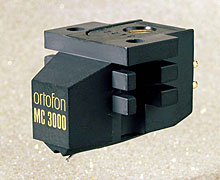
The Ortofon">http://www.stereophile.com/phonocartridges/ortofon_mc-2000_mc_phono_car… MC-2000 may just have been the most impractical cartridge to be unleashed upon the audio community for some years. With a high compliance (20cu) that made it ill-suited for most tonearms, it also had a preposterously low signal output of 50 microvolts, which gave new meaning to the terms hum and noise. Few MC preamps had enough gain to deliver adequate driving voltage to a system, and none of those that did had low enough noise to be usable with the 2000. If the problem wasn't hum, it was hiss; if hiss was acceptably low, there would be too much hum. At least Ortofon had the sense to be aware of the problem and to do something about it, in the form of their T-2000 step-up transformer, which is the only device I ever found that would allow the cartridge to be operated without a constant background of hum or hiss. Despite all this, I have used the MC-2000 as my reference cartridge for the last two years. Why? Because of all the cartridges I've tried, it is by far the most accurate.
Ortofon Rondo Bronze MC phono cartridge

An enduringly healthy phono-cartridge industry? After a quarter of a century of rushing right out to buy the latest digital music appliances? You bet.
Ortofon Xpression pickup head
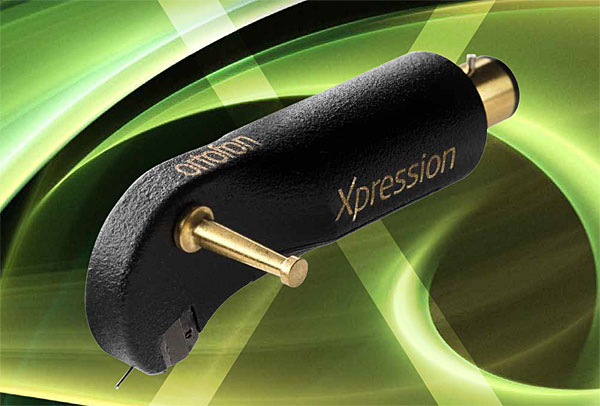
I listen to music in all formats, but my most ecstatic home listening experiences have always involved vinyl. It's probably something to do with the fact that, like most people my age and older, I grew up listening to LPsin my case, played on a Technics SL-210 turntable, and through an Aiwa receiver with beautiful green tuner lights and a pair of early Polk Audio studio monitors. I'm drawn, surely, to an improved version of the sound I heard back then. It's a powerful sentimental connection.
Rega Apheta MC phono cartridge

I see a pattern taking shape: Roy Gandy's Rega Research offered their first CD player in 1996, which was 13 years after the medium was introduced to the public. Now, in 2006, some 50 years after Joe Grado designed and sold the first moving-coil phono cartridges, Rega has released one of those. The year 2016 may see the first Rega fluoroscope, or perhaps wire recorder. And it'll be a good one, I'm sure.
Robert Deutsch Upgrades His Record Player
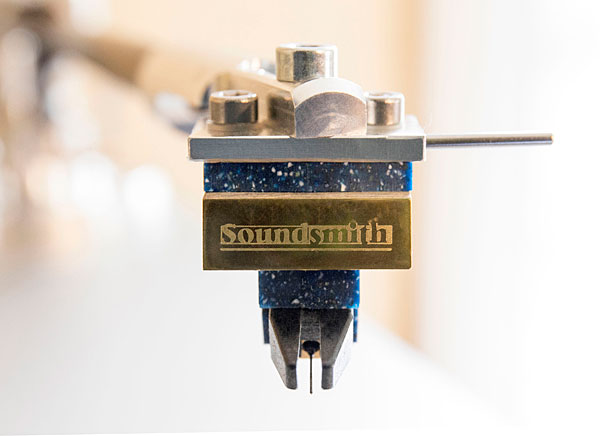
For some time now, I've been thinking that my record player was due for an upgrade. My Linn LP12 turntable and Ittok LVII tonearm are about 25 years old, and my AudioQuest AQ7000nsx cartridge is going on 15. During that time, my listening has become increasingly dominated by CDs, but I am not yet ready to give up on LPs. Updating my LP12for which I have Linn's Lingo power supply but no other upgradeswould involve installing the Keel subchassis, for $3250for which price I could get another maker's new, current-design turntable and still have the LP12 to sell. The Linn Ittok can't be upgraded, and its replacement, the Ekos SE, costs $4950out of my range. AudioQuest no longer makes cartridges. Examining my AQ7000nsx's stylus under a microscope showed no visible wear, and there was no obvious audible problem that could be traced to the cartridge's suspension, but age must be having some sort of effect. Taking all these factors into account, I decided to replace my entire phono front end.
Shure V15-III phono cartridge

The Shure V15-III is the latest of Shure's top-of-the-line "Super-track" pickups, earlier versions of which we scorned because of their dished-down response in the 6kHz range and their consequent "dead" sound. (We were unimpressed with Shure's suggestion that the pickup cable capacitance be increased to a total of around 300pF, since few audiophiles are equipped to measure either cable capacitance or frequency response).
Shure M75E phono cartridge
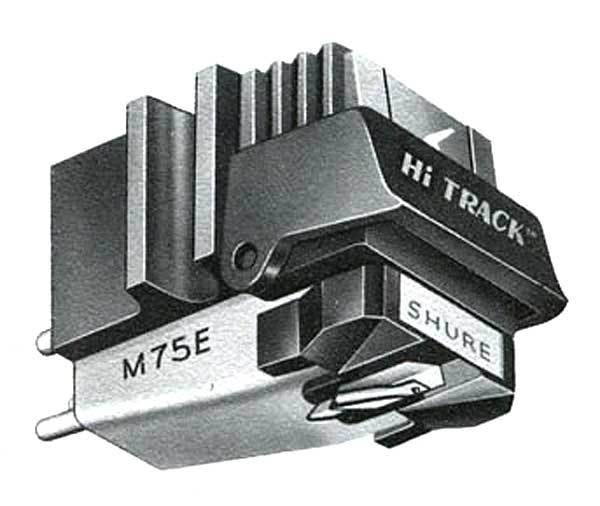
This is one of Shure's new generation of pickups with "trackability" that grew out of research on the Type II V-15 pickup.
At first glance, the V-15-II and the M75E are physically identical. They're the same size, the same shape, and almost the same weight (the M75E weighs 0.8 grams less); and both of them have the same neat little hinged cover that flips down to protect the stylus when the pickup's not in use.