

Analog Corner #324: Phono Cartridge Standards, SW1X LPU III Balanced phono preamplifier, Sumiko Wellfleet phono cartridge

Whenever I do turntable-setup seminars, I complain to the participants about the lack of cartridge-pin diameter and clip-opening standards. Anyone who does their own setup has experienced it: The connection is too tight or too loose. Forcing the clip onto the pin usually results in a broken-off clip that most end users don't have the soldering skills needed to repair; in the worst case, it can even result in damage to the cartridge when you try to remove the clip from the pin.
Audio Dynamics ADC-1 phono cartridge
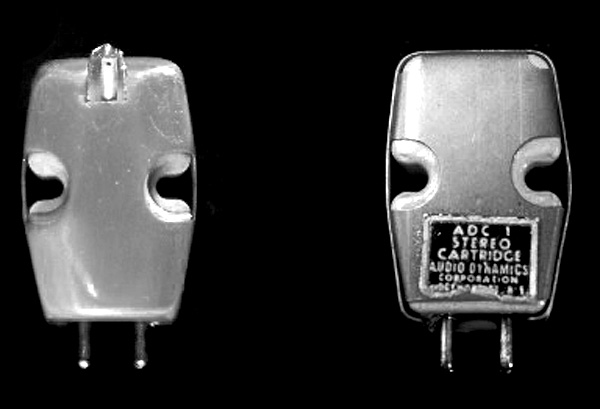
We tested two samples of the ADC-1 phono cartridge, both of which were taken from a dealer's stock. One was a demonstrator that had been in use for some months. The other was brand new, right off the shelf. Both were tested in an Empire 98 tonearm and in a Gray 108-C tonearm with its damping lightly adjusted, but results with both cartridges were for all intents and purposes identical in both arms.
Audio-Technica AT-ML 150/OCC phono cartridge
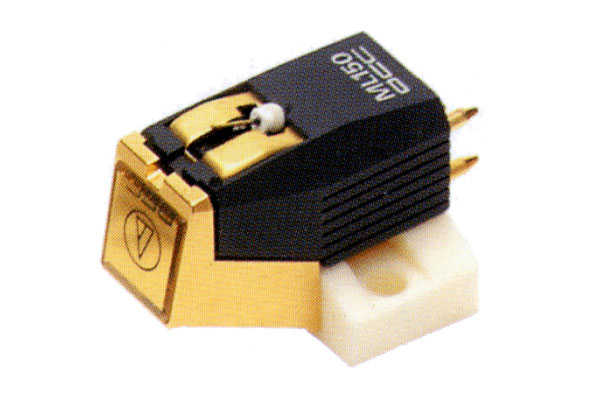
How can two meticulously built, high-technology, high-performance, premium-quality moving-magnet cartridges that measure so well (according to their manufacturer-supplied specs) sound so different?
Audio-Technica AT-OC9 phono cartridge
 While the AT-OC9 bears the Audio-Technica logo, you won't find a sample of this moving-coil cartridge at your friendly Audio-Technica dealership. The US distributor of Audio-Technica products has apparently decided that their market does not include high-end cartridges. A quick perusal of the latest Audio directory issue (October 1988) lists the most expensive AT cartridge at $295, with no moving-coils in sight. When I first heard of the AT-OC9, the only reasonably accessible source, short of Japan, was Audio-Technica in the UK. A quick phone call and follow-up letter resulted in a review sample. Since that time, Music Hall in the US importers of the Epos loudspeakers, among other items) has begun importing the AT-OC9 (along with the less-expensive AT-F5). Mail-order company Lyle Cartridges also stock it, I believe.
AudioQuest 7000 Fe5 MC phono cartridge
You know what's the first thing they teach you in dental school? Don't ever say "Oops!" Even if you stick one of those hooked teeth scrapers through the patient's cheek, you don't say "Oops!" "Don't move!"? Yes. "Oops!"? No. That's the big day-one lesson—and given the cost of medical malpractice insurance today, a damn good one.
Benz-Micro MC-20E II & MC Silver phono cartridges

No matter how much I upgrade my digital rig, my trusty $1195 Well-Tempered Record Player blows it away without half trying. . . That's why I corralled a bunch of promising midpriced cartridges and spent a couple of months settin' 'em up, breakin' 'em in, and listenin' to 'em on my favorite records.
Benz-Micro MC20E2-L MC phono cartridge

The ceiling remains, but the floor has changed: Benz-Micro continues to offer a selection of rather expensive phono cartridges, including their well-established LP Ebony ($4700) and Ruby 3 ($3000) models. But in recent years, my attention has been drawn by the succession of budget Benzes: first, the Gliders ($795), then the ACEs ($550), and now the MC20E2-L ($199).
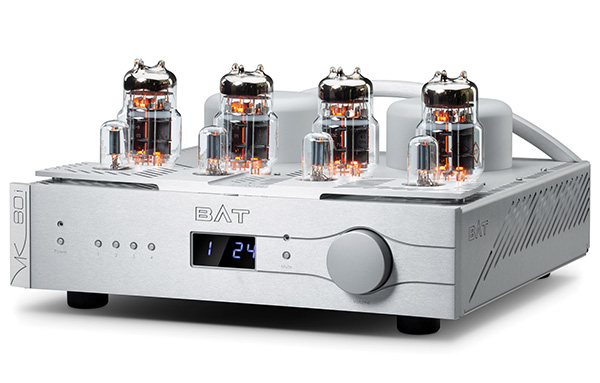
Brilliant Corners #12: Balanced Audio Technology VK-80i integrated amplifier, Ortofon Cadenza Bronze phono cartridge
In 1976, a Soviet fighter pilot named Viktor Belenko made an emergency landing in Hokkaido, Japan. He was flying a MiG-25 supersonic interceptor jet and, upon touching down, requested political asylum. This proved to be a stroke of brilliant luck for the Americans. The MiG-25 remains one of the fastest and highest-flying aircraft ever produced, and Belenko's defection allowed them to have a tantalizing look at the technology inside.
Among the top-secret loot found inside the Soviet jet was a large, heavy triode vacuum tube used as a regulator in the power supply of the MiG's radio. It was known as the 6C33C. (The enormous electromagnetic pulse caused by a nuclear explosion would fry a transistor. Tubes were used in military equipment with such an eventuality in mind.)
Brilliant Corners #17: Monomania! The Miyajima Zero Mono phono cartridge
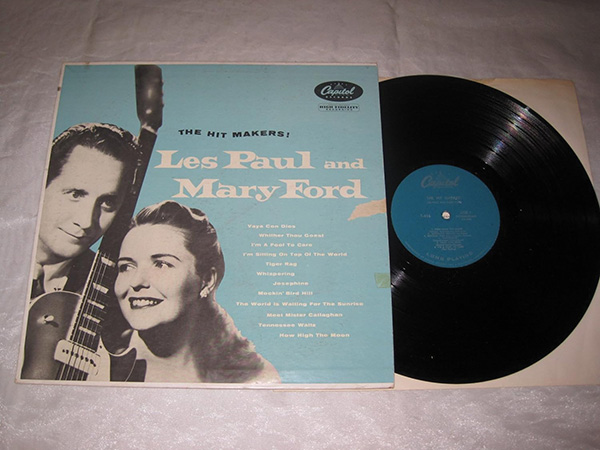
Stereo is the most successful audio gimmick of all time. While dashboard record players, quadraphonic LPs, and MQA have gone the way of Ron Popeil's hair-in-a-spray-can infomercials, stereo remains king. And I am guilty of loving it.
That old expression "men love with their eyes" applies to listening, too. Enabled by the advent of a second channel, the fanning out of musicians across a soundstage fills the room and gives the eyesand not only the earssomething to do. And I happen to enjoy the soundstage. It may be an utterly artificial delight, but who doesn't love hearing a tambourine coming from 10' to the left of the left speaker? So when I came across an article in which someone likened mono to listening to music through a hole in a wall, the metaphor made sense. Why would anyone want their music congealed in a blob directly in front of them when they could hear it separated out in space?
As always, though, it turns out that things aren't quite so simple...
Brilliant Corners #18: Adventures in Schwabylon, Ortofon Cadenza Mono Phono Cartridge

Meeting up at High End Munich: Grover Neville (left), a contributor to Stereophile's late headphone blog InnerFidelity, with his dad, Craig, a civil engineer from Chicago.
"Schwabing isn't a neighborhood, but a state of being," declared the Countess Fanny zu Reventlow, an early feminist who scandalized German society by parenting out of wedlock, carrying a revolver, and practicing what today tends to be called ethical nonmonogamy. Thomas Mann described the fellow denizens of this northern corner of Munich as "the most singular, the most delicate, the boldest exotic plants." At the turn of the last century, Schwabing was on its way to becoming the artistic epicenter of Europe, a laboratory for the most progressive social ideas, and arguably the birthplace of modernity. Kandinsky made Western art's first abstract painting while living there; local cafes once patronized by Lenin would soon host a young Adolf Hitler. Some called it Schwabylon.
These days, Schwabing's spotless, freshly paved streets are lined with the glass-and-steel facades of Hiltons and Marriotts. Its proximity to MOC, Munich's titanic convention center, has turned the neighborhood into a destination for business travelers from near and far.