Solid State Preamp Reviews

Sort By: Post DateTitle Publish Date

NAD Monitor Series 1300 preamplifier

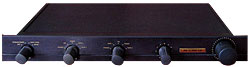
By far the most complicated of the three preamps i review in this issue in terms of facilities offered, NAD's "Monitor Series" 1300 ($398) provides two buffered tape loops, an external processor loop (which can also be used as a third tape-recorder loop), a headphone output, a "null" switch, switchable bass equalization to extend the low-frequency range of small loudspeakers, and treble and bass controls, each with a choice of three turnover frequencies: 3kHz, 6kHz, 12kHz, and 50Hz, 125Hz, 250Hz, respectively.

Rotel RC-850 preamplifier

A few issues back, in my review of the Mark Levinson No.26 and No.20 (May 1988, Vol.11 No.5), I mused on the fact that the preamplifier, being the heart of a system, had a more significant effect on sound quality in the long term than, say, the loudspeakers. It was worth spending more on a preamplifier, therefore, than on loudspeakers. Needless to say, this viewpoint was regarded by many readers as dangerously heretical. I decided, therefore, to investigate the sonic possibilities of budget-priced preamps in this issue, even the most expensive being less than one-tenth the price of the Mark Levinson.

Meridian 207 Pro CD player

In a way, you could say that Meridian started the now epidemic practice of modifying stock CD players (usually of the Philips-Magnavox species). The original Meridian player, the MCD, was a reworking of the first-generation Philips and was praised">http://www.stereophile.com/cdplayers/285meridian">praised by J. Gordon Holt in these pages in his 1985 review (Vol.8 No.2). The Meridian Pro (Vol.8 No.6) won similar plaudits, and is still to be seen lurking in JA's system. And the original 207 was well-received by MC in Vol.10 No.3.


PS Audio 4.6 preamplifier

666ps46.1.jpgChoosing a moderately priced preamp has traditionally presented the audiophile with a host of serious problems. Most attempt to be all things to all listeners, expending resources on bells and whistles which would have been better expended on basic performance. Few have anything resembling a decent moving-coil stage. But there have always been a few designers (and companies) willing to expend much of their effort at the "low end of the high end." PS Audio has been such a company. Their new 4.6 preamp, an update and cosmetic clone of the earlier, well-received 4.5, is not at the top of their preamp range—that honor belongs to the 5.5—but it is clearly designed to be more than a price-point product.
Sumo Athena preamplifier

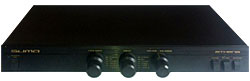
666sumopre.jpgSumo is one of a handful of American audio manufacturers dedicated to producing moderately priced products aiming for high-end sound; their most expensive product is the Nine Plus, at $1199 (although a more expensive Andromeda II is imminent). When I heard I was scheduled to review the Sumo Athena, I looked forward to the opportunity. A Sumo Nine (not a Nine Plus, which I haven't auditioned) had been my front-line power amplifier a few years ago. It was an excellent budget amplifier whose only serious shortcoming was its limited 60Wpc power output.

Mark Levinson No.26 preamplifier & No.20 monoblock power amplifier

I must admit, right from the outset, that I find reviewing electronic components harder than reviewing loudspeakers; the faults are less immediately obvious. No preamplifier, for example, suffers from the frequency-response problems endemic to even good loudspeakers. And power amplifiers? If you were to believe the older generation of engineers—which includes some quite young people!—then we reached a plateau of perfection in amplifier design some time after the Scopes Monkey Trial but well before embarking on the rich and exciting lifestyles afforded us by Reaganomics. (In the UK, it is generally felt by these people that the date coincided with the introduction of Quad's first current-dumping amplifier, the 405, in 1976.)


Klyne Audio Arts SK-5A preamplifier

Klyne Audio Arts has an almost Zen-like approach to the design of its products. Like the best Japanese designs, Klyne's preamps are aesthetically pleasing in appearance, do exactly what they're supposed to, and their controls are not only where you would expect them to be, but have an almost sensually smooth action. Internal construction, too, is a work of art—the kind of design which, transferred to a tapestry, would grace the wall of any listening room. You have to see the insides of a Klyne preamp to appreciate how attractive-looking an audio component can be. But physical beauty is only one aspect of Stan Klyne's designs; of all the electronics manufacturers I know of, Klyne Audio Arts also makes products more adjustable than any others, so as to appeal to the needs of what I call compulsive tweaks.


Threshold FET 10 preamplifier

This product is a pre-trol. What, you may well ask, is a "pre-trol?" Well, Threshold Corp. calls its FET-10 a preamplifier, but it isn't, really. In fact, it isn't an It at all; it's a Them. Only half of Them is a preamp, and you can buy each half separately. If that sounds a little confusing, maybe it's because some of the old, familiar language of audio is starting to lose its relevance.


The Mod Squad Line Drive passive preamplifier

The Mod Squad Line Drive System Control Center is a purely passive stereo switching unit with a volume and balance control, five line inputs, and additional facilities for two tape decks. It allows the audiophile to replace a preamp, with its active gain stages—and resulting coloration—with a device that introduces no distortion or coloration other than that in the wiring, switches, and controls.
Advertisement
Advertisement
Advertisement