If you missed
Part">http://www.stereophile.com/features/105kh">Part 1 of this article (
Stereophile, January 2005), or it has faded in your memory, here's a résumé. (Readers who recall Part 1 with crystalline clarity, please skip to paragraph four.) The accurate measuring of loudspeakers requires that the measurements be taken in a reflection-free environment. Traditionally, this has meant that the speaker be placed atop a tall pole outdoors or in an anechoic chamber. Both of these options are hedged around with unwelcome implications of cost and practicality. To overcome these and allow
quasi-anechoic measurements to be performed in normal, reverberant rooms,
time-windowed measurement methods were developed that allow the user to analyze only that portion of the speaker's impulse response that arrives at the microphone ahead of the first room reflection. MLSSA from
DRA">http://www.mlssa.com">DRA Labs is the best-known measurement system to work on this principle, and both John Atkinson and I use it in the course of preparing our loudspeaker reviews.



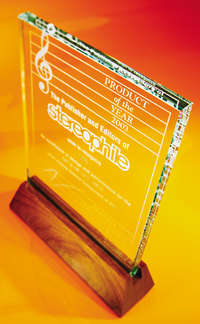 Since 1992, Stereophile has recognized components that have proved capable of giving musical pleasure beyond the formal review period by naming its "Products of the Year." These are the components that can be recommended without any ifs or buts, that will grace any system in which they used.