Features

Sort By: Post DateTitle Publish Date

High-End Tunes to Go

Photo Credit: Tim Austin Photography


A true story: I got tagged for doing a howling 90mph on the way back to New York on the Jersey Turnpike late one night and got off with a warning.


I was pulled over by a beefy young Trooper, lights blinking furiously. Oops. [heh heh]. He saw Kathleen and I weren't nuts, checked the papers and my license, then checked out the Lexus very carefully with his flashlight. There was much oohing and ahhing.


Super Audio CD—One Year Later

In his very English way, Sony's then managing director for the UK, Tim Steele, was getting a touch, er, desperate. His oh-so-cultured voice rose a smidgen as he resorted to a direct selling of the benefits of what he was talking about. "Look, you're all sitting on riches," was his fundamental pitch. "You can sell music-lovers your entire back catalog all over again—at a higher price!"


Super Audio CD: The Rich Report

Although Philips invented the Compact Disc, it was only when Sony got involved in the early 1980s that it was decided—at the prompting of conductor Herbert von Karajan, a close friend of Sony's then-president Akio Morita—that the CD should have a long enough playing time to fit Beethoven's Ninth Symphony on a single disc (footnote 1). Even if the conductor was using very slow tempos, and even given the minimum pit size and track pitch printable at the time, the 16-bit data and 44.1kHz sampling rate they settled on gave them a little margin.


What's Going On Up There?

A much-touted benefit of DVD-Audio and Super Audio CD is that these new media can store digital audio data extending one or more octaves higher in frequency response than the capabilities of the CD. In the August issue's "Industry Update" (pp.27-29), Paul Messenger reported on an add-on supertweeter from English manufacturer Tannoy that would extend the ultrasonic response of loudspeakers so they can reproduce this new information. Putting to one side for now the issue of whether a loudspeaker really needs to be able to reproduce frequencies that no one can hear, the subject of how much ultrasonic content is present in real musical signals is still a contentious one.


Tubes Do Something Special

Most people who now listen to tube amplifiers began with a transistor amp, and know from experience that a tube amp of a given measured power output sounds louder than its nominally identical transistorized equivalent. The unofficial consensus is that you need two to four times the transistor power to achieve the same loudness as you would using tubes. In other words, given the (subjectively) undistorted sound level a 25W (footnote 1) tube amplifier can provide, if you want the same loudness from solid-state technology you would have to replace it with at least a 50W transistor amp (footnote 2).


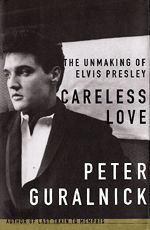
Elvis Presley: Baby What You Want Me To Do

"Here's somebody who just loves to sing." Over the telephone, Peter Guralnick sounds sad, incredulous. "But he's unable at the end of his life to force himself into the recording studio—the fear of completion, fear of exposing your untrammeled idea to execution. What a terrible thing to lose that ability, that faith in yourself."


God is in the Nuances

This journal has seen a number of thoughtful ruminations on what it is that attracts us to music or to a given audio component, and how we should describe that attraction. The "Letters" pages have been filled by readers who have taken us to task for not adhering to rigorous scientific methods in the evaluation of components, those rigorous scientific methods usually being equated with double-blind listening. Other readers have praised the magazine for its stance that an educated listener in a familiar, relaxed environment will be more accurate in his or her assessment than an average of trained and untrained listeners in unfamiliar, stressful circumstances. Overall, sonic descriptions from diverse reviewers in different publications show a remarkable consensus of observation (not opinion).


In Search of the Perfect 300B Tube

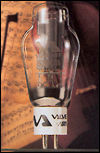
In the last two years, the available choices in 300B output tubes for one's low-wattage single-ended power amplifier have become an embarrassment of riches. If we include the souped-up versions—which, in fact, deviate from the original 1930s Western Electric (WE) specifications—the number of 300Bs to choose from now includes about 15 different brands and types.


Elite DV-05 DVD player (SGHT Review)

When we reviewed Pioneer's flagship Elite DV-09 DVD player in our September 1998 issue, it blew us away so much that it garnered an Editors' Choice award (see the February 1999 issue) as the best DVD player we had reviewed up to that time. This opinion has not changed in the intervening months, but at $2000, the DV-09 is more than many home-theater fans can afford (or justify) for a DVD player. The Elite DV-05, introduced earlier this year, provides many of the features and most of performance capabilities of the DV-09 at a more affordable price.


Advertisement
Advertisement
Advertisement