Music and Recording Features

Sort By: Post DateTitle Publish Date

Revinylization #11: James Booker, Louis Armstrong, Oscar Peterson, Joan Armatrading

Last month, I received so few vinyl reissues that I had to invite a guest writer—jazz critic and political commentator Fred Kaplan—to fill in. Fred had managed to grab an early copy of the excellent Analogue Productions 45rpm reissue of Bill Evans at the Montreux Jazz Festival. I didn't get mine until a week or so after his review was submitted.


This month, I have a tall stack to choose from, so I'll mention several.

Maria Schneider: Is There Anybody Out There?

"The data lords are gathering data and giving it to organizations that then manipulate us with the things they know about us, things that we don't even know about ourselves," says five-time Grammy Award–winning composer, conductor, producer, and band leader Maria Schneider. "They give our data to any company that'll pay for it to manipulate you, specifically targeting your vulnerabilities. It takes away freedom of thought, a true discourse where people are thinking for themselves. Count me out."

Revinylization #10: Bill Evans's Live at Montreux

The late pianist Bill Evans may be the most reissued jazz musician in the catalogs of audiophile record labels. There are reasons for that: He played standards, mainly ballads (many audiophiles shun the avantgarde), almost never in groups larger than trios (stereo systems often do best with small-scale ensembles). Whether by design or chance, his best recordings were miked by superb engineers. Perhaps because of that, proprietors of high-end labels have cherished Evans's music with heightened passion.

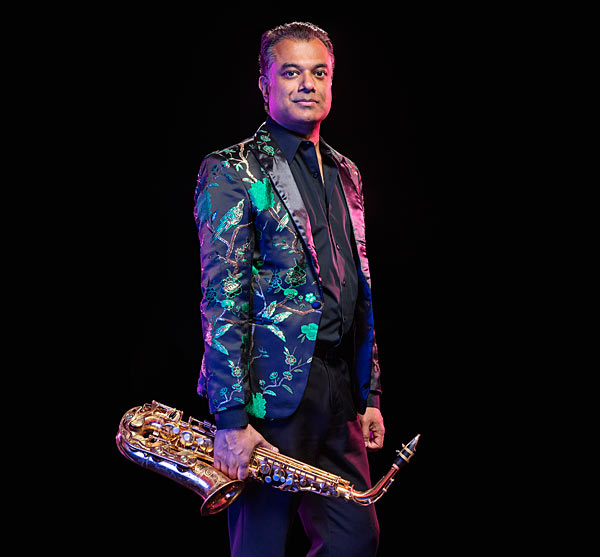
Rudresh Mahanthappa: The Time Is Now


An outburst of saxophone flurries sits you straight up in your chair. The tone is rich but with a cutting edge.


It has to be Rudresh Mahanthappa. The riveting cry of his alto saxophone is one of the most recognizable sounds in jazz.


But those darting runs coalesce into Charlie Parker's "Red Cross." So it can't be Mahanthappa, can it? He has made 15 straight albums of original music. He doesn't do covers, right?

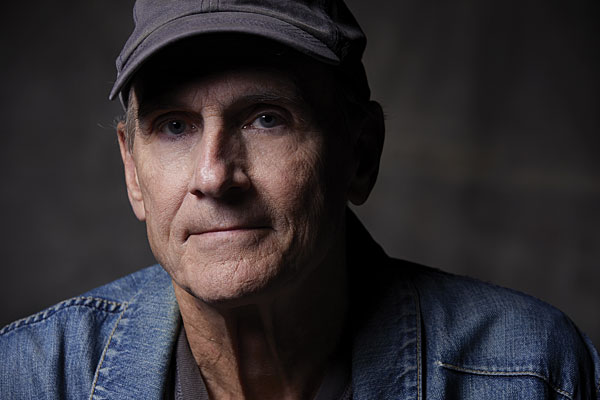
James Taylor: an American Standard

On iconic singer-songwriter James Taylor's 20th album, American Standard, the lanky crooner adapts the classic American songbook to his easy-rolling musical ways. The result is an American mixture of timeless songcraft.


Where some popular singers use the songbook canon to increase record and ticket sales, Taylor has no need to change himself or increase his audience. He's as comfortable as any man can be, having sold many millions of records the world over for almost 50 years.

Terry Riley: Get What You Need

For two months, I'd been planning to attend Terry Riley's appearance at Seattle's 536-seat Illsley Ball Nordstrom Recital Hall. For two weeks, I'd been planning to watch a presidential-candidate debate on television. Only one problem: As it turned out, the two events were scheduled for the same night. Even after a decade of trying to master the muddle known as multitasking, it was impossible to do both.

Sheltering In Place In New Orleans

New Orleans, Louisiana — As I write this, my city is locked down. To make sure of it, the National Guard is encamped in Louis Armstrong Park, site of Congo Square, where in former times enslaved Americans gathered to dance and play music, and tourists gathered to watch them. People still gather there when the city is not locked down; they gather at other places, too. No one's gathering now.

Jim Campilongo: Telecaster Master & Audio Enthusiast

In a 2014 profile in the New Yorker, Paul Elie, author of the book Reinventing Bach, wrote, "There it was again: the stinging treble, the spooky overtones, the strings snapping and booming under his hands—the sound of a Tele being played as skillfully and exuberantly as it can be played."


The musician in question was Jim Campilongo . . .

Being There: Reflections on Ways of Experiencing Jazz


I remember the only time i ever saw Chet Baker. It was at Parnell's, a jazz club in Pioneer Square in Seattle, long since defunct. It was a few years before Baker died under mysterious circumstances, in Amsterdam in 1988, after a life of creativity, notorious dissipation, and addiction.


Emaciated, with a caved-in face, he already looked near death. He played like an angel. I remember something that happened to me toward the end of the night. Sometimes last sets in jazz clubs, when the crowd has thinned, seem to exist outside of time.

Advertisement
Advertisement
Advertisement