
Tube Power Amp Reviews

Sort By: Post DateTitle Publish Date

Rogue Audio M-180 monoblock power amplifier

Two audiophile buddies of mine both own Rogue Audio M-150 monoblocks. I'd always been impressed with not only the sound quality of the M-150, but also its price. For $4495/pair, I thought my friends got a whole lotta amp for notta lotta dough. In this day and age, it's a rare and wonderful thing to get a pair of monoblocks, made in the US by a real audio company, that give you 150Wpc of tube power for under $5000. When Rogue came out with an update of the M-150, the M-180 ($5495), I thought it might be a good subject for my first full review in Stereophile. John Atkinson thought so too. I also thought it would be interesting to compare the M-180 with the very tube-like and almost identically priced Pass Labs XA30.5 two-channel amplifier ($5500), a sample of which I had on hand. (see my Follow-Uphttp://www.stereophile.com/solidpoweramps/pass_labs_xa305_power_amplifi…; in August 2009).


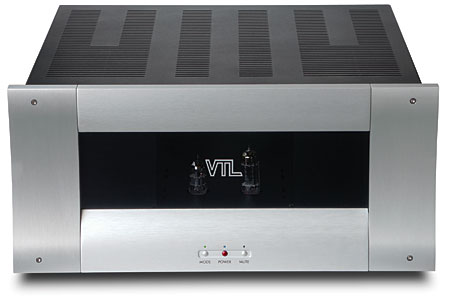
VTL MB-450 Series II Signature monoblock power amplifier

Stop me if you've heard this one: Back in the early 1990s, just after the fall of the Soviet Union, I debated professor of music engineering and magazine columnist Ken Pohlmann on a talk show on the CBS radio network. The subject was analog sound vs digital sound, but I guess when Pohlmann felt I was getting the upper hand, he felt he needed to play the tube card. Derisively, he said, "I bet you're one of those tube guys, too, aren't you?" Before I could open my mouth, he continued: "You know, the Soviet Union's military gear, including the MIG fighters, ran on tube electronics, and look what happened to them!"


Rogue Audio Atlas power amplifier

When I unpacked the Rogue Audio Atlas, I didn't know how much it cost. After examining its chassis of high-grade steel, its silver-anodized aluminum faceplate, its sleek and slightly rounded edges, and, above all, its two chunk-o'brick transformers—for such a little thing (a foot-and-a-half square by half-a-foot high), it's heavy—I guessed around five grand. Then I called Rogue Audio and learned that it retails for $1395.


PrimaLuna ProLogue Three tube preamplifier & Seven monoblock amplifier

Everybody loves a bargain. No—make that: Most people love a bargain. Some just want the best, and they don't care about the cost. Some even distrust and reject out of hand any product that's not expensive enough. If you're one of these people, you might as well stop reading this review right now—the PrimaLuna ProLogue Three and ProLogue Seven are not for you. $1395 for a tube preamp? $2695 for a pair of 70Wpc tube monoblocks equipped with four KT88 tubes each? Must be based on old designs in the public domain using cheap parts carelessly assembled...


AudioValve Baldur 70 monoblock power amplifier

In this hobby, nothing's for nothing. To get that gorgeous midrange, with its harmonic depth and inner detail, tube-amp enthusiasts are willing to give up some things in the bass. Tube folks put up with heat and occasional maintenance—routine or otherwise. To get the ideal middle, fans of single-ended triodes are even willing to shave off considerable dynamic range and settle for ultra-efficient speakers that often have limited response at the frequency extremes. Those who say nothing is lost by preferring tubes are in denial.


Yamamoto A-08 power amplifier

My stepfather wore only second-hand clothes as a child and never understood why anyone would deliberately wash the color out of his new dungarees. By the same token, the senior members of our hobby, many of whom recall with fondness the transistor's advent, don't understand why anyone would now wish to throw away their newfound power. Some people deserve to be blessed for their point of view, even as the world moves away from it.


VTL S-400 Reference power amplifier

When I reviewedhttp://www.stereophile.com/tubepoweramps/152">reviewed; VTL's MB-750 monoblock amplifier in the December 1997 Stereophile (Vol.20 No.12), it was a transitional time for the company. Luke">http://www.stereophile.com/interviews/153">Luke Manley had recently taken it over, and he and his wife and partner, Bea Lam, were aggressively retooling. They introduced new business systems, including rigorous inventory and quality control; rebuilt VTL's dealer network around top-rank dealers; and systematically upgraded the products themselves to improve their consistency, reliability, manufacturability, and performance. VTL's goal, Luke explained to me at the time, was to build amplifiers that competed with the very best, and to "make the tubes invisible to the customer."


Advertisement
Advertisement
Advertisement