Tube Power Amp Reviews

Sort By: Post DateTitle Publish Date

Octave Audio RE 290 power amplifier
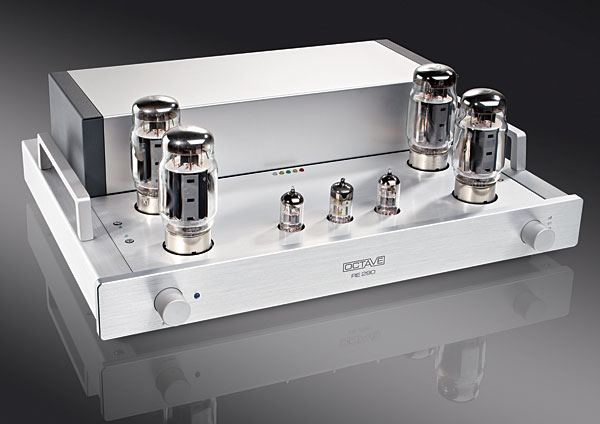
Ever since I became a Stereophile contributing editor, people have asked me, "How do you determine what equipment you're going to review? Do you get to pick your own, or does John Atkinson tell you what to do?"


I've chosen roughly 85% of the components I've reviewed for Stereophile, those choices made on the bases of what I find interesting, and what I think readers would like to know about. It's as simple as that.

McIntosh Laboratory MC275 50th Anniversary Limited Edition power amplifier

It began when I reviewed the MartinLogan Montis loudspeaker (September 2012). The amplifiers I had to drive the pair of them were the PrimaLuna ProLogue Premier integrated ($2999), the Audiopax Mk.II (no longer available; the Mk.III costs $22,000), and the Simaudio Moon Evolution W-7 ($9000). The first two are tubed, with power in the 30–40Wpc range; the solid-state Simaudio puts out 150Wpc. The Audiopax, which sounds great with my Avantgarde Uno Nanos, turned out to be not such a good match for the Montises: weak in dynamics, and too soft sounding. The PrimaLuna and the Simaudio were better overall, each with its strengths and weaknesses, though neither was ideal. I really liked the ProLogue Premier's tonal characteristics, and wondered what a higher-powered tube amp would sound like with the MartinLogans.

Audio Research Reference 150 power amplifier


It's always good to have a reference. No matter the endeavor, references help guide us and set standards for all we do. For many hours of every day, I'm lucky to enjoy the reference of live, unamplified music. Right now, I average over 20 hours a week of rehearsals and performances of various ensembles, and four to five hours of listening to recorded music on my hi-fi. Clearly, for me, my musical reference is not the sound of my audio system, but the sound of live music created in various venues and acoustics.

Allnic Audio A-5000 DHT monoblock power amplifier

Even at its humblest, a 300B is a fine thing. And at its best, this classic triode output tube can deliver some of the most intoxicating music playback imaginable. If tubes are liquor, the 300B is clearly absinthe. (The 2A3 is Cognac, the 45 is Armagnac, the F2a is Tequila, and the EL34 is vodka—which is to say, you can make almost anything out of an EL34, from the repulsive to the sublime.)

Rogue Audio Titan Atlas Magnum power amplifier

One drizzly, gray morning I found myself with an unexpected hole in my schedule and an unusual hankering for doughnuts. Since my move to Portland, Oregon, last August, people from around the country have told me that I just had to try the over-the-top creations over at Voodoo Doughnuts. So I donned my raincoat and walked through downtown Portland for one of Voodoo's fried, raised, and glazed treats. Once inside Voodoo's tiny storefront, I chose two confections: a maple-bacon bar (yep, they put a whole strip of bacon on top of a doughnut), and an Old Dirty Bastard doughnut with chocolate frosting, Oreos, and a peanut-butter topping. They were delicious, and way more doughnut than one man should eat.

Conrad-Johnson LP125M monoblock power amplifier

For anyone who's been around the audiophile block a few times, Conrad-Johnson Design is a brand that needs no introduction. My first acquaintance with Conrad-Johnson was before I began writing for Stereophile (more than two decades ago—time sure flies fast when you're having fun!). I was in the market for a new preamp, having become convinced that my Dayton Wright SPS Mk.II was the weak link in my system, and had narrowed my choices to two similarly priced products: a solid-state model made by PS Audio (I'm not sure of the model number), and the tubed Conrad-Johnson PV-2ar. They were carried by different dealers, who allowed me to take their preamps home over the same weekend for a direct comparison. I was impressed by both preamps, and was sure that either would represent an improvement over the Dayton Wright, but in the end decided to go for the PV-2ar. I later traded it in on a dealer's demo unit of another Conrad-Johnson preamp, the PV-5. And, as it turned out, one of my first reviews for Stereophile was of Conrad-Johnson's PV-11 preamp.

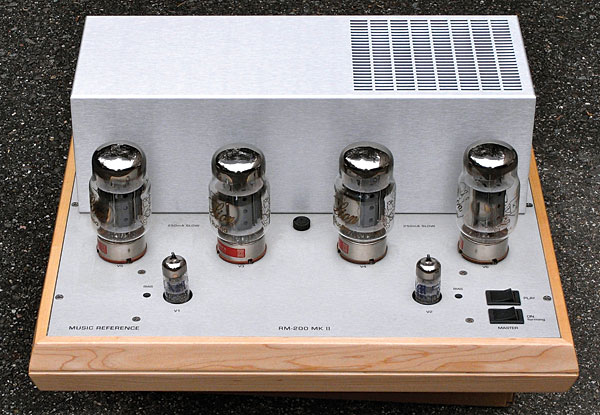
Music Reference RM-200 Mk.II power amplifier

In his "Manufacturer's Comment" in response to my review of the original Music Reference RM-200 power amplifier in the April 2002 issue, designer Roger Modjeski admitted that being a manufacturer was not his first choice. "Frankly, I'd rather consult than produce," he claimed. "I'd rather be making a living doing stand-up comedy," I said to myself after reading his comment.

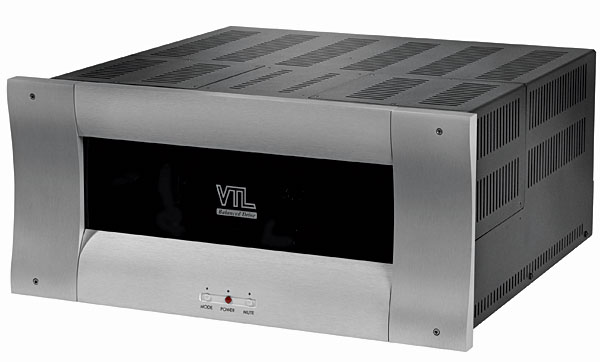
VTL MB-450 Series III Signature monoblock power amplifier

The VTL MB-450 series began life in the late 1980s as the Deluxe 300, a pair of which I once owned. Over the years the basic design has been improved and modified, in the forms of the MB-450 (1996) and the MB-450 Series II (which I reviewed in January 2008). The tube complement remains the same: eight 6550s in the push-pull output stage, a 12AT7 input tube, and a 12BH7 driver. Into a 5 ohm load, the MB-450 III is claimed to produce 425W in tetrode mode or 225W in triode, from 20Hz to 20kHz.

McIntosh MC275 power amplifier

It's been a while since I've had a classic amplifier in my system, and McIntosh Laboratory's MC275 is as classic as they come. Introduced in 1961 as the "powerhouse" of that era's newfangled stereo tube amps (two 75W amplifiers in one chassis!), the MC275 retained its position as the amplifier to own—challenged only, perhaps, by Marantz and a few others—until 1970, when it fell prey to the widespread wisdom that transistors were king and tubes were dead, and the model was discontinued. The MC275 briefly returned in 1993, in a limited "Commemorative" edition to honor the late Gordon Gow, longtime president and chief designer of McIntosh Labs. To everyone's surprise, that edition sold well, and McIntosh, gingerly at first, crept back into the tube business.
Advertisement
Advertisement
Advertisement