Tube Power Amp Reviews

Sort By: Post DateTitle Publish Date

Air Tight ATM-1S power amplifier


It's no secret, especially to those who've been following Stereophile for more than a short time: In the first half of 2007, I took the plunge and bought a Shindo preamplifier and monoblock amplifiers—handmade products characterized by low output power, generous numbers of vintage parts, steel casework finished in a signature shade of green, and richly textured, impactful sound with lots of sheer musical drive. And while we tend not to alert the major newspapers whenever someone on staff buys new electronics, the change was notable for two reasons: The compatibility of Shindo's amplifiers is limited to loudspeakers of higher-than-average sensitivity and impedance; and, throughout the seven years that followed my switch to Shindo (footnote 1) both my system and my point of view regarding domestic audio in general have evolved in the direction of the artisanal and the vintage.

Siltech SAGA power amplifier

Among the biggest buzzes at the January 2013 Consumer Electronics Show, and at Munich's High End Show the following May, was the sound in the room of Siltech BV, a Dutch company best known for its high-end cables. Siltech was demonstrating an innovative new power amplifier, and using it to drive the company's glass-cabineted Arabesque loudspeakers ($90,000/pair). The sound was unmistakably lush yet also remarkably linear, notably dynamic, and seemingly free of electronic artifacts. It sounded like the sound of "nothing"—which was really something!—and so much of a something that it caught the attention of many reviewers. But while there's often controversy and disagreement about a given product's sound quality, this time the enthusiasm seemed unanimous.

Raven Audio Spirit 300B Reference Stereo power amplifier

No one can say precisely how or when the ancient 300B triode tube made its cross-kingdom leap to the modern world of consumer audio, but we've got the where pretty much nailed down: It all began in Asia, where the best of the West is sometimes held in reverence rather than left to drown in consumerism's wake. Asia is the final resting place for the great Western Electric cinema systems of the 1940s—and that's where the 300B earned its un-American second act. By the mid-1990s, the tube had captured the hearts of hobbyists who, consciously or not, sensed that the audio refineries of the day had lost the plot, not to mention the body.

VTL Siegfried Series II Reference monoblock power amplifier

Big tube amplifiers were once scary monsters reserved for those who didn't mind heavy maintenance, careful tweaking, and the occasional explosion. Blown tubes required replacing, preferably with pricey matched pairs, then biasing with a voltmeter. Optimal sonic performance required regular bias monitoring and adjusting, and because of current surges on startup, you had to choose between leaving the heat-producing monoliths on, or turning them on and off for each listening session, thus shortening the life of the tubes.

PrimaLuna DiaLogue Premium power amplifier

The road to hell is paved with good inventions: clever ideas that appear, in hindsight, motivated more by a desire to sell clever ideas than to make musically superior products.


The DiaLogue tube amplifiers from PrimaLuna have, at their heart, a clever idea of their own: an output circuit that is user-switchable between triode operation, in which the screen grid of a tetrode or pentode power tube is defeated by means of connection to the tube's anode; and Ultralinear operation, in which the screen grid of a tetrode or pentode carries a portion of the AC music signal, supplied by a tap on the output-transformer primary, in a feedback-like effort to reduce distortion and increase power. Fans of the former often report a sweeter, more tubey sound, while fans of the latter report a tighter, more detailed, more timbrally neutral sound. Audio enthusiasts are given to reporting any number of things.

Sophia Electric 91-01 300B monoblock power amplifier

"We put music in the souls of our amplifiers. Every amplifier, every tube, every transformer has music in its soul."


Not to be cynical, but I've heard, over the years, countless variations on that sentiment. Not to be naïve, but it rang with somewhat-greater-than-usual sincerity when given voice by 45-year-old Richard Wugang—founder, with his late father, of Virginia-based Sophia Electric, Inc.

Lamm Industries ML3 Signature monoblock power amplifier

Even as the gulf narrows between the sounds of the best solid-state and the best tubed amplifiers, most listeners remain staunch members of one or the other camp. Similarly, when it comes to video displays, the plasma and liquid-crystal technologies each has its partisans, though that conflict's intensity is relatively mild, perhaps because video performance, unlike audio, is based on a mastering standard that establishes color temperature, gray-scale tracking, color points, and the like (I'm deeply in the plasma camp). But in audio, the "standard" is whatever monitoring loudspeaker and sonic balance the mastering engineer prefers, which makes somewhat questionable the pursuit of "sonic accuracy." Still, in a power amplifier, a relative lack of coloration is preferable to amps that Stereophile editor John Atkinson has characterized as "tone controls"—usually, if not exclusively, of the tubed variety.

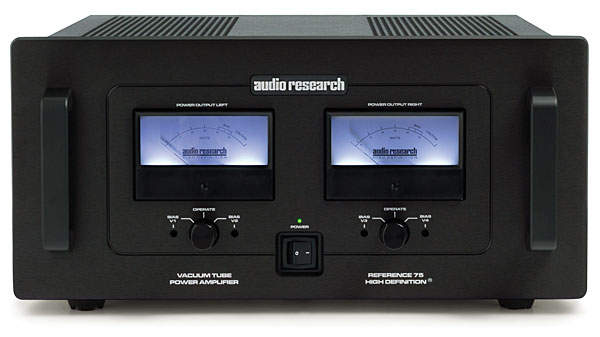
Audio Research Reference 75 power amplifier

After I read Brian Damkroger's rave review of the Audio Research Corporation's Reference 5 SE line stage in the November 2012 Stereophile, I was excited about getting the review sample into my system so that I could do a Follow-Up (February 2013). However, the sample had already been returned to the factory, so I called ARC to see if it could be rerouted eastward to me. Chief Listener Warren Gehl answered the phone.


"Sure, you can listen to the Ref 5 SE, but I'd assumed you were calling about the Reference 75 amplifier."


"Reference 75? What's that?"


"It's our newest amplifier—a half-power version of the Reference 150."

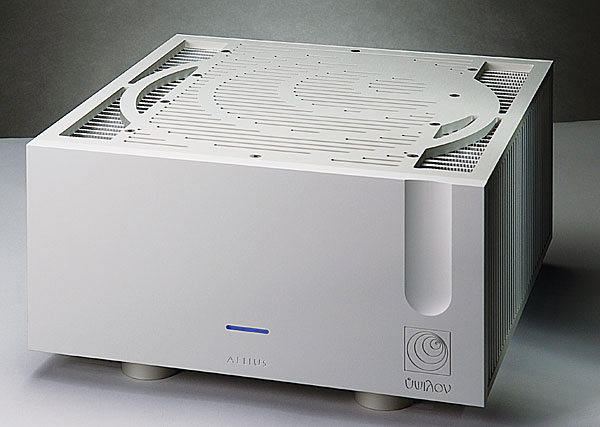
Ypsilon Aelius monoblock power amplifier

I knew nothing of Ypsilon when I first saw its products in a room at an overseas audio show. Even though the speakers in this system were complete unknowns, I was convinced that it was the electronics that were responsible for the magical balance of what I was hearing. That was confirmed when I reviewed the VPS-100 phono preamplifier in August 2009 and PST-100 Mk.II preamplifier in July 2011.
Advertisement
Advertisement
Advertisement