As We See It

Sort By: Post DateTitle Publish Date

A Dolby In the House

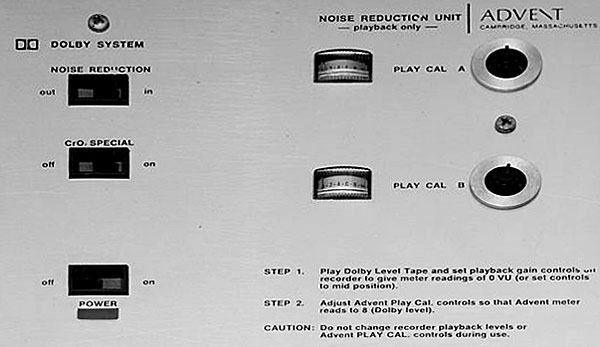
By the time you read this, in the fall of 1967, the "Dolby system" will probably be old hat to you. Every other audio publication has been describing it, discussing it, and hailing it as the greatest invention since sex.


We've seen that kind of press ballyhoo before, about such significant advances as the Edsel, the 16-rpm LP and the "thin-profile" loudspeaker, so our first inclination was to be a wee bit skeptical of the Dolby. It seemed too good to be true.

Do It Yourself!

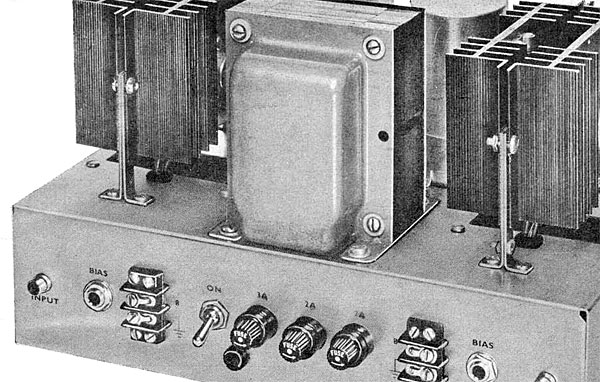
Editor's Note: in the main, Stereophile has steered clear of DIY audio projects, leaving them to magazines like The Audio Amateur, which was published by the late Edward T. Dell. But one of the exceptions was this 1967 article on the "Brute," a tube amplifier design by none other than Ed Dell. Note that the DIY competition mentioned by Gordon Holt is long closed to entries.—John Atkinson


There's a platitude to the effect that the road to Hell is strewn with good intentions. Well, we don't see ourselves as headed for perdition, but we must admit that we are surveying a rather impressive-looking junk pile of good intentions at this point.

A Measurement that Says Something

When we first heard rumors that Shure Brothers was about to unleash something called "trackability" on the audio world, our reaction was mainly one of indifference. We already had loudspeakers with listenability, tape recorders with portability, and amplifiers with stability and dependability. Trackability, we figured, was just another clever sales gimmick; a catchy word that the advertising department had thought up to describe what everyone wanted in a pickup.

Nowhere to Go?

Our mail, in recent months, has brought a number of comments (some of them printed in this issue) from professional audio men who decry the fact that developments in the audio field seem to have come to a screeching halt.


There would seem to be some justification for believing this, too. There hasn't been a new kind of loudspeaker, amplifier, pickup, or tuner for the past five years or so. The professional engineering journals, once loaded with juicy articles about research and developments in music reproduction, are now devoted largely to public-address techniques and new methods for the "creation" of electronic music.

Upward and (Hopefully) Onward

Editor's Note from 1974: As you can read in the following "As We See It," the last issue of Vol.1 No.12 (cover dated "Spring 1966") was perhaps not as "strong" as it might have been. If we had been doing things according to Proper Business Practice, we should have held back our best articles and our gutsiest reports until that issue, as a high-powered incentive for our subscribers to renew their subs. We didn't. There were better articles and a greater variety of topics covered in earlier issues, but Issue 12 was significant in that it set the pattern of topic emphasis, and the balance of reports versus other editorial material, that was to continue more or less unchanged for the next 7 years.

The Moment of Truth

Well, it's that time. The time of reckoning, the moment of truth. It's renewal time.


Most of you have noticed the hyphenated numbers on your address labels, and most of you guessed what they were: Expiration codes. If your label has a 1-12 number on it (or no hyphenated code at all), the next issue of The Stereophile, Issue Number 12 [published in September 1966—Ed.], will be the last one that will arrive on your present subscription.

The Sound of Transistors

Editor's Note: Those of us who cut our engineering teeth on tubes still remember the advent of the solid-state amplifier with mixed feelings. Yes, they were lighter and cheaper per watt than the thermionic hulks we loved so much, but they broke all the time (thanks to the germanium transistor) and sounded like—well, let J. Gordon Holt tell us what they sounded like in an "As We See It" article from Vol.1 No.10, first published in May 1965. We also develop the theme with a JGH review of an early transistorized amp, as well as a selection of readers' letters from the early days of Stereophile. Enjoy.John Atkinson

Observations and Prognostications for 1965

Well, the New York Hi-Fi wingding has come and gone once again, and now is the time when audio editors dutifully adopt the role of oracle, divining the future of high fidelity, and generally sketching out The Big Picture for those of us too blind to see the graffiti on the wall. So, who are we to shirk our duty? Herewith, The Stereophile's audio observations and predictions for 1965.

Don't Just Sit There!

Like every sensible publication, The Stereophile keeps track of the questions raised by readers who write to us, so we can get some idea of what most of you would like to see in future issues of the magazine. To date, the list looks like this, in order of diminishing interest: transistor amps and preamps, loudspeakers, pickups, tape equipment, tuners and, way at the bottom of the list, recordings. We are devoting most of the August 1964 issue to a discussion of commercial recording practices.
Advertisement
Advertisement
Advertisement