J. Gordon Holt

Sort By: Post DateTitle Publish Date

Give CD a Chance

According to a recent newsletter sent to its regular contributors, our "competition"—The Absolute Sound—sees "controversy and confrontation" as the core of its editorial policy. By contrast, Stereophile sees as its modus schtickus an unflagging devotion to, and pursuit of, truth, reason, all of the eternal verities (including some you never heard of), and the intelligent exchange of informed ideas. In honor of all of the above-mentioned precepts (as well as some I didn't mention), this issue of Stereophile is largely devoted to the confrontation between knowledgeable writers for whom the widely proclaimed perfection of the Compact Disc remains a controversial issue.


Sound-Lab A-3 loudspeaker

The Sound-Lab electrostatic loudspeakers are legendary. Many serious audiophiles have heard of them, and rumors of their existence abound in audio circles. But, like gnomes, UFOs, and poltergeists, Sound-Lab loudspeakers are sufficiently hard to find that it is sometimes difficult to prove to skeptics that they exist at all. Well, I can now report that they do. As proof of this contention, I can point to the two which are actually occupying solid, tangible space in my listening room at this very moment. I have even taken a photo of them, which will be published along with this report if they leave any sort of an image on the film emulsion. (Many such apparitions do not!)


Mark Levinson ML-7A preamplifier

Before launching into Stereophile's first-ever report on a Mark Levinson product, an important point needs to be clarified. Although Mark Levinson products were originally made by Mark Levinson, they are no longer. Au contraire, Mark Levinson products are now being made by Madrigal, Ltd., which bought Mark Levinson Audio Systems' assets and trademark two years ago. Mark Levinson's products, as distinguished from Mark Levinson products, are now being manufactured by a company called Cello. But the subject of this report, the Mark Levinson ML-7A preamplifier, is a product of Madrigal, Ltd., not of Cello. Now that I've made that all perfectly clear, we may proceed.


Recording of August 1986: Sheffield Lab's Orchestral Direct-to-Disc LP

886rotmjgh.1.jpgStravinsky: The Firebird (1910 Suite)

Debussy: Prelude to the Afternoon of a Faun

Los Angeles Philharmonic, conducted by Erich Leinsdorf

Sheffield Lab Direct-to-Disc Lab 24 (LP). Lincoln Mayorga, prod.; Doug Sax, James Boyk, engs.


For some reason, Stereophile didn't receive an early pressing of Sheffield's latest orchestral recording, their first since the Wagner and Prokofiev discs back in 1977. So, guess where my review copy of this finally came from? From Harry Pearson, that's who. How did this come about? Well, I had seen a passing comment in The Absolute Sound to the effect that HP didn't like the recording, and since I was favorably impressed with what I'd heard of it at the last two Consumer Electronics Shows, I phoned HP to ask what he didn't like about it. "Dull high end, closed-in sound, not enough spaciousness" was the reply. Thank you, I said. Several days later, a copy of the disc arrived, postmarked Sea Cliff, NY.


Thank you Harry, but I must disagree with you about this recording.

Seeing Red

Although inclined to mood swings bordering on the manic-depressive, I am generally a very patient, tolerant person, willing to accept and overlook the foibles of those less perfect than myself. But even my incredible equanimity has its limits, beyond which the milk of my human kindness curdles, becoming as lumpy as last month's yogurt.


Transparent, My Dear Watson

Much of the descriptive">http://www.stereophile.com/reference/50">descriptive terminology used in subjective reporting describes things we hear in live music, and expect—or, rather, hope—to hear from reproduced music, too. I'm referring to terms like width, depth, perspective, spectral balance, and tonal accuracy. If you read our reports, you know these terms as well as I do, and since they are (for most people) self-explanatory, I will devote no more time to them.


VMPS SuperTower IIa/R loudspeaker

One of the nicest features of the High End is its diversity. Regardless of whatever trend is fashionable, there will always be manufacturers to buck it, and sell alternative concepts and sounds. VMPS is just such a case. With few exceptions, the recent trend in speaker systems has been toward small-to-medium-sized "monitors" with good imaging and high resolution, but limited bass and dynamics (footnote 1). The VMPS SuperTowers provide the former, but buck the trend by adding reproduction of the deepest bass and outstanding full-range dynamics.


Acoustic Sciences Corp. Tube Traps

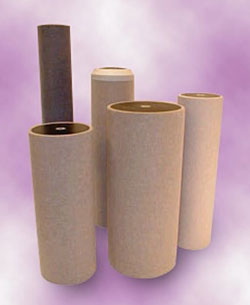
In my rather jaded report">http://www.stereophile.com/asweseeit/the_1986_winter_ces/">report from the 1986 Winter CES (Vol.9 No.2), I remarked that there was nothing really new in the field of high-end audio. Well, I was wrong. I overlooked the Acoustic Sciences Corporation Tube Traps, a patented new acoustic device designed by Arthur Noxon (president of ASC). The Traps represent the first practical and effective solution to a perennial audiophile problem: standing waves in the listening room.


Advertisement
Advertisement
Advertisement