Budget Component Reviews

Sort By: Post DateTitle Publish Date

KEF Q350 loudspeaker
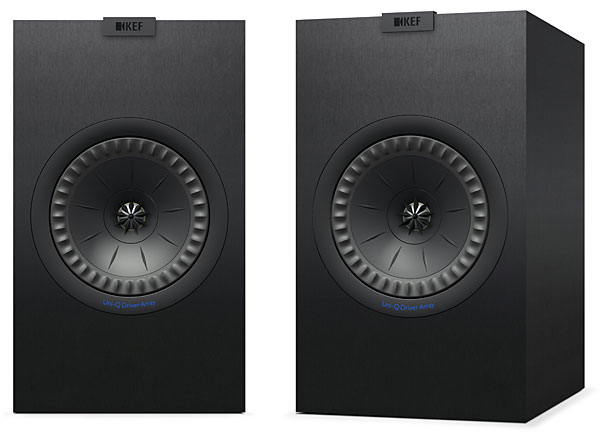
During the hour preceding my removal of the KEF LS50 loudspeakers from their spiked, rough-iron stands, I was lost in the recurring still moments, reverberating tones, and contemplative spirit of Sir John Tavener's Eis Thanaton and Theophany, in the recording by soprano Patricia Rozario, bass Stephen Richardson, and Richard Hickox conducting the City of London Sinfonia (CD, Chandos CHAN 9440).
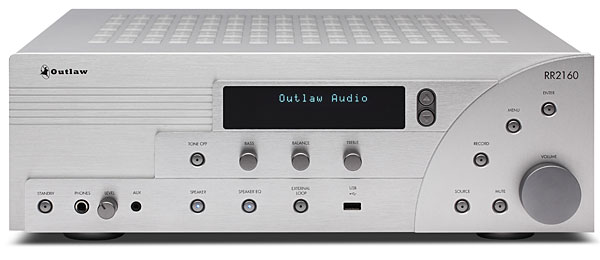
Outlaw Audio RR2160 stereo receiver

For audiophiles of a certain age, the mere mention of NAD Electronics' original 3020 integrated amplifier (1980, designed by Erik Edvardsen), or Adcom's GFA-555 stereo power amplifier (1985, designed by Nelson Pass), conjures up happy memories of audio's last Golden Age—an idyllic time when working stiffs could luxuriate in the same audio arcadia as bankers and brokers. Since then, few, if any, audio components have achieved that level of iconic high value. Which caused me to wonder: What would it take, nowadays, to manufacture a genuinely high-value audiophile product: one that delivers exciting, satisfying sound at a price most audiophiles can afford?

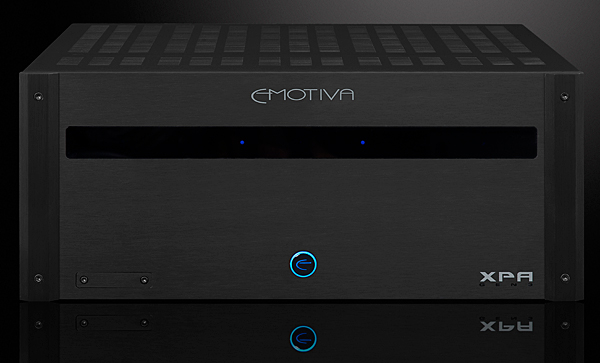
Emotiva XPA Gen3 two-channel power amplifier

Have I told you about my objectivist friend—the left-brain audiophile who puts a lot of trust in measurements? He has a high natural intelligence and is an extremely experienced listener, but once he knows a component doesn't measure well, he can never again experience it impartially.


I don't want to embarrass my friend, so in this story I will call him O., for Mr. Objectivity.

Arcam irDAC-II D/A processor

For digital playback, in recent months I've been breathing some rarefied air, pricewise. In December 2016, I reviewed dCS's Rossini Player and Clock, followed in May 2017 by Meridian's Ultra DAC, and in June by Chord's DAVE DAC. The Rossini Player costs $28,499 without the Clock, the Meridian $23,000, and though the DAVE is less expensive than either at $10,588, that's still a fair chunk of change. Even PS Audio's PerfectWave DirectStream DAC, which I bought following Art Dudley's review in September 2014, costs $6899 with the Network Bridge II, which hardly counts as "affordable."

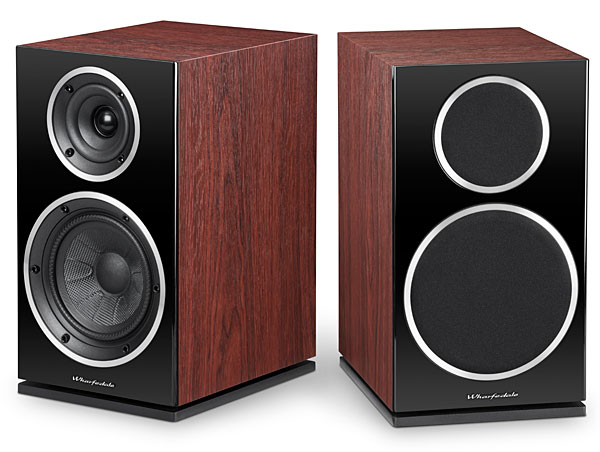
Wharfedale Diamond 225 loudspeaker

In the United Kingdom, the first seeds of perfectionism in audio separates were sown by Goodmans Industries, founded in 1925. Then, in 1930, Garrard (est. 1722) produced its first commercial gramophone. Shortly thereafter, England experienced the Great Slump, the British name for the worldwide catastrophe known in the US as the Great Depression. Near the beginning of this economic downturn, in 1932, Gilbert Briggs founded Wharfedale Wireless Works—and the first British "high-fidelity" audio amplifiers began being manufactured by H.J. Leak & Co. Ltd., founded by Harold Joseph Leak in 1934.

NEAT Acoustics Iota Alpha loudspeaker

Reviewers of high-fidelity gear are a trend-sniffing, topology-bandying bunch. When four of our kin gathered last November over lunch, during the 2016 New York Audio Show, the high-end chatter flew fast and furious. "Did you hear those mother-rocking big horns on the seventh floor?" "Nah, man, the Bruno Putzeys speakers on nine were best in show." "What about those li'l Lowthers on eight? Great sweet spot, but small as peanuts."

Gramophone Dreams #14: Rega Planar 3

UK, 1976: Upon its release, Rega Research's original Planar 3 turntable became the poor man's Linn Sondek LP12. It opened a gateway of affordability to the exotic world of high-quality British record players. Forty years later, the new Planar 3 turntable and its "light and rigid" engineering aesthetic, as conceived by Rega founder Roy Gandy, still occupy an admirably working-class, pro-music position in an audio world increasingly populated by gold-plated tonearms and quarter-ton turntables.

AudioQuest DragonFly Red & Black USB D/A headphone amplifiers

Approximately 331/3 years after AudioQuest's first phono cartridge, the company announced two new USB D/A headphone amplifiers: the DragonFly Black ($99) and the DragonFly Red ($199). Both have circuits designed by the engineer responsible for the original DragonFly—Gordon Rankin, of Wavelength Audio—and both have the novel distinction of requiring considerably less operating power than their predecessors, so much less that the new DragonFlys can be used with iPhones, iPads, and various other mobile devices.

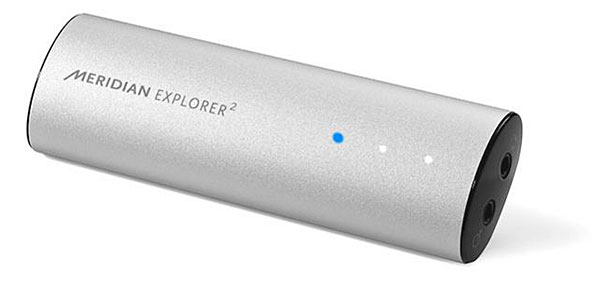
Meridian Explorer2 D/A headphone amplifier

I was lying on a mattress on the floor of an empty apartment on Manhattan's Upper West Side. Not as grim as it sounds—it's a nice apartment, and the mattress was new, and had just been delivered—but it was hot (no air-conditioning), and my family and my furniture were still in my condo up in Maine, and I was lonely. I needed some cheering up. Which is how I rationalized the decision to buy an Explorer2, Meridian Audio's tiny, inexpensive ($299) digital-to-analog converter.
Advertisement
Advertisement
Advertisement