Budget Component Reviews

Sort By: Post DateTitle Publish Date

Gramophone Dreams #4
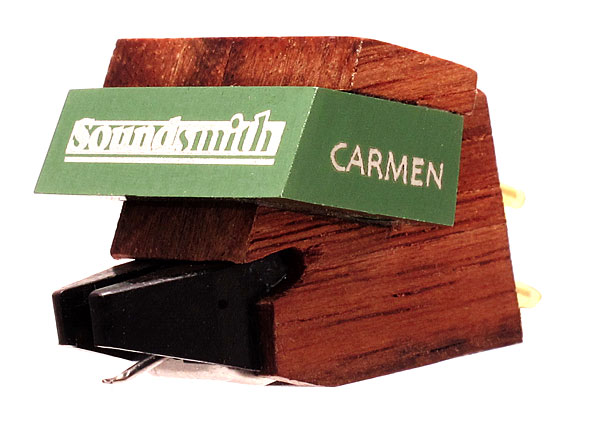
So, audiophiles, riddle me this: What does a DAC actually look like? I don't mean the box it hides in—I mean the little doodad that does the actual converting from digital to analog. Is it bigger than a phono cartridge? Is it made of rain-forest wood, gemstone, or porcelain? Do people show it to their friends, who gawk in awe and envy? Does it have an exotic, geisha-sounding name like Jasmine Tiger, Koetsu Onyx, or Miyajima Takumi? When it breaks, does a watchmaker type rebuild it for a not-insubstantial fee? Do people hoard them in vaults, like NOS tubes? Can you trade a DAC for a rose-gold Rolex Oyster Bubbleback ca 1945?

PS Audio Sprout integrated amplifier

I find small humans more beguiling than big people. My favorites are the two-footers—those little two-year-old boys with a kind of wobbly, bent-kneed stride that dips like a blues song every fourth step as they stagger ahead of their watchful parents. I like three-footers too—sprightly three-year-old girls who dress better than their moms and never need a lifestyle consultation. Whenever we see one of these cheerful, bouncing young'uns coming toward us on the sidewalk, I smile and my dog's tail wags. Their bright faces and excited voices make me think, You go, little sprouts! These miniature humans' special beauty is that they still possess their full force de vie.

NAD D 3020 integrated amplifier

In the mornings, just before I leave for work, I power up the system, turn the volume down low, and set the CD player to Repeat. I like to think that if I play calm, soothing music while Ms. Little and I are away, the cats will feel less alone and more relaxed. It's also nice, on returning home from work, to walk into a room filled with music. One evening a few weeks ago, I stepped into the apartment, dropped my bags to the floor, settled down into the couch with my iPhone, and began scrolling through text messages. I'd been seated for only a moment before I had to turn my attention entirely to the sound of the system, which, even at a very low volume, sounded warm, detailed, and unusually good—unbelievably, almost unbearably engaging.

Emotiva Audio Pro Airmotiv 4s powered loudspeaker

"I'm intrigued how Emotiva can offer an active speaker for so little."


This was John Atkinson's response to my request to review Emotiva's Pro Airmotiv 4s ($299/pair). My colleague Steve Guttenberg had been discussing this speaker with me at a recent industry event, and I'd realized that it had been some time since I'd reviewed an entry-level loudspeaker. I'd reviewed Emotiva's X-Ref XRT-5.2 floorstanding speaker in the August 2012 issue and had been impressed with its combination of sound quality and price. I requested samples for review.

Pono PonoPlayer portable music player

In the 1960s, musical giants walked the earth. I vividly remember the first time I heard a song called "Expecting to Fly," in a UK record store. The vast, reverberation-drenched sound was extraordinary; the frail, shaky alto voice of the singer riveting.


"Who is that?" I asked the clerk.


"It's a new American band, Buffalo Springfield . . . but they've already broken up."


I bought all I could find of the Springfield, which wasn't much, and learned that the singer and composer of "Expecting to Fly" was a Canadian, Neil Young.

Gramophone Dreams #3

Before I moved to the boat, I lived in a big old firehouse with a shiny brass pole and a red door. The fire engines were gone but it was still a boy-toy pilgrimage site. The first thing one noticed on entering was a red 356 Porsche coupe. Behind it was a black '32 Ford hot rod with a flat-head V8 and triple Strombergs. Behind that was a 1939 Lincoln convertible from some Godfather movie. On the second floor . . .

VPI Nomad LP player

I wish I'd had a VPI Nomad when I was in college. I was in a fraternity, and for most of my time there I had to rely on others' sound systems to play my music. My sophomore and junior years, some freshmen were rotated through my room, and several of them had nice sound systems and were accommodating about letting me play my music. When I wanted to really crank it up, I visited the stoners, who had the best systems and were happy to spin my collections of King Crimson and ELP, assuming I could get them to stop listening to Jefferson Starship for five minutes (footnote 1).

Sjöfn HiFi (the clue) loudspeaker

I was sitting in my high chair, eating strained peas. My father was walking around the kitchen with a wooden box in one hand and a cord with a plug in the other. The box and the cord were attached to each other. I was inspired to utter my first actual sentence: "Plug it in over there!" Moments later, a man with a disturbing voice began squawking from inside the wooden box. It was a radio. Schnapps, our dachshund, barked angrily. I started to cry. Ever since, I've been charmed, fascinated, and mostly annoyed by wooden boxes that talk to me.

Gramophone Dreams #2

• 1947: General Electric introduces a variable-reluctance phono cartridge with a 0.3mil sapphire stylus and 11mV output.


• 1948: Brook Electronics Inc. (Elizabeth, New Jersey) introduces the 12A audio amplifier and 12A3 preamplifier, beginning the era of high-fidelity audio separates.


Since hi-fi's postwar beginnings, hundreds of high-quality audio inventions for the home have thrilled and satisfied music lovers worldwide. But inevitably, no more than a few score companies, and maybe a dozen or so engineer-designers, have defined audio's most creative and enduring achievements.

Music Hall Ikura LP player & Ortofon 2M Blue phono cartridge

The call I received from Music Hall's Leland Leard surprised me: "Hey, Bob, I think you'd be the perfect guy to review our new Ikura turntable!"


Hmm. It had been four years since I'd reviewed a record player: Pro-Ject's Debut III, in the February 2010 issue. And with the surging popularity of vinyl—hell, Rough Trade NYC's enormous new record store, in the Williamsburg section of Brooklyn, even sells turntables—the thought of a plug-and-play turntable-tonearm-cartridge combination for $1200 intrigued me. Sure, Leland—send it on.

Advertisement
Advertisement
Advertisement