Ah, Miss Julie.
One of my 2008 "Records To Die For" picks was the 1991 compilation Time for Love: The Best of Julie London (CD, Rhino R2 70737). The source material runs from London's mono 1955 debut LP to her last stereo album, of 1967. Originally a Hollywood B-movie actress who had to be cajoled into singing in public, London (1926–2000) later enjoyed a successful third career as a television actress in the late 1960s and '70s, and played Nurse Dixie McCall in the drama series Emergency!
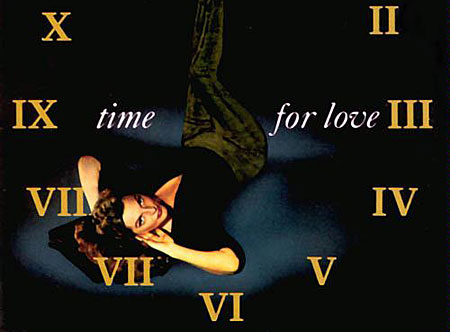 As far as I can tell, the Rhino remaster is the most readily available CD compilation that presents her mono tracks in their original form. Of course, because Julie London was Billboard's Female Vocalist of the Year for 1956, '57, and '58, there should be no shortage of original vinyl available on the used market—just watch out for the later, phonily "stereoized" LP rereleases.
I find Time for Love fascinating on at least three distinct levels. As a best-of compilation, it does a good job of showing London's range as a singer: from the admittedly rare performances—such as "I Surrender, Dear," "I'm in the Mood for Love," and, of course, "Cry Me a River"—that are on the same level of quality as Ella Fitzgerald's work, to the camp, crowd-pleasing, corny, or cringe-inducingly cloying numbers that doubtless helped establish her popularity. The occasional dopey song is what it is, but London's gems are truly gems. She was the first popularly successful female jazz vocalist who had not come up through the big-band circuit. Rather, London's musical roots were in post-WWII West Coast small-combo and "cool" jazz.
I think that London's "I Surrender, Dear" is almost as engrossing—and revealing—a performance as my longtime favorite test track for female vocals, "Easy to Love," from Ella Fitzgerald Sings the Cole Porter Song Book, Volume Two. While Fitzgerald's "Easy to Love" is available as a 99¢ download from Amazon.com, that doesn't seem to be the case with London's "I Surrender, Dear." The obstacle should not prove insurmountable. If they don't already have it, your public library should be able to get Time for Love through interlibrary loan. Also, used copies are readily available, through Amazon.com or eBay, for about six bucks. Eminently well worth checking out.
Second, Time for Love once again proves that access to more sophisticated technology, or a larger budget for backing musicians, does not necessarily make for more artistic or enjoyable recordings. Some of the best tracks are the mono ones from London's first album, on which she was accompanied only by Barney Kessel's guitar and Ray Leatherwood's string bass. On some of the later tracks, artificial reverb leaves some smudgy fingerprints. And, more often than not, the sighing strings are overdone. Perhaps sensing this trend, London recorded her 11th LP in her own living room, and titled it Julie .†.†. At Home. Her total output was more than 30 albums.
Third, from the standpoint of cultural anthropology: Anyone today who thinks that the 1950s were uniformly repressed, puritanical, and sexless should give a listen as London sings:
If I invite a boy some night
As far as I can tell, the Rhino remaster is the most readily available CD compilation that presents her mono tracks in their original form. Of course, because Julie London was Billboard's Female Vocalist of the Year for 1956, '57, and '58, there should be no shortage of original vinyl available on the used market—just watch out for the later, phonily "stereoized" LP rereleases.
I find Time for Love fascinating on at least three distinct levels. As a best-of compilation, it does a good job of showing London's range as a singer: from the admittedly rare performances—such as "I Surrender, Dear," "I'm in the Mood for Love," and, of course, "Cry Me a River"—that are on the same level of quality as Ella Fitzgerald's work, to the camp, crowd-pleasing, corny, or cringe-inducingly cloying numbers that doubtless helped establish her popularity. The occasional dopey song is what it is, but London's gems are truly gems. She was the first popularly successful female jazz vocalist who had not come up through the big-band circuit. Rather, London's musical roots were in post-WWII West Coast small-combo and "cool" jazz.
I think that London's "I Surrender, Dear" is almost as engrossing—and revealing—a performance as my longtime favorite test track for female vocals, "Easy to Love," from Ella Fitzgerald Sings the Cole Porter Song Book, Volume Two. While Fitzgerald's "Easy to Love" is available as a 99¢ download from Amazon.com, that doesn't seem to be the case with London's "I Surrender, Dear." The obstacle should not prove insurmountable. If they don't already have it, your public library should be able to get Time for Love through interlibrary loan. Also, used copies are readily available, through Amazon.com or eBay, for about six bucks. Eminently well worth checking out.
Second, Time for Love once again proves that access to more sophisticated technology, or a larger budget for backing musicians, does not necessarily make for more artistic or enjoyable recordings. Some of the best tracks are the mono ones from London's first album, on which she was accompanied only by Barney Kessel's guitar and Ray Leatherwood's string bass. On some of the later tracks, artificial reverb leaves some smudgy fingerprints. And, more often than not, the sighing strings are overdone. Perhaps sensing this trend, London recorded her 11th LP in her own living room, and titled it Julie .†.†. At Home. Her total output was more than 30 albums.
Third, from the standpoint of cultural anthropology: Anyone today who thinks that the 1950s were uniformly repressed, puritanical, and sexless should give a listen as London sings:
If I invite a boy some night
To dine on my fine finnan haddie,
I just adore his asking for more
'Cause my heart belongs to Daddy. Somehow, I think that when Cole Porter wrote that lyric in 1938, he wasn't thinking of Scottish smoked haddock. I don't think London was, either. In the same vein are the song "Daddy" 's kept woman's shopping list ("Daddy, I want a brand-new car / Champagne, caviar..."), and "Go Slow" 's suggestively whispered "You make me feel so good." London had been a popular pinup girl during WWII. Her album covers were in that genre, and sometimes the titles, too, as in Nice Girls Don't Stay for Breakfast. So, in retrospect, isn't it peculiar that people got all bent out of shape over the Beatles as a threat to the morals of the nation's youth? All the Beatles sang was "I Want to Hold Your Hand." In comparison, some of Julie London's work crossed the line into auditory soft-core porn. Still and all, her best tracks are exemplars of the art of the female vocal. If you don't know them, you should hear a few.
The Search Continues
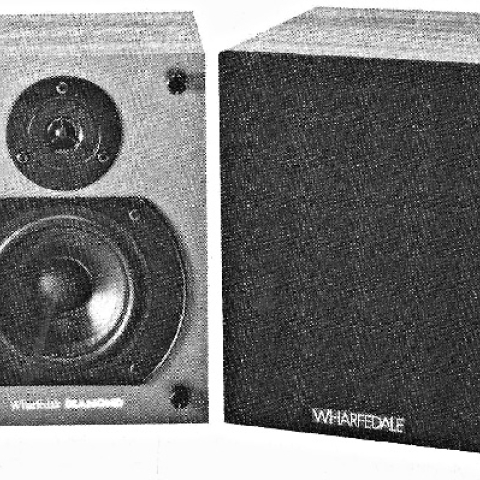
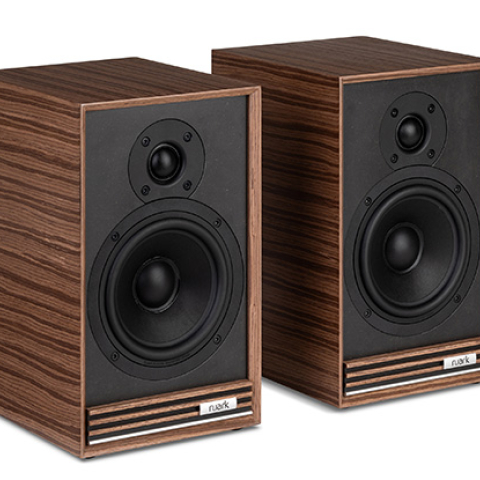
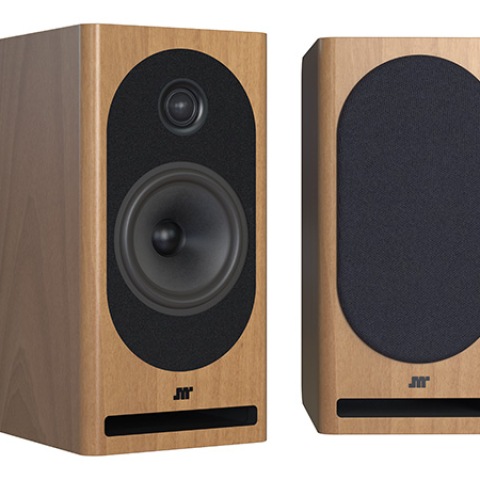
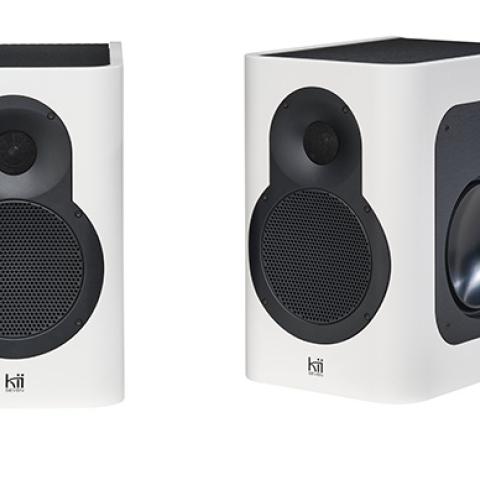
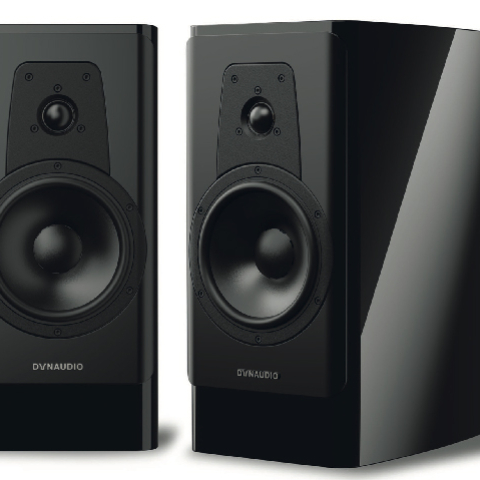
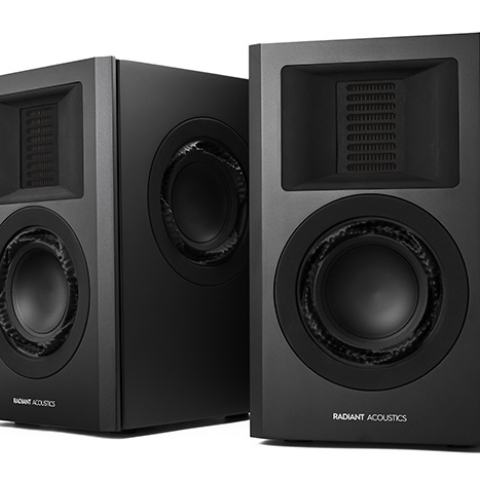
In February's "The Fifth Element," I began the quest for an affordable music-lover's stereo system. I'm specifically interested in finding affordable speakers that do not come up noticeably short in bass extension, particularly for classical music—even though, of course, this factor will also make a difference for jazz, rock, and pop. My frustration with otherwise good speakers with no deep bass to speak of was pushed past the tipping point by Pioneer's tiny Pure Malt speakers, which I wrote about in December 2007. In my April column I spent some time barking up the wrong tree of Sony's first-generation PlayStation as a CD-playing source. Furthermore, sequential episodes of shipping damage to one pair of candidate speakers delayed meaningful comparisons. There are even more pairs of speakers on the way (and perhaps another DVD/CD receiver or two), but this time out I want to talk about three speakers, each excellent in its own way, that offer superb value for money and do not come up noticeably short in the bass department.
As a way of quantifying what I was talking about, in the February issue I included a sidebar with a table relating driver diameter and frontal area—not an intuitive relationship for most of us. To cite one example, an 8" driver has four times the frontal area of a 4" driver. I held up the ca-1976 Fried Products Company Q/2 as an example of an outstanding budget speaker for music lovers; and indeed, that speaker had an 8" mid-woofer.
All loudspeaker designs involve compromise, even if the only aspect compromised is that of affordability. Especially among "affordable" speakers, designers must trade off such incompatible virtues as cabinet size, bass extension, fit'n'finish, and price. A certain market basket of compromises may fit your wants and needs better than it does mine. Therefore, you should take my reactions here as only a rough guide, probably to a greater extent than were I talking about speakers costing over $5000/pair, for which, we assume, there is enough money in the design budget to meet most goals.
As far as I can tell, the Rhino remaster is the most readily available CD compilation that presents her mono tracks in their original form. Of course, because Julie London was Billboard's Female Vocalist of the Year for 1956, '57, and '58, there should be no shortage of original vinyl available on the used market—just watch out for the later, phonily "stereoized" LP rereleases.
I find Time for Love fascinating on at least three distinct levels. As a best-of compilation, it does a good job of showing London's range as a singer: from the admittedly rare performances—such as "I Surrender, Dear," "I'm in the Mood for Love," and, of course, "Cry Me a River"—that are on the same level of quality as Ella Fitzgerald's work, to the camp, crowd-pleasing, corny, or cringe-inducingly cloying numbers that doubtless helped establish her popularity. The occasional dopey song is what it is, but London's gems are truly gems. She was the first popularly successful female jazz vocalist who had not come up through the big-band circuit. Rather, London's musical roots were in post-WWII West Coast small-combo and "cool" jazz.
To dine on my fine finnan haddie,
I just adore his asking for more
'Cause my heart belongs to Daddy. Somehow, I think that when Cole Porter wrote that lyric in 1938, he wasn't thinking of Scottish smoked haddock. I don't think London was, either. In the same vein are the song "Daddy" 's kept woman's shopping list ("Daddy, I want a brand-new car / Champagne, caviar..."), and "Go Slow" 's suggestively whispered "You make me feel so good." London had been a popular pinup girl during WWII. Her album covers were in that genre, and sometimes the titles, too, as in Nice Girls Don't Stay for Breakfast. So, in retrospect, isn't it peculiar that people got all bent out of shape over the Beatles as a threat to the morals of the nation's youth? All the Beatles sang was "I Want to Hold Your Hand." In comparison, some of Julie London's work crossed the line into auditory soft-core porn. Still and all, her best tracks are exemplars of the art of the female vocal. If you don't know them, you should hear a few.
In February's "The Fifth Element," I began the quest for an affordable music-lover's stereo system. I'm specifically interested in finding affordable speakers that do not come up noticeably short in bass extension, particularly for classical music—even though, of course, this factor will also make a difference for jazz, rock, and pop. My frustration with otherwise good speakers with no deep bass to speak of was pushed past the tipping point by Pioneer's tiny Pure Malt speakers, which I wrote about in December 2007. In my April column I spent some time barking up the wrong tree of Sony's first-generation PlayStation as a CD-playing source. Furthermore, sequential episodes of shipping damage to one pair of candidate speakers delayed meaningful comparisons. There are even more pairs of speakers on the way (and perhaps another DVD/CD receiver or two), but this time out I want to talk about three speakers, each excellent in its own way, that offer superb value for money and do not come up noticeably short in the bass department.