Integrated Amp Reviews

Sort By:  Post Date TitlePublish Date

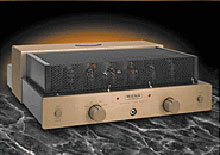
Mesa Tigris integrated amplifier

Obviously, no one wants to listen to exaggerated bass, italicized highs, or colored mids. But if you (as I have in the past few months) plug in several high-quality integrated amplifiers, each designed to a different price point, into the same basic signal chain, you'll experience a wide disparity of sound signatures.

Onkyo A-9555 integrated amplifier

"Onkyo Returns to its Stereo Roots to Debut New Digital Amplifier Technology." This heading of the press release for Onkyo's A-9555 digital integrated amplifier was surely intended to warm the cockles of the two-channel audiophile's heart. Some of us remember the Onkyo Grand Integra amplifiers of the 1980s, which were considered competitive with the big Krells and Mark Levinsons of the day. To refresh my memory, I looked through my Stereophile archives and found the December 1985 issue (Vol.8 No.8), which included Larry Greenhill's review of the Grand Integra M-510, a 300Wpc power amplifier covered in lacquered persimmon wood, weighing 139 lbs, and costing $4200 (about $8000 in 2007 dollars). Larry was most impressed with the M-510, describing it as "a very powerful amplifier with outstanding sonics across the board—power with delicacy."


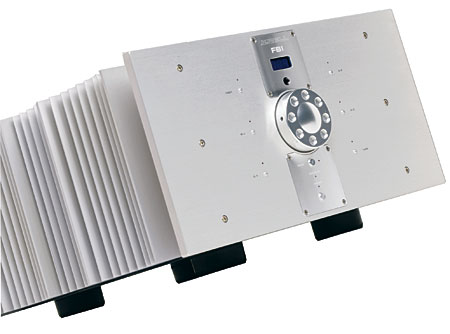
Krell FBI integrated amplifier

There's something a bit oddball about the notion of a $16,500 integrated amplifier—until you stop to consider that the market is fairly drenched with preamps and power amps that, together, cost that much and more. And putting both pre- and power amp in a single chassis cuts down on storage (one less shelf), accessories (one less pair of cable), and electrical outlets (one socket freed up).

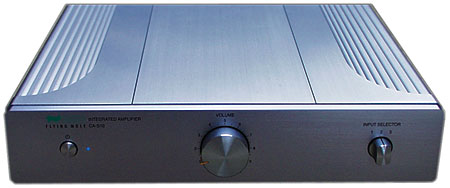
Flying Mole CA-S10 integrated amplifier

The naming of audio companies is a tricky business. Ideally, the name should be distinctive, so that people will remember it, and descriptive of the products. However, given the proliferation of audio manufacturers, it's getting more and more difficult to come up with a name that fulfills these criteria, and some names are similar enough to lead to confusion. In one of my show-report blog entries from the 2007 Consumer Electronics Show, instead of correctly listing a company name as Divergent Technologies, I called it Definitive Technologies, which is the name of an another audio company—and was rightly chastised for it in a comment by a reader. I'll bet that no such confusion will occur in the case of Flying Mole Electronics. (As far as I know, there is no Flying Groundhog Electronics.)

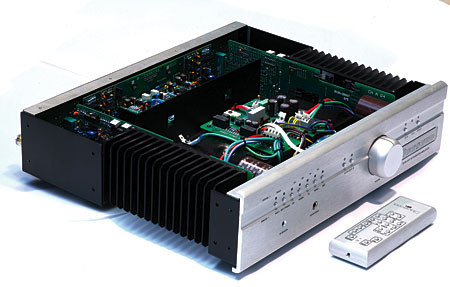
Bryston B100-DA SST DAC/integrated amplifier

Over the years, I have used and enjoyed in my audio system large, single-purpose components. Each of these chassis has had but one role: preamplifier, amplifier, digital-to-audio converter (DAC), etc. I guess I've been just a little suspicious of products with multiple functions crammed into a single small chassis; I've figured that the designer may have cut a corner that could affect the sound.

Denon AVR-4800 THX Ultra digital surround receiver

July came in this year like September: cool, crisp night air and bright, clear days. The humidity and temperature remained low throughout the week I spent setting up the Denon AVR-4800 surround A/V receiver. So, crouched down behind its crowded rear panel, wiring up eight loudspeakers and multiple inputs, I wasn't sweating from the temperature. Launching the new multichannel Denon AVR-4800's surround audio-visual system required hard work, trial and error, and an emergency trip to the UPS terminal in the Bronx. While there were great musical pleasures ahead, the path to music-surround knowledge was rougher than I ever imagined it might be.

Advertisement
Advertisement
Advertisement