Interviews

Sort By:  Post Date TitlePublish Date

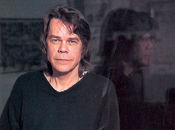
Tim de Paravicini: Dialing-in the Original Experience

Meeting Englishman Tim de Paravicini for the first time, you start to wonder if your mind has slipped a gear, whether premature brain fade has cut in. The conversation seems not only to be racing by unexpectedly quickly, but also subjects you hadn't even realized were subjects are being examined in knowledgeable depth. It was at the end of the 1970s that I bumped into Tim at a trade show in the UK; having wanted to ask his opinion of tube-amp design, knowing that the gangling, wispy-bearded, Nigeria-born, one-time resident of South Africa and Japan, ex-Lux engineer (footnote 1) had cast a magic wand over the Michaelson & Austin product line, I found myself instead being treated to an exposition of color phosphor problems in TV monitors. For Tim is a true polymath, his mind seemingly capable of running at high speed along several sets of tracks simultaneously.
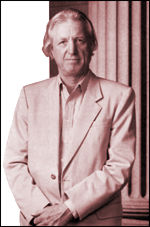
Jim Winey: Maggies Man

The Pennsylvania Gazette documented an early connection between music and an American named Winey when, in 1759, it listed for sale as part of an estate "a middle sized organ, having eight stops." Interested parties were directed to one Jacob Winey, a Philadelphia merchant.

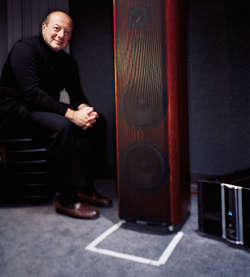
Dan D'Agostino of Krell: Power Is As Power Does

Maybe Dan D'Agostino was destined to develop and build a line of products distinguished by their sheer might. After all, he grew up just blocks from a natural phenomenon synonymous with power: Niagara Falls. Even today, when the 56-year-old D'Agostino returns to his boyhood home to visit his parents, he enjoys pulling on a pair of shorts and going for a long run in the adjacent park, which resounds with the Falls' unrelenting thunder.

Ikonoklast: Linn's Ivor Tiefenbrun

In July 1877, Thomas Edison wrote that he was sure he would "be able to store up & reproduce at any future time the human voice perfectly," and the word phonograph soon began showing up in his lab notes. By the time Ivor Tiefenbrun stepped onto the audio industry soundstage, nearly a century had passed, and even discriminating listeners took the record player for granted. But Tiefenbrun had discerned sonic differences among players, and he knew that his LP12—he had built a prototype for personal use—was a superior performer. When people told him that turntables do no more than go 'round and 'round, he would rebut them by pointing out that speakers merely go in and out.

The Fifth Element #1

From the days of Les Paul's chum Mary Ford, through Amanda McBroom and Jennifer Warnes, right up to Patricia Barber, audiophiles have been fascinated, and sometimes obsessed, with female vocals. I nominate to membership in that select sorority another Patricia, in this case O'Callaghan, whose third CD has just been released worldwide by her new label, Teldec.

Carla Bley: The Further Adventures of the Lone Arranger

Even though she calls her new band, 4x4, a "small" group, it's a big band—almost too big for the stage of the Knitting Factory on the night of October 11, 2000, as it makes its first American appearance. Bley's piano is so far to stage left, she has to lean against the wall and stoop under a hanging monitor speaker to address the audience. Four music stands dominate the rest of the apron—her front line of tenor saxophone, alto saxophone, trumpet, and trombone stand shoulder to shoulder, blocking the audience's view of Larry Goldings and his Hammond B3, drummer Billy Drummond, and bassist Steve Swallow, who stands 15' back and on a riser. If she'd showed up with her 17-piece band, they'd have had to have hung the horn sections from the rafters, like the sound system.

Advertisement
Advertisement
Advertisement