Music and Recording Features

Sort By:  Post Date TitlePublish Date

Manfred Eicher: "You Can't Record Everybody"

There has never been a record producer like Manfred Eicher, founder and sole proprietor of ECM records, the German-based jazz (and sometimes classical) label that celebrates its 50th anniversary this month.

Eicher doesn't quite win the all-time prize for longevity. Edward Lewis started Decca (UK) in 1929 and owned it until 1980. David Sarnoff controlled RCA from 1919–1970. William Paley did the same at Columbia from 1938-1988. But unlike those other, financially heftier titans, who deferred to department heads and studio producers, Eicher has supervised every single one of ECM's albums—more than 1600 of them.

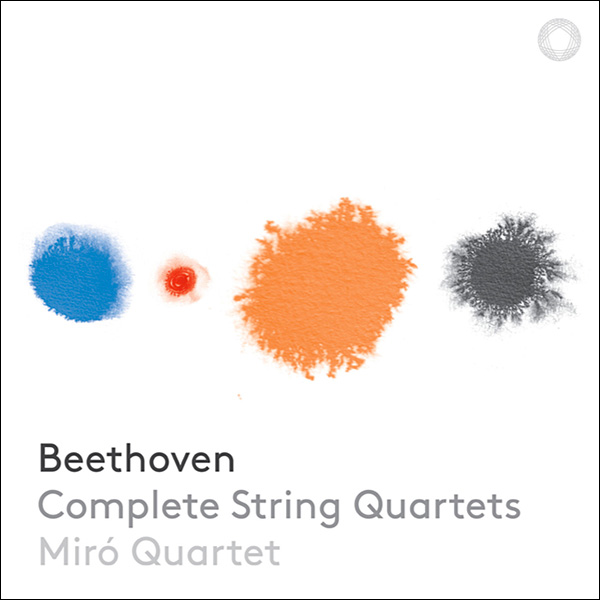
Beethoven for Four, in All Its Glory

As the 250th anniversary of the birth of Ludwig van Beethoven approaches, artists worldwide have begun issuing complete recordings of his oeuvre. At the top of a fast-growing list, three stand out: Andris Nelsons' recording of Beethoven's nine symphonies with the Wiener Philarmoniker (Decca), Igor Levit's issue of Beethoven's Complete Piano Sonatas (Sony), and the subject of this review, the Miró Quartet's 8-CD set of Beethoven's Complete String Quartets (Pentatone PTC5186827).

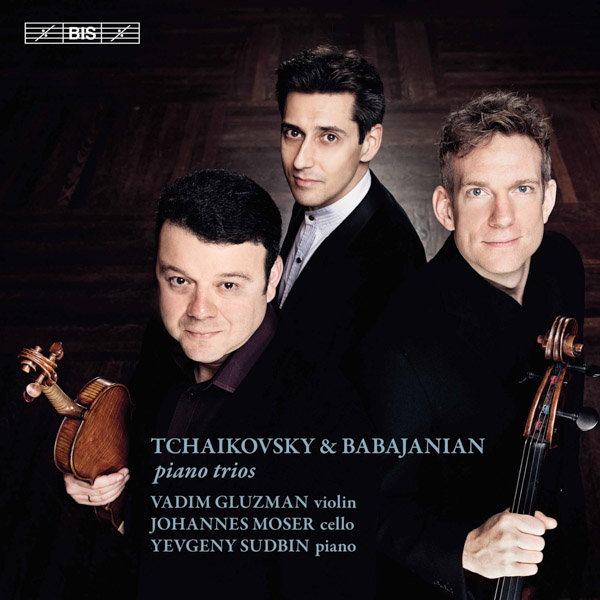
Russian Romantic Piano Trio Bonanza

Romantics rejoice! In an age where ice seems to melt faster than hearts, there are still great musicians who uphold the Russian tradition of romantic music. Vadim Gluzman, Johannes Moser, and Yevgeny Sudbin may not (yet) have the cachet of David Oistrakh, Mstislav Rostropovich, and Sviatoslav Richter, who famously came together with Herbert von Karajan to record Beethoven’s Triple Concerto, but their new SACD of Tchaikovsky’s Piano Trio in A minor, Op. 50, and Arno Babajanian’s sole Piano Trio (BIS-2372) places them firmly in the grand Russian tradition of emotive, give-it-all-you’ve-got musicianship.

Chick Corea: Pioneering Jazz Pianist

Armando Anthony "Chick" Corea belongs to that elite cadre of pianists that includes Herbie Hancock, Keith Jarrett, and Mccoy Tyner, pioneers who reshaped the jazz or- der starting in the early 1960s and continued to make strides into the present day.

The now-78-year-old Corea's attainments are many: composer of the standards "la fiesta," "Spain," "500 Miles High," "Matrix," and "Windows"; winner of 22 Grammy Awards (and 64 nods); founder of at least six colossal improvising units (Return to Forever I and II, Circle, the Three Quartets quartet, the Chick Corea Elektric Band, the Vigil Quintet); popularizer of early monophonic synthesizers, and recipient, in 2006, of an NEA Jazz Masters award.

A Magic Flute Delights and Surprises

A divine amalgam of joy and solemnity and one of Mozart’s most spiritually elevated creations, Die Zauberflöte (The Magic Flute) brings each generation's finest conductors and singers to the microphone. Now, Metropolitan Opera conductor Yannick Nézet-Séguin and tenor-cum-baritone Rolando Villazón and the Chamber Orchestra of Europe add to their series of Mozart recordings for Deutsche Grammophon with a star-studded version that includes some of the best young and veteran artists of our time.

Giant Step Arts: a Visionary Jazz Concept

Early in 2019, three jazz CDs appeared on a new record label. They were Jason Palmer's Rhyme and Reason, Johnathan Blake's Trion (both double CDs), and Eric Alexander's Leap of Faith. The label was Giant Step Arts.

Given that hundreds of jazz records—many of them good— are released every month, and that new jazz labels pop up all the time, is the release of three new albums really news?

Verve Gets Vital

Back when the vinyl resurgence was only a gleam in Michael Fremer's eye, most major record labels just couldn't be bothered with the LP. Fans of such masterpieces as Relaxin' with the Miles Davis Quintet, John Coltrane's Blue Train, and Charles Mingus's Blues & Roots had to make do with poor-quality vinyl reissues from small EU-based labels. Sure, there were—and continue to be—audiophile-quality reissues from such companies as Analogue Productions and Speakers Corner, but they often came at a premium price, and a great many classic jazz titles remained unavailable as new, high-quality LPs.

John Adams

American composer John Adams and I first met in the late 1970s, when I became one of his composition students at the San Francisco Conservatory of Music. My recollections from those days endure as near-cinematic images: John lugging his homemade synthesizer—he called it "the Studebaker"—down the hall prior to meeting me at his office; an early performance, at Mills College in Oakland, of Adams's Shaker Loops (footnote 1) for string septet; sitting with Adams during rehearsals for the 1981 premiere of his choral symphony Harmonium (footnote 2), with Edo De Waart and the San Francisco Symphony.
Advertisement
Advertisement
Advertisement