Music and Recording Features

Sort By:  Post Date TitlePublish Date

Stilling Heartbreak from Weinberg

Lithuanian conductor Mirga Gražinytė-Tyla's (b. 1986) rendition of Polish-Jewish composer Mieczysław Weinberg's (1919–1996) final symphony, which is dedicated "to the memory of those who were murdered in the Warsaw Ghetto," has all the earmarks of a life-affirming Record to Die For. Rarely have I heard such hallowed silence, absolute control, and reverence for life and beauty from a conductor so young. For those willing to explore the mysteries of exquisite sadness amidst suffering, this recording cries out.

Branford Marsalis: Listening with Sonic Ears

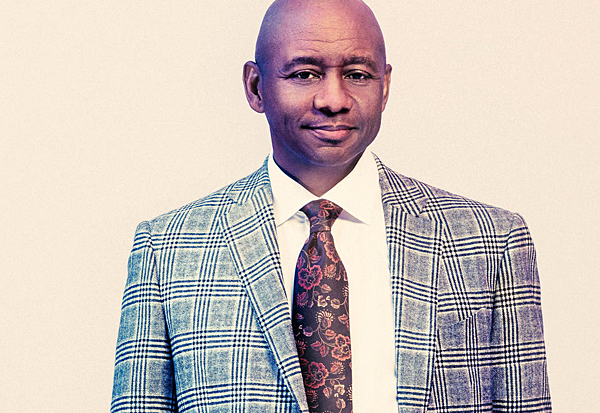
Louisiana-born, 58-year-old saxophonist Branford Marsalis has achieved singular status in the worlds of both jazz and classical music. He cut his teeth playing hard-hitting hard bop with Art Blakey's Jazz Messengers, led The Tonight Show band, and kicked it with the Grateful Dead. He's toured and recorded with Sting, costarred in the Spike Lee film School Daze (1988), and made his classical debut with the New York Philharmonic performing Glazunov's Concerto for Alto Saxophone on Central Park's Great Lawn.

Don Was: What Was Will Be

Don Was is a music lover. Looking at his extensive discography as a record producer and musician, one is struck by the variety of artists he's worked with: from Iggy Pop to the B-52's, from Roy Orbison to Elton John, with over half a dozen stops along the way as producer for a little band called the Rolling Stones. In 2017, Was produced Gregg Allman's final studio album, Southern Blood (Rounder 610005). And when you include all the music he's had a hand in since 2012, when he became president of Blue Note Records, you're talking about one busy little red hen helping to bake a lot of bread.

Honoring Hector Berlioz

It's 150 years since that quintessential French Romantic, Louis-Hector Berlioz (1803–1869), left the planet. A near-contemporary of the equally romantic Chopin, Gounod, Schubert, Schumann, Mendelssohn, and Liszt, Berlioz shared with Meyerbeer (1791–1864) and Wagner (1813–1883) a propensity to express his passions and fantasies in music that sometimes unfolded slowly as it extended drama to extraordinary lengths.

Jean-Michel Jarre: Organic meets Electronic

"I have an organic approach toward music but I've always been interested in electronics," says Jean-Michel Jarre, whose luxurious electronic pop conquered the world in 1976 with his hit album Oxygène. Even today, Oxygène's bubbling tones and saturated textures provide a blissful sonic experience. "I love jazz because of its organic approach to sound, and I've been influenced by that. I always thought that jazz and electronic music have much more in common than we think."

John Coltrane's 1963: New Directions

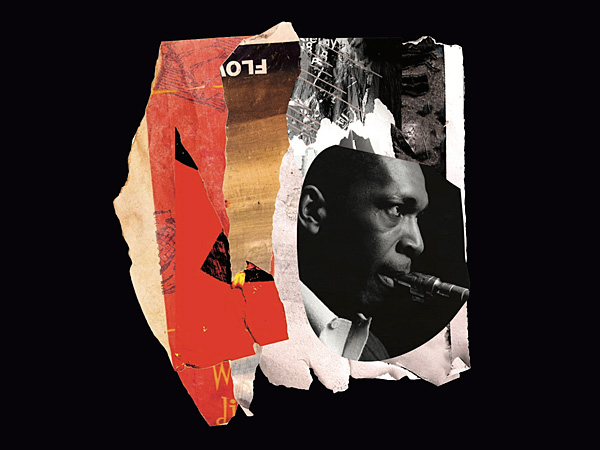
Only a few months after the extraordinary news and release of John Coltrane's Both Directions at Once: The Lost Album on Impulse! Records, which revealed the tenor and soprano saxophonist deep in transitional mode, comes Universal Music/Verve's attempt to cash in on the Trane fever. Joining music from The Lost Album with selections from other albums recorded by Coltrane in that year, 1963: New Directions brings Coltrane's legacy to our commercially crass, modern marketplace.

Shostakovich's Devastating Impact

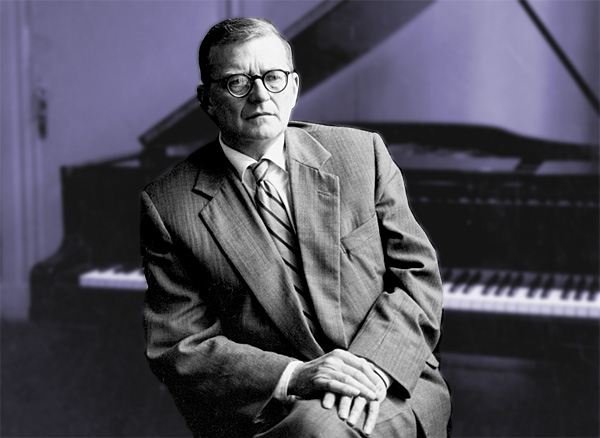
Dmitri Shostakovich (1906–1975) was hardly the first composer to run headfirst into opposition from political authorities. In his case, however, the pushback was so extreme that it affected everything he wrote thereafter.

In early 1936, after the style and subject matter of his opera Lady Macbeth of Mtsensk clashed with the so-called proletarian aesthetic of Russian dictator Joseph Stalin (1878–1953), Shostakovich was denounced by the official state newspaper, Pravda. From then on, his symphonies reflected either his defiance of decades of Socialist realism, or attempts to appease the authorities while still speaking his truth.

Wayne Shorter: How the Future Would Be

Wayne Shorter is 85. His mind moves at warp speed, a million miles from Art Blakey's Jazz Messengers, who rescued him from Newark, New Jersey—or the Miles Davis's second great quintet, for which the saxophonist wrote the compositions that would establish his genius. Shorter's constellation of classic Blue Note recordings from 1964–67—Night Dreamer, JuJu, The All Seeing Eye, ETC, The Soothsayer, Adam's Apple, Speak No Evil, Schizophrenia—is now but a dim cluster of stars in his ever-expanding musical galaxy.

Mission Accomplished: Du Pré's Elgar

The stars lined up.

According to biographer Charles Reid, the British conductor Sir John Barbirolli "burned with Elgarian zeal," attributable in part to Barbirolli's participation, as a young cellist in the London Symphony Orchestra of 1919, in the premiere performance of Edward Elgar's Cello Concerto. That performance, conducted by the composer and with Felix Salmond as soloist, was a disaster—Elgar's rehearsal time had been cut short by a lack of cooperation from another conductor on the bill, a slight the composer never forgave—yet from then on, the 19-year-old Barbirolli regarded Elgar's music with reverence.

Advertisement
Advertisement
Advertisement