Music in the Round

Sort By:  Post Date TitlePublish Date

Music in the Round #49
Things move fast in multichannel. No, I'm not referring to the speed of sound effects as they whip around a room—let's leave that for the home-theater mags. I'm talking about audio technology. Since I began writing this column in June 2003, we've seen serious technological changes almost annually, some driven by real needs, some imposed by marketing considerations. To me, the rate of change seems strikingly rapid, compared to that of the products I review for the main portion of Stereophile, based, as they are, in the two-channel world.
Music in the Round #48

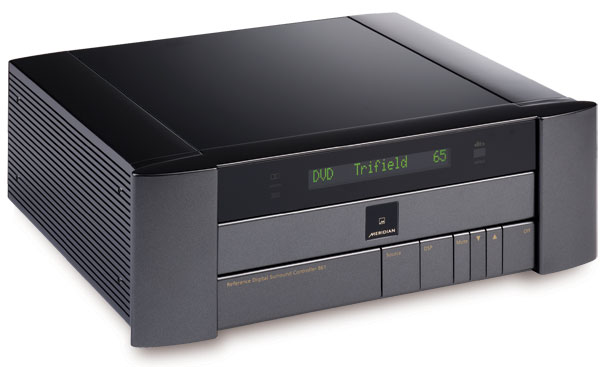
Kal reviews the Yamaha Aventage BD-A1000 universal Blu-ray player and remarks "a sharp-looking, great-sounding machine that will play any extant digital format well. It sounded better in my better system, where I could really relish its low-frequency performance." He also takes a listen to the Meridian 861 Reference v6 Digital Surround Controller and ponders "how to reconcile the internal complexity of Meridian's 861 Reference v6 with the disarming purity of the sounds it reproduces?"

Music in the Round #47

The AV7005 is Marantz's second multichannel preamplifier-processor and, at $1499.99, the least expensive pre-pro I've used or reviewed. The Integra DTC-9.8, which has been resident in my stable since 2007, when it cost $1600, and its successors, have since then steadily risen in price. The Marantz's predecessor, the AV8003 ($2599.99), was highly praised in many quarters. I never got my hands on one because, like a churlish child, I felt it lacked features I considered essential. Other reviewers didn't seem bothered by those limitations, or were unaware of them. The AV7005, however, looks and feels like a winner for music and home theater. I see no evidence of skimping—the AV7005 sports such high-end features as balanced outputs, network controllability and streaming, and, of course, HDMI v1.4a for compatibility with 3D and all audio codecs.

Music in the Round #46

As I wandered the displays and demonstrations at the 2010 CEDIA Expo last September, I found few multichannel products worth writing about. Sure, there were many interesting new speakers from Pioneer, GoldenEar, Atlantic Technology, Adam Audio, MartinLogan, and others, but really, you could just use two for stereo. I saw the requisite number of new multichannel players, processors, and receivers, but most boasted no more than some new features that made them easier to use (iPad apps were rife) and/or gave them access to new sources (audio and video streaming were obligatory).

Music in the Round #45

I remember my first experience with headphones. In 1960, I bought a set of Trimm dual 'phones (less than $5) and rewired them for stereo. The experience was remarkable for several reasons. First, it brought the sounds into my head—I was thrilled with the impact. Second, stereo effects, especially with Enoch Light's ping-pong LPs (eg, Provocative Percussion, Command RS800SD), were striking. Third, I could play them really loud without bothering others. Of course, they had no bass, brittle treble, distorted at high levels, and their wire headband and Bakelite earpieces were uncomfortable. My fascination with this gimmick quickly faded.

Music in the Round #44

When I started">http://www.stereophile.com/musicintheround/854">started out on my multichannel mission in 2000, it was with an all-digital Meridian">http://www.stereophile.com/floorloudspeakers/201">Meridian system that relied on lossy, compressed sources like the original Dolby Digital and DTS formats, or on synthesized surround based on Dolby Pro-Logic or Meridian's own TriField. With the appearance of first SACD and DVD-Audio and then Blu-ray, discrete lossless multichannel recordings became available, but there was no way to output those signals in digital form for interconnection to other components for playback or further manipulation. Most audiophiles, me included, already had analog preamps and power amps. It was only with the appearance of HDMI and the accompanying HDCP content protection that we could output those digital signals, and over a single cable to boot. Today, there are A/V receivers, some costing less than $500, and more than a handful of audiophile-oriented preamp-processors, that can accept such lossless high-resolution multichannel content as PCM, DSD, Dolby TruHD, and dtsHD Master Audio.

Music in the Round #43

The debate over which audio component is most important in determining the quality of a system's sound is one that has been with us for decades. Recently, it came up in a conversation I had during a visit to a Manhattan high-end shop, when I was told about a discussion on the topic by Ivor">http://www.stereophile.com/interviews/1101ivor">Ivor Tiefenbrun (of Linn) and David">http://www.stereophile.com/interviews/690wil">David Wilson (of Wilson Audio Specialties). You don't have to be a seasoned audiophile to predict their respective positions, but when I was pressed to take a stand, I paused.

Music in the Round #41

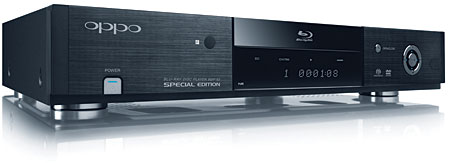
It was only a few">http://www.stereophile.com/musicintheround/music_in_the_round_37/index2… months ago that I greeted Oppo Digital's BDP-83 universal Blu-ray player as a breakthrough consumer component, and it became a Runner-Up for Stereophile's Budget Product of 2009. It now appears that Oppo is using the design as a base on which to develop similar and more advanced products, both for themselves and for a good many other manufacturers. Some may take exception to my use of the word manufacturers—if it's an Oppo under the skin, what, precisely, are these other "manufacturers" contributing? Well, that's hardly a new question.

Music in the Round #40

It seems only yesterday, but it's been 10 years since I began using the original Paradigm">http://www.stereophile.com/subwoofers/955">Paradigm Reference Servo-15 subwoofer in my system. It was good then, and it still is, although a lot around it has changed. At first, I hooked it up via Paradigm's X-35 crossover, then via a Technics SH-AC500D surround processor, and finally to the subwoofer/LFE outputs of the various preamplifier-processors and A/V receivers I've used. Y'see, the Servo-15 is just a powered sub. It has an amp and a level control, but no crossover, no channel mixing, and no phase control. Just plug in the signal and it plays it. Along came in-room response correction from Audyssey, Anthem, Velodyne, etc., and the Servo-15 became an even better sub. For music, it entirely satisfies my needs.

Advertisement
Advertisement
Advertisement