Phono Cartridge Reviews

Sort By:  Post Date TitlePublish Date

Spin Doctor #30: The Belleson Radiance & EBI Audio Khumar
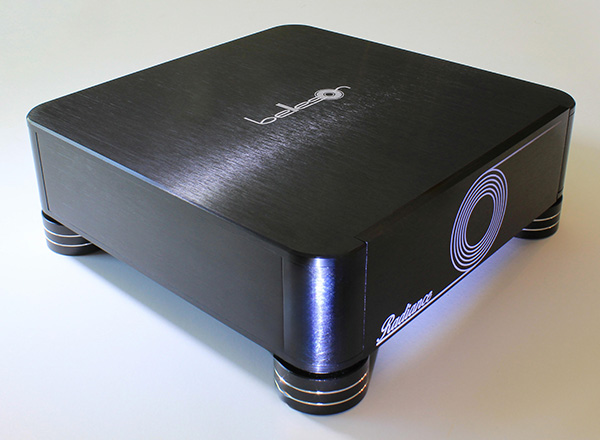
As the Spin Doctor, I tend to lead an analog life. I'm not just talking about my preferred ways of listening to music, but also my approach to other everyday technology. For decades, there has been a push to turn everything we use into a connected, "smart" device. We now have technology that allows us to change the color temperature of the lights in our living room while we sit on the sofa, or to answer our front doorbell from the other side of the world. I prefer an older-school approach.
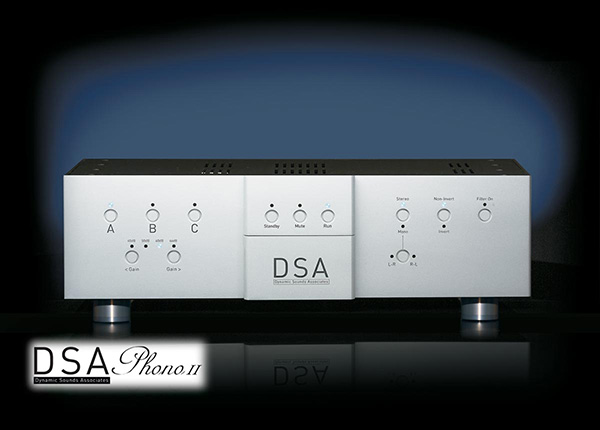
Analog Corner #219: DSA Phono II preamplifier, Stein Music and Miyajima phono cartridges

Shortly after the July 2013 issue of Stereophile hit the newsstands, I received an e-mail from audio restoration expert Doug Pomeroy, who specializes in the digital preservation of disc pressing metal parts, acetates, and 78s . . . His and my opinions about digital sound couldn't be more divergent.

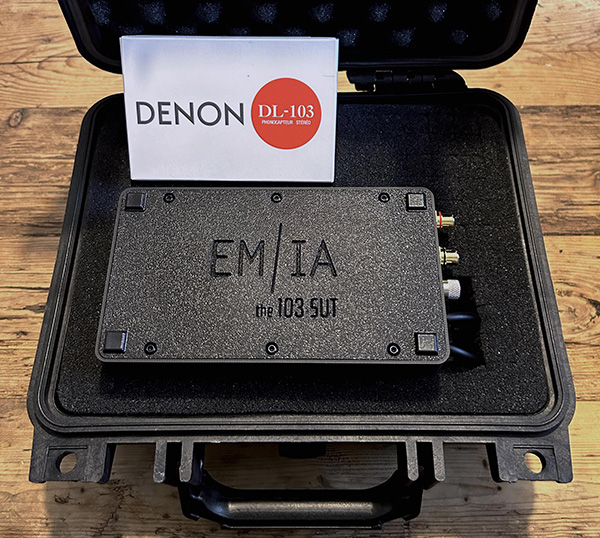
Gramophone Dreams #100: the Schiit Stjarna again, the Denon DL-103, the EM/IA 103 SUT

My Russian neighbor Alex forges ax heads and smokes pig chests 5' from my bedroom window. At 2:00am, shirtless, in February. One especially cold night, I woke up to the sounds of hammering and loud music. When I looked out, Alex was blacksmithing a glowing red meat cleaver blade, with Rachmaninoff plays Rachmaninoff blaring from a cassette in his boom box.

Spin Doctor #26: The Sorane TA-1 tonearm and the Ortofon MC 90X phono cartridge

A friend who sells high-end audio gear once pointed out that people who shop for separate tonearms are very different from those interested in phono cartridges or turntables in general. If you think about it, this makes sense. Almost everyone buying a new turntable needs a cartridge to go with it, and most turntables come equipped with a tonearm. Tonearm shoppers are more avid enthusiasts than general consumers.

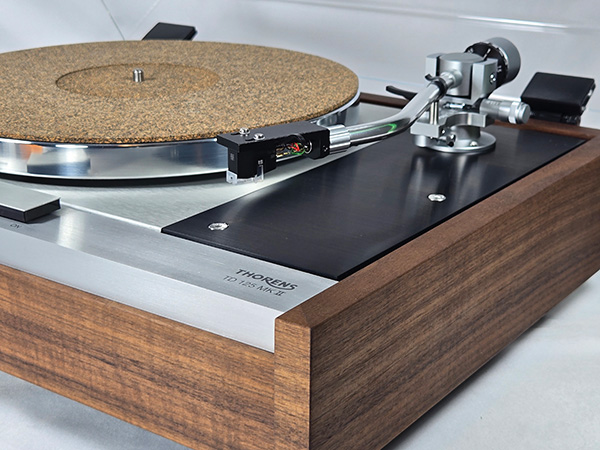
It wasn't always that way. In earlier days of high fidelity, 60 or more years ago, people putting together a cutting-edge phono playback system would typically buy what was known as a motor unit: a Thorens TD 124, Garrard 301, or a few years later the Garrard 401 or Technics SP-10. They would match it up with a tonearm from a company like SME or Ortofon.

Gramophone Dreams #98: Woo WA24 headphone amplifier, Lyra & Hana phono cartridges

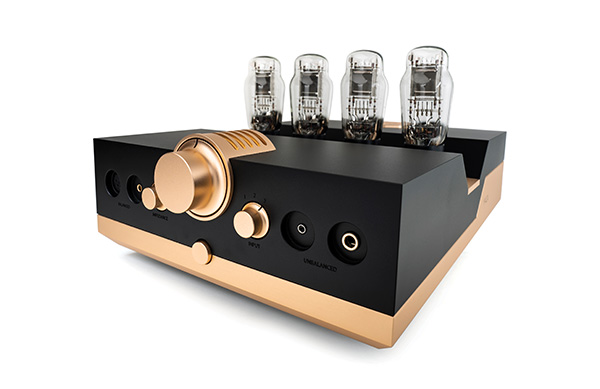
Woo Audio's 20th Anniversary WA24 headphone amplifier comes in a distinctive, low-slung chassis that welcomes the eye with gentle angular volumes and bright, frosty-surfaced, copper-toned controls. In the always-crowded Woo–JPS Labs–Stax room at CanJam 2025, Woo's new $12,999 flagship caught everybody's eye, sitting on a table next to its similar-looking stablemate, the $8999 WA23 LUNA, a tube-rectified single-ended amplifier that, unlike the new WA24, uses 2A3 tubes.

Brilliant Corners #27: Ortofon SPU Royal N phono cartridge (and Patsy Cline)

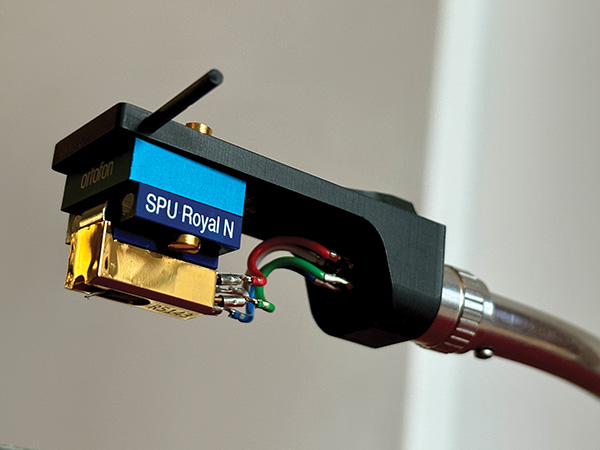
Back in the '90s, when I was young and marginally employed, one of the things I looked forward to most was going downstairs to my mailbox and finding a copy of Audiomart. The booklet arrived every two weeks, sometimes monthly, and was filled with classified ads for audio gear typeset in tiny, difficult-to-read print. In those pre-internet days, you needed a reference from a subscriber to sign up for Audiomart, which fostered a sense of community and safety, and if you wanted to respond to an ad, you had to call someone. Mostly I just enjoyed perusing the ads, but the prices for some of the vintage gear, particularly the less legendary stuff, were low enough that from time to time I could afford them.

Gramophone Dreams #96: Falcon 2024 Limited Edition LS3/5a loudspeaker, Lyra Delos phono cartridge

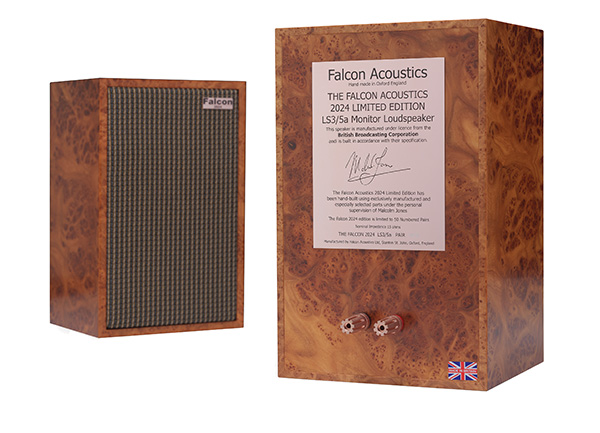
The story goes that starting in 1962, Malcolm Jones was KEF's "first employee," where he "did most of the design and development of the legendary KEF drive units—the B139, B200, B110, T15, T27—and the systems in which they were incorporated. Malcolm left KEF in 1974, having just completed the Reference Series 104 system and work on an active professional monitor to work full time at Falcon Acoustics Ltd."

Fast-forward a few years. I bought my first BBC LS3/5a in 1980. It was a Falcon Acoustics kit I saw advertised in the back of Speaker Builder magazine. Fingers crossed, I sent a postal money order in a thin Air Mail envelope to what I imagined was a garden shed in England. But of course it wasn't.

Analog Corner #232: HiFiction Simplicity II tonearm, Miyajima Labs Madake phono cartridge, Rogers High Fidelity PA-1A phono preamplifier

In my January 2014 column, I reviewed HiFiction's Thales TTT-Compact turntable and Simplicity tangential-tracking pivoted tonearm, an intriguing combo from Micha Huber, a talented Swiss watchmaker turned turntable designer.

The TTT-Compact's particulars, including its battery-powered motor and exceptional ease of setup, are described in detail in that review, which includes a link to a useful animation that shows how the design, as Huber says, "reduces the perfectly tangential tracking to pivot points, while the pick-up cartridge is taken and aligned on the Thales' Circle."

Suffice it to say that while the HiFiction tonearm is named Simplicity, its design is anything but.

Gramophone Dreams #93: The Kalman R Experience, Audio-Technica ART20 Phono Cartridge

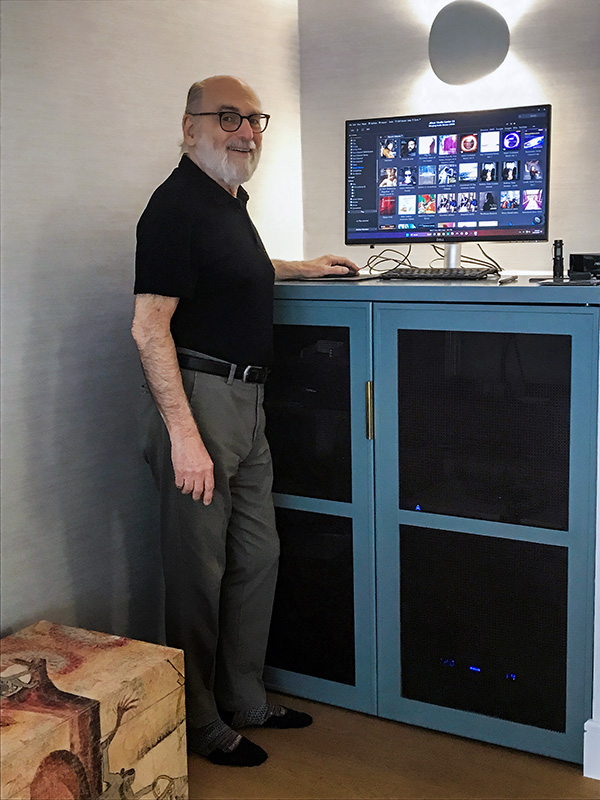
The day I visited Stereophile Senior Contributing Editor Kalman Rubinson, I arrived back home with a headful of new understandings, but before I could ponder those things, I made a cup of tea and sat down to read a few New York Times obituaries.

While Kal and I sat chatting on his couch, he told me that reading obituaries was not only fascinating but had actually helped him find out what happened to a few people he had lost touch with. I told him I hadn't read Times obits in years but when I did, I did it to enjoy the quality of writing. We agreed that the Times's obituaries (as well as their Sports, Food, and Arts & Leisure pages) are good places to find inspired bits of pure journalism.

After some raving about our favorite journalists, we began telling when-we-were-kid stories about how we used to stare through the grille cloths on table radios, where inside by the speaker we would see the announcer's face, and sometimes whole orchestras—in miniature—on a dark stage where the speaker cone morphed into a concert shell.

Advertisement
Advertisement
Advertisement