Phono Cartridge Reviews

Sort By:  Post Date TitlePublish Date

Analog Corner #242: Cornering the Vinyl Scoffers; Fuuga & Air Tight Phono Cartridges
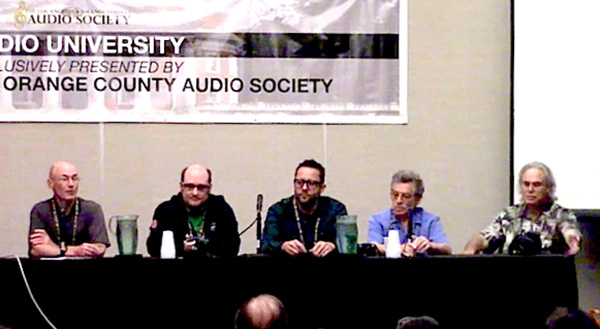
The "Meet the Editors" panel at T.H.E. Show Newport Beach 2015. (L–R): Robert Harley, Chris Connaker, John Darko, Michael Fremer, David W. Robinson.

Add to the deniers of the Holocaust and Climate Change those who say that the vinyl resurgence isn't happening.

Seriously, the pushback was bound to happen, and the bigger this so-called "hipster fad" gets, the more the scoffers sweat. In 2014, according to my sources—representatives of the world's largest pressing plants—more than 73,985,000 LPs were pressed. That's correct: almost 74 million LPs. Taking into consideration such things as multi-LP boxed sets like The Beatles in Mono (which might be counted as a single record in terms of sales), defective discs rejected by consumers or retailers, and unsold records, of which there surely are many in the pipeline, we could cut the number in half—and still have around 35 million. That's more than a 40% increase worldwide over 2013.
Brilliant Corners #17: Monomania! The Miyajima Zero Mono phono cartridge

Stereo is the most successful audio gimmick of all time. While dashboard record players, quadraphonic LPs, and MQA have gone the way of Ron Popeil's hair-in-a-spray-can infomercials, stereo remains king. And I am guilty of loving it.

That old expression "men love with their eyes" applies to listening, too. Enabled by the advent of a second channel, the fanning out of musicians across a soundstage fills the room and gives the eyes—and not only the ears—something to do. And I happen to enjoy the soundstage. It may be an utterly artificial delight, but who doesn't love hearing a tambourine coming from 10' to the left of the left speaker? So when I came across an article in which someone likened mono to listening to music through a hole in a wall, the metaphor made sense. Why would anyone want their music congealed in a blob directly in front of them when they could hear it separated out in space?

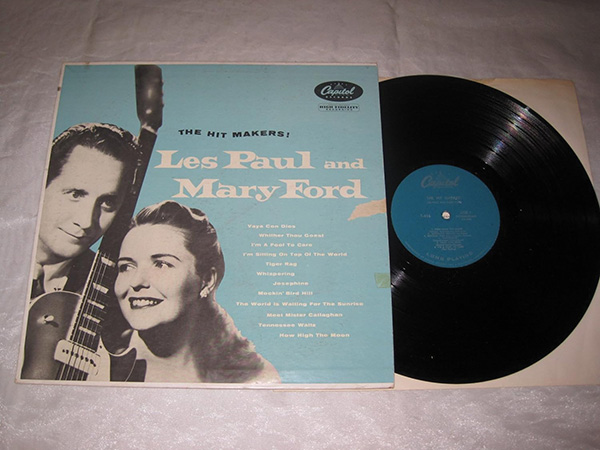
As always, though, it turns out that things aren't quite so simple...

Gramophone Dreams #87: Deejay Coolosities, AudioQuest Yosemite tonearm cable, Nagaoka MP-110 phono cartridge

SME’s Kathryn "Kat" Ourlian deejays a turntable shootout. Photo by Michael Trei.

One August night in 1965, I parked in the driveway of my best friend Derf Marko's house and let myself in the back door. As I entered, I could see to the bottom of the basement stairs, where I observed a loud pulsing darkness with plumes of agreeably acrid smoke floating up through the stairwell. Back in the darkness, I heard Derf/Fred and another person making declarative statements in loud unintelligible bursts. When I reached the bottom of the stairs, Marko's basement rec room looked like a trashed-out tiki bar illuminated by a single red Christmas light hanging just above a Dual turntable. The room was dark to a point where it was impossible to walk without stepping on records or to make out who was there and what was going on. I slouched on a couch, closed my eyes, and let my mind follow the sounds of rock drummers wailing like angry cats.

Soon it was obvious: Marko was frantically playing one drum solo after another while some crazy old dude kept hollering for the next solo before the last one finished. The revved-up stranger kept slapping his knees, muttering, and drumming along with each different drummer. Stacks of unsleeved LPs littered the linoleum floor and pink wool couch I was slumping on. But unbelievably, Marko adeptly—without cursing, fumbling, or hesitation—located every solo he wanted.

I found out later that the crazed "old guy" was Ginger Baker!

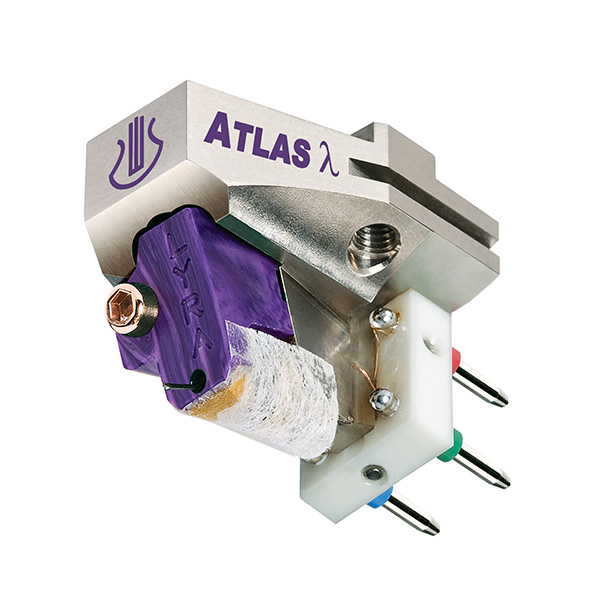
Spin Doctor #14: Lyra Atlas λ Lambda phono cartridge and fixing footfall problems

It has been more than a decade since 2012, when Lyra launched the original Atlas moving coil cartridge as the company's flagship, but in the intervening years, there have been a few updates. First, in 2016, Lyra introduced what they call the SL versions of the Atlas and also the Etna. These cartridges were designed to take advantage of a new crop of transimpedance phono preamps like the CH Precision P1 and the Sutherland Phono Loco, which boast exceptionally low noise levels but work best with cartridges that have very low impedance. Cutting the number of turns on each of the cartridge's two coils in half reduces the moving mass and inertia, allowing the stylus/cantilever assembly to respond more accurately to the tiny groove modulations. This results in improved tracking at the cost of a lower output level, which, thankfully, transimpedance phono preamps are well-equipped to handle.

Then in 2020, both Atlas and Etna versions were updated to new λ Lambda versions, with a redesigned suspension and damper system that Lyra says delivers enhancements in clarity and resolution.

Analog Corner #241: DS Audio DS-W1 optical phono cartridge

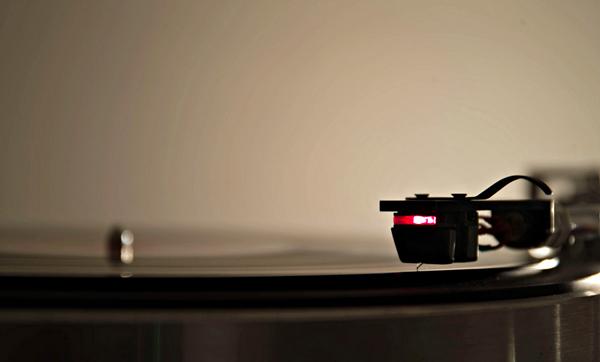
Using light to read data from a disc sounds a lot like the technology behind the Compact Disc—but you may be happy to hear there's nothing digital about DS Audio's optical phono cartridge. The DS-W1 uses the motions of a Shibata stylus and boron cantilever to modulate the output of its externally powered light-emitting diode (LED).

This Analog Corner is reprinted on Stereophile's sister site Analog Planet website.

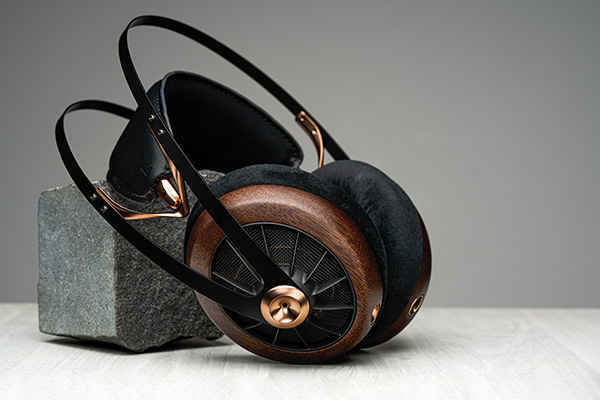
Gramophone Dreams #83: Benz Micro Gullwing SLR, Goldring Ethos phono cartridges, Meze 109 Pro headphones

It was almost Christmas, a perfect, chilly, blue-sky day to visit the Met Museum and see the Manet/Degas show before it ended. On my way, walking north on Madison Avenue, I passed the uptown branch of Gagosian Gallery and noticed a brightly lit poster behind thick glass announcing their exhibition of American artist Brice Marden's last paintings. The title of the show was "Let the painting make you," which sounded like an invite and a challenge, so of course I had to go in. I was in the perfect mood to ride in Gagosian's swanky private elevator and see how a famously serious painter with a six-decade career chose to communicate his last thoughts.

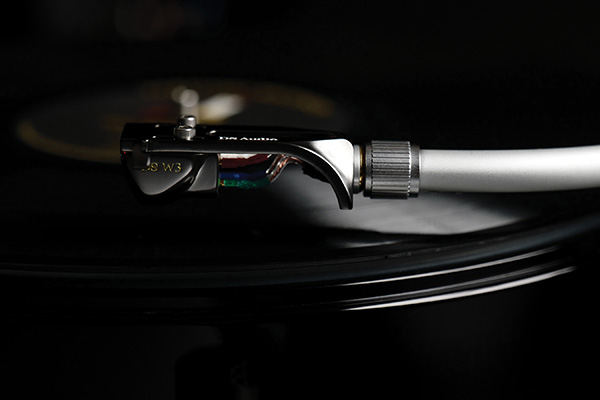
Spin Doctor #11: Alternative Phono Cartridge Technologies and the DS Audio DS-W3 optical cartridge system

Over the last 50 years, I must have installed well over 1000 phono cartridges, but I still remember the very first one: a Goldring G850 I put into the family Garrard Autoslim turntable when I was 11 years old. In 1973, the G850 was the least expensive moving magnet cartridge Goldring made. The change from the flipover-stylus ceramic cartridge that came with the Garrard wasn't an attempt to satisfy a youthful audiophile itch but, rather, a result of my first encounter with a system compatibility problem.

A few months earlier, I had convinced my nonaudiophile dad to upgrade the family stereo. We went from our ancient Monacor SMX-50 tube receiver to a pretty weird but less ancient Sony all-in-one cassette system called the TC-133CS. I failed to understand that the new Sony's magnetic phono input was incompatible with our old ceramic cartridge. Once I figured that out, I tried to convince my dad that what we really needed was a Shure M75ED. After all, that cartridge came from the same company that made the legendary V-15 Type III, widely regarded as the best cartridge in the world at the time. My dad, however, had different plans. Guided by his home-product purchasing bible, Consumer Reports, he decided we should go instead with the less-costly Goldring.

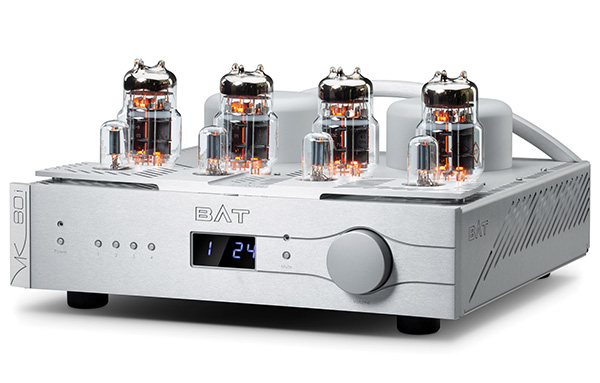
Brilliant Corners #12: Balanced Audio Technology VK-80i integrated amplifier, Ortofon Cadenza Bronze phono cartridge

In 1976, a Soviet fighter pilot named Viktor Belenko made an emergency landing in Hokkaido, Japan. He was flying a MiG-25 supersonic interceptor jet and, upon touching down, requested political asylum. This proved to be a stroke of brilliant luck for the Americans. The MiG-25 remains one of the fastest and highest-flying aircraft ever produced, and Belenko's defection allowed them to have a tantalizing look at the technology inside.

Among the top-secret loot found inside the Soviet jet was a large, heavy triode vacuum tube used as a regulator in the power supply of the MiG's radio. It was known as the 6C33C. (The enormous electromagnetic pulse caused by a nuclear explosion would fry a transistor. Tubes were used in military equipment with such an eventuality in mind.)

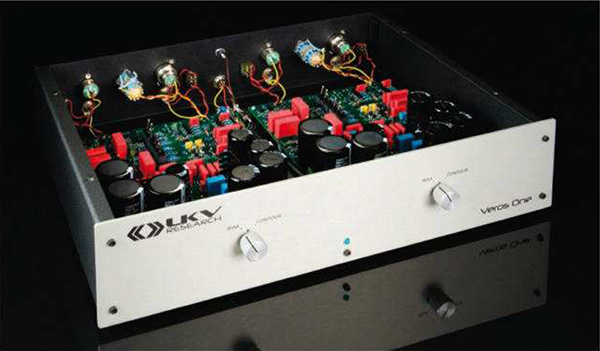
Analog Corner #249: LKV Research Veros One phono preamp, Triangle Art Apollo MC cartridge

Designer Bill Hutchins, of LKV Research, builds the 2-SB moving-magnet/moving-coil phono preamplifier in North Conway, in the White Mountains of New Hampshire; he uses as many US-sourced parts as possible, and sells his products factory direct. I reviewed the 2-SB in March 2014, on AnalogPlanet.com: the 2-SB's sound was exceptionally fine—especially if you like refined, solid-state quiet and detail, and especially considering its then-price of $2500. Since that review's publication, the 2-SB has been upgraded with a version of the third gain stage from LKV's JFET-based Veros One phono preamp ($6500; see below), and its price has risen to a still-reasonable $3000.

In May 2014, Bill Hutchins introduced the Veros One phono preamplifier ($6500).

Spin Doctor #9: Soviet-era Hi-Fi & 2 Aidas phono cartridges

In 1985, I visited what was then known as Soviet Estonia with my family. My paternal grandparents, Mimi and Pop, had emigrated to the US from this small Baltic country in 1929. Fifty-six years later, after more than a decade of rejection, the family was granted permission by the Soviet authorities to visit our ancestral homeland, and the whole family, including Mimi, made the trek. (Pop died in 1962.)

Once we were there, we were more or less free to move around in the capital city Tallinn, but leaving the city was strictly forbidden, except as part of a planned group excursion with our KGB minders—er, "Intourist guides."

Advertisement
Advertisement
Advertisement