Phono Cartridge Reviews

Sort By:  Post Date TitlePublish Date

Analog Corner #235: Kiseki & Lamm
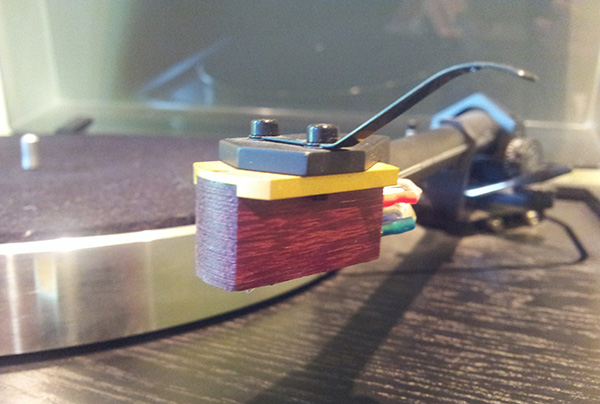
At the 2011 Consumer Electronics Show, Herman van den Dungen handed me a surprise: a brand new Kiseki Blue cartridge manufactured from new-old-stock parts. It wasn't mine to take home—only to look at, to prove it was real.

Herman van den Dungen may not be a household name even for audiophiles, but his products are: his PrimaLuna electronics are exported from the Netherlands to the US and distributed by tube connoisseur and collector Kevin Deal for PrimaLuna USA.

In the 1980s, Kiseki was legendary among audiophiles, even if their cartridges' prices were beyond the reach of most. But the brand's history is less well known—and younger analog devotees may not have heard of Kiseki at all.
Spin Doctor #19: An exotic Audio-Technica cartridge and a Vivid flagship speaker

I think of Audio-Technica as the maker of some of the best high-value cartridges out there. From the ubiquitous AT3600L, which can be had for a little more than a Big Mac meal at McDonald's, to the popular OC9 moving coil series, A-T's cartridges have long been easy-to-recommend options that deliver great sound mounted on just about any turntable.

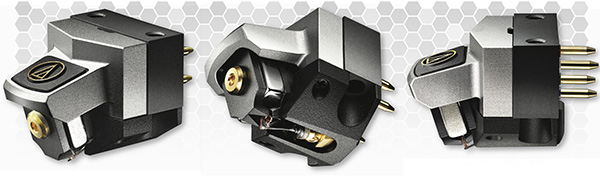
But occasionally, Audio-Technica likes to show off its technological chops by launching a cartridge that breaks new ground. Last year, they celebrated their 60th anniversary by stunning everyone with the AT-MC2022, which uses an outrageous integrated stylus and cantilever fashioned from a single piece of lab-grown diamond. In 2016, they flexed their capabilities with the AT-ART1000, which completely reconfigured how the elements of a moving coil cartridge are arranged, with spectacular results.

Now, eight years after the AT-ART1000 was launched, A-T has introduced the AT-ART1000x, which incorporates several small but important improvements.

Gramophone Dreams #91: Mobile Fidelity, PrimaLuna, and First Watt Redux

Herb waits for Godot

It's important for readers to remember that I've spent my adult life as an artist and mechanic. Making things. Working as a tradesperson during the day then at an easel or workbench at night.

When I finished high school, all I wanted to do was work in a fancy, well-equipped shop building drag race engines. Engine building was something I had already shown a talent for, but my parents insisted I go to college. Unfortunately, my high school grade point average was so low I was turned down by every college I applied to. Consequently, my parents forced me to attend Wright Junior College in Chicago, a place where teachers rolled joints for their students. And I got straight A's. Those easy A's got me into Western Illinois University, a small state college in a tiny rural town called Macomb near the Mississippi River. My mother was so proud, she told everybody she knew that her son was accepted into "university," but she could never remember which one.

Analog Corner #237: Ortofon MC A95 phono cartridge, Brinkmann Audio Spyder turntable and 12.1 tonearm

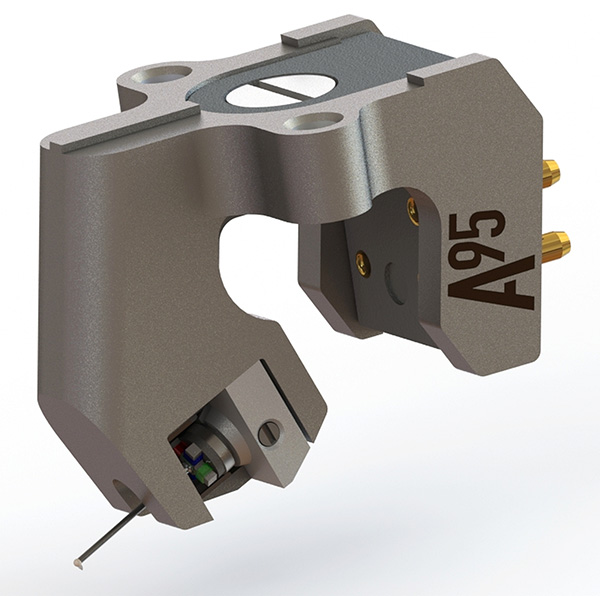
It's difficult to believe that more than five years have passed since Ortofon introduced its ground-breaking MC A90 moving-coil cartridge ($4200 when last available). The limited-edition MC A90, with its radically shaped body made of powdered stainless steel Selective Laser Melting (SLM), celebrated Ortofon's 90th year in business. The MC A95 ($6500), celebrating their 95th year, retains the A90's seductive shape, but the new body is built of powdered titanium, and thus is even more effectively self-damped.

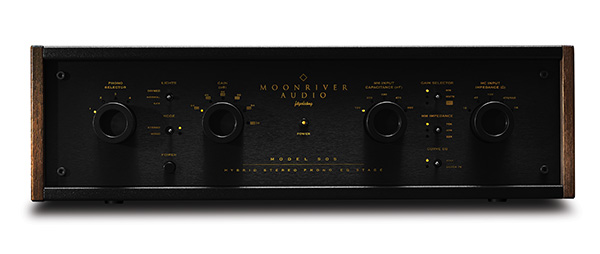
Spin Doctor #18: Moonriver 505 Phono Stage, DS Audio E3 Optical Phono Cartridge System

I spent the second three-and-a-half years of my life living with my family in Sweden. Our home was on an island just outside of Stockholm called Lidingö, which locals tell me today is like the Beverly Hills of Stockholm, a fancy place where the rich and famous live. Fifty-nine years ago, it wasn't quite so fancy; it just seemed like a cool place for a little kid from New York City to grow up.

I can't honestly say I remember many details about my life between the ages of three and a half and seven, yet apparently some of that Swedish way of thinking ended up influencing my life view, specifically, how Swedes approach consumer goods and purchasing decisions.

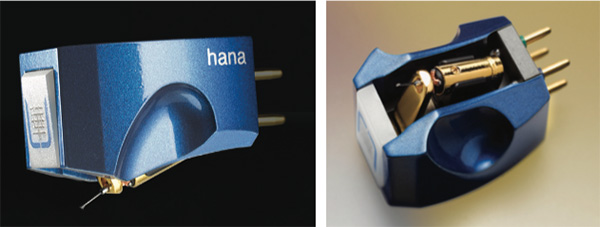
Gramophone Dreams #90: Collecting Phono Cartridges, Hana, MoFi

In a video on his YouTube channel Jazz Vinyl Audiophile, Stereophile contributing editor Ken Micallef asks Jeffrey Catalano of High Water Sound how he manages to be so consistent—how his rooms wrangle "top 2% sound" at every audio show. The first words out of Jeffrey's mouth are "I know how to listen."

"It's one of my greatest strengths. I know what music sounds like. I just go inside the music and let it tell me how it's supposed to be alive, how it's supposed to live in that space. I know that sounds simplistic and maybe somewhat esoteric, or pretentious even—but it's not.

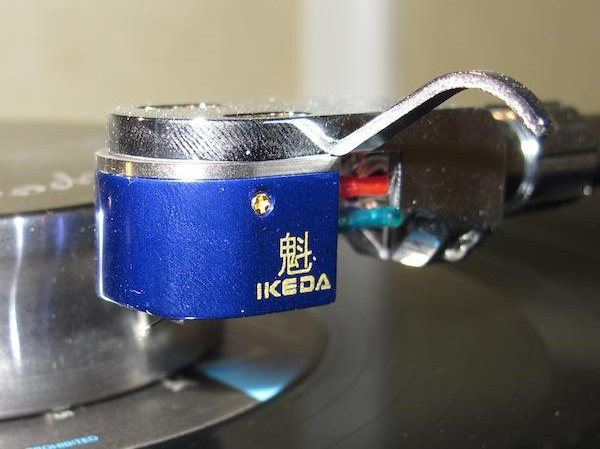
Analog Corner #238: A Tale of Two Cartridges from Ikeda and Ortofon

But first, the blowback I expected following my February 2014 column on Synergistic Research's Uniform Energy Field Technology room treatments never arrived—in fact, quite the opposite. My own positive experience of the UEF devices was confirmed by e-mails from readers who'd already used them, and from those who'd taken up Synergistic's offer of a money-back guarantee. Skeptics will charge that what I and these readers heard is evidence of confirmation bias, but people say this about any positive remarks made about audio components priced above $500.

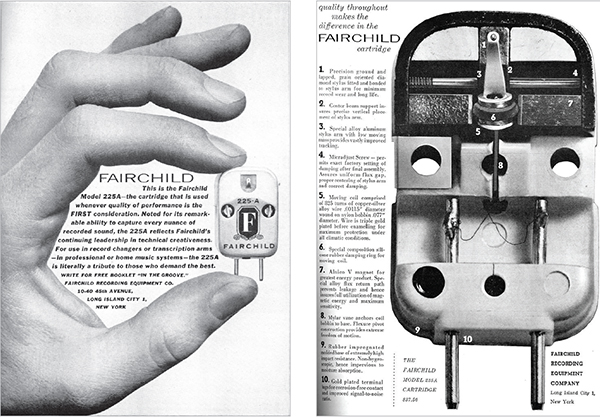
Brilliant Corners #19: Music Among the Fairchildren

Pull down the shades, find a comfortable seat, and come with me on an imaginary journey to the year 1956. The Eisenhower-Nixon ticket wins reelection, the United Methodist Church begins to ordain women, and a can of Campbell's tomato soup costs 10 cents. Elvis Presley's two-week residency at Las Vegas's New Frontier Hotel and Casino is received so poorly by the middle-aged guests that Newsweek likens it to "a jug of corn liquor at a champagne party." And a Seattle couple gives birth to Kenneth Bruce Gorelick, who will become known professionally as Kenny G.

The hobby that will become "high-end audio" is still called plain old "audio." The top marginal tax rate is 91%, the US boasts more income equality than present-day socialist Sweden, and most of the country's top earners are not panic-room wealthy but merely rich. The prices of hi-fi gear reflect this: Two of the finest power amplifiers you can buy—the McIntosh MC-60 and the Marantz Model 2 (both monophonic, of course)—retail for $198. That's about $2266 in today's dollars, and while certainly not cheap, these products are accessible to a far larger group of hi-fi enthusiasts than "the best" of today (including from McIntosh itself).

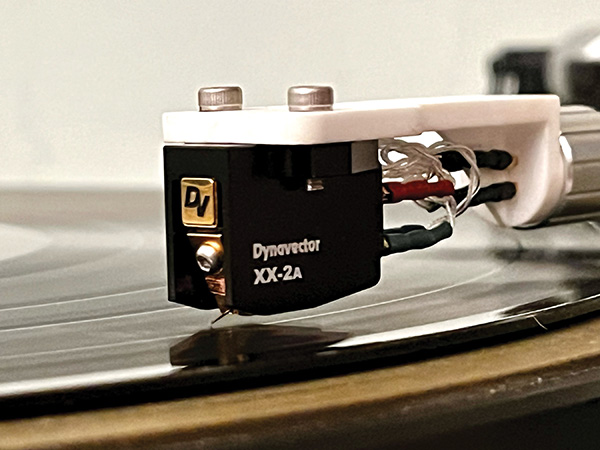
Spin Doctor #16: Sutherland Dos Locos Phono Preamp, Dynavector XX-2A Phono Cartridge

Ron Sutherland makes a strong case for being crowned the king of all phono preamps, though I expect he would blush at any such suggestion. In 1979, with degrees in physics and electronic engineering (where his final project involved designing and building a digital logic–controlled preamp), he teamed up with Gayle Sanders to found electrostatic speaker company MartinLogan. ("Martin" and "Logan" are Sanders' and Sutherland's middle names, respectively.) But after a few years, he found the increasingly corporate mindset at M-L a bit stifling, so he decided to go his own way. Ron wanted to build gear he thought was cool and fun while not being directed solely by its commercial potential. He joined up with his brother to start Sutherland Engineering, creating hi-fi equipment that piqued his own interest and hopefully that of a bunch of customers.

At first, Sutherland made a wide range of components, including preamps, power amps, and DACs, but gradually he focused more and more on phono preamps. Today that's the only thing he makes...

Brilliant Corners #18: Adventures in Schwabylon, Ortofon Cadenza Mono Phono Cartridge

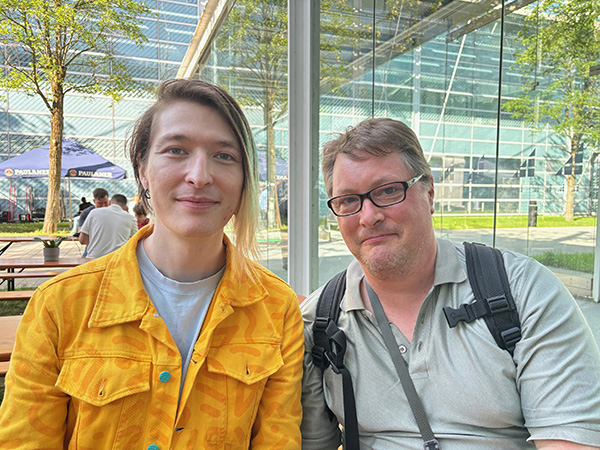
Meeting up at High End Munich: Grover Neville (left), a contributor to Stereophile's late headphone blog InnerFidelity, with his dad, Craig, a civil engineer from Chicago.

"Schwabing isn't a neighborhood, but a state of being," declared the Countess Fanny zu Reventlow, an early feminist who scandalized German society by parenting out of wedlock, carrying a revolver, and practicing what today tends to be called ethical nonmonogamy. Thomas Mann described the fellow denizens of this northern corner of Munich as "the most singular, the most delicate, the boldest exotic plants." At the turn of the last century, Schwabing was on its way to becoming the artistic epicenter of Europe, a laboratory for the most progressive social ideas, and arguably the birthplace of modernity. Kandinsky made Western art's first abstract painting while living there; local cafes once patronized by Lenin would soon host a young Adolf Hitler. Some called it Schwabylon.

These days, Schwabing's spotless, freshly paved streets are lined with the glass-and-steel facades of Hiltons and Marriotts. Its proximity to MOC, Munich's titanic convention center, has turned the neighborhood into a destination for business travelers from near and far.

Advertisement
Advertisement
Advertisement