Recording of the Month

Sort By:  Post Date TitlePublish Date

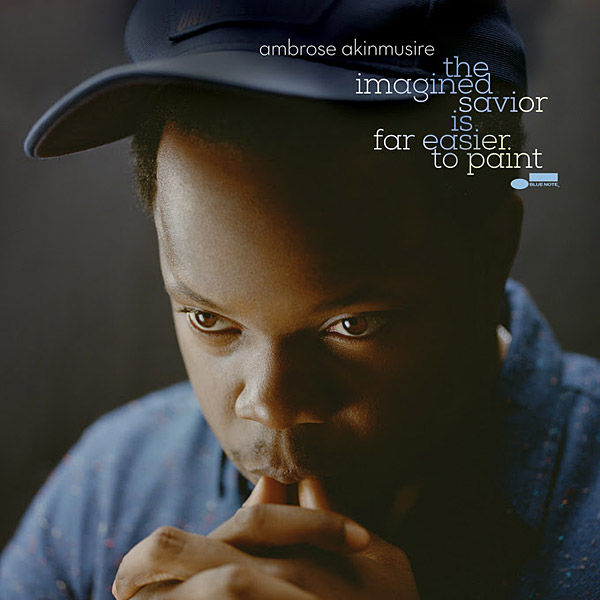
Recording of May 2014: The Imagined Savior . . .

WANTED: Jazz Hero. Must be willing and able to bring stunning new creative energies to a musical genre in danger of becoming stale and repetitive. Must be comfortable with a Marsalis level of celebrity. Saxophone or trumpet players preferred. Old men need not apply.

In 2011, jazz prayers were answered with the release of When the Heart Emerges Glistening, a brilliantly inventive mainstream jazz album led by Ambrose Akinmusire, a photogenic, 28-year-old trumpeter from Oakland, California. The young man had lots of fresh ideas, speed and dexterity to burn, and a unique tone, the combination of which brought back a flood of memories: Miles Davis, Clifford Brown, Pops.

Recording of August 1985: Mozart: Eine Kleine Nachtmusik

885rotm.250.jpgMozart: Eine Kleine Nachtmusik, Posthorn Serenade
Prague Chamber Orchestra, Charles Mackerras conducting.
Telarc CD 80108 (CD). Robert Woods, prod., Jack Renner, eng. DDD.

Holt's First Law of Recording states: "The better the performance, the worse the recording—and vice versa." It's true; really fine recordings of superb musical performances are so rare that the discovery of one such gem is cause for rejoicing. Well, you can rejoice: this is one of them.

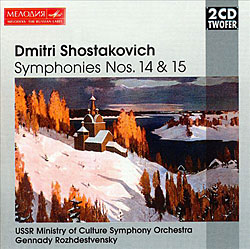
Recording of September 1985: Shostakovich: Symphony 15

985rotm.shost250.jpgShostakovich: Symphony 15
USSR Ministry of Culture State Symphony Orchestra, Gennady Rozhdestvensky conducting.
JVC/Melodiya CD VDC-528 (CD). Igor Veprintsev, eng. AAD.

I have been wondering recently if we aren't seeing the beginning of the end of rotten recordings. I'm now not too surprised when yet another superlative-sounding Telarc or Reference Recordings disc arrives for review, but when a Soviet-made Melodiya blows me away with its sound, not to say a stupendous performance, I must conclude that something earthshaking is going on.

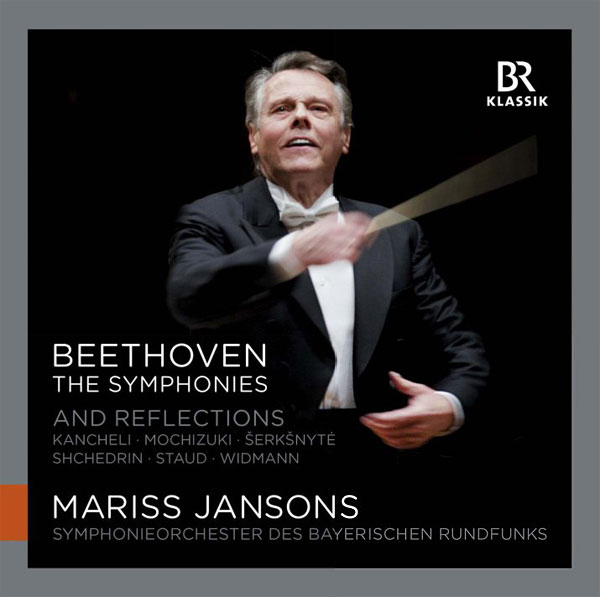
Recording of April 2014: Beethoven: The Symphonies and Reflections

Beethoven: The Symphonies and Reflections
Symphonies 1–9; works by Giya Kancheli, Misato Mochizuki, Raminta Šerkšnyte, Rodion Shchedrin, Johannes Maria Staud, Jörg Widmann
Mariss Jansons, Bavarian Radio Symphony Orchestra. Christiane Karg, soprano; Mihoko Fujimura, mezzo-soprano; Michael Schade, tenor; Michael Volle, baritone.
BR Klassik 900119 (6 CDs). 2013. Wilhelm Meister, prod.; Ulrike Schwarz, Peter Urban, Sunao Shimazaki, engs; Mechtild Homburg, Elisabeth Panzer, Bernadette Rüb, asst. engs. DDD. 6:27:31
Performance ****
Sonics *****

These live performances of Beethoven's nine symphonies were recorded mostly in Tokyo's Suntory Hall, October through December 2012 (except 3 and 6, recorded in Munich's Herkulessaal); the ancillary material—the Reflections of this set's title—are works by contemporary composers commissioned by conductor Mariss Jansons and recorded in Munich and Tokyo in 2008, 2009, and 2012. Intended as homages to Beethoven (as if he needed any), they are supposed to reflect what these composers feel Beethoven might be writing if he were alive today. Each new work is meant to denote an aspect of a specific symphony, and the CDs are (mostly) arranged so that we can hear each after the symphony that inspired it. Some of these pieces are daring and innovative, and add value to these marvelous performances of the symphonies themselves.

Recording of December 1985: Respighi: Church Windows

rotm1285.p.pngRespighi: Church Windows
The Pacific Symphony Orchestra, Keith Clark conducting.
Reference Recordings RR-15 (LP). Tam Henderson, prod.; Keith Johnson, eng. AAA

Some years ago, Harry Pearson, editor and publisher of That Other Magazine, announced his intention to help finance production of a no-holds-barred symphonic recording. The only question was, who would produce it?

Reference Recordings' Tam Henderson assures me he did not have HP's grant in mind when he conspired with the Pacific Symphony's conductor to record "something" in the Crystal Cathedral, a huge barn of a place in Santa Ana, CA. When that hall, graced by a large, romantic-sounding pipe organ and superb acoustics, proved to be unavailable because of some legal wrangle, the idea of recording something big and romantic for orchestra and pipe organ refused to go away.

Recording of March 2014: Concerts: Bregenz München

Keith Jarrett's gift for brilliant invention is apparently inexhaustible throughout both of these concerts, recorded five days apart in spring 1981. The combinations of lyricism, literally foot-stomping gospel, chordings and voicings alternately sumptuously lush and astringently lean, and unexpected musical destinations reached in surprising ways, are here at least as rich as anything else he's done.

Recording of February 2014: Classified: Remixed and Expanded

James Booker: Classified: Remixed and Expanded Rounder 11661-9175-1 (2 LPs). 1983/2013. Scott Billington, John Parsons, prods.; Jay Gallagher, eng.; Jonathan Wyner, transfer eng.; David Farrell, remix. ADA. TT: 68:12 Performance ***** Sonics ****½

Before anything else, there's his musicality. No one has ever played the piano like James Carroll Booker III. If the piano is New Orleans' preeminent musical instrument, then Booker is its most talented virtuoso. A child prodigy who went on the road as part of Little Richard's band when he was 14, the Ivory Emperor, the Bronze Liberace, Li'l Booker, Little Chopin in Living Color (as he was variously known throughout his life) was breathtakingly gifted.

Recording of January 2014: The Rise & Fall of Paramount Records 1917–1927, Volume One

Various Artists: The Rise & Fall of Paramount Records 1917–1927, Volume One
Third Man/Revenant (6 LPs, USB drive). 1917–27/2013. Alex van der Tuuk, Jack White, Dean Blackwood, prods.; Christopher C. King, David Glasser, Anna Frick, remastering. A–D. TT: 4:12:39 (LPs only)
Performance *****
Sonics Historical

Launched in 1917, Paramount Records initially recorded conventional pop music, such as Arthur Fields's "Good Morning, Mr. Zip, Zip, Zip." But with the hiring of J. Mayo Williams as a talent scout and producer in 1924, Paramount became one of the leading suppliers of "race" records, as discs marketed to African-Americans were then called. For the next decade, Paramount recorded some of the most important blues, jazz, and gospel artists of the era, along with country and pop musicians.

Advertisement
Advertisement
Advertisement