Recording of the Month

Sort By:  Post Date TitlePublish Date

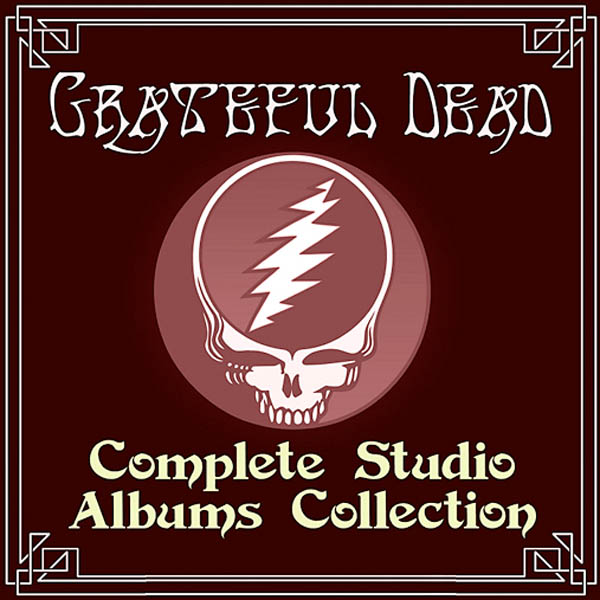
Recording of December 2013: The Grateful Dead's Original 13 Studio Albums

Deadlines and the Dead don't mix. Let me explain . . .

Back when I was a cub reporter, green as ivy, I was, in retrospect, suckered into volunteering to review a Grateful Dead concert. I dutifully drove to the venue for the 8pm show, abstained from intoxicating substances, and was on track—until I realized that, after two hours, the band was still on just the third song. Jerry was deep into an epic, 2000-bar solo that was gaining rather than losing momentum. In Deadspeak, it was one of those nights.

Recordings of November 1986: Chesky's First Releases

666rotm.earl.jpgBERLIOZ: Symphonie Fantastique
Royal Philharmonic Orchestra, Massimo Fraccia
Chesky CR-1.

RACHMANINOV: Piano Concerto No.2 in c
Earl Wild, Royal Philharmonic Orchestra, Jascha Horenstein
Chesky CR-2.

Chesky? Massimo Fraccia? Is this a put-on?

No, it's not. Chesky is a new record company which, at a time when everyone is predicting the imminent demise of the LP, has just launched its first two LPs and is threatening to follow them with more.

David Chesky is a young composer/musician who, despite some impressive credentials in the classical music world, remains singularly unrenowned. But he is also a musical reactionary after my own heart, who feels that all the best performances of the so-called Romantic repertoire were done years ago and will probably never be equalled. But rather than just bitch about this in record reviews, he is doing something about it, by releasing some of those early, possibly definitive performances on the best-sounding recordings he knows how to produce.

Recordings of December 1986: Two Out-of-Character Recordings

REFLECTIONS
666rotm.reflections.jpgJim Walker, flute, Mike Garson, piano
Reference Recordings CD RR-18CD.

DEBUSSY: Quartet in g
RAVEL: Quartet in F

The Cleveland Quartet
Telarc CD-80111.

What do you listen to when you've heard Reference Recordings' Symphonie Fantastique, Telarc's 1812 Overture, and Sheffield's Firebird, the last of your audiophile guests have gone home, and tomorrow's a workday but you're too hyped up to go to bed?

These.

Both are from record companies whose reputations were built on sonic blockbusters, but the subjects of this review are about as true to expectation as Mr. T flouncing about with a limp wrist.

Reflections is a program of short works for flute and piano. It's quiet, restful, and, in an age when it seems that nothing is worth listening to unless it's high-powered or "significant," this laidback program is a delightful change of pace.

Recording of August 1986: Sheffield Lab's Orchestral Direct-to-Disc LP

886rotmjgh.1.jpgStravinsky: The Firebird (1910 Suite)
Debussy: Prelude to the Afternoon of a Faun
Los Angeles Philharmonic, conducted by Erich Leinsdorf
Sheffield Lab Direct-to-Disc Lab 24 (LP). Lincoln Mayorga, prod.; Doug Sax, James Boyk, engs.

For some reason, Stereophile didn't receive an early pressing of Sheffield's latest orchestral recording, their first since the Wagner and Prokofiev discs back in 1977. So, guess where my review copy of this finally came from? From Harry Pearson, that's who. How did this come about? Well, I had seen a passing comment in The Absolute Sound to the effect that HP didn't like the recording, and since I was favorably impressed with what I'd heard of it at the last two Consumer Electronics Shows, I phoned HP to ask what he didn't like about it. "Dull high end, closed-in sound, not enough spaciousness" was the reply. Thank you, I said. Several days later, a copy of the disc arrived, postmarked Sea Cliff, NY.

Thank you Harry, but I must disagree with you about this recording.

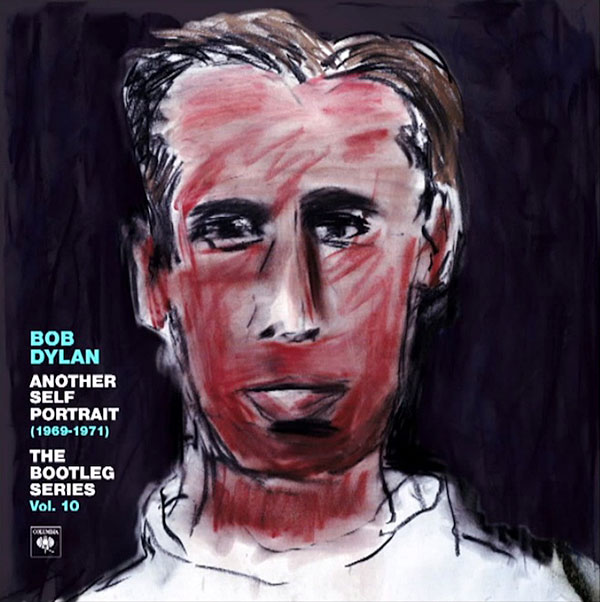
Recording of November 2013: Another Self Portrait (1969–1971)

Bob Dylan: Another Self Portrait (1969–1971): The Bootleg Series Vol.10
Columbia/Legacy 88883 73488 2 (4 CDs). 2013. Bob Johnston, Al Kooper, orig. prods.; Neil Wilburn, Don Puluse, Glyn Johns, orig. engs.; Elliot Mazer, Glyn Johns (Isle of Wight disc); Jeff Rosen, Steve Berkowitz, prods.; Greg Calbi, mastering. AAD? TT: 4:06:32
Performance ****½
Sonics ****½

It wasn't until I'd read Michael Metzger's write-up of Self Portrait in "Records To Die For" (Stereophile, February 2002) that I was prompted to revisit Bob Dylan's once-critically-scoffed-at musical enigma from 1970. Sandwiched between the new country of 1969's Nashville Skyline and the decidedly folkier New Morning from late 1970, the two LPs of the original Self Portrait sounded like the work of an artist, albeit one still in his late 20s, wanting to unplug from the world and his already staggering body of work. With its quirky cover versions and unfocused song selection, it left plenty of fans scratching their heads.

Recording of June 1987: Copland: Appalachian Spring, etc.

Copland: Appalachian Spring (Suite), Eight Poems of Emily Dickinson, An Outdoor Overture (CD only)
Pacific Symphony Orchestra/Clark/Marni Nixon (soprano)
Reference Recordings LP RR-2 and CD RR-22CD. Tam Henderson, prod.; Keith Johnson, eng.

This is unquestionably one of the best recordings Reference Recordings has done. The sound of the LP is up-front and quite bright, giving the orchestra that peculiarly nasal quality I usually associate with small French orchestras. There is truly remarkable detail and naturalness here; I was about to write that the recording makes the orchestra sound very small and pinched in Appalachian Spring when I noticed on the record jacket that this is the "Original version for 13 instruments." Okay, so I know what it costs to hire musicians in the US, but I still prefer the version of this work scored for full, bombastic, overblown 108-piece symphony orchestra. The 13 instruments are superbly balanced, though—even the piano, which is usually (and wrongfully) relegated to behind the orchestra. About a half a block behind it.

Recording of October 2013: Selected Signs III–VIII

The most indelicate, if not gory, term in all of music is the ever-popular "bleeding chunks." The bane of classical audiences cursed with lazy pops conductors, bleeding chunks are movements of works—or even parts of movements—strung together in that abomination known as a medley. The effect can be, I guess, soothing to those who, for example, know only a little about Mozart. But for anyone well versed in their Wolfy, these programs are jarring, and can produce involuntarily grinding of those cavity-prone back molars.

Recording of October 1987: Duruflé & Fauré Requiems

Duruflé: Requiem; Fauré: Requiem
Blegen, Morris, Shaw, Atlanta SO and Chorus.
Telarc 80135 (CD). Robert Woods, prod.; Jack Renner, eng. DDD. TT: 74:23

To have two Requiems by French composers on the same disc certainly invites comparisons. Superficially similar, the works are actually quite different: both are conceived for small-scale performance, both rely on the organ, and neither places any great demands on chorus or orchestra. The differences concern mood and even intent. Fauré's Requiem, composed between 1887 and 1890, has survived all kinds of performances, both amateur and professional, without losing its ability to move hearers with its gentle hymn for the dead. The Duruflé, composed in 1947, has not achieved this kind of public appeal. A commissioned work, and not unified in style, this requiem is enjoyed by those who sing it; audiences tend to find it bland.

Recording of June 1983: Magnum Opus

683rotm.jpgJAMES WELCH: Magnum Opus
James Welch, Organist, and D.A. Flentrop, Organ-builder.
Wilson Audio W8111 (LP). David Wilson, eng.

Hearing this organ gives one delusions of grandeur! How wonderful to be rich as Croesus and be able to commission an organ like this for one's (baronial) home. At any rate, those of us who don't live in Seattle can hear it at home, thanks to this superb recording.

True to its title, this is as much a recording of the organ as it is of the organist. Full specifications are given on the back, and although it is not Flentrop's largest organ in terms of number of ranks of pipes, it is physically the largest: it contains a 32-foot Pedal Prestant which emits a floor-shuddering 16Hz!

Recording of September 2013: Jazz in the New Harmonic

David Chesky: Jazz in the New Harmonic
David Chesky, piano; Javon Jackson, tenor saxophone; Jeremy Pelt, trumpet; Peter Washington, bass; Billy Drummond, drums
Chesky JD358 (CD). 2013. Norman Chesky, exec prod.; David Chesky, prod.; Nicholas Prout, prod., eng. DDD.? TT: 69:15.
Performance ****
Sonics *****

If there's a word that describes the feeling, the vibe present throughout Jazz in the New Harmonic, it's trance. Pianist and session leader David Chesky even uses it without prompting when asked how, among all his music endeavors—an album of difficult non–Joplin-like New York Rags in 2012, a children's ballet later this year, not to mention running Chesky Records—he found the time or inspiration to make a straight-ahead jazz record.

Advertisement
Advertisement
Advertisement