Recording of the Month

Sort By:  Post Date TitlePublish Date

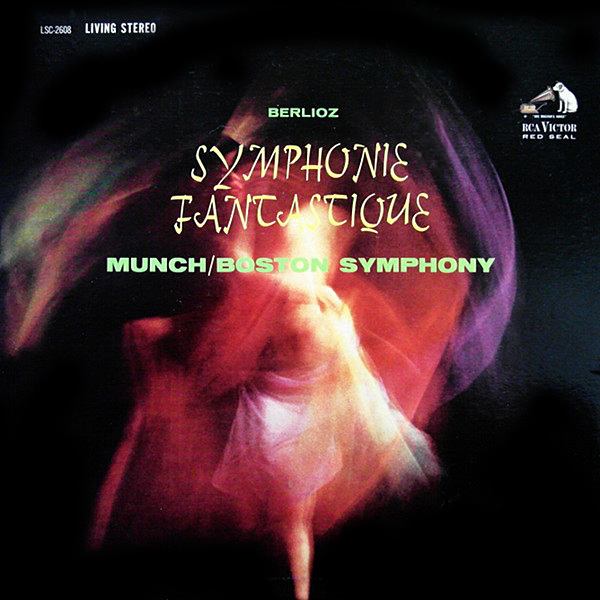
Recording of November 1962: Berlioz: Symphonie fantastique

Berlioz: Symphonie fantastique
Boston Symphony Orchestra, Charles Munch, conductor
RCA Victor LSC-2608 (LP). TT: 48:40

It is easy to forget that the hi-fi movements—the "March to the Scaffold" and the "Dream of a Witches' Sabbath"—comprise barely a third of the music in the Symphonie fantastique, yet when we listen to most of the available versions of this, we can understand why the first three movements are usually passed up by the record listener. Two are slow and brooding, one is a wispy sort of waltz, and all three require a certain combination of flowing gentleness and grotesquerie that few orchestras and fewer conductors can carry off. It is in these first three movements where most readings of Berlioz' best-known work fall flat. Either they are too sweetly pastoral or too episodic and choppy, or they degenerate into unreliered dullness.

Bonus Recording of January 2019: Bruckner: String Quintet

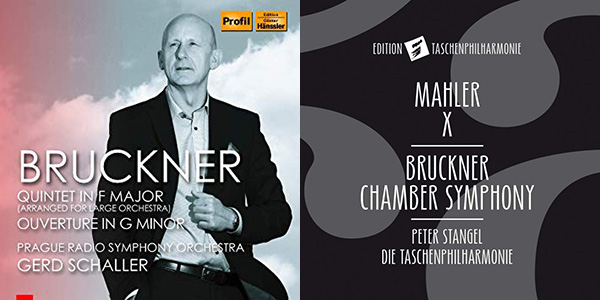
Bruckner: String Quintet (arr. for Large Orchestra), Overture in g
Gerd Schaller, arr., cond.; Prague Radio Symphony Orchestra
Profil PH16036 (CD). 2018. Milan Puklický, prod.; Jan Lzicar, eng. DDD. TT: 57:12
Performance ***
Sonics ****

Bruckner & Mahler: String Quintet (arr. for Chamber Orchestra) & Symphony 10: Adagio
Peter Stangel, arr., cond.; Pocket Philharmonic Orchestra
Edition Taschenphilharmonie/Sony ETP008 (CD). 2017. Sebastian Riederer von Paar, prod., eng., ed. DDD. TT: 59:12
Performance ****
Sonics ****

Bruckner's only mature chamber work, the String Quintet in F, has long sounded to many less like chamber music than like a Bruckner symphony squeezed into far smaller form. It's long, follows Bruckner's version of classical symphonic form, and is as meticulously composed and as contrapuntally intricate as his far larger-scaled symphonies. Like many of those, it has an alternate movement, an Intermezzo. In tenderness and poignancy, the Quintet's warm Adagio is close enough in depth and quality to its counterparts in Bruckner's symphonies 00 through 5 that it now exists in at least 11 arrangements (none by Bruckner) for string orchestra; three of those, the most popular being Hans Stadlmeier's, include the Quintet's three other movements.

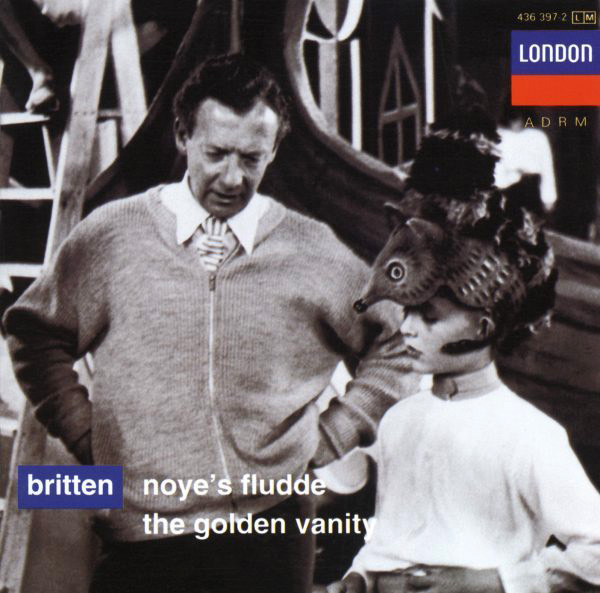
Recording of December 1962: Britten: Noye's Fludde

Britten: Noye's Fludde
Owen Brannigan, Sheila Rex, Trevor Anthony, Children's Chorus, and East Suffolk Children's Orchestra, Members of the English Chamber Orchestra, Norman Del Mar, conductor
London OS-25331 (LP). Colin Graham, prod. Recording date, 1961-07-03. Recording venue, Orford Church, Suffolk. TT: 48:00

This musical setting of the Chester miracle play about Noah, his ark, and the problems attendant thereof, if one of the most movingly beautiful recorded works I have ever heard. Its simplicity and sincerity are a stinging rebuke to those contemporary composers who have forgotten that music is basically an expression of emotion, without which its appeal can be only to the logic-oriented "mind" of a computing machine.

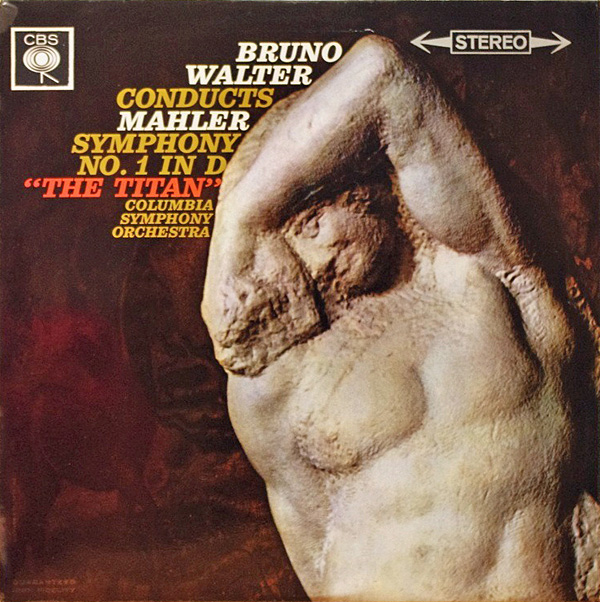
Recording of March 1963: Mahler: Symphony No.1

Mahler: Symphony No.1 in D ("The Titan")
Columbia Symphony Orchestra, Bruno Walter, conductor
Columbia MS-6394 (LP). John McClure, prod. TT: 52:15

This is one of those rare combinations of a superb recording and a stunning performance. As far as I'm concerned, it is the best Mahler First that Bruno Walter committed to discs during his lifetime, including the last one that he made with the New York Philharmonic. And the fact that this recording is far superior to that accorded Walter when he conducted the New York Philharmonic does not detract one bit from my feeling about this new release.

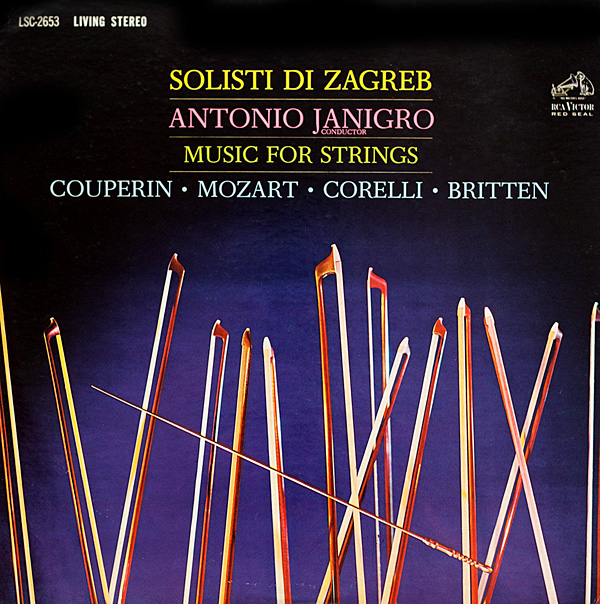
Recording of June 1963: Music for Strings

Music for Strings
Couperin: Concert Pieces for Cello and Orchestra; Mozart: Divertimento in D, K.136; Corelli: Concerto Grosso No.4, Op.6; Britten: A Simple Symphony
Solisti de Zagreb, Antonio Janigro, cello and director
RCA Victor LSC 2653 (2 LPs). Richard Mohr, prod., Lewis W. Layton, eng, TT: 47:56

From the standpoint of content and musicianship this is a superb collection of delightful music performed with the consummate authority and artistry for which Mr. Janigro and I Solisti de Zagreb are justly famous. The recording, too, while by no means perfect, is at least pre-Dynagroove, which as far as I'm concerned is now a compliment to any RCA Victor release.

Recording of August 1963: Nielsen: Symphony No.5

Nielsen: Symphony No.5, Op.50
New York Philharmonic Orchestra, Leonard Bernstein, conductor
Columbia MS-6414 (LP). John McClure, prod. TT: 33:10

This is surely one of the most exciting works written in the twentieth century. and if there is going to be an upsurge of interest in the works of this great Danish composer as a result of this recording, then Mr. Bernstein and the New York Philharmonic will have rendered music lovers an invaluable service.

Recording of January 2019: Into the Fire

Joyce DiDonato: Into the Fire
Works by Heggie, Strauss, Debussy, Gruber, Lekeu
Joyce DiDonato, mezzo-soprano; Brentano String Quartet
Erato 573802 (24/96, CD). 2018. Jeremy Hayes, prod.; Steve Portnoi, balance, mastering. DDD. TT: 77:38
Performance ****½
Sonics ****½

On the 2017 Winter Solstice, the astounding Joyce DiDonato—the coloratura mezzo-soprano from Kansas who zips through impossible runs of Rossinian roulades faster than anyone can shuck corn—took a break from opera to present a song recital in London's famed Wigmore Hall. With Jake Heggie and Gene Scheer's moving song cycle Into the Fire as its centerpiece, this live recording of DiDonato with the Brentano String Quartet confirms that she is a song interpreter of rare distinction.

Bonus Recording of December 2018: La Fenice

Keith Jarrett: La Fenice
Keith Jarrett, piano
ECM 2601/02 (2 CDs). 2018. Keith Jarrett, prod.; Martin Pearson, eng.; Christoph Stickel, Manfred Eicher, mastering, exec. prod. DDD. TT: 97:47
Performance *****
Sonics *****

This July 2006 concert, performed in Venice's Gran Teatro La Fenice, is Keith Jarrett's seventh recording of the shorter solo-piano improvisations he's explored since the early 2000s, after chronic fatigue syndrome robbed him of the stamina needed to improvise for unbroken stretches of nearly an hour. Despite their many high points, none of its six predecessors—Tokyo Solo, Radiance, Carnegie Hall, Testament, Rio, Creation—matched the cumulative power and depth of his best long-form improvisations: Köln, Sun Bear, Bregenz München, Paris. This one does.

Recording of December 2018: Where the River Goes

Wolfgang Muthspiel: Where the River Goes
Wolfgang Muthspiel, electric & acoustic guitars; Ambrose Akinmusire, trumpet; Brad Mehldau, piano; Larry Grenadier, bass; Eric Harland, drums
ECM 2610 (CD). 2018. Manfred Eicher, prod.; Gérard de Haro, Nicolas Baillard, engs. DDD. TT: 48:15
Performance ****½
Sonics ****½

Wolfgang Muthspiel of Austria has been active and respected on the European scene for 30 years. But like so many of the best European jazz musicians, he began to get famous only when he began recording for ECM: His Travel Guide (2013) and Driftwood (2014) were endorsed by critics and embraced by guitar junkies.

Recording of December 1963: Music of Edgar Varèse, Vol.2

Music of Edgar Varèse, Vol.2
Arcana, Déserts, Offrandes, Chanson De Là-Haut (Song From High)
Dona Precht, soprano, Columbia Symphony Orchestra, Robert Craft, conductor.
Columbia Masterworks MS-6362 (LP). John McClure, Thomas Frost, prods. TT: 24:45.

In electronic music, the sounds of musical instruments, natural noise-makers and electronic signal generators are recorded on tape, modified by running them at higher- or lower-than-normal speeds and manipulating their tonal content, and then combined in rhythmic and tonal patterns to create entirely new forms of music.

Advertisement
Advertisement
Advertisement