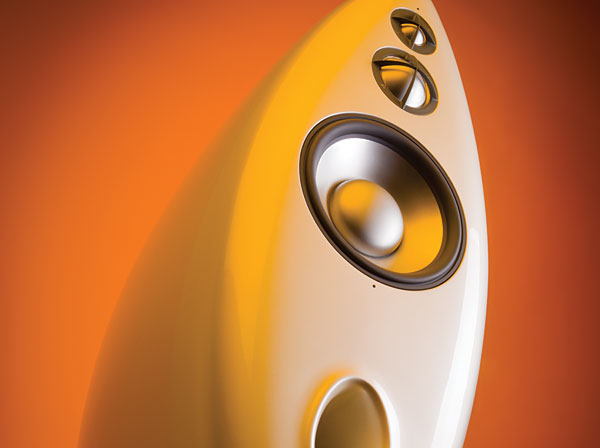
Paradigm Reference Studio 20 v5 loudspeaker

I have fond memories of the Paradigm Reference Studio 20. When I reviewed the original version for the February 1998 issue of Stereophile, it was the model that started me on my quest to seek out the best affordable loudspeakers. I believe that of all the speakers I've reviewed, the original Studio 20 remained in the magazine's "Recommended Components" longest. When I checked out the speaker's fourth generation, in May 2008, I felt it had significantly progressed in terms of sound quality and value for money. This didn't surprise me, however, as pushing the envelopes of sound quality and value has long been Paradigm's trademark. They've done with this with every one of their speakers I've heard, including the third and fifth iterations of the Atom (which I reviewed in September 2002 and February 2008, respectively), and the more expensive models I've heard at audio shows. So when I was given the opportunity to review the Studio 20's fifth generation, I jumped.
 Ten seconds to ignition. Relax, buckle in, and welcome to Stereophile's Good Times time machine. Flux capacitors fully energized. Ignition. Not to worry, that slight tingling sensation is perfectly normal. Roll back your calendar to...June 28, 1933. We're at the Eighth Annual convention of the Institute of Radio Engineers in Chicago. Harry Olsen is on the podium, describing a new wide-range cone loudspeaker for high-fidelity sound reproduction.
Quiet, please, Mr. Olsen is about to describe the disadvantages of multipledrive-unit systems. "The radiating surfaces must be separated by a finite distance, with the result that this system will exhibit peculiar directional characteristics in the overlap region where the sound radiation issues from both sources. To reduce this effect to a minimum, the overlap region must be confined to a very small range which requires an elaborate electric filter system for allocating the frequency bands of the units. The greater space required for the two loudspeakers is another important factor. The cost of two separate field structures and vibrating systems will be considerably greater than that of a single unit."
Ten seconds to ignition. Relax, buckle in, and welcome to Stereophile's Good Times time machine. Flux capacitors fully energized. Ignition. Not to worry, that slight tingling sensation is perfectly normal. Roll back your calendar to...June 28, 1933. We're at the Eighth Annual convention of the Institute of Radio Engineers in Chicago. Harry Olsen is on the podium, describing a new wide-range cone loudspeaker for high-fidelity sound reproduction.
Quiet, please, Mr. Olsen is about to describe the disadvantages of multipledrive-unit systems. "The radiating surfaces must be separated by a finite distance, with the result that this system will exhibit peculiar directional characteristics in the overlap region where the sound radiation issues from both sources. To reduce this effect to a minimum, the overlap region must be confined to a very small range which requires an elaborate electric filter system for allocating the frequency bands of the units. The greater space required for the two loudspeakers is another important factor. The cost of two separate field structures and vibrating systems will be considerably greater than that of a single unit."